Home
Storia in 1 fonti
Self-adaptive Cu–Co catalyst converts nitrate pollution into green ammonia through dynamic catalyst reconstruction
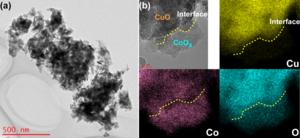
Researchers from Kochi University of Technology and Nagoya University have developed a self-adaptive copper–cobalt catalyst that efficiently converts nitrate contaminants into ammonia under ambient conditions. By combining advanced operando and quasi-operando spectroscopic analyses with density functional theory calculations, the team discovered that the catalyst dynamically reconstructs during electrochemical nitrate reduction to form hydroxyl-rich Cu–OH active sites. Amorphous cobalt oxide supplies reactive hydrogen via hydrogen spillover, enabling highly efficient ammonia synthesis. The catalyst achieved an ammonia production rate of 54.68 mg h⁻¹ mgcat⁻¹ with a Faradaic efficiency of 95.4% at −0.2 V versus the reversible hydrogen electrode and maintained stable performance for more than 60 hours in a flow cell. The work establishes adaptive catalyst reconstruction as a new design principle for sustainable electrocatalysis.
Raccontata da eurekalert.org