HomeAI · summaries
Storia in 2 fonti
SKKU Researchers Identify Room-Temperature "Spin Qubit" Defect in Zinc Oxide Semiconductors - Quantum Computing Report
An international research team led by Professor Hosung Seo at Sungkyunkwan University (SKKU)—in collaboration with researchers at the University of Wisconsin–Madison and the University of Washington—has computationally identified a novel atomic defect in zinc oxide (ZnO) capable of functioning as a high-fidelity “spin qubit.” Published in PRX Quantum, the findings propose a molybdenum-oxygen-vacancy complex [(MoZnvO)2+] as an optically addressable, deep-level spin-triplet defect. The discovery marks the first time a robust, room-temperature spin qubit has been identified in ZnO, a wide-bandgap semiconductor already deeply integrated into global commercial fabrication processes. Overcoming the Diamond NV-Center Manufacturing Bottleneck Currently, the nitrogen-vacancy (NV) center in [...]
Confronto fonti
2 prospettive sulla stessa storiaTimeline cronologica
- ·
thequantuminsider.com
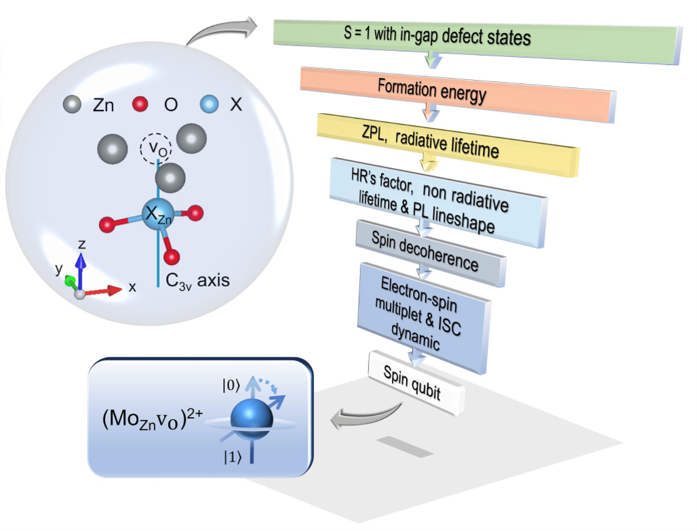
SKKU-led Team Identifies ‘Zinc Oxide Spin Qubit’ — A Semiconductor-Based Quantum Technology
Researchers identified a defect in zinc oxide that theoretical simulations indicate could serve as a high-performance spin qubit.
- ·
quantumcomputingreport.com
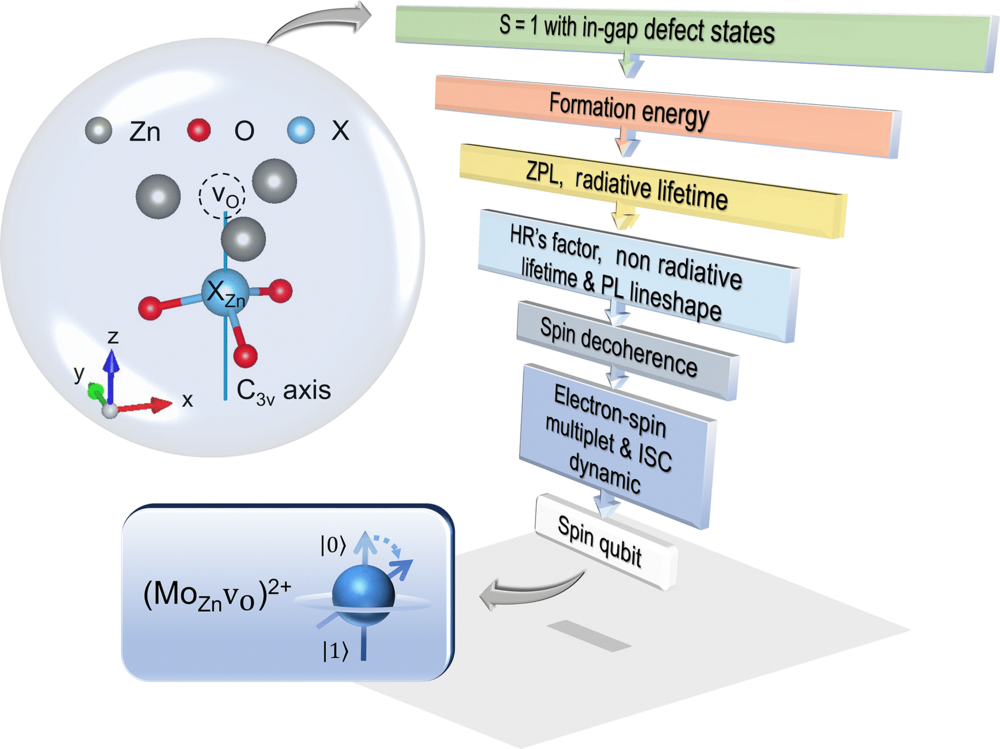
SKKU Researchers Identify Room-Temperature "Spin Qubit" Defect in Zinc Oxide Semiconductors - Quantum Computing Report
An international research team led by Professor Hosung Seo at Sungkyunkwan University (SKKU)—in collaboration with researchers at the University of Wisconsin–Madison and the…