Home
Storia in 1 fonti
LBNL Researcher Leverages 104 Qubits on IBM Heron to Simulate Subatomic Hadronization - Quantum Computing Report
A research collaboration led by the Lawrence Berkeley National Laboratory (LBNL) has successfully simulated hadronization—the fundamental particle physics process where quarks bind via the strong nuclear force to create composite hadrons like protons and neutrons—on a physical quantum processor. Executed by LBNL research scientist Anthony Ciavarella and published in Physical Review D, the simulation mapped real-time string-breaking dynamics using 104 active qubits on an IBM Heron processor (ibm_torino). The access pipeline was facilitated by the Quantum Computer User Program (QCUP), a federal cloud-access infrastructure framework managed by the Oak Ridge Leadership Computing Facility (OLCF) at Oak Ridge National Laboratory. Accurately calculating [...]
Raccontata da quantumcomputingreport.com
Timeline cronologica
- ·
qBraid Establishes QUEST Program to Deliver Unified Cloud-Based QPU Access to 40 Universities - Quantum Computing Report
Quantum software and cloud infrastructure provider qBraid has launched the Quantum University Education and Support Track (QUEST), a workforce-development initiative designed to…
- ·
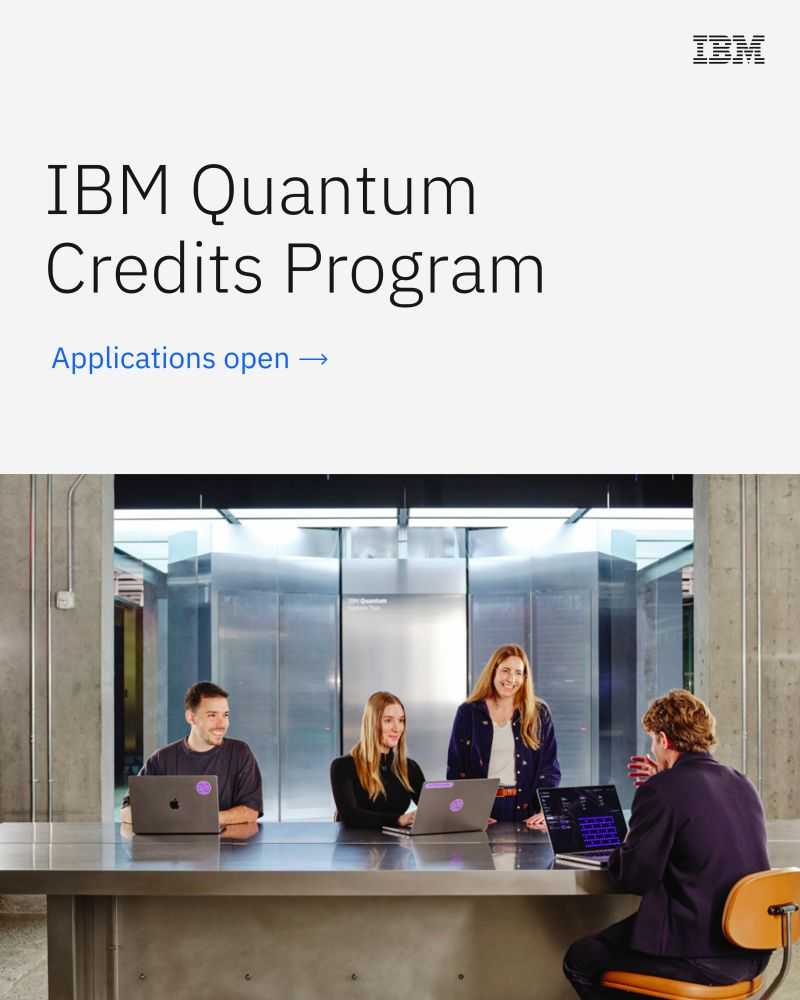
IBM Quantum Credits Program Drives Advanced Algorithmic Breakthroughs Beyond Classical Limits - Quantum Computing Report
IBM Quantum has released a technical review detailing the initial research outcomes generated by its expanded IBM Quantum Credits program. Spearheaded by IBM Fellow and Director…
- ·

LBNL Researcher Leverages 104 Qubits on IBM Heron to Simulate Subatomic Hadronization - Quantum Computing Report
A research collaboration led by the Lawrence Berkeley National Laboratory (LBNL) has successfully simulated hadronization—the fundamental particle physics process where quarks…
- ·

University of Sydney and IBM Quantify Mid-Circuit Measurement Bottlenecks to Advance Fault-Tolerant Logic - Quantum Computing Report
A joint research collaboration between the University of Sydney Nano Institute and IBM Quantum has identified, isolated, and mitigated a major hardware engineering bottleneck…
- ·

Heterogeneous Quantum-Classical Workflow Computes Tritium Binding in FLiBe Molten Salts - Quantum Computing Report
A research collaboration between Oak Ridge National Laboratory (ORNL), the Cleveland Clinic, and IBM Quantum has completed the first heterogeneous quantum-classical simulation of…