Home
Storia in 1 fonti
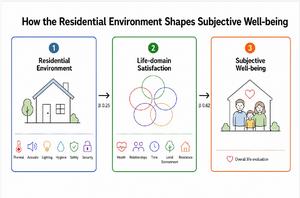
Residential environment linked to subjective well-being through life-domain satisfaction
Well-being is recognized as a key element of sustainable and healthy societies. Using survey data from 1,001 adults in Japan, a study shows that a better residential environment, characterized by thermal comfort, acoustic quality, lighting quality, hygiene, safety, and security conditions, was linked to greater satisfaction across key life domains, which in turn was associated with higher subjective well-being. This underscores the role of better residential environments in fostering sustainable, healthy, and inclusive societies.
Raccontata da eurekalert.org