Home
Storia in 1 fonti
Giving Your Agent a Memory — Multi-Turn Conversations with NVIDIA NIM
Your agent answers one question and forgets. Ask "how many days until that?" and it has no idea what "that" is. This post adds memory — lift the messages list into a session object so the conversation survives between turns. The catch is trimming history without breaking tool calls. Part 7 of the series.
Raccontata da dev.to
Timeline cronologica
- ·
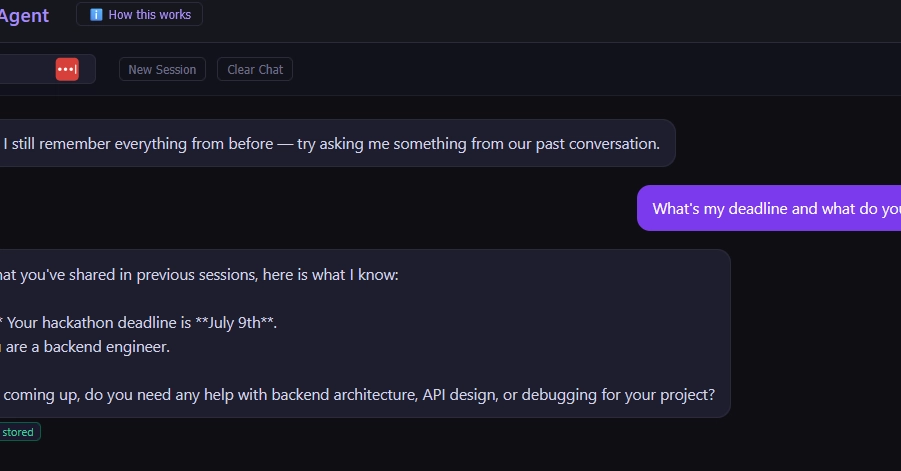
Building a Memory Agent That Actually Forgets (And the Three Bugs That Taught Me Why That's Hard)
By Nidhi: Built for the Global AI Hackathon Series with Qwen Cloud, Track 1: MemoryAgent When I...
- ·
From One Tool to a Plan — Multi-Step Agents with NVIDIA NIM
Part 5 let the model pick one tool. Real agents chain tools — search, then calculate, then answer. This post builds the ReAct loop (Reason + Act + Observe) on NVIDIA NIM and…
- ·
Giving Your Agent a Memory — Multi-Turn Conversations with NVIDIA NIM
Your agent answers one question and forgets. Ask "how many days until that?" and it has no idea what "that" is. This post adds memory — lift the messages list into a session…
- ·
AI Agent Memory in 2026: How It Works and When to Use It
Understanding different memory architectures for AI agents and when persistent, episodic, or vector memory actually pays off in production.