WARPTECHNEWS · LAB
HomeAIBusinessTechArchive
WARPTECH LAB NEWS

Warptech Lab News aggrega le notizie più rilevanti da oltre 700 fonti internazionali, con classificazione AI, TL;DR sintetici e timeline cluster su singole storie.

Navigazione

  • Home
  • Archivio
  • Editor's Brief
  • Cerca
  • Il tuo account
  • Newsletter tech/AI

Informazioni legali

  • Privacy Policy
  • Termini di servizio
  • Cookie Policy

© 2026 Sparktech S.R.L. — Tutti i diritti riservati. Sito gestito e manutenuto da Sparktech S.R.L.

Sede legale: Corso Libertà 55, 13100 Vercelli (VC), Italia · P.IVA / C.F. 02835910023 · Contatti: admin@warptechlab.com

Home
Storia in 5 fonti

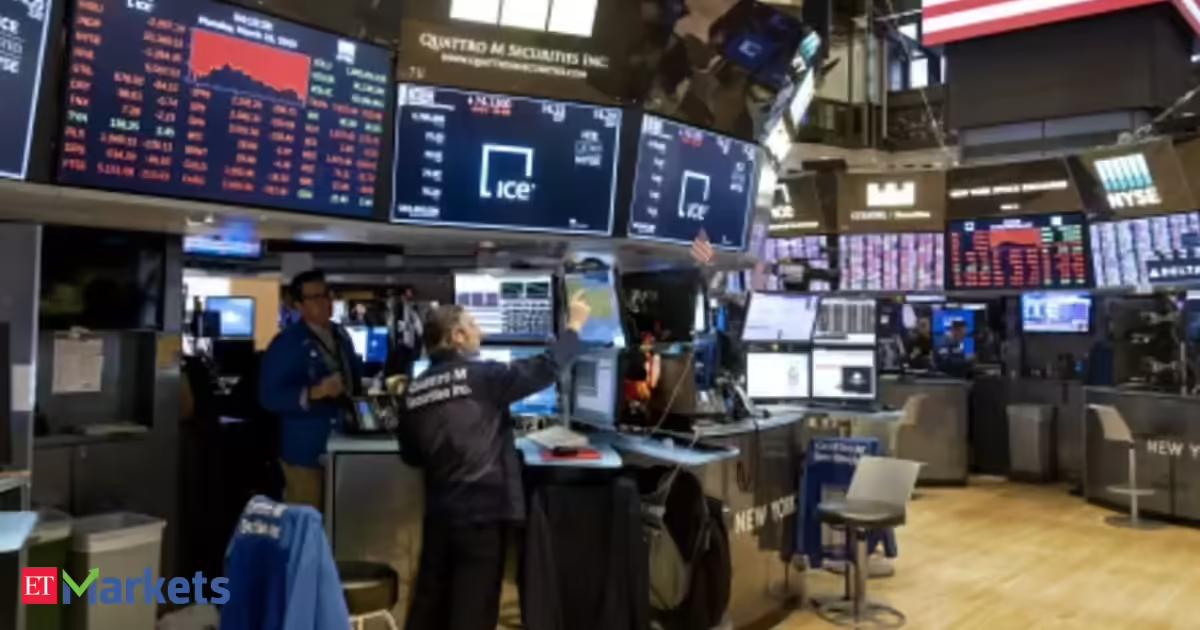
Big Tech stock buybacks vanish as AI spending spree eats up cash

The AI race is becoming so expensive that it’s snuffing out one of the key forces that has helped keep Big Tech stocks soaring. Read on

Raccontata dacryptobriefing.comoilprice.comeconomictimes.indiatimes.comfinancialpost.comthehindubusinessline.com

Confronto fonti

5 prospettive sulla stessa storia
AI · summaries
financialpost.comStai leggendo4 g fa

Big Tech stock buybacks vanish as AI spending spree eats up cash

Alphabet plans $85B equity raise; Microsoft's Q1 buybacks hit 10-year low as Big Tech's $725B AI capex squeezes shareholder returns. Without buyback EPS leverage, tech giants face pressure to deliver ROI on massive capex rather than artificially boosting share price.

originale

Timeline cronologica

  1. giovedì 18 giugno 2026·cryptobriefing.com

    Big Tech share buybacks decline as AI race escalates costs

    Big Tech hyperscalers are projected to spend $755 billion on AI in 2026, slashing share buybacks to just 20% of capital allocation, down from a 34% average.

  2. giovedì 18 giugno 2026·oilprice.com

    The AI Spending Boom Is Creating a Depreciation Time Bomb | OilPrice.com

    The soaring cost of building and continually replacing AI infrastructure could become a major financial challenge for Big Tech, even if demand for artificial intelligence remains…
thehindubusinessline.com
3 g fa

Big tech stock buybacks vanish as AI spending spree eats up cash

Alphabet, Microsoft, Meta, Amazon halted buybacks (only Microsoft $3.4B in Q1, lowest in decade) to fund $725B AI capex, raising $85B+ equity. AI infrastructure absorbs free cash flow; ROI on capex replaces shareholder returns as the valuation metric.

Leggi questa versione → originale
cryptobriefing.com5 g fa

Big Tech share buybacks decline as AI race escalates costs

Big Tech hyperscalers are projected to spend $755 billion on AI in 2026, slashing share buybacks to just 20% of capital allocation, down from a 34% average.

Leggi questa versione → originale
oilprice.com5 g fa

The AI Spending Boom Is Creating a Depreciation Time Bomb | OilPrice.com

The soaring cost of building and continually replacing AI infrastructure could become a major financial challenge for Big Tech, even if demand for artificial intelligence remains strong.

Leggi questa versione → originale
economictimes.indiatimes.com5 g fa

The AI Age: The rise and rise of US tech stocks

A sharp rise in AI infrastructure spending has catapulted many tech stocks in the US to huge returns over the past 12 months. Technology accounts for almost all of the top gainers on the Nasdaq in this period, and all…

Leggi questa versione → originale
  • venerdì 19 giugno 2026·economictimes.indiatimes.com

    The AI Age: The rise and rise of US tech stocks

    A sharp rise in AI infrastructure spending has catapulted many tech stocks in the US to huge returns over the past 12 months. Technology accounts for almost all of the top gainers…

  • venerdì 19 giugno 2026·financialpost.com

    Big Tech stock buybacks vanish as AI spending spree eats up cash

    The AI race is becoming so expensive that it’s snuffing out one of the key forces that has helped keep Big Tech stocks soaring. Read on

  • sabato 20 giugno 2026·thehindubusinessline.com

    Big tech stock buybacks vanish as AI spending spree eats up cash

    Big tech's stock buybacks decline as companies prioritize AI investments, shifting from capital-light to capital-intensive strategies.