Home
Storia in 1 fonti
Microbes frozen in ancient rubbish heaps help reconstruct ancient Greenlanders’ farms, seal hunts, and toilets
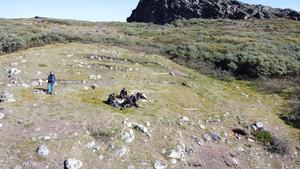
Researchers studied the microbes associated with historical middens conserved in Greenland’s permafrost, left behind by Paleo-Inuit, ancient Norse, and early modern Inuit. These middens harbored biodiverse bacterial communities – including many unknown taxa – that were especially rich in human- and animal-associated groups. The authors concluded that microbial traces of human activities such as defecation, livestock farming, and seal hunting can linger for centuries in Arctic middens. They also found a wide range of antimicrobial resistance genes in the bacterial genomes. However, the limited outward spread of potential pathogens away from the frozen core of the middens means that they currently pose little risk to public health.
Raccontata da eurekalert.org