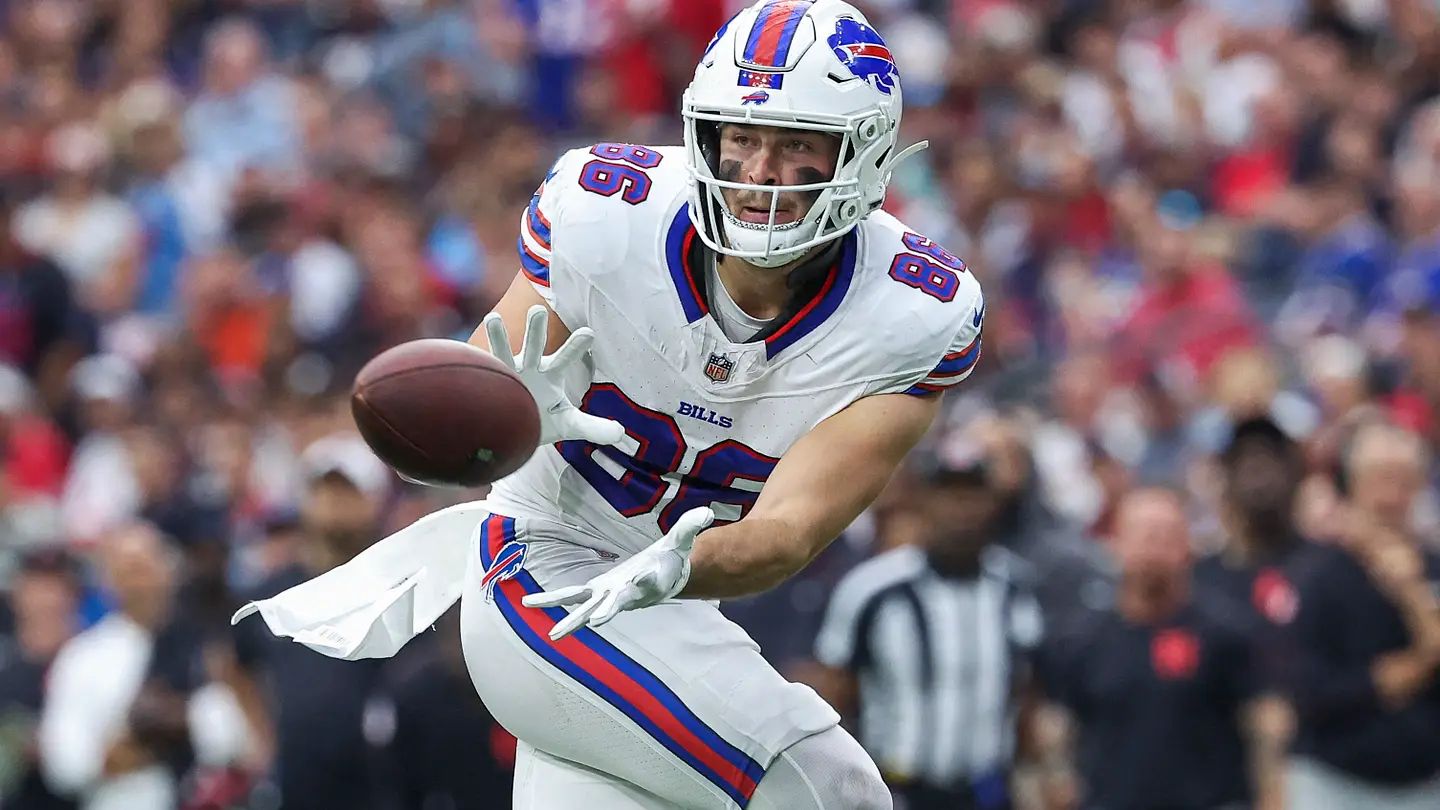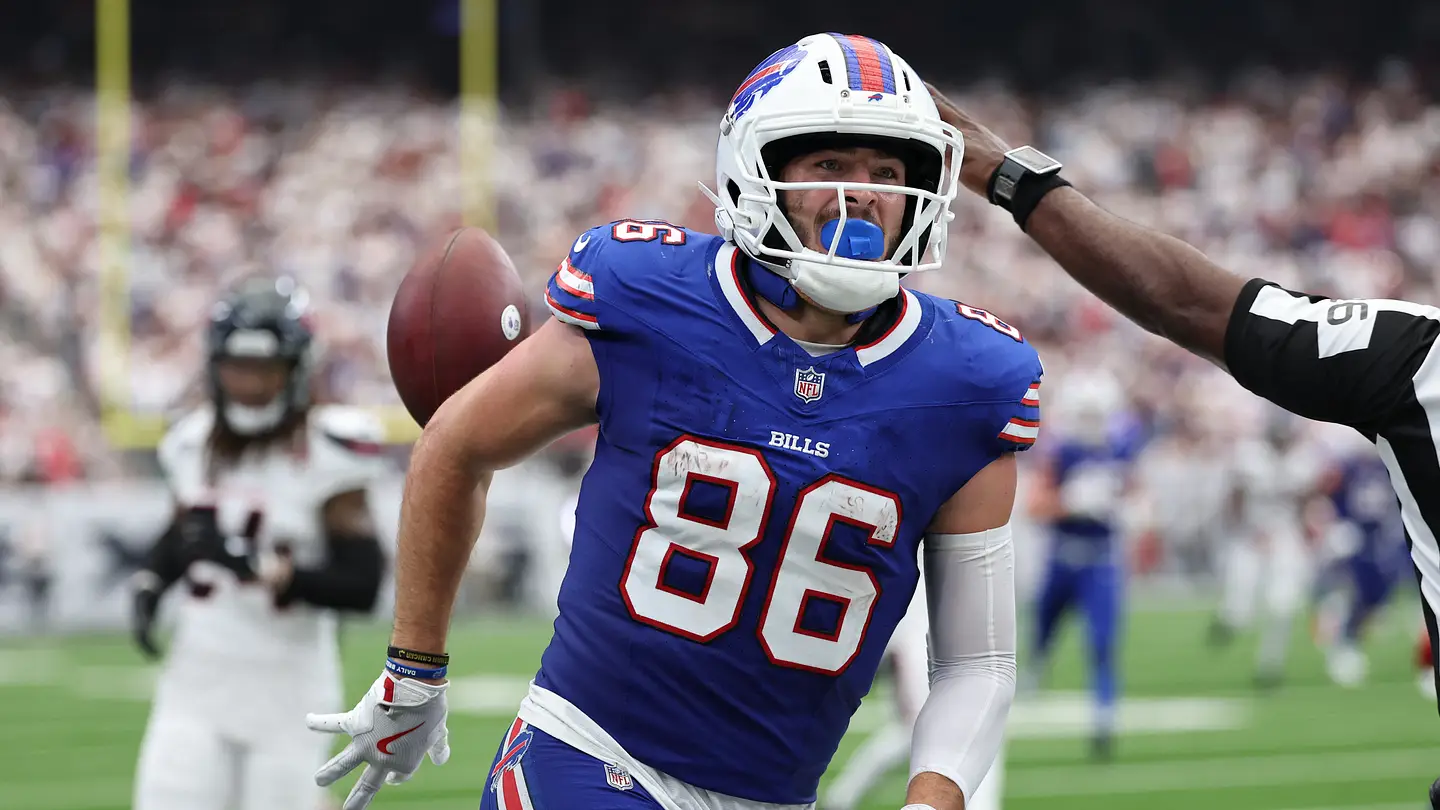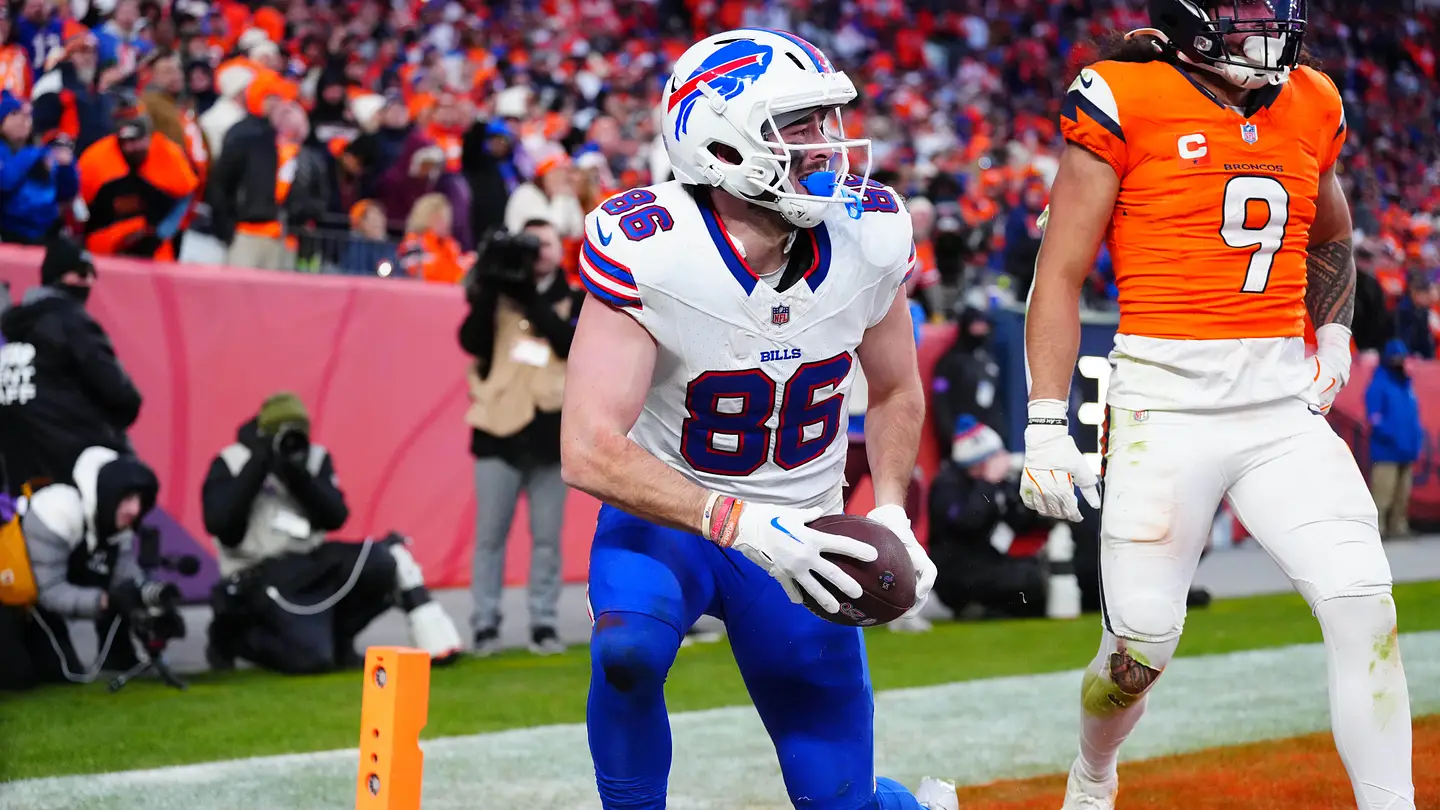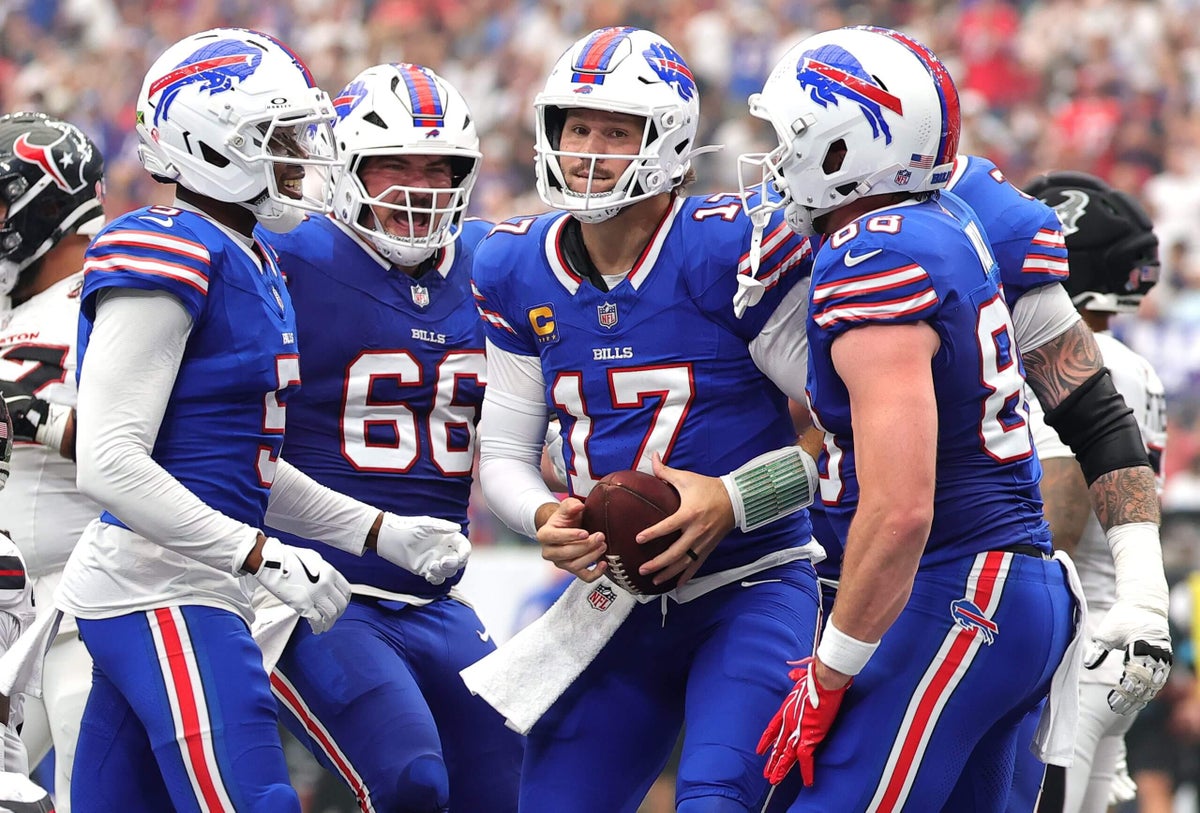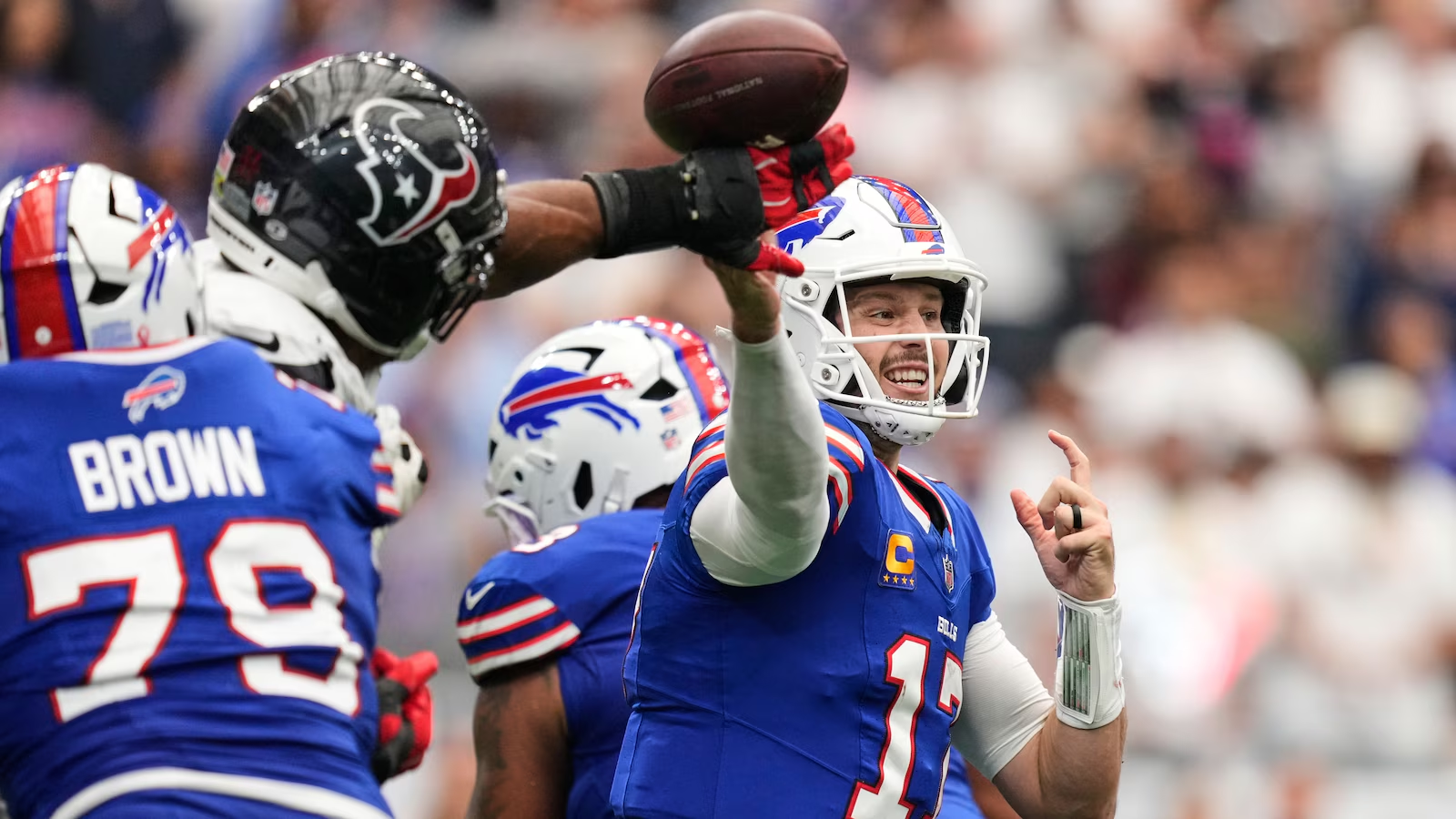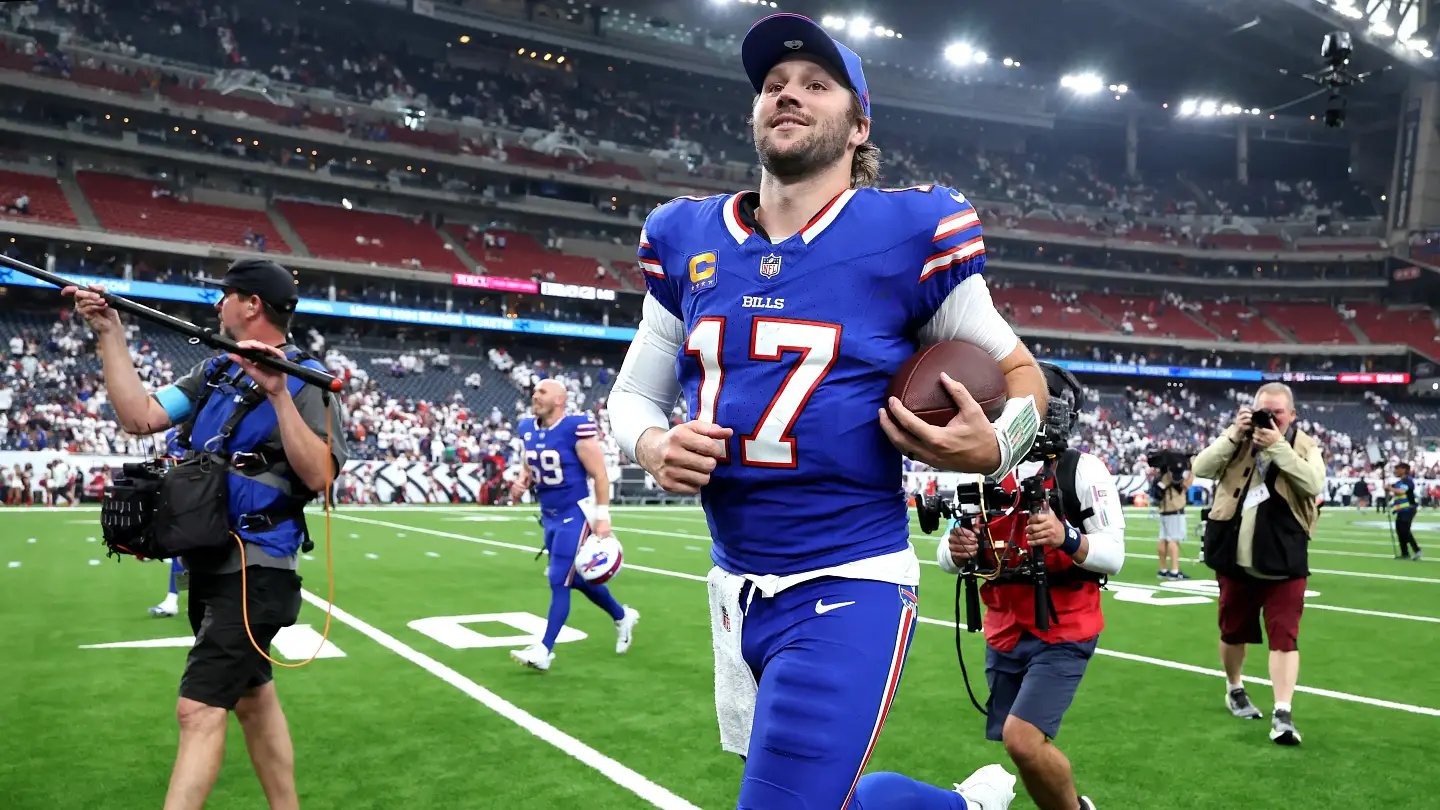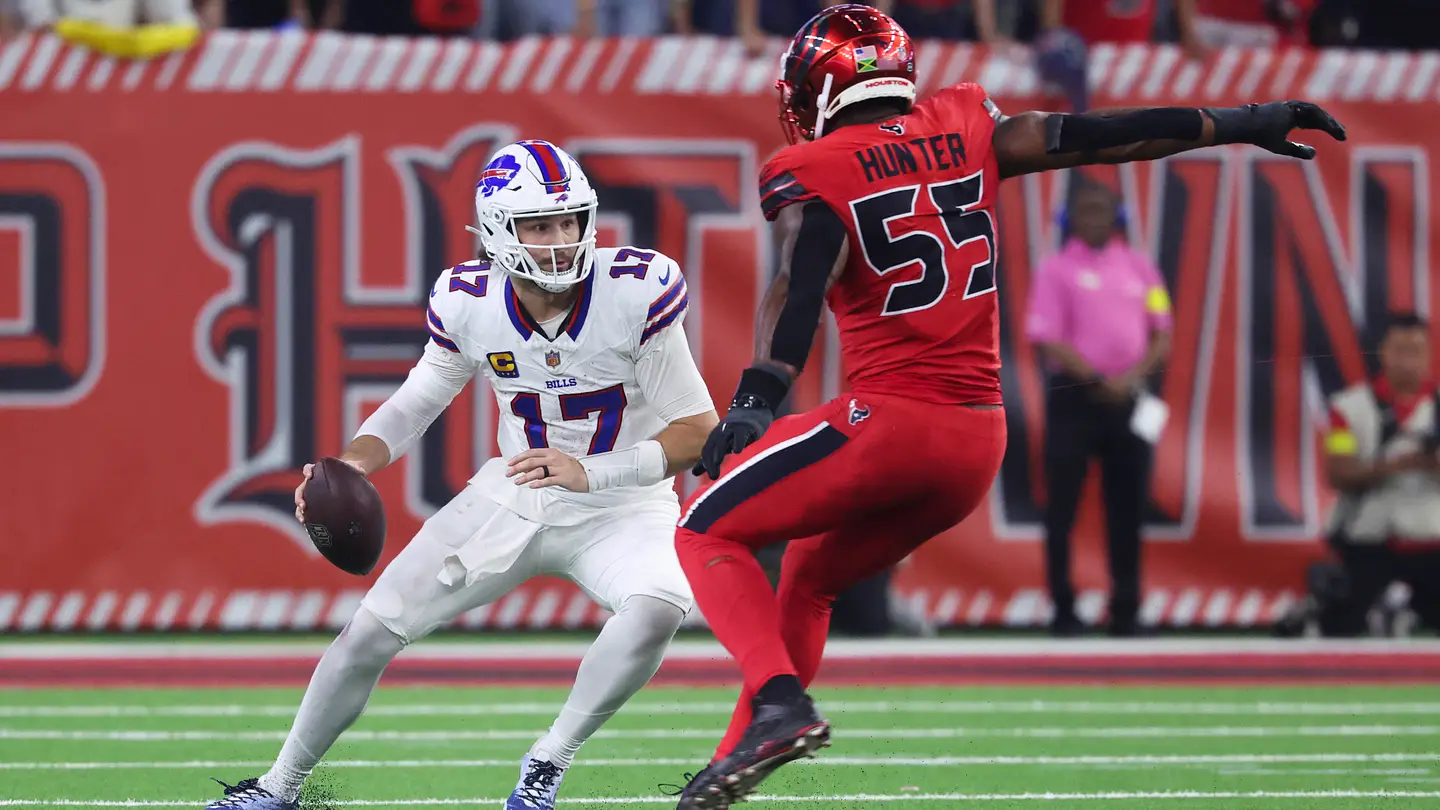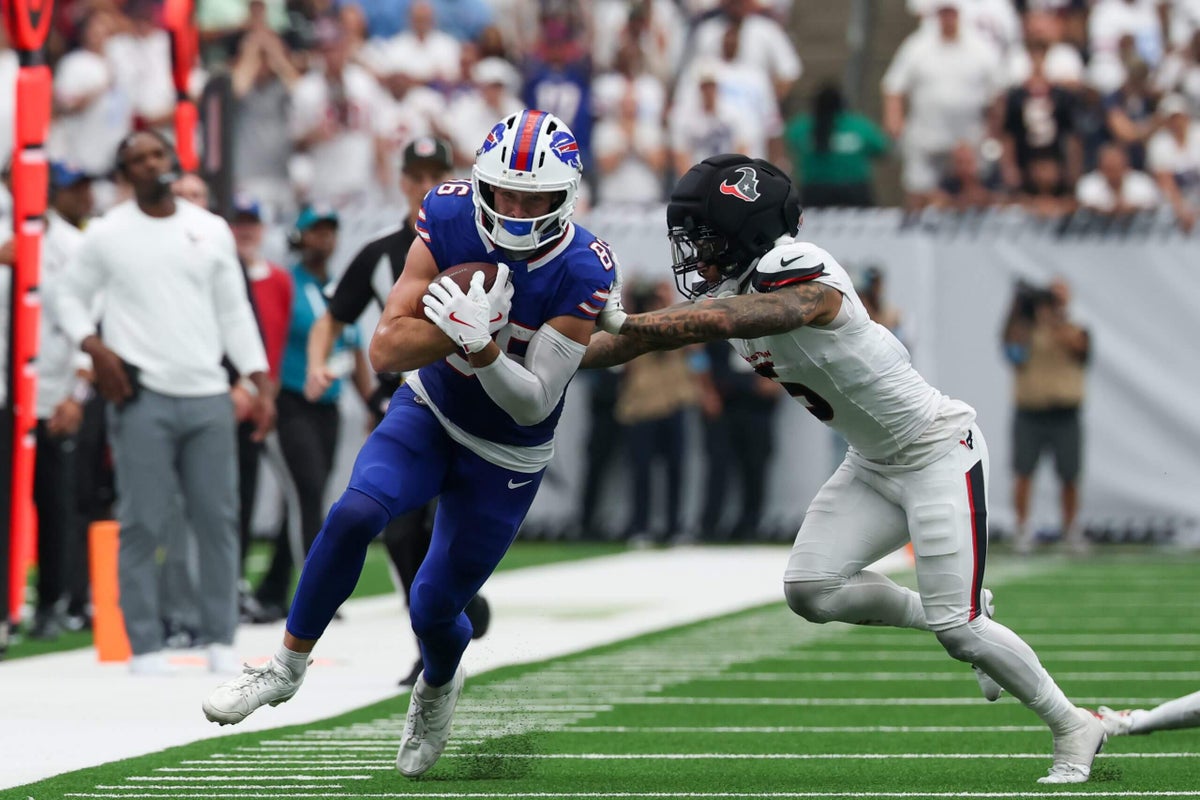
For the first time in Josh Allen’s career, he leaves Houston a winner.The Bills’ 36-31 shootout win gave us our first chance to see how all of Buffalo’s new variables melded together on the field.With a new head coach, new defensive coordinator and defensive scheme, a new No. 1 receiver, and new starters at nearly half the defensive positions, there was a lot to glean from the Week 1 showdown.What stood out most?It begins with arguably Sunday’s biggest development — something the Bills have been waiting almost two full years to see.Bills edge Texans in Week 1 thriller Kincaid’s stunning showing amid a TE-heavy dayThe Bills entered the game knowing they needed to have a plan for Houston’s edge-rushing duo of Will Anderson Jr. and Danielle Hunter. The pressure and sacks the Bills allowed the Texans in their 2025 matchup simply could not happen again, which meant they needed a different philosophical approach.In his first game as both offensive play caller and head coach, Joe Brady made packages with multiple tight ends the star of the show. Including penalties, the Bills wound up with 56 total plays, and they used at least two tight ends on 29 of those, an astounding 51.8 percent. Their commitment to 13 personnel — three tight ends — was even more striking: The Bills used that grouping on 20 of their 56 plays, or 35.7 percent.For context, that 13 personnel usage more than doubled any Bills single-game rate since they drafted Allen in 2018. The previous high in one game for 13 personnel over the last three years was only 16 percent, according to TruMedia.They felt empowered to use 13 personnel for one distinct reason: They wanted to unleash a fully healthy Dalton Kincaid as the cheat code to the matchup. By using so many tight ends at once, the Bills forced the Texans to keep heavier players on the field. However, Kincaid looked legitimately different than he had at any point since late 2024. The player who flashed so much potential in the second half of his rookie season in 2023 was back.Even on simple motion in the backfield, his acceleration was eye-opening. He can challenge defenses at the intermediate and deep levels and make difficult catches look easy. A player that size, with that speed and receiving ability, is a potential matchup nightmare for opposing teams when he’s fully healthy.We clearly saw how that could play out against the Texans, one of the best defenses in the league. Three of Kincaid’s receptions went for at least 35 yards. Two of those came with the Bills in 13 personnel, furthering their advantage from that grouping. He had five catches for 130 yards total — the most for any Bills tight end since 1967. But his game was so much more than just those five plays. What we saw is the vision the Bills have clung to since his injury woes began, and why they kept standing by him.It wasn’t just the 13 personnel usage with Kincaid; it was the overall role. By my unofficial count, Kincaid was on the field for 73 percent of the Bills’ offensive plays, the most of any Bills tight end. It is the highest snap share Kincaid has had since Nov. 3, 2024 — the game before he suffered a PCL injury to his knee that bogged him down for almost two years. After his injury in 2024, Kincaid took only 37 percent of snaps in games played the rest of the season. In 2025, Kincaid managed only 39 percent of snaps in games all season.The Bills teased this type of usage during training camp practices and delivered on it, and in turn, Kincaid delivered the breakout performance of his career. His performance yielded an astonishing 5.65 yards per route run. That would have ranked 12th among all NFL single-game performances in 2025 by players who ran at least 20 routes.If Kincaid can stay healthy — which is a big ‘if’ given his history — he and No. 1 receiver DJ Moore suddenly change the entire complexion of the Bills offense in 2026.Leonhard’s uneven defensive debutThe first go-round for new defensive coordinator Jim Leonhard didn’t go as well as he hoped. While the Bills bookended their day with turnovers off Greg Rousseau strip-sacks, much of the game was marred by inconsistency, chunk plays and question marks against an average Texans offense. The Bills had a tough time on third and fourth downs, allowing the Texans to convert on 55 percent of opportunities — penalties included.Leonhard has the mind for the role and the potential to be a very good defensive coordinator, but the Bills looked like a team with a bunch of new defensive starters in their first real game with a new defensive scheme.The flashes are what the Bills will keep coming back to, but they’ve got some real question marks at cornerback, inside linebacker, on dime looks, and in generating consistent pressure throughout the game.Until the Bills settle into Leonhard’s scheme, their defense could remain inconsistent from series to series, setting the stage for more early-season shootouts.Cook’s fleeting third down usageWithout Ty Johnson available due to a hamstring injury, the Bills smartly wanted to see if their top rusher, James Cook, could stay on the field for third downs. The Bills kept Cook on the field for three late-down situations — two on third down and one on fourth down.That came to a screeching halt in the second half. The Bills didn’t use Cook on a third down the rest of the game, instead going with practice squad call-up Frank Gore Jr. on six of the seven third-down chances in the second half. Ray Davis had the other third-down snap in the second half.Almost all Hairston at CB2The Bills were open to the idea of using a platoon at the second cornerback spot, and they delivered on doing that — but not to a grand degree. Starter Maxwell Hairston came off the field for only two defensive series, with rookie Davison Igbinosun getting the chance on those.Igbinosun made it through his first full series with both a holding penalty and a pass breakup. On his second, the Bills pulled him mid-series after a 21-yard Kayshon Boutte catch. Hairston wound up with 71 of the 81 possible plays against the Texans.The Bills’ key to their DL? Ed OliverIf one thing was clear with Leonhard, it’s that he wanted his best defensive front players (defensive line and outside linebackers) in the game as much as possible. That was led by defensive lineman Ed Oliver, who was unofficially on the field for 82.7 percent of the Bills’ defensive plays (penalties included). Outside linebackers Greg Rousseau and Bradley Chubb weren’t far behind at 80.3 percent each.Landon Jackson with a very defined roleSecond-year defensive lineman Landon Jackson has had a positive summer leading up to the season and moved up the depth chart as a result.That, along with T.J. Sanders’ injury, set the table for him to have an enhanced role on Sunday, but the Bills didn’t veer from one personnel grouping for Jackson. On all 30 of his snaps, Jackson lined up at defensive end in a base defense look with two other defensive linemen with him.He didn’t take a single snap as one of only two defensive linemen. It could come in the future, but they kept things simple for Jackson in Week 1.Bills debut their dime lookThe Bills used a pretty specific third-down grouping for most of the game. They deviated a couple of times for a different look, but the group mostly consisted of the same players and substitutions.They would take out defensive lineman Deone Walker and replace him with outside linebacker Michael Hoecht as an interior rusher, leaving Oliver as the only defensive lineman.Then, they substituted safety Damar Hamlin for inside linebacker Dorian Williams, put Hamlin at safety, and had starting safety Cole Bishop line up in the box next to inside linebacker Terrel Bernard. Given their late-down struggles, the Bills may need to switch things up if it continues.Up Next: The Bills head home on a short week to take on the 1-0 Detroit Lions on Thursday night — the regular-season debut of their new $2.2 billion stadium.
How the Bills unleashed Dalton Kincaid against Texans: 7 Week 1 observations
Dalton Kincaid starred as the Bills leaned on tight ends against Houston. Plus, Jim Leonhard’s debut, James Cook’s role and more.
1,372 words~6 min read