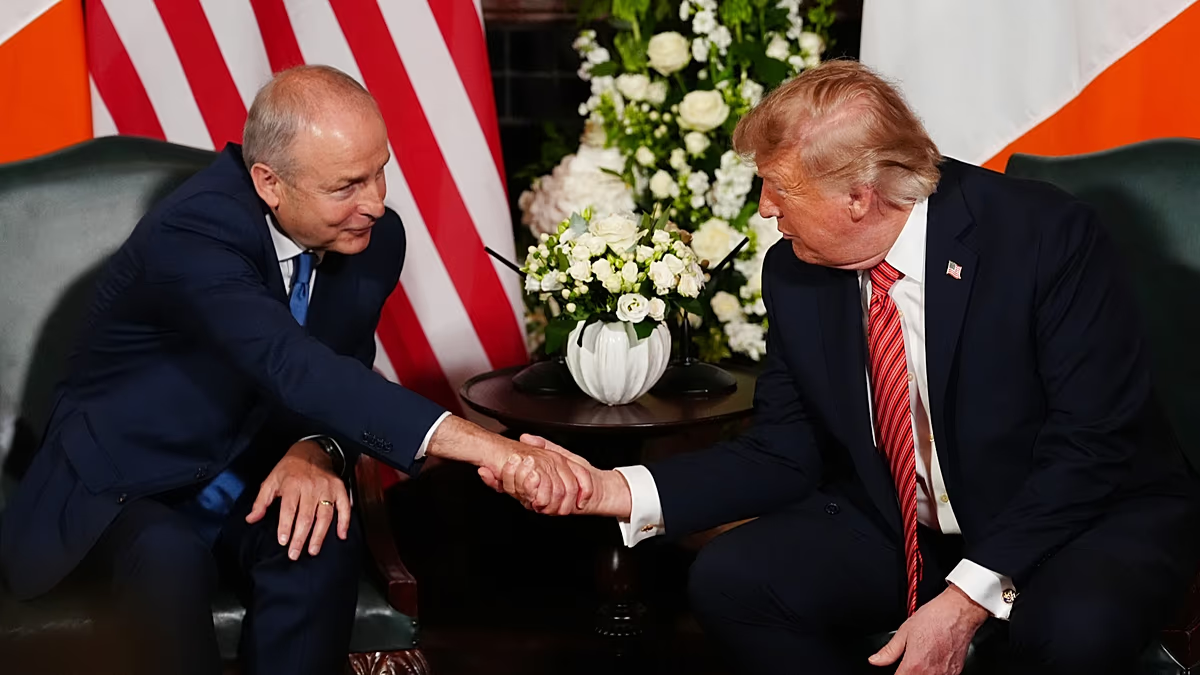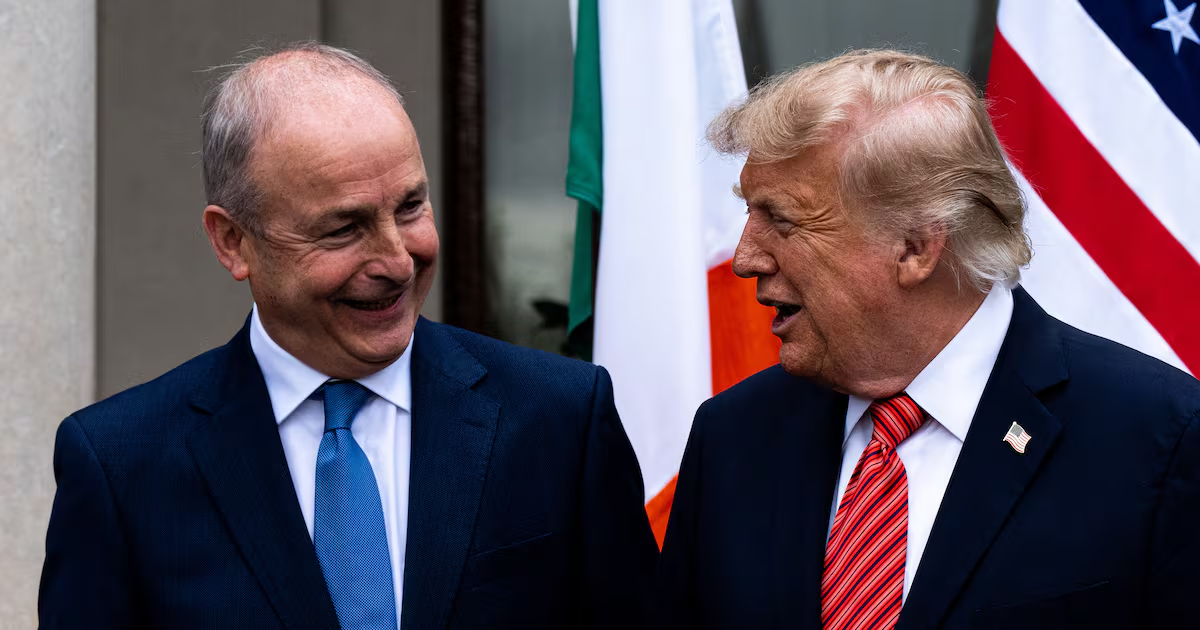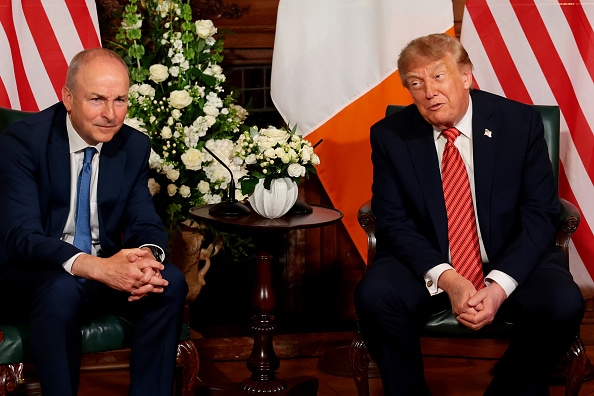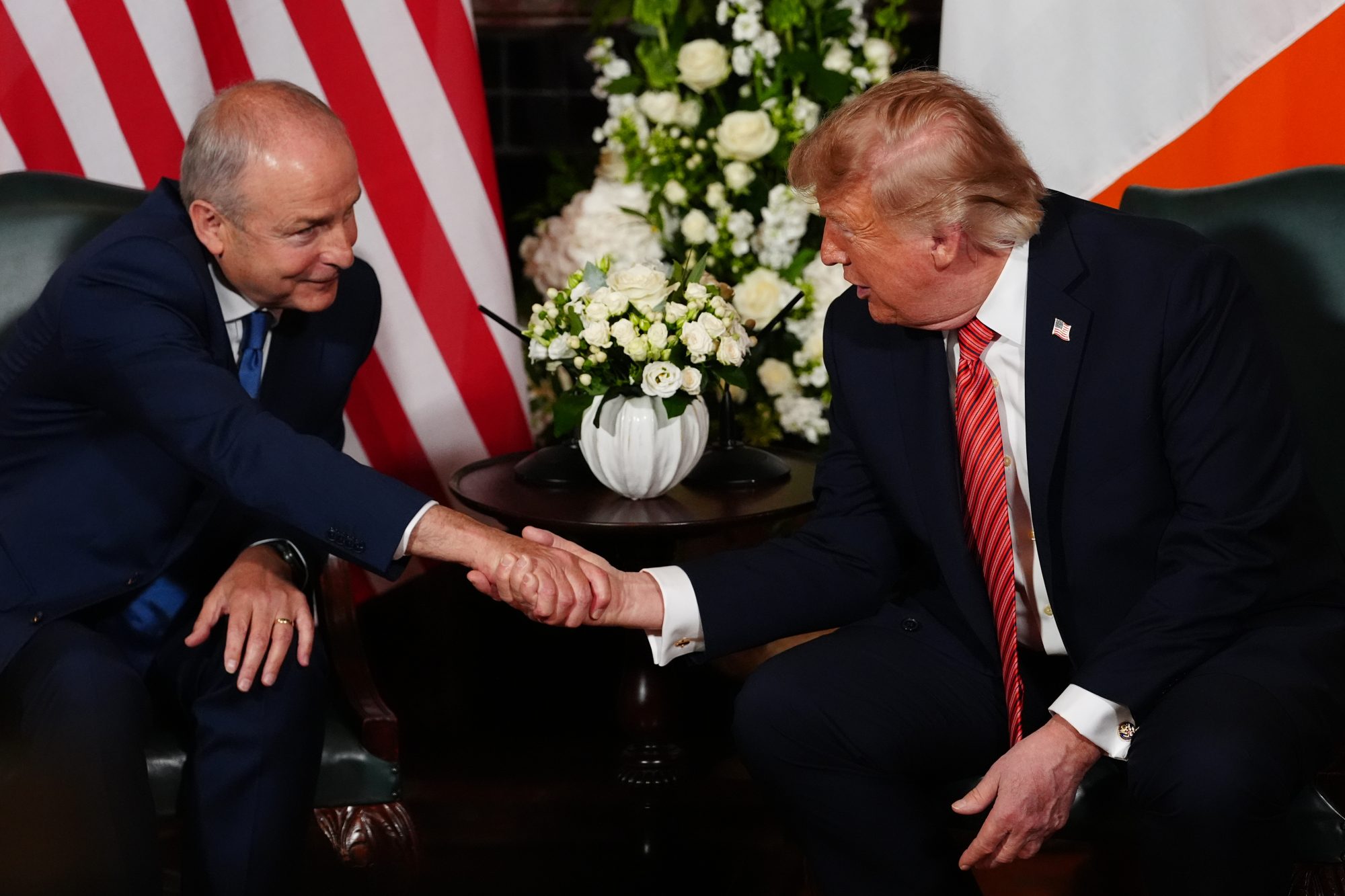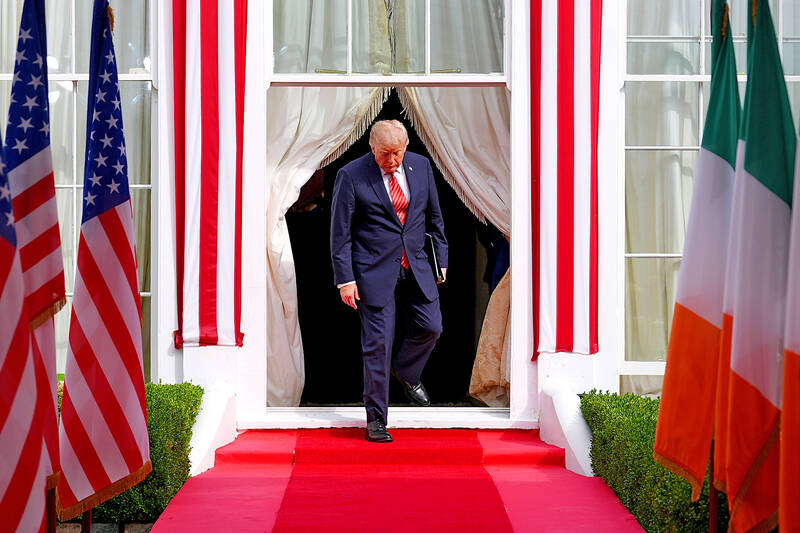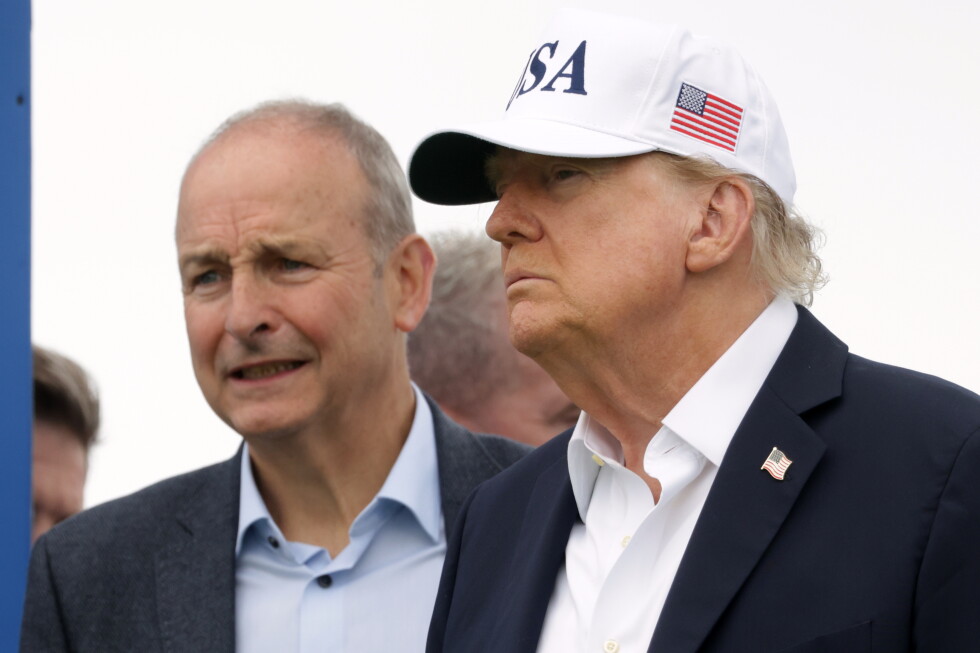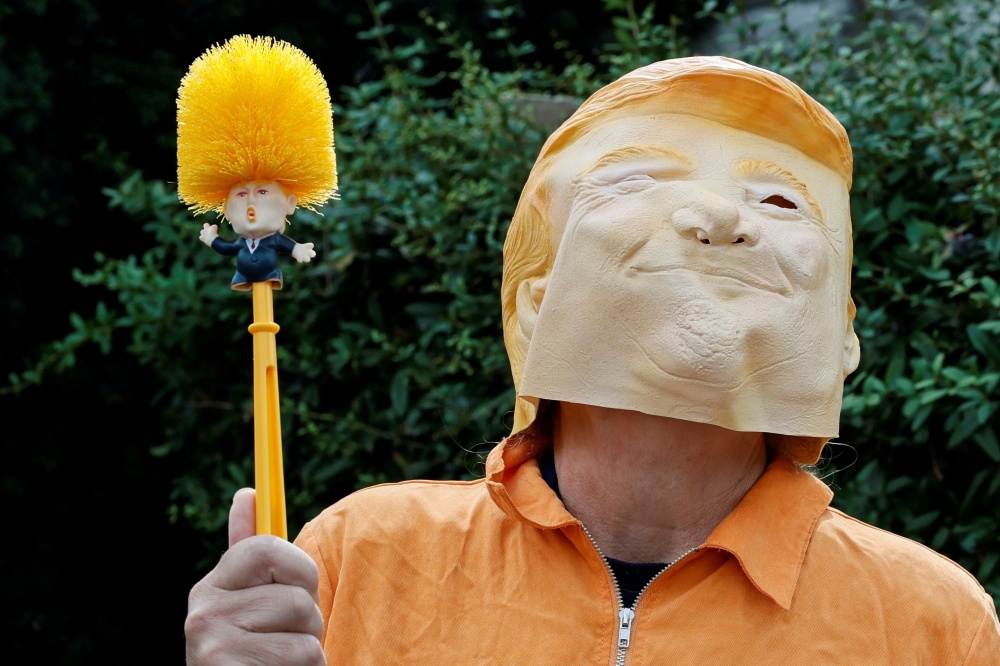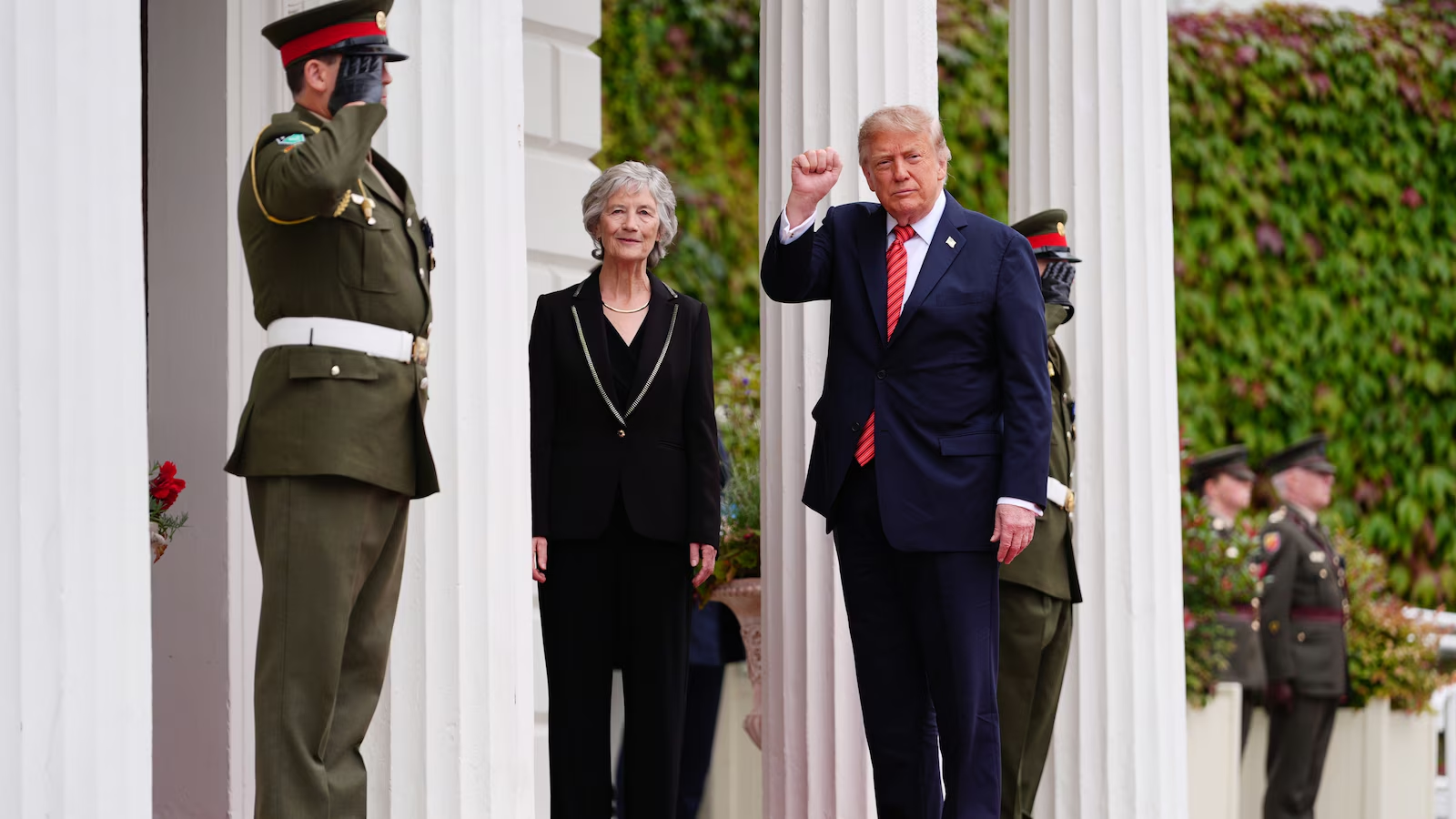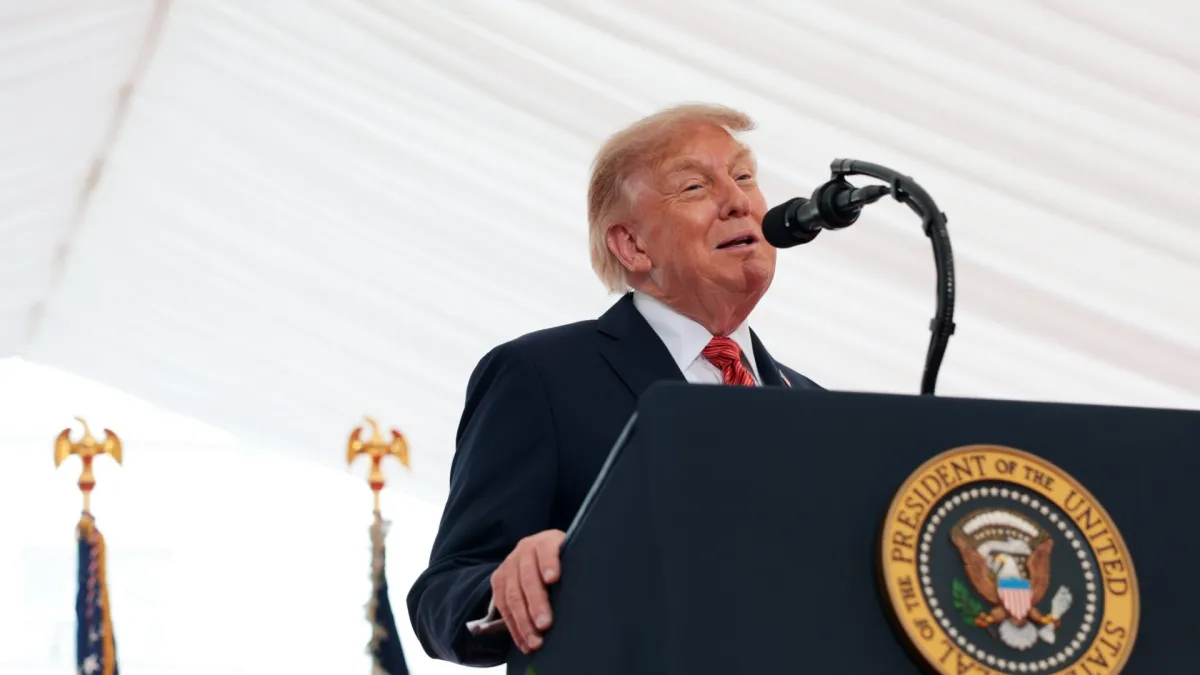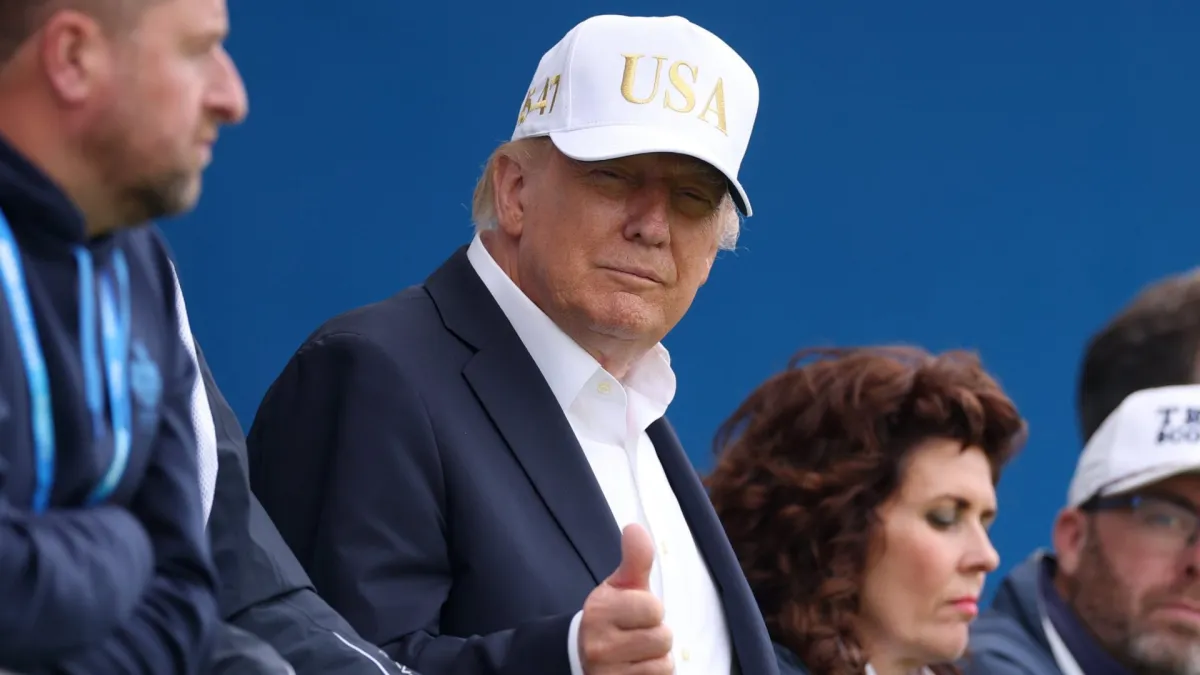
If the main aim of Donald Trump’s visit to Ireland was to get an unpredictable transatlantic guest in and out with minimum breakage of the diplomatic crockery, one clattering mishap occurred along the way. The US President blundered into the hypersensitive matter of Northern Ireland’s relations with the Republic, with an off-the-cuff proposal that a united Ireland would be “a cool thing” and “a great feather in everyone’s cap”.
What he affably termed in later comments a “nice answer” to a bloodsoaked, century-old question was a discombobulating one for hardcore nationalists, rarely aligned with the rest of the Trump agenda. It also reflects a broader conundrum for European politicians who suddenly find the great Shrek of transatlantic relations on their side – is it an endorsement or an inconvenience?
Given that the Good Friday Agreement nailed down the need for majority support across Northern Ireland and the Republic for any poll on unity, and that the terms would need to be clearly spelled out, the President’s comments were more of a musing than reliable prediction.
As things stand, pro-unification sentiment in the North lags a clear 10 percentage points or so behind advocates of a united Ireland – and “don’t knows” might well be swayed by practical factors. Northern Ireland citizens would lose prized access to the NHS and also forfeit subsidies which compensate for a large spending deficit. The Republic is in the Eurozone, which means that it is even more exposed to Trump-era tariffs than the North – and pharmaceuticals, one of its leading industries, is currently under a 15 per cent tariff deal, whereas the UK has a hard-fought three-year deal of zero levies.