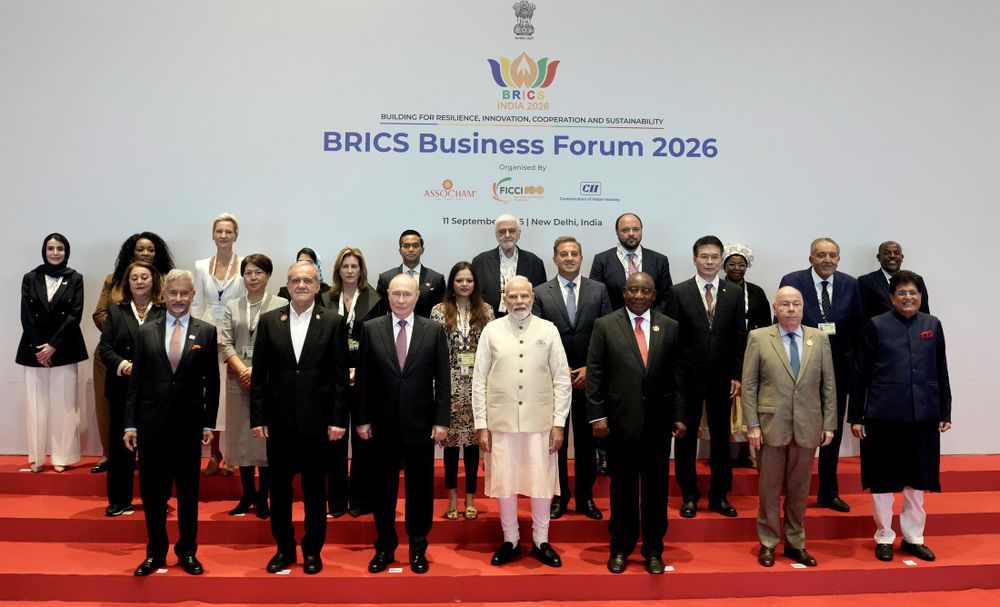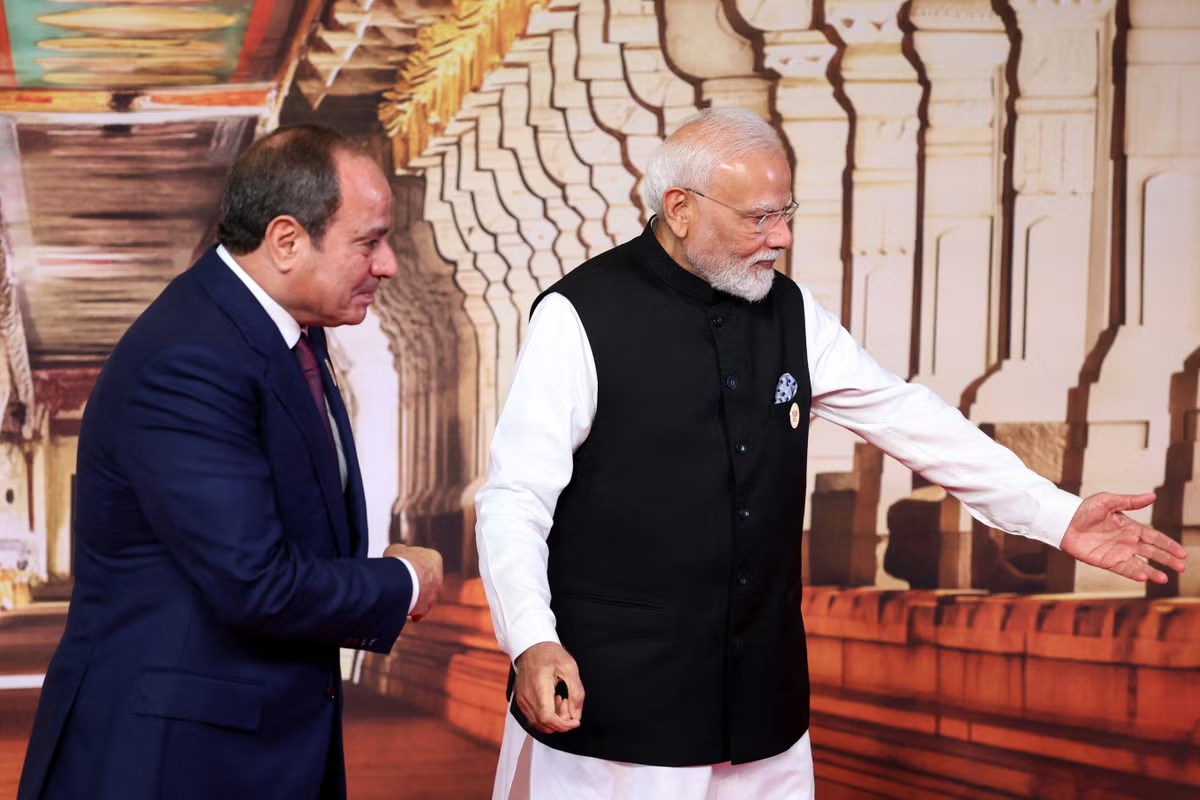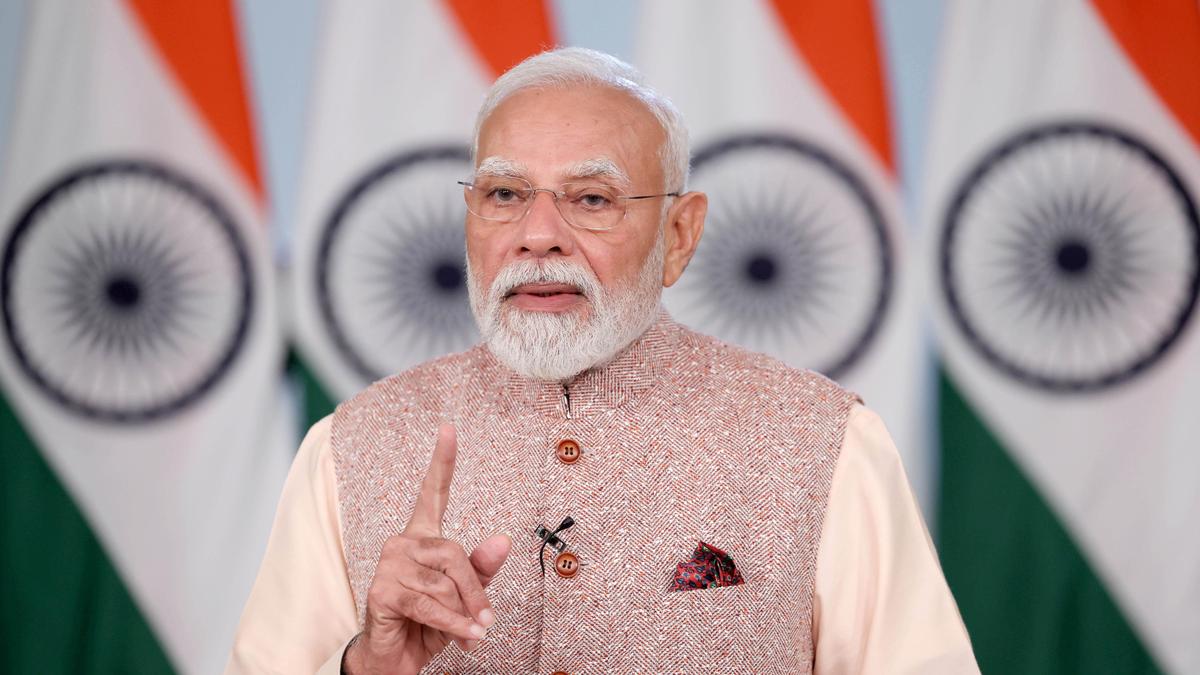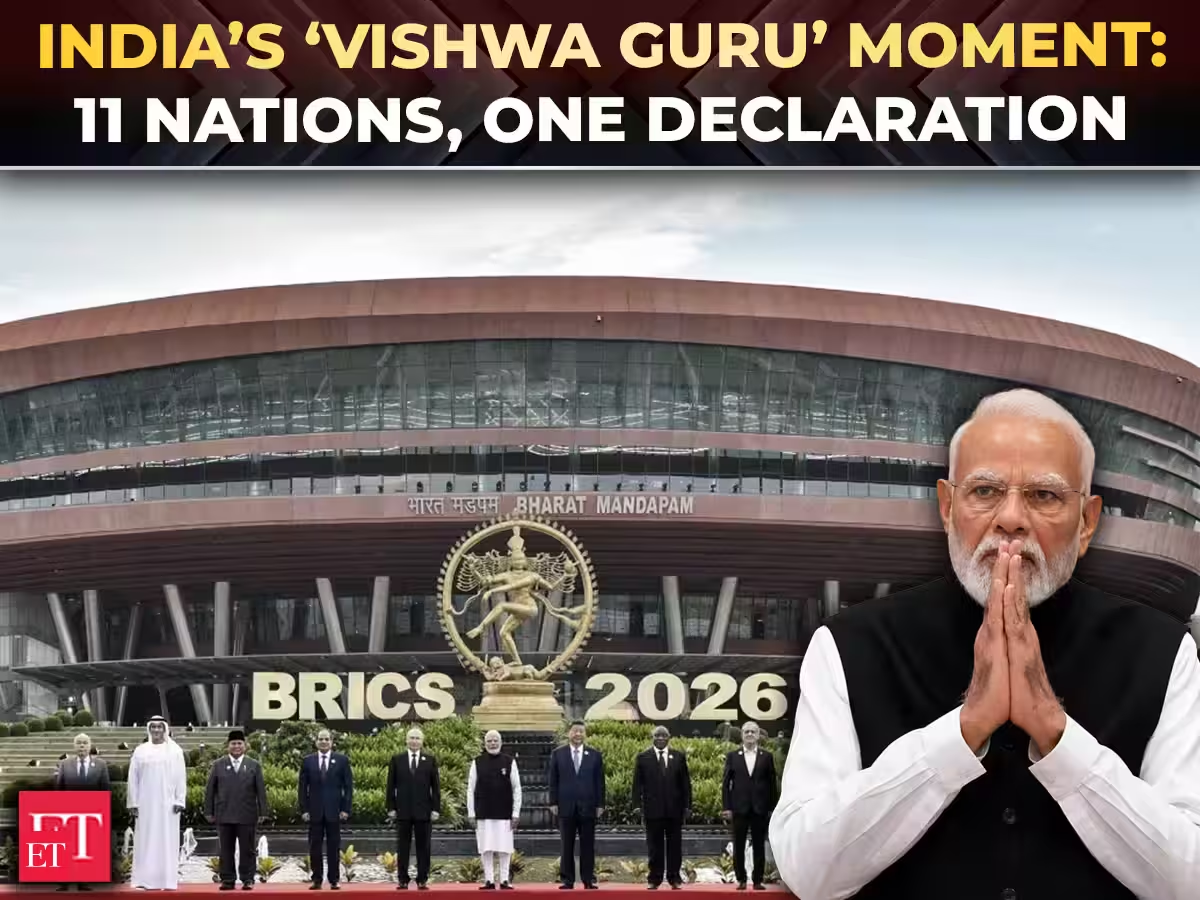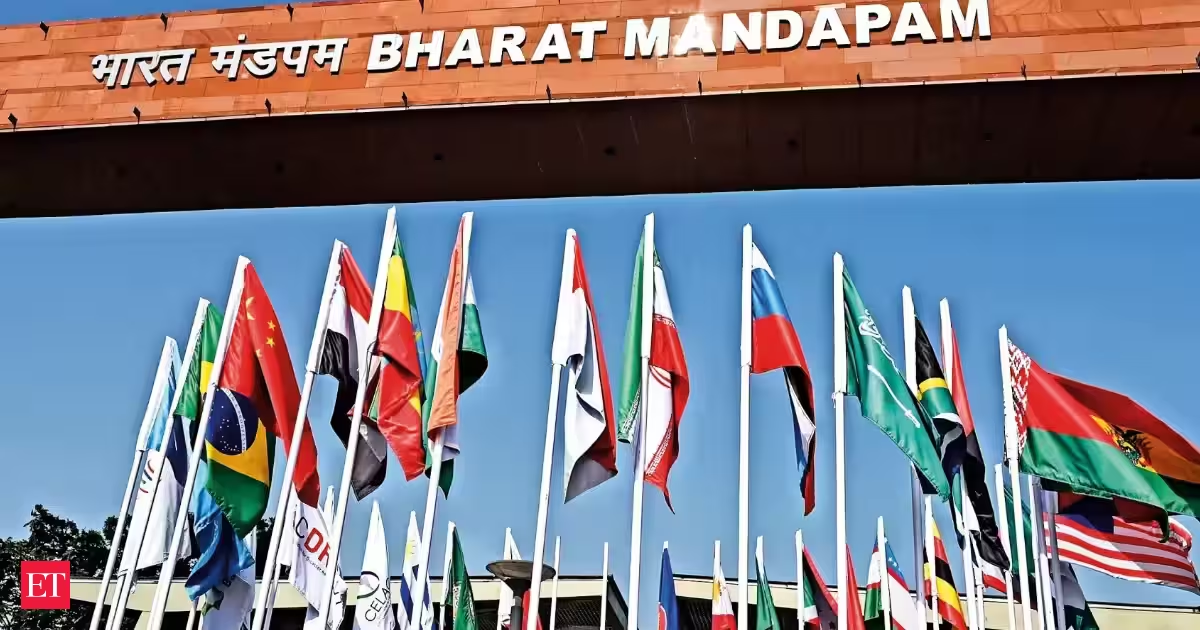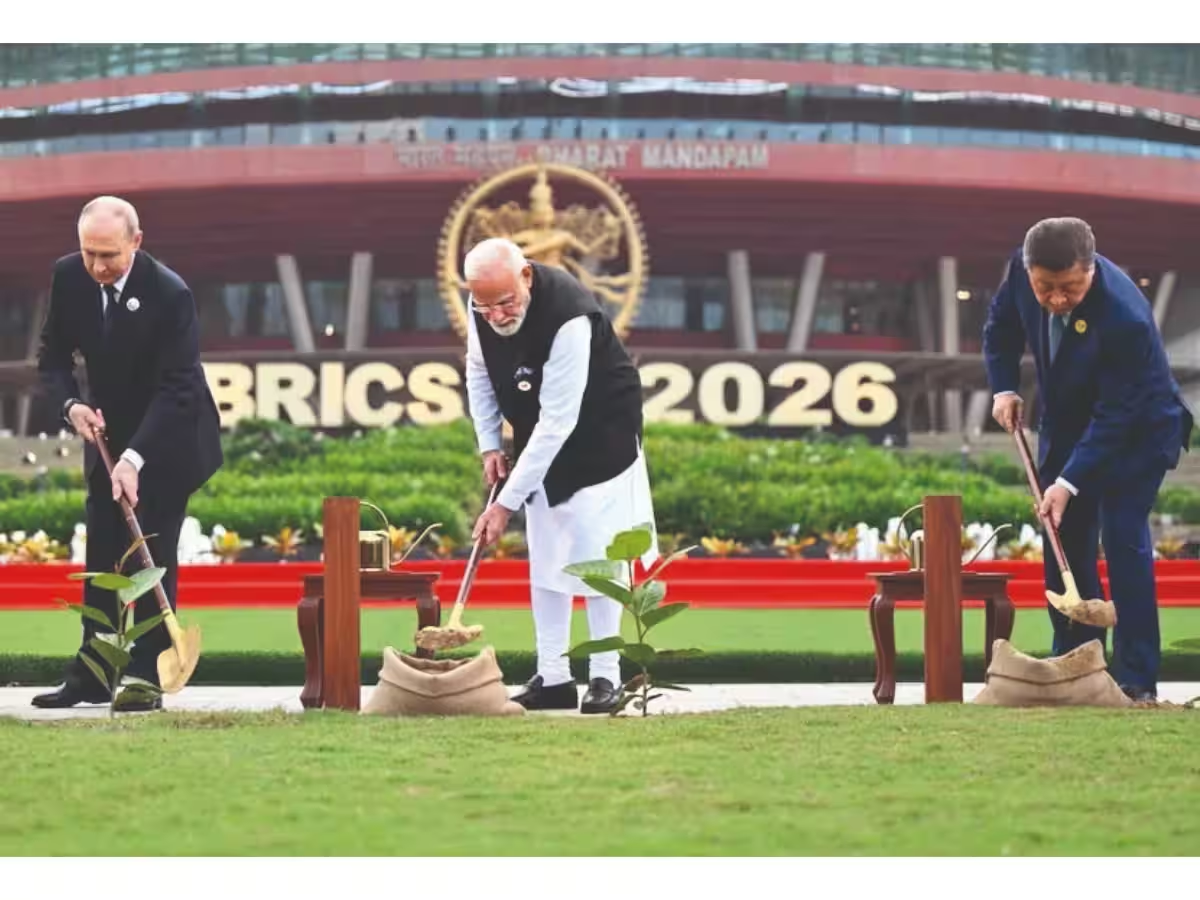
Hosting 20 countries - members and partners - at BRICS summit represented New Delhi's biggest diplomatic gathering since the 2023 G20 meeting. Expectedly, the event has generated much debate. The 45-page joint statement, too, has been read and interpreted widely. In the end, what does this amount to? Three points are worth noting.There is the familiar, but boring, question about the coherence of BRICS. This is not a trading bloc (Asean), or strategically aligned political collective (G7, at least in its good days). In some senses, it's a grouping constantly searching for a glue and making up for it by sharing economic, social and developmental, and occasionally technological experiences among a cohort of emerging economies.Read all our BRICS-related stories hereWhile this is true, it is also a fact that more and more countries -middle powers if you will, developing countries if you prefer - are intrigued by BRICS. They are unsure about the gains, but don't see a real loss. They are willing to test its utility. This year, at the current juncture, despite its internal diversity - India and China are in a complicated relationship; Iran, Saudi Arabia and the UAE might as well occupy separate universes - BRICS found something to agree on. It became a forum of protest against:A scattershot tariffs and sanctions regime that has shaken the world economy.An impetuous conflict in the Persian Gulf that has now gone out of control and threatens an unending energy and food shock.Crippling of a multilateral institutional system that was far from perfect but, still, was the only one we had.While individual grievances against Europeans and others might have been suggested, thrust of the BRICS message was not anti-West, or even aimed at the US. It was reflective of deep-seated frustration with specifically Trumpism. If anything, many of the countries would welcome a more active and involved America as a balancer to China, ironically even as China is in the room.Also Read: PM Modi thanks BRICS leaders for making summit productive, outcome-orientedIt is a paradox that the US president has given BRICS some sort of a connective tissue - in terms of what it disagrees with, even if not what it agrees upon. This is a response to the moment and to immediate challenges, including reintensifying of the Gulf conflict on summit eve. Absent this context, the optics and language from BRICS would have been different. As such permanence should not be assumed.Different leaders came for different reasons. The Chinese president arrived to revalidate his commitment to BRICS, but more than that as part of a series of diplomatic boxes he is ticking before his visit to the US later this month. There he will meet an embattled host, boxed in by foreign policy and electoral conundrums. To whatever extent, the New Delhi stop has added to Xi Jinping's cards.For Narendra Modi, the BRICS weekend became an occasion to demonstrate India's appeal. For all its problems, this country remains a pillar of stability, standing steady amid ferocious geopolitical and economic winds in a year from hell. This explains why invited countries wanted to come and stay engaged with India. (Bangladesh was the one exception, but that is another story.) That aside, in convening even Persian Gulf rival states and drafting a statement that while admittedly a compromise - which 45-page document isn't? - offered language that everyone could take home, Modi and Indian diplomacy did themselves proud.BRICS is an unusual organisation in that the sum of its parts is greater than the whole. Cumulative bilateral and, where available, sub-regional affinities surpass any overarching identity. Consider India's guest list - 10 co-members of BRICS and 10 partner countries. Each of them denotes a trade or similar nexus that makes conversation important. A BRICS summit provides a convenient occasion to touch base.This point is often underappreciated by those who insist New Delhi must walk away from BRICS and limit its solidarity to the West, where India's biggest markets, its tech and capital sources, and its upcoming trade agreements lie. The contention about the West is correct. Trade pacts with, say, the EU and Canada, Britain and the US, open up markets for Indian manufacture, whether engineering and electronics goods, refined petro products or food items.Nevertheless, crucial supply chains and commodities and ingredients linkages that such exports run through BRICS family countries. These range from crude oil (UAE, Saudi Arabia, Iran, Russia) to gas (Nigeria), metals (Bolivia), uranium (Kazakhstan), fertilisers (Egypt, Russia, Uzbekistan, Saudi Arabia), specialised coal (Indonesia, South Africa, Russia) and industrial equipment, electronics components and pharma APIs (China).From the semiconductor ecosystem (Malaysia) to aerospace (Brazil), there are other incoming and capacity-building opportunities. One is not even going into the expanding export basket (including defence exports) with many of these countries, admittedly with the exception of China.What is the big message? It is that in today's each-man-for-himself world order, India's well-being and economic security cannot be met by offering humbug arguments about how India is a western-aligned country, or indeed by suggesting India can at all ignore the West. Reality and realism are much too complex. They call for far too many intricate networks and tactical arrangements. Each of these adds up. Over the past two days, Modi and India provided an adroit demonstration.The author is partner, The Asia Group, and chair of its India practice(Disclaimer: The opinions expressed in this column are that of the writer. The facts and opinions expressed here do not reflect the views of www.economictimes.com.)
A weekend in New Delhi: At BRICS, Modi and India provided an adroit demonstration of tactically gathering a motley crew - The Economic Times
The recent BRICS summit hosted twenty nations, fostering debate and wide interpretation of its joint statement. This gathering served as a protest forum against global economic instability and institutional failures. India's diplomacy showcased its appeal as a stable pillar amidst geopolitical challenges. The summit highlighted crucial supply chains and commodity linkages within BRICS family countries. India's engagement demonstrates the need for intricate networks and tactical arrangements in global affairs.
909 words~4 min read