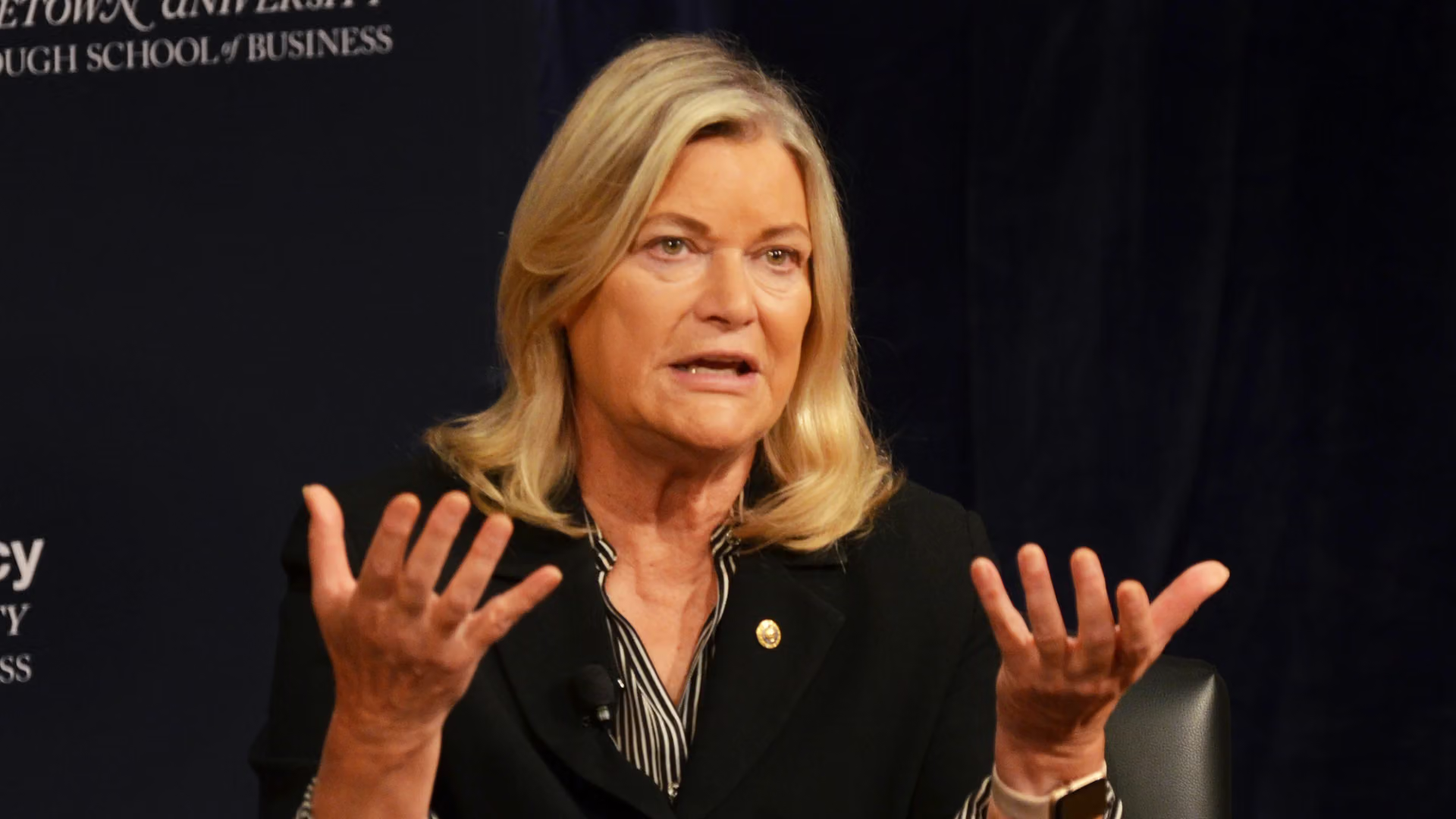
45 min ago5 min readU.S. Senator Cynthia Lummis is among lawmakers still trying to land the Clarity Act as a vote looms. (Jesse Hamilton/CoinDesk)SummaryDespite the crypto space fixated on a U.S. Senate vote planned for September 15, nobody knows for sure how that may go, or whether it'll happen at all.The Digital Asset Market Clarity Act has a brief window and very long odds to survive the slings and arrows of its political fortune before Congress closes shop to concentrate on its very consequential midterm elections.Depending on who you hear from, the Digital Asset Market Clarity Act has a real shot at a last-second deal that will catapult it into law. Or no shot at all.It might also reemerge inside another bill. Or be shunted aside for years in legislative purgatory.The crypto industry is awash in Clarity Act theory, but the truth seems to hew close to a legislative shrug at this stage. For a sector that has so much on the line, the frustration can be palpable in a process that seems to be neither entirely dead nor alive, akin to the thought exercise of Schrödinger's cat.Much of the conjecture hinges on the potential September 15 vote that was set up in the final moments before the Senate dispersed for its August break. But the Senate is not an entity easily nailed down to strict timetables, so the certainty of the vote meant to establish whether Clarity can beat the 60-vote threshold necessary for Senate passage is not necessarily in stone.To be sure, the fact that the bill has dragged into the final do-or-die weeks of the session is not a good sign. The more time that goes by, the lower the odds of a crypto law emerging. But the Senate is a land of last-minute negotiation, and the emergence of the latest draft last week was the Republican side's marker for where they stand in the talks, representing a number of compromise positions already negotiated with Democrats."We are optimistic heading into Tuesday’s vote and deeply grateful to the senators in both parties who have stayed at the table and worked through difficult issues in good faith," Blockchain Association CEO Summer Mersinger said in a statement to CoinDesk. "This is a defining moment for the next generation of financial innovation."However, the Democrats had previously insisted that an ethics approach that could significantly curtail President Donald Trump's crypto involvement is needed before they'll make up the current vote shortfall. They've argued that the restrictions that Trump already agreed to (and that would mark the first of their kind for a sitting president) would be easily sidestepped. A handful of Republicans have also expressed opposition to the bill, citing concerns about how a stablecoin yield provision might affect community banks.To vote, or not to voteIf there is a vote, it could go one of two ways: It fails, forcing Democrats to vote no while Republicans hope the opposition party would suffer campaign torment from the deep-pocketed industry. Or it could succeed, if the final compromises are landed or the Democrats agree to keep the process open for amendments. But a win in the first vote doesn't necessarily mean smooth sailing through the rest of the multi-stage process.Or, the vote simply doesn't happen on September 15, as some crypto insiders have suggested may occur. That could also be read in a couple of different ways: The industry's optimists who are still cheering the process might say that it was postponed because last-minute talks are still constructively moving forward and both sides want to ensure a bipartisan victory before they vote. Or, those who have resigned to Clarity's failure might say it was put off because the votes weren't even there to get a majority, as some Republicans continue to express worries about stablecoin yield programs that rival banks' interest-bearing deposit accounts.Bottom line: September 15 almost certainly won't be the dramatic moment that decides the fate of the Clarity Act.If the legislation happens to experience a rush of final negotiations and White House concessions that lend it more than 60 supporters, the first vote is still very much just a first vote. There could be an amendment process after that, and time to debate and complicate matters further.The so-called cloture process for a Senate bill can be a lengthy affair. The Senate will have a few work weeks in September to figure it out, or not. If Clarity isn't done by then, it's theoretically (if narrowly) possible it could keep getting negotiated.Lame duckThe next Senate recess will take the chamber past the November elections, entering the "lame duck" session in which the outgoing Congress has a few weeks to finish up business before the retirees or those voted out will leave at the start of 2027. At that point, Clarity's last chapter could be a more desperate gambit, such as lawmakers trying to attach it to a spending bill like the National Defense Authorization Act.But once the new Congress starts, all old business is shaken clear like an Etch A Sketch.Even if the Clarity Act gets its Senate win this month, that end-of-year period may already be in the cards, because the House of Representatives isn't currently scheduled to return until after the midterm elections, and the House would need to sign off on the Senate's work before it can get sent to Trump's desk for a signature.At this stage, proponents — including in the White House — are asking lawmakers from both parties to go ahead and clear this week's first vote, not as a final decision but as a way to keep the debate alive long enough to secure common ground.Treasury Secretary Scott Bessent called for them to "agree to the motion to proceed, and continue the legislative process."New draftThe version of the Clarity Act circulated on Thursday by Republican Senator Cynthia Lummis, one of the leading negotiators, was meant to represent a lot of earlier compromise and the further work done over the August recess, she said. Democrats haven't responded, and key negotiators such as Senator Ruben Gallego seem to be spending more of their focus on the risks of artificial intelligence.The White House didn't respond to CoinDesk's effort to get comment on the Republicans’ current draft.As Washington veterans were always well aware, the closer the process gets to the November 3 election, the less collegial and productive the lawmakers were likely to be. As of the start of October, the Senate is scheduled to leave town and forge headlong into battling for votes that could decide the chamber's majority (and crypto's future policy path).For its part, Coinbase, the leading U.S. crypto exchange that once helped derail the legislation over questions about allowing stablecoin holders to earn yield is currently signaling that it's fine if Clarity doesn't work out."If it passes, great, we've got legislation," Coinbase CEO Brian Armstrong said in a CNBC interview. "If it doesn't pass, it's also going to be a good outcome," he said, because the U.S. regulatory agencies will press forward with new regulations trying to fill the gap.12345678910
Crypto's Clarity Act is a Schrödinger's cat in life-death limbo as U.S. Senate returns
The crypto industry eagerly awaits a September 15 vote, though it might not happen. Or maybe it will. Or it might get delayed or reappear in some other form.
TL;DRAI
Digital Asset Market Clarity Act requires 60 votes for September 15 Senate passage; Democrats demand Trump restrictions, GOP opposes stablecoin yield terms. Outcome shapes compliance frameworks and blockchain investment decisions for crypto-focused tech companies.
1,174 words~5 min read