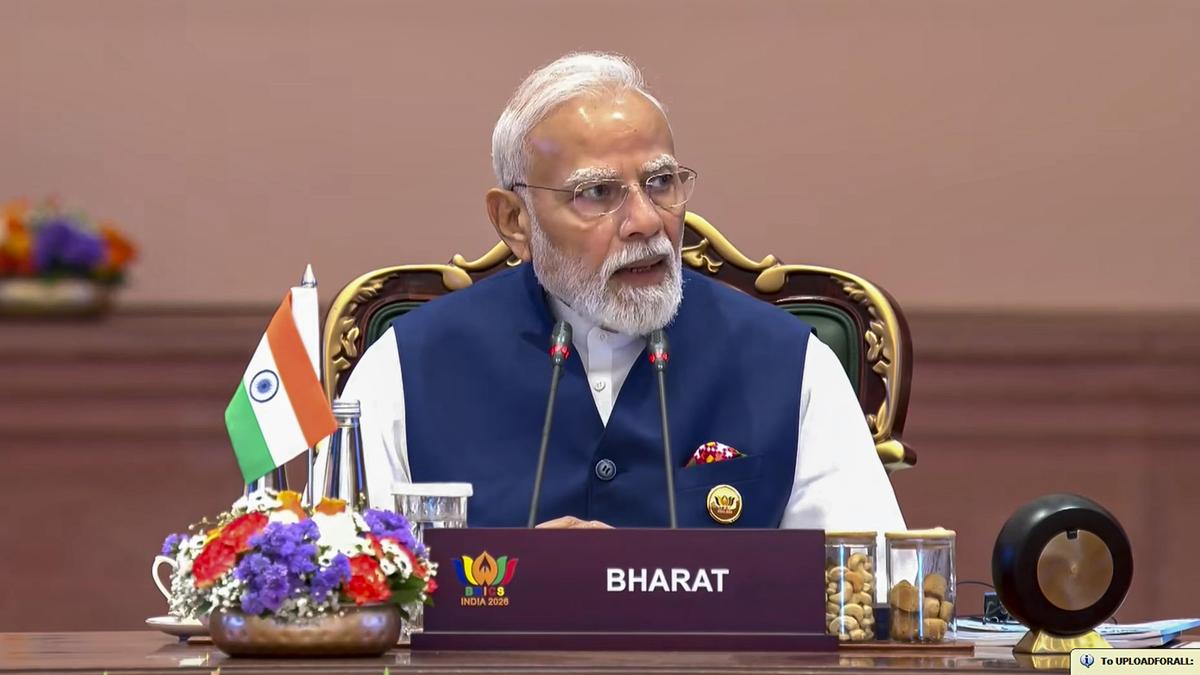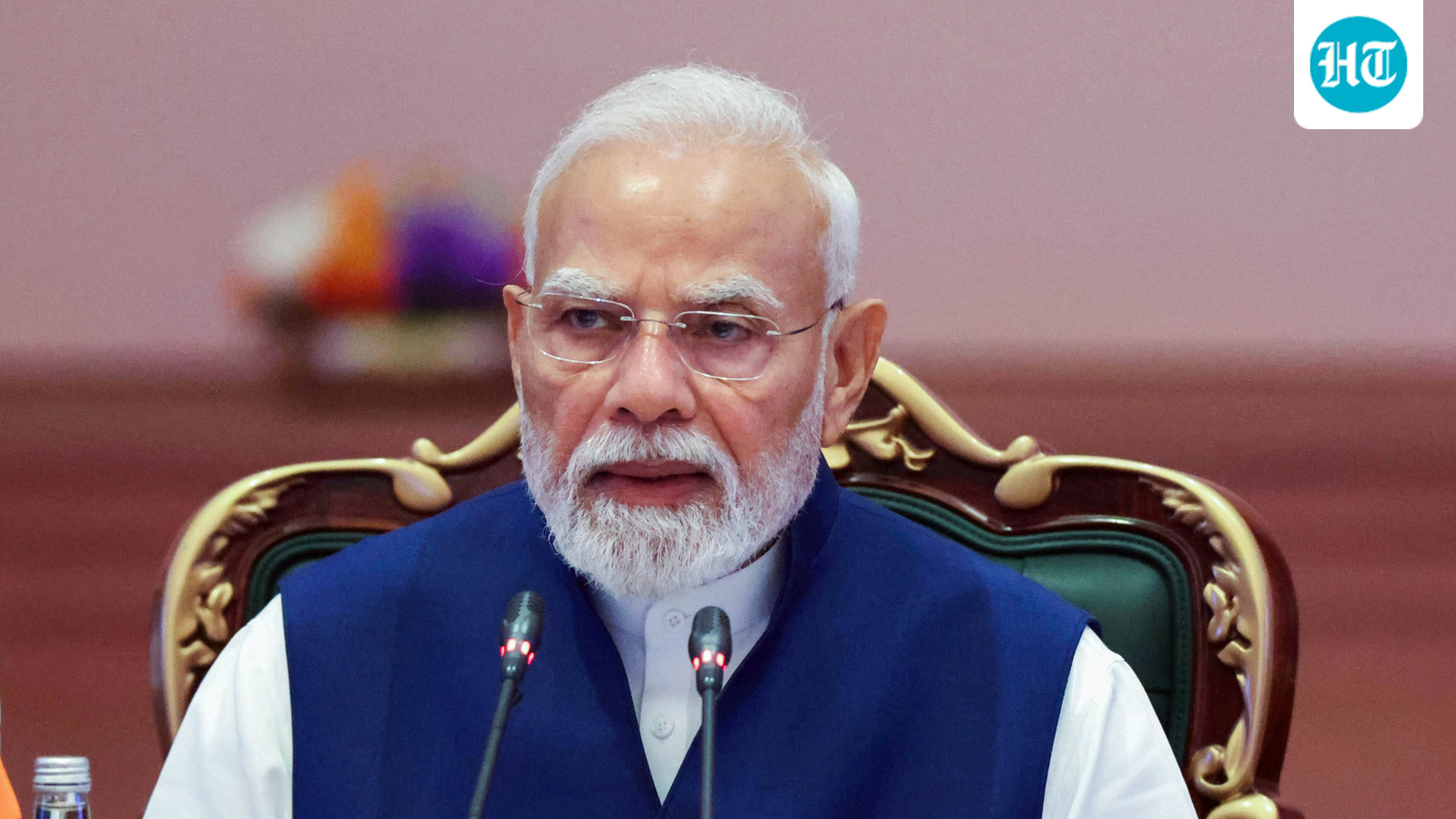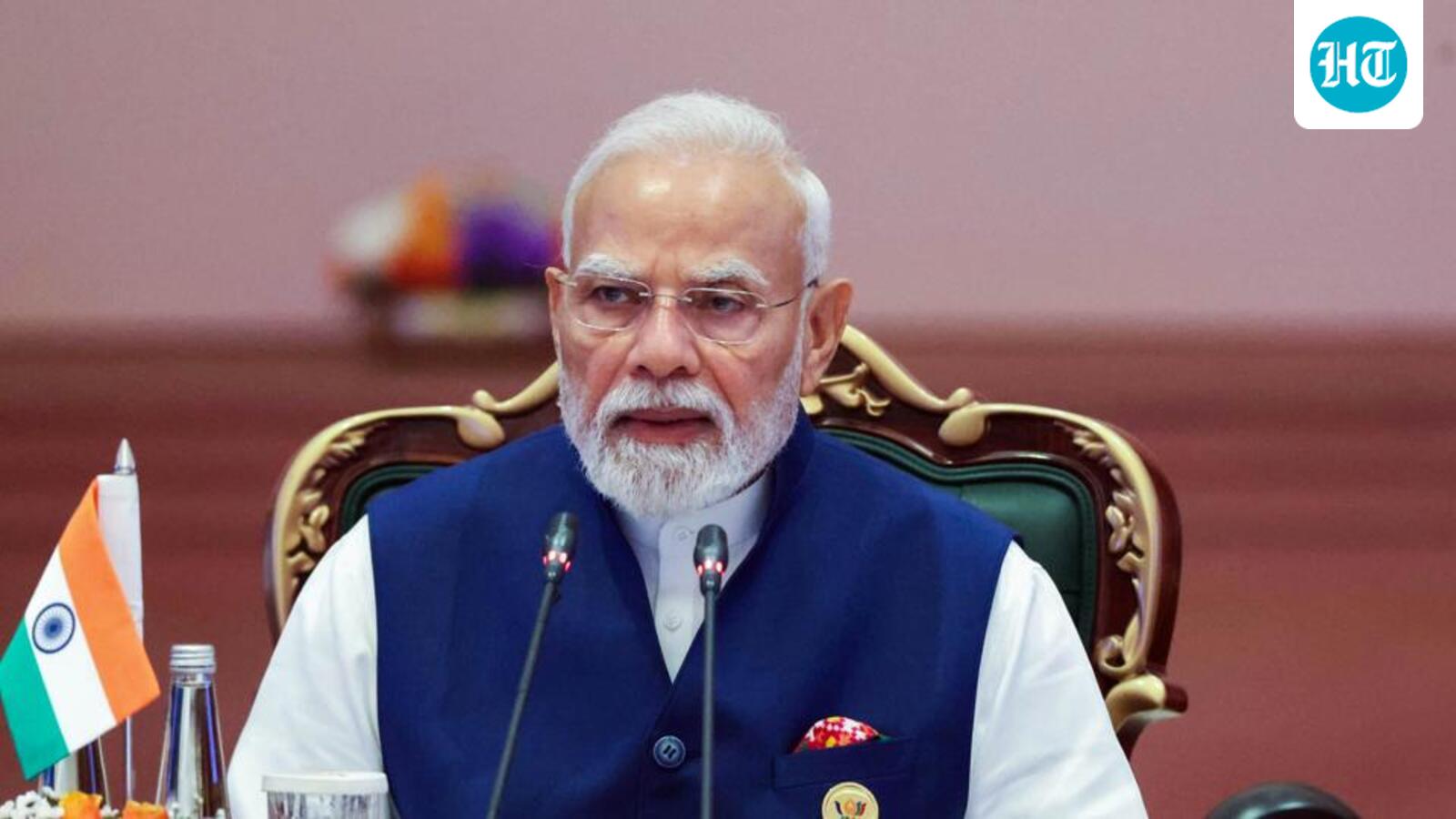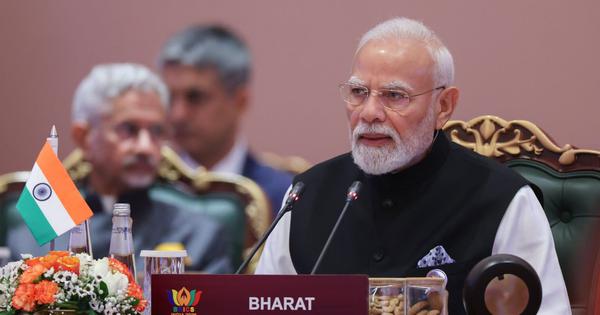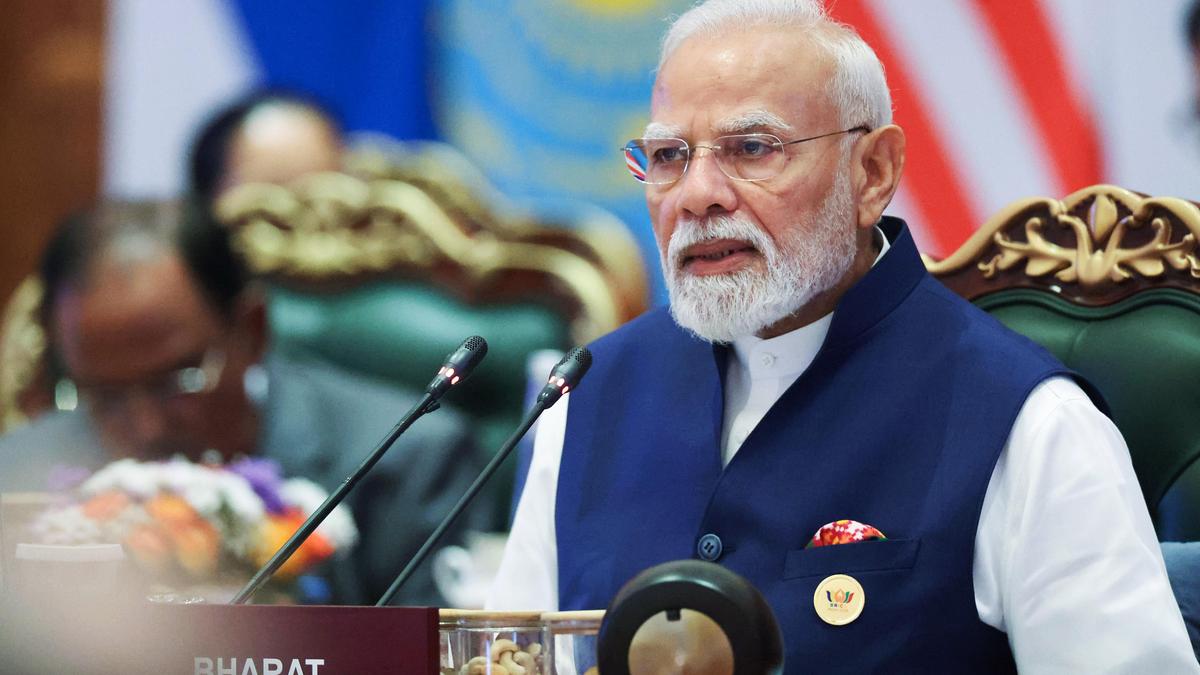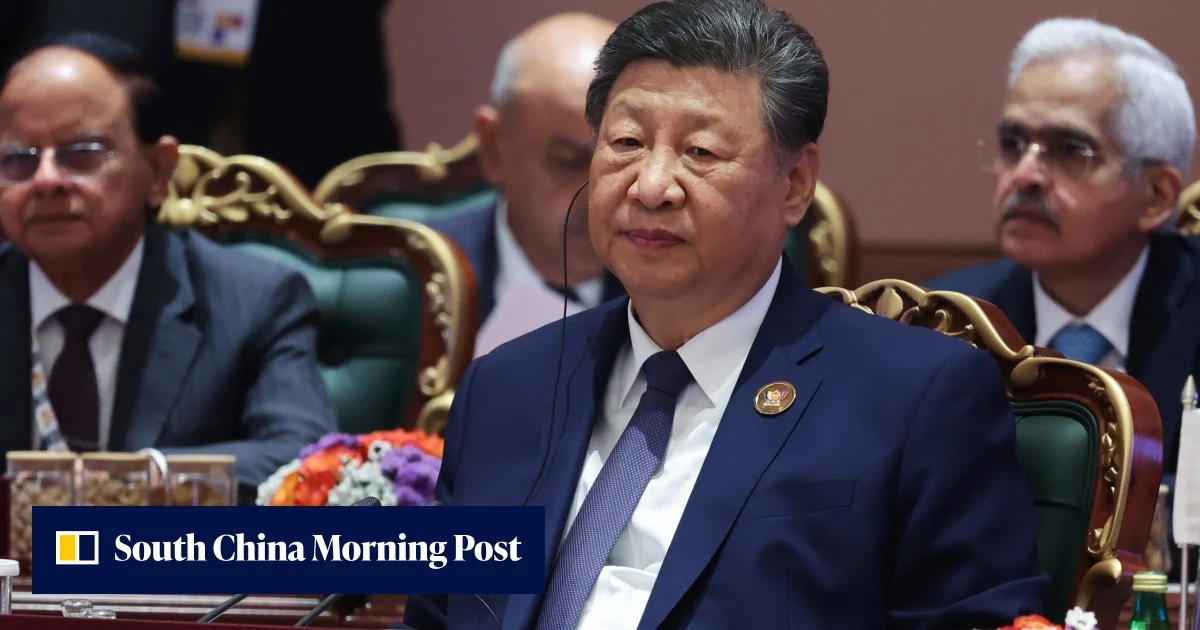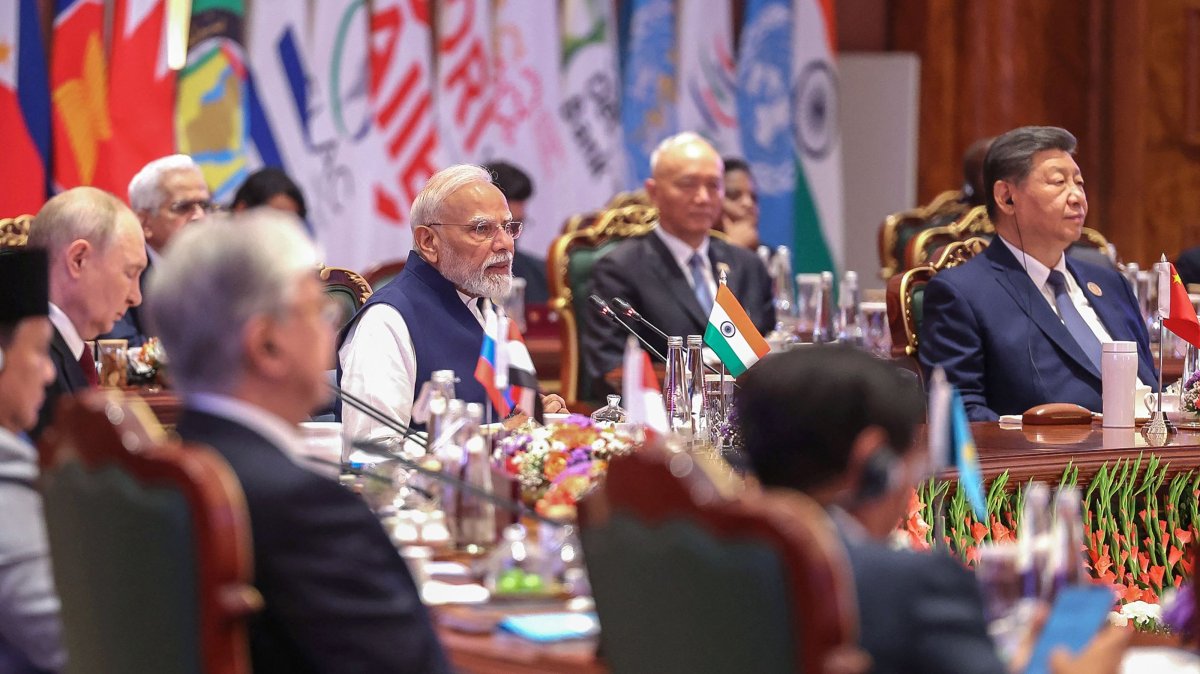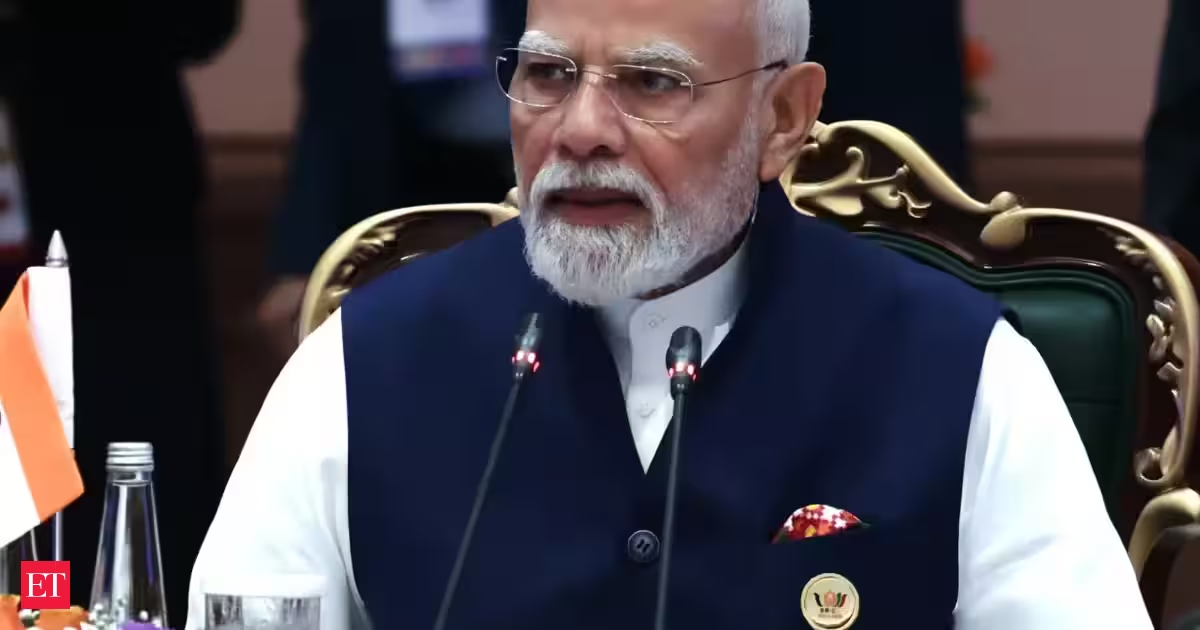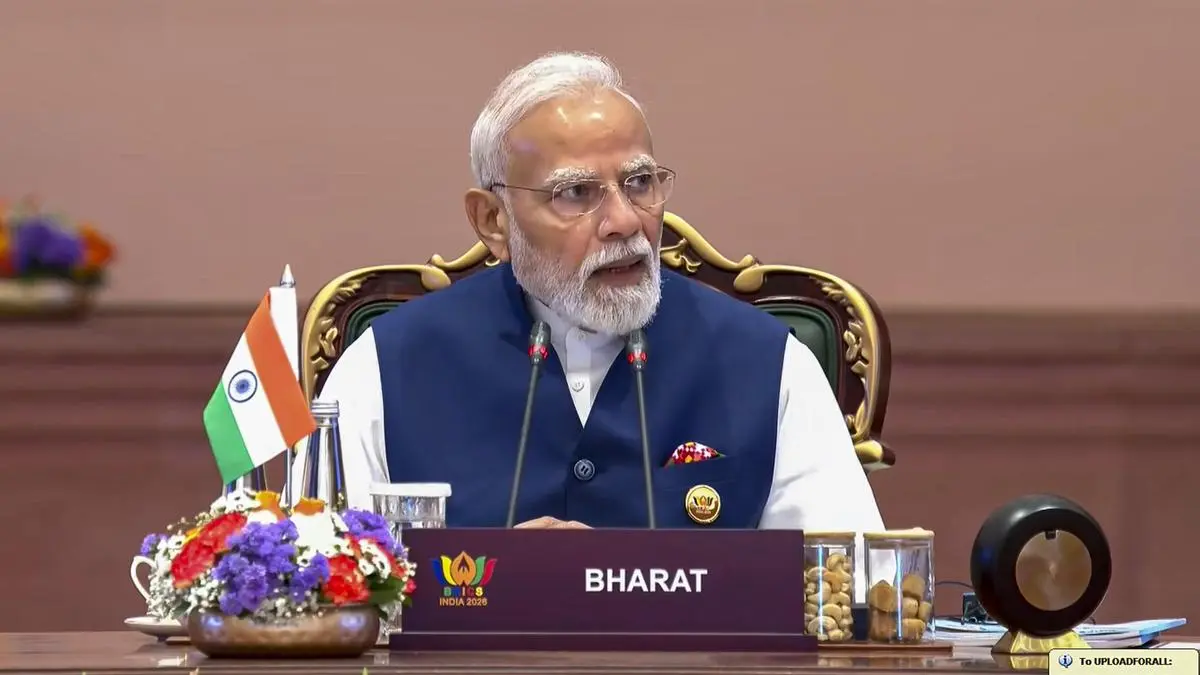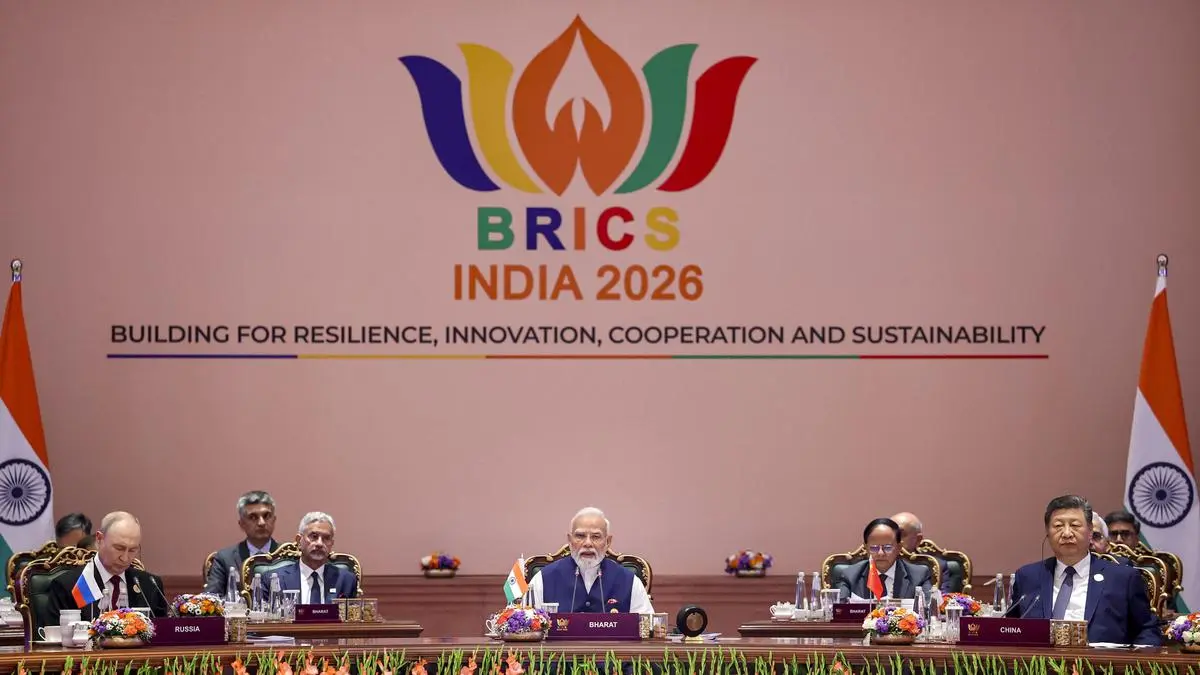
Prime Minister Narendra Modi with Russian President Vladimir Putin and Chinese President Xi Jinping, at Bharat Mandapam on the second day of the BRICS Summit 2026, in New Delhi.
| Photo Credit:
MEA via PTI Photo
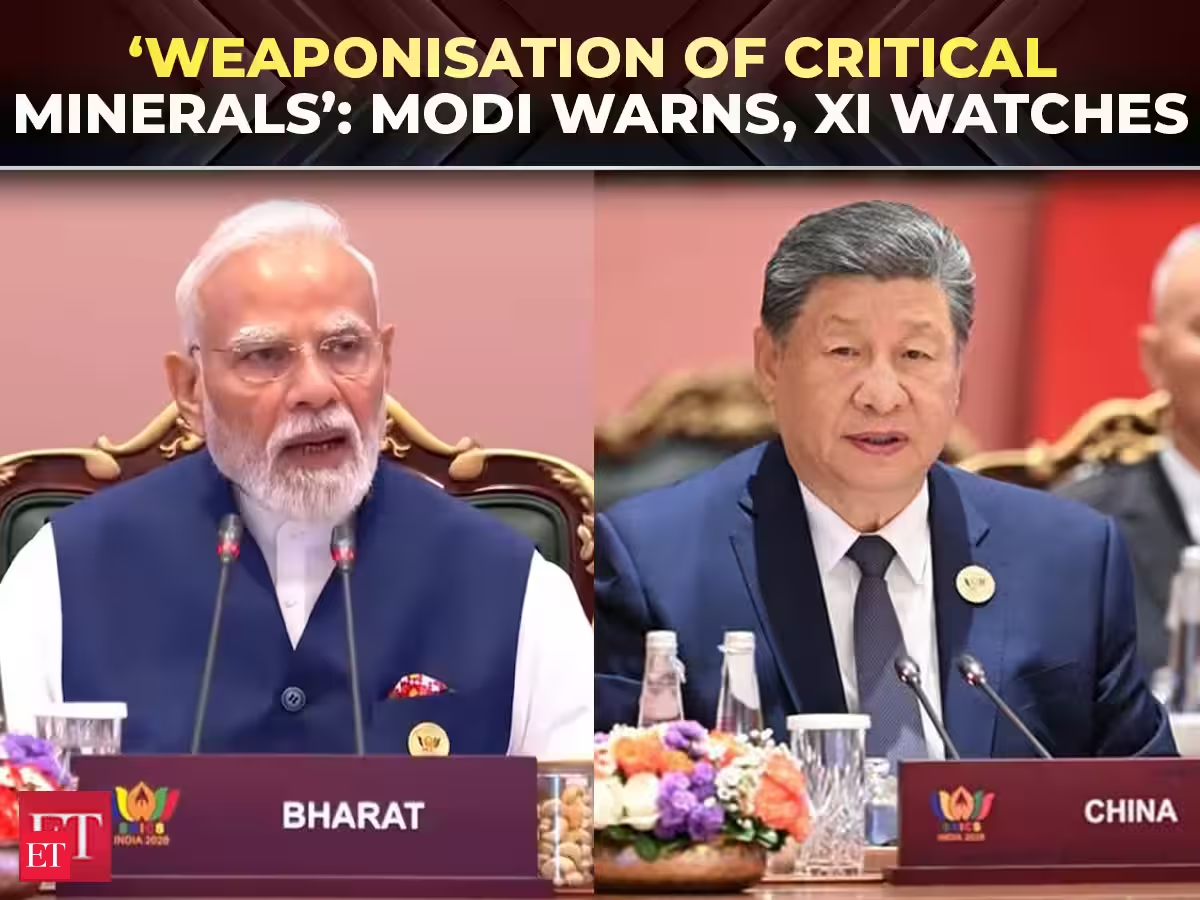
Prime Minister Narendra Modi on Sunday warned that the weaponisation of technology and critical minerals could become a hurdle to shared progress, and called on BRICS countries to ensure inclusive access to technology while pursuing growth that balances development with environmental sustainability.Modi said the grouping needed to strengthen resilience and ensure that the benefits of solutions developed within BRICS were also adaptable and accessible to countries of the Global South, addressing a session on “Resilience, Innovation, Cooperation and Sustainability: Shaping the Future for Inclusive Global Growth” at the BRICS Summit in New Delhi.“The weaponisation of technology and critical minerals can become a hurdle in our shared progress. Therefore, we have emphasised inclusivity in technology adoption,” Modi said.The remarks assume significance as China’s periodic export restrictions on critical minerals and related technologies have raised concerns over supply-chain vulnerabilities and economic coercion.Chinese President Xi Jinping’s bilateral meeting with Modi on the sidelines of the BRICS Summit on Saturday has increased expectations of solutions being reached on various concerns on trade and investments from both sides, including assured supplies of rare earth elements and magnets, but border tensions remain a challenge.Outlining new initiatives, Modi said consensus had been reached on a BRICS Integrated Early Warning System for infectious diseases, and that early warning data integration guidelines had been prepared for disaster management. “The BRICS Logistics Supply Chain Cooperation Framework will be helpful in making our supply chains more reliable and resilient,” he said.On innovation, Modi noted, the ‘BRICS Incubator Network' will connect startups and incubators with each other. “To promote innovative and scalable solutions, we have proposed the BRICS Startup Innovation Fund,” he saidThe BRICS Network on Digital Agriculture will create new possibilities for farmers, through which AI, geo-spatial technology, and digital public infrastructure will be connected with the real needs of farmers, the PM added.India had worked to widen BRICS’ base of participation, and efforts to enhance BRICS cooperation should not be limited only to governments. “Our entrepreneurs, farmers, researchers, women, youth, and ordinary citizens should also become its active participants,” Modi said. He cited BRICS Connect, the BRICS MSME Cooperation Portal, and the BRICS Urban Mobility Hub, saying the last of these “has been established to share best practices among our cities.”Focussing on sustainability, Modi said, for centuries, the country’s belief has been that development and environment are not alternatives to each other, but complementary. He noted that a BRICS Digital Center of Excellence had been created for smart grids and energy storage, and said Centers of Excellence for agro-ecology and regenerative agriculture “will connect traditional knowledge with modern science.”Trust of Global South countries in BRICS had grown over time. “Because their voices are heard in BRICS, their experiences are respected, and solutions are made not just for them, but together with them,” he said.The New Delhi Declaration arrived at by BRICS leaders at the ongoing summit on Saturday calls for “reliable, responsible, diversified, resilient, fair, sustainable and just supply chains” for critical minerals, with benefit-sharing, value addition and economic diversification in resource-rich countries. It also stresses countries’ sovereign rights over their mineral resources. BRICS members also backed cooperation to promote “safe, secure and affordable access to technology”, particularly to strengthen global value chains and support sustainable growth.More Like ThisPublished on September 13, 2026