The language is an indirect reference to the wave of tariffs imposed by the Trump administration.
| Photo Credit:
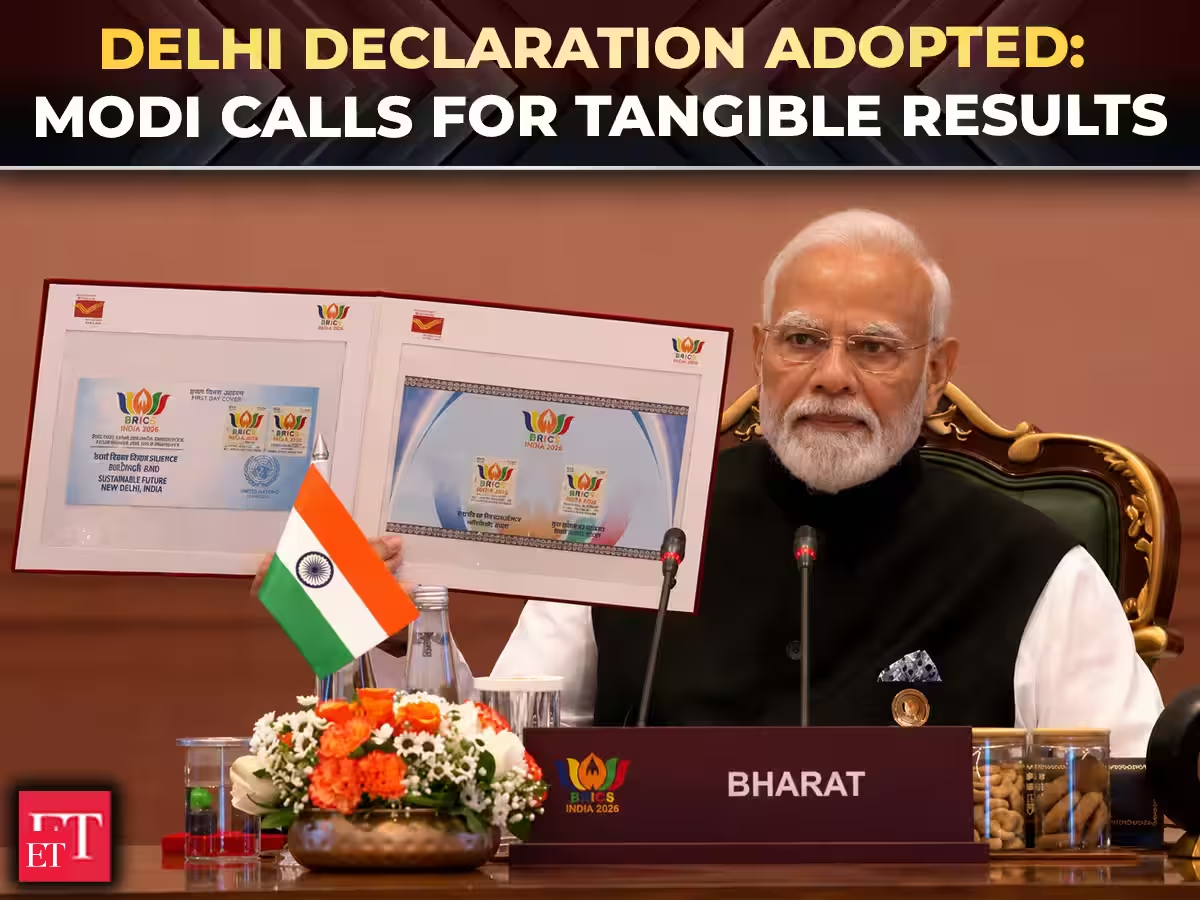
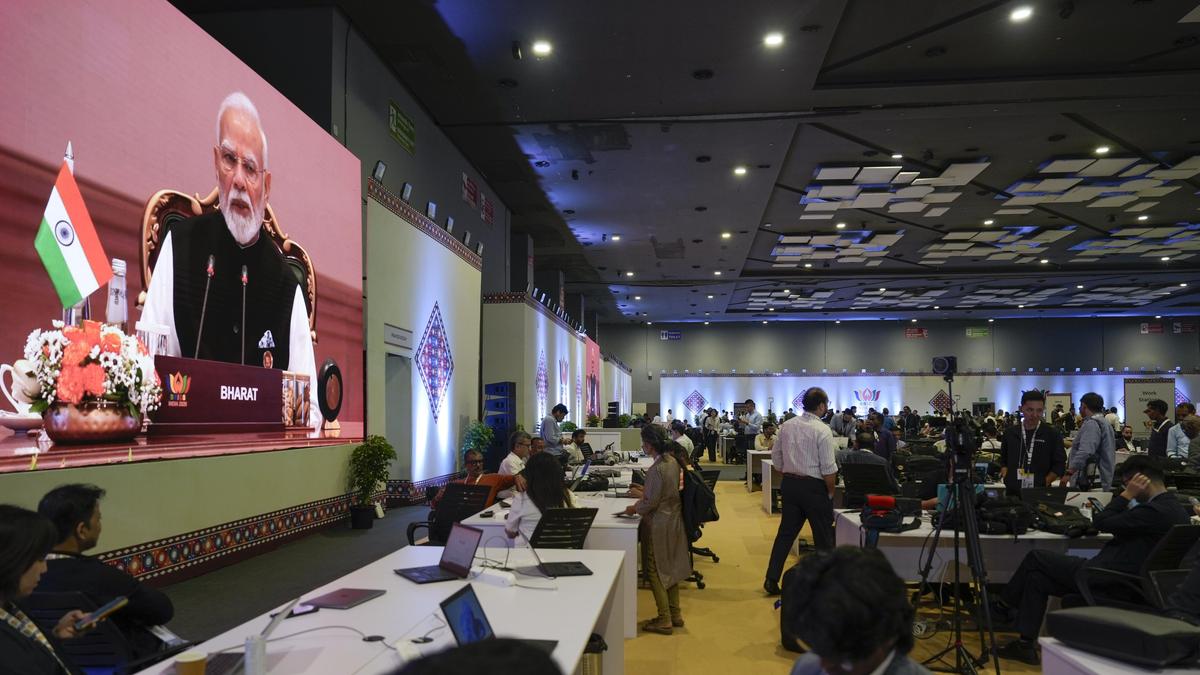
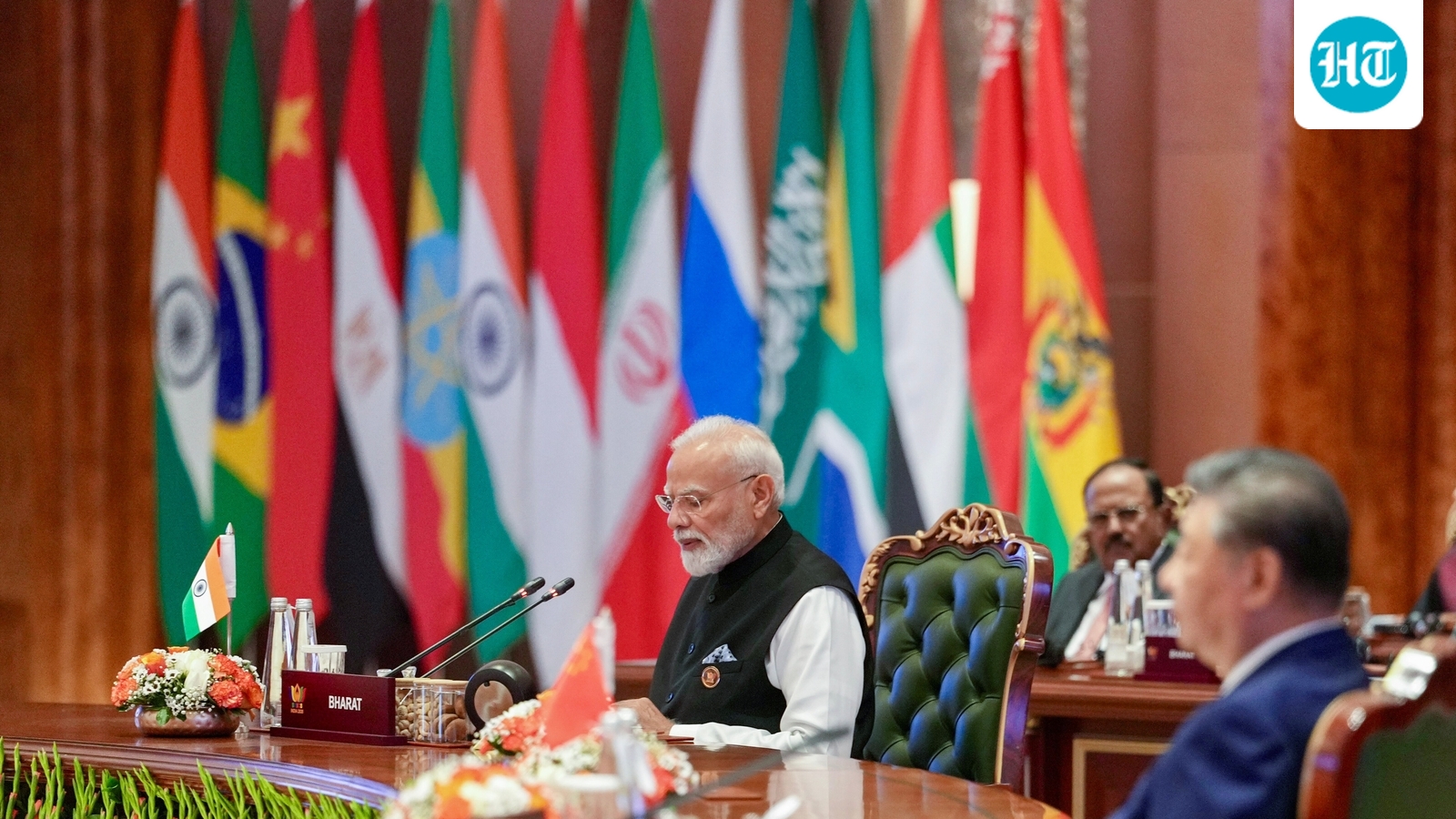
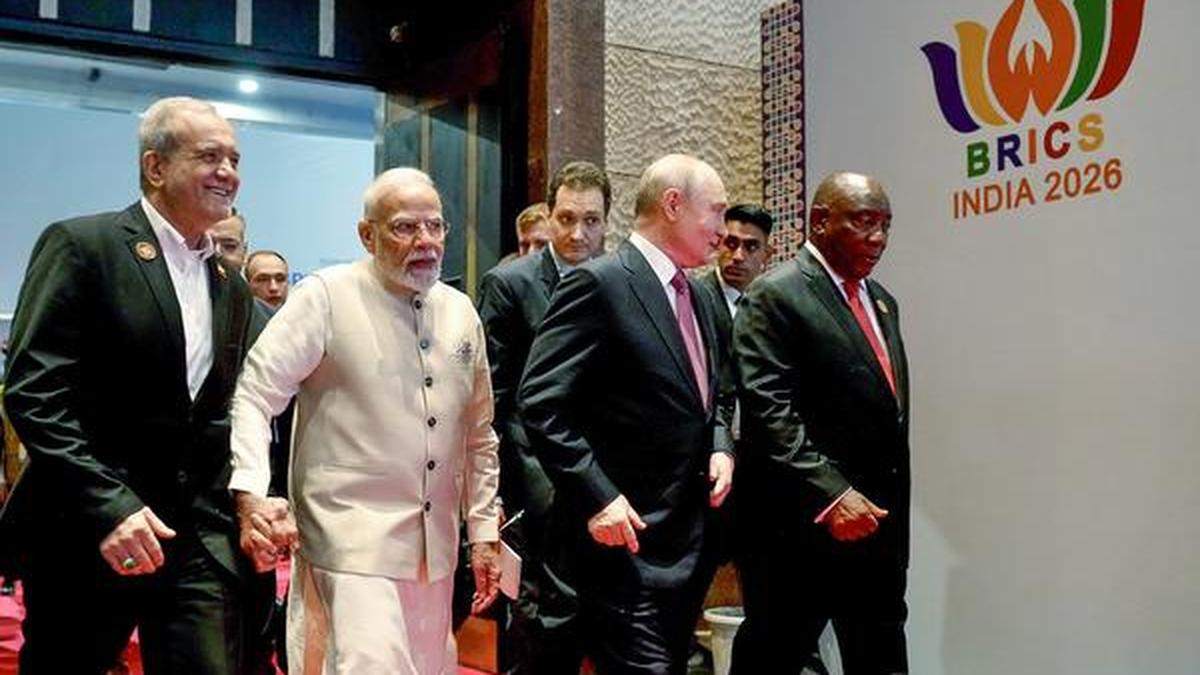
India pulled off a critical diplomatic balancing act at the BRICS Summit on Saturday, securing consensus among all 11 member nations on a joint declaration that voices serious concern over the rise of “unilateral tariff and non-tariff measures” running contrary to WTO rules, and resolves to strengthen the multilateral trade body.Negotiators worked through the night to bridge deep rifts between Iran and the UAE over the West Asia conflict to arrive at language acceptable to all, sources close to the development said.The resulting New Delhi Declaration condemns unilateral coercive measures as violations of international law, calls for protecting global trade, energy flows and supply chains, demands an end to the blockade against Cuba, and voices concern over the escalating tensions in West Asia — all while avoiding direct mention of specific countries.On trade, the declaration is unambiguous: “The proliferation of trade-restrictive actions that are inconsistent with WTO rules, whether in the form of indiscriminate rising of tariffs and non-tariff measures, or protectionism under the guise of environmental objectives, threatens to further reduce global trade, disrupt global supply chains, and introduce uncertainty into international economic and trade activities, potentially exacerbating existing economic disparities and negatively affecting prospects for global economic development.” The language is an indirect reference to the wave of tariffs imposed by the Trump administration over the past two years and Europe’s green trade restrictions, both of which have rattled several BRICS economies.BRICS leaders resolved to work together to make the WTO more responsive to trade disruptions and the needs of emerging markets and developing economies, and renewed their push for restoring a fully functioning, two-tier WTO dispute settlement mechanism — whose top appellate body has remained paralysed for years — calling for new Appellate Body members to be appointed “without further delay.”On coercive measures, the declaration notes that sanctions and secondary sanctions imposed unilaterally, inflict far-reaching harm on the human rights of ordinary citizens in targeted states — from healthcare and food security to development — while disproportionately hurting the poor. The bloc called for the elimination of such measures altogether, reaffirming its opposition to sanctions that lack UN Security Council authorisation.The declaration also takes up Cuba’s case as part of its broader critique of unilateral sanctions. BRICS leaders expressed deep concern over the tightening of unilateral blockade measures against Cuba, citing their adverse effects on the Cuban economy, energy supplies and the humanitarian situation on the island. The bloc reiterated the need to end the sanctions, in line with a UNGA resolution.On the West Asia crisis, negotiators crafted careful language expressing deep concern over the continued escalation of tensions in the region, urging all sides to exercise maximum restraint. “We stress the need to work together to maintain smooth flow of global trade, supply chains and energy, in accordance with applicable international law,” the declaration said, explicitly tying the security crisis to trade — alluding to the disruption the Iran-Israel-US conflict has caused to Gulf shipping and oil markets.BRICS leaders also expressed deep concern over the ongoing violence in Gaza despite the October 2025 ceasefire and called for unhindered humanitarian access and an immediate halt to any policies aimed at the forced displacement of Palestinians. The bloc urged implementation of relevant UNSC and UNGA resolutions, cautioning against arrangements that could legitimise or prolong the occupation and prejudice the inalienable rights of the Palestinian people.Published on September 12, 2026