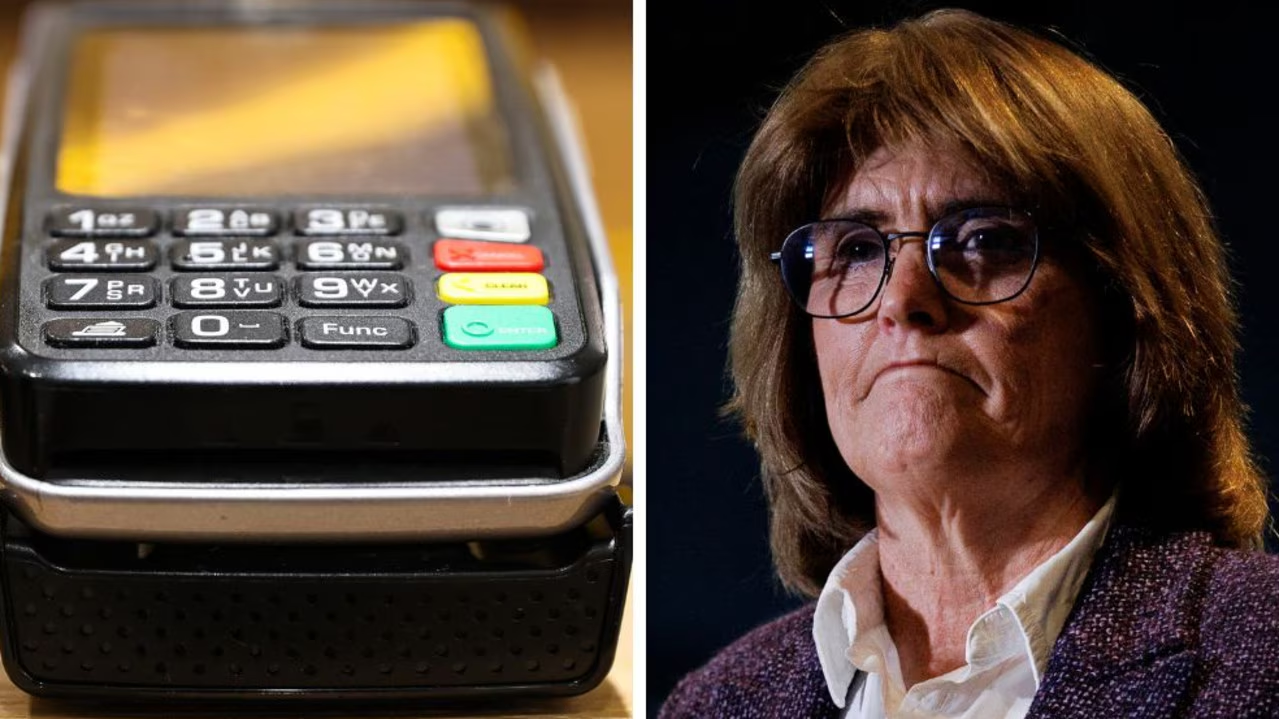
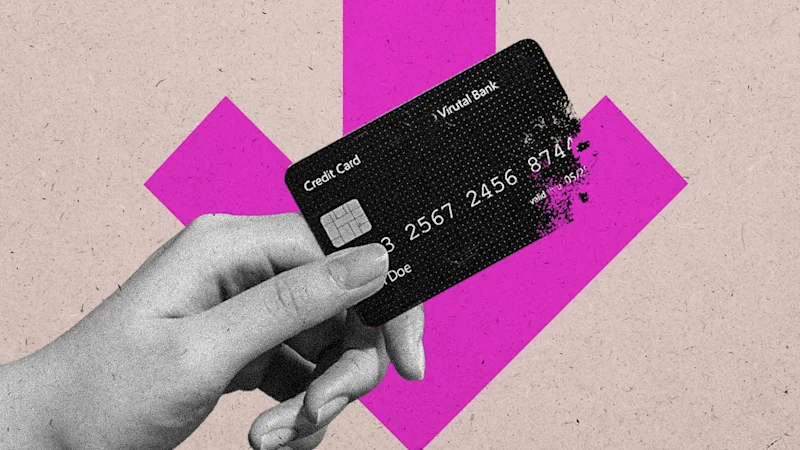
When the Reserve Bank of Australia announced an end to credit and debit card surcharges, it was billed as a huge win for consumers.Estimates from the central bank stated customers would save about $1.6 billion each year in pesky surcharges tacked onto the end of purchases.But a senior hospitality figure says that claim was “one of the biggest jokes” in the industry, with venues likely to simply raise menu prices even higher than the current card fees.Want more finance news? Download our new app and never miss a headlineMORE: Bank suddenly kills pay system, millions hitWes Lambert, chief of the Australian Restaurant & Cafe Association, said both consumers and businesses were not ready for the impact of the reforms coming on October 1.Mr Lambert told news.com.au there were just over 19 days to go until “all hell breaks loose”.“We believe it will be one of the largest changes in payments and the financial services industry in the history of Australia,” he said.“And it is surprising that a large percentage of businesses, especially small businesses around Australia, either don’t know that this is coming or are unprepared for its arrival.”In March, RBA Governor Michele Bullock said surcharging was no longer working as intended, and that the change would “make card payments simpler for consumers”.“Consumers and businesses find the rules complex and confusing, surcharges are often not well disclosed, and most consumers want surcharging to stop,” she said.Surcharges introduced in the early 2000s allowed businesses and governments to pass on costs for merchant fees to card payment providers, which were added on to the end of a transaction as a percentage.It also represented a signal by the RBA encouraging wider use of credit and debit cards at a time when non-cash payments made up only a small number of transactions.But as of 2026, cards are being used for 80 to 85 per cent of all payments, and there has been increasing scrutiny on the prevalence of surcharges.Australian Banking Association data shows $40.6 million was spent on credit cards and $59.5 billion on debit cards in July alone.Mr Lambert said about 80 per cent of hospitality businesses used card surcharging, meaning many were about receive merchant fee bills for the first time.He said the $1.6 billion which used to cover merchant fees would inevitably be added on to the price of coffees and other goods, and the way Australian currency worked meant it would likely be even more.“That’s one of the biggest jokes in the hospitality industry, because ultimately the consumers are likely going to pay more,” he told news.com.au.“Because now consumers that pay with cash will now pay an increased price. “In addition, because typical surcharges were less than coin totals – so on a $5 coffee, it was 8 or 9 cents – the menu can’t say $5.08 or $5.09. “The menu is going to say $5.10, $5.20. The amount that the businesses have to charge will inevitably be much more than what the debit and credit card surcharge was.”The changes do not impact other types of surcharges, like public holiday and weekend ratesA ‘double-edged sword’Finder’s personal finance specialist Taylor Blackburn said a recent survey found 43 per cent of Australians were unaware of the impending changes next month.He said the reform could be a “double-edged sword” for consumers who will no longer be shocked by a 1 or 2 per cent surcharge on card purchases – but will pay for it in other ways.“You don’t have to worry about the price you see in the store being different to the price that you end up paying. “But what is coming off the back of that is, the credit card providers aren’t necessarily going to be offering the same level of rewards.”Mr Blackburn explained that the interchange fees banks charge businesses were used to subsidise things like credit card points.The RBA has announced interchange fees would be reduced from 0.8 per cent to 0.3 per cent in order to save businesses on costs. But that would eat into rewards schemes like frequent flyers. Finder’s survey found 30 per cent of people would cancel their cards if providers charged higher fees, saying a “reckoning” could be ahead.Then he also expected retailers “may need to bake in the price of doing business with their credit card providers into the product”. “So that $10 at the pub might just be $11 instead of $10.16,” Mr Blackburn said.“I don’t think you can you can call it a straight savings, but … whether or not we’re going to see prices increase fractionally or more than the surcharge remains to be seen. “But I think it’s a win for clarity.”Card fees ‘outdated’Morgan Campbell, head of policy for consumer group Choice, said he supported the end of surcharges saying it was a “really outdated” practice.“It was brought in the early 2000 at a time when card payments were quite a bit more expensive for businesses to accept than cash was … the likelihood is now that the opposite is true but they’re charging the surcharge on cards,” he said.“It doesn’t make sense.”Mr Campbell pointed to the RBA estimate that businesses would save $200 million per year in reduced fees on the back end, such as lower interchange rates.Because of that, he would be surprised if businesses significantly jacked up prices.“I think the RBA have done a lot of work to try and bring those costs down,” Mr Campbell said. “So I would be surprised if we see a really big impost or really big increasing costs as a result of this. “It may be that there are some businesses who add on what they would have charged as a surcharge onto the upfront price. “I think consumers are always better off with the final price, final price quoted upfront than getting a surprise at the till.”An ‘inflationary’ moveRaj Kuckreja, a chartered accountant and co-founder of cash flow start up ezyCollect, believes the move could have an “inflationary” impact as retailers pass on costs to customers.Mr Kuckreja said it could also take away the choice for consumers who still carried cash in order to avoid paying extra fees.“The people who have been passing the costs on have to work out, ‘What do we do now?’” he said.“And those businesses will have to think about an increase in prices, which I guess a lot of people will do (at) a restaurant or cafe directly impacting consumers.”He said ezyCollect had built systems allowing clients to pass on costs for online purchases, but some were now looking at dealing with $100,000 per year that was previously covered by surcharges.Mr Kuckreja expected some small businesses would start to offer discounts for cash use in order to keep prices lower and avoid back end costs.The RBA has acknowledged businesses would “still incur costs when accepting card payments after surcharging is removed”. “Those costs can be reflected in a business’s overall pricing, rather than charged as a separate surcharge,” its website states.“This is in line with consumer preferences for sticker prices to be all-inclusive.”Mr Campbell said ending card surcharges was a “sensible change to reflect the economies that we all live in now”.“I think that $1.6 billion figure just reflects what we all feel that these, these surcharges really add up,” he said.“They’re small at the time, but over the course of a week, a month, a year, it really starts to add up and take a lot out of consumer’s pockets. “So we were really glad to see the Reserve Bank make this change.”Mr Lambert, however, believed there would be no winners when it comes to footing the new bills Australians will be pay.“And they’re already they’re already paying for it. They’re paying for in increased interest rates on the credit cards. They’re paying for it with a reduction in the points that they earn … ultimately, this is not going to help anyone,” he said.“And on the back end, ultimately, we think that this decision will be worse off for everyone.”Read related topics:Reserve Bank
$1.6b claim the ‘biggest joke’ in hospo
When the Reserve Bank of Australia announced an end to credit and debit card surcharges, it was billed as a huge win for consumers.
1,331 words~6 min read