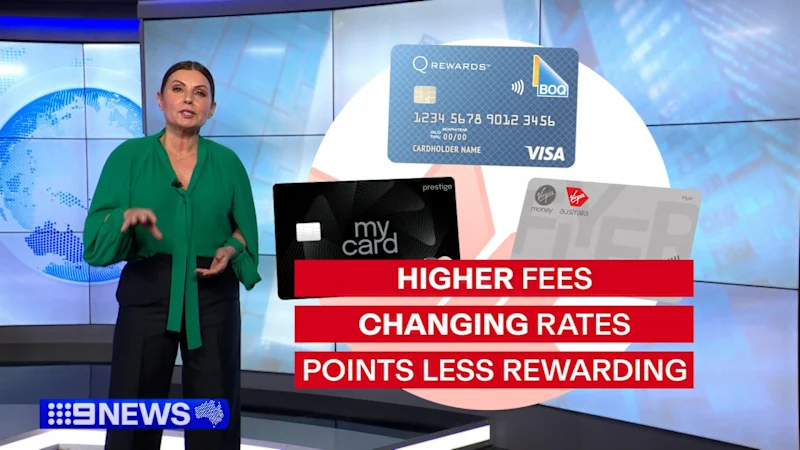
You may have heard the Reserve Bank is banning card surcharges from October 1 – but there’s more happening behind the scenes than you may realise.The RBA will also trim the interchange fee cap on consumer credit cards from 0.8 per cent to 0.3 per cent, which is already having a very real impact on the points, perks and bonuses available to Australians.Interchange fees are one of the ways banks fund credit card rewards.If banks earn less every time you tap your card, they have less money available to fund points, sign-up bonuses, lounge passes, insurance and other perks. We’re already seeing the impacts.The latest Point Hacks survey of 4534 engaged Australian cardholders found 55.4 per cent were willing to ditch their cards and shop around if their earn rates were cut.Since then, all the big four banks have announced a raft of changes, which have inevitably included a reduction in benefits on many reward cards.So, what should Australians actually do?Firstly, don’t panic! The RBA isn’t banning rewards credit cards.Banks can still offer points, and for someone who pays their balance in full every month, a rewards card can remain a useful way to get something back from spending they’re already doing.Yes, it’s true – we’re seeing more cards with spending caps, lower ongoing earn rates, smaller sign-up bonuses and higher annual fees. Some benefits, such as travel insurance and lounge passes, are also being removed.But it’s not October 1 yet.For points collectors, right now is a ripe window of opportunity.If you’ve been considering a new card, there are still some strong offers in the market, which may remain active for applications up to September 30.The golden rule on credit card pointsFor all the changes coming to Australia’s credit card market, there’s one rule that I humbly insist you still follow.Please don’t spend out of your means and pay interest while trying to earn points. Don’t apply for a card just out of FOMO.A credit card is only worthwhile if it fits your finances and spending habits, and there’s little value in collecting 100,000 points if you pay thousands of dollars in interest to get them. The only amount you should be ‘out of pocket’ by is the card’s annual fee.The Point Hacks survey revealed that 80.3 per cent of respondents were happy to pay anannual fee of $201 or more for the right card.My philosophy, as boring as it might be, is to keep it simple. Spend what you would normally spend, using a card that suits your circumstances.Take advantage of big offers when they’re available but pay the balance off in full every month.Time for some credit card homework1. Check whether you’re eligible for current sign-up bonuses. Most banks have a 12–24-month exclusion period on sign-up offers, if you’re a current or previous cardholder.2. Look at how long you need to hold a card before receiving its bonus, and what your minimum spend is.Unfortunately, one of my friends recently found out they forgot to make the minimum spend in time. It happens, but no points for them.Some bonuses are also split over two years, so you need to pay the annual fee twice to get the full advertised amount.3. Keep an eye on spending caps and other similar fine print. A card might advertise an attractive earn rate, but that card becomes much less valuable if you regularly go over the monthly spending cap. For example, instead of earning 0.75 points per dollar, your card might only offer 0.25 points per dollar after you go over the cap.4. Also check whether you’ll actually use the travel insurance, lounge passes, dining credits and other perks. Some higher-tier cards often include travel credits or ‘free flights’ that could greatly offset the annual fee, but it won’t be worth anything if you can’t find the time to use them.5. Finally, pay particular attention to offers that you like the look of. Some banks have already flagged that current offers will disappear before the RBA changes take effect, while others don’t have a fixed expiry date and may change without warning.Earning points is just half of the equationEarning points is only half the equation. You also need to know how you’re going touse them.There’s little point accumulating hundreds of thousands of points if you don’t have a plan to redeem them.For many frequent flyers, the sweet spot is using points for flights, particularly in premium cabins.One of my favourite Business Class rewards out of Perth is flying to Asia in Singapore Airlines’ business class for only 68,975 Velocity Points per person (converting it to 44,500 KrisFlyer miles), plus around $120 in fees and taxes.But it doesn’t just have to be in business class. Think about what you’d actually be willing to pay for the trip, how many points you’re giving up and what the fees and taxes are on top.The best redemptions are often those that save you money on travel you were already planning to take. Even if that’s an economy class reward flight for your family of four, you’ll probably be ahead.The points game isn’t deadWhenever there’s a major change to rewards programs, you’ll inevitably hear that points are dead. I don’t think that’s the case.Will points sign-up bonuses still be as giant as they are today? Probably not, but they’ll still be part of a points strategy.On that note, don’t assume the best opportunities will always come from the traditional players.We’re seeing more competition enter the loyalty space with unique offers, so it’s worth looking beyond the credit cards you already know.There are still plenty of points being offered in supermarket gift card offers (one of my personal favourites), private health insurance sign-ups, shopping offers, wine deals and more. The debit card space is also shaping up as a new way to earn points.If you’re willing to adapt, you’ll be winning in the points game for much longer.Brandon Loo is the editor-in-chief at Point Hacks AustraliaRead related topics:Reserve Bank
Australian travellers warned ahead of RBA’s credit card shake-up
You may have heard the Reserve Bank is banning card surcharges from October 1 – but there’s more happening behind the scenes than you may realise.
990 words~5 min read