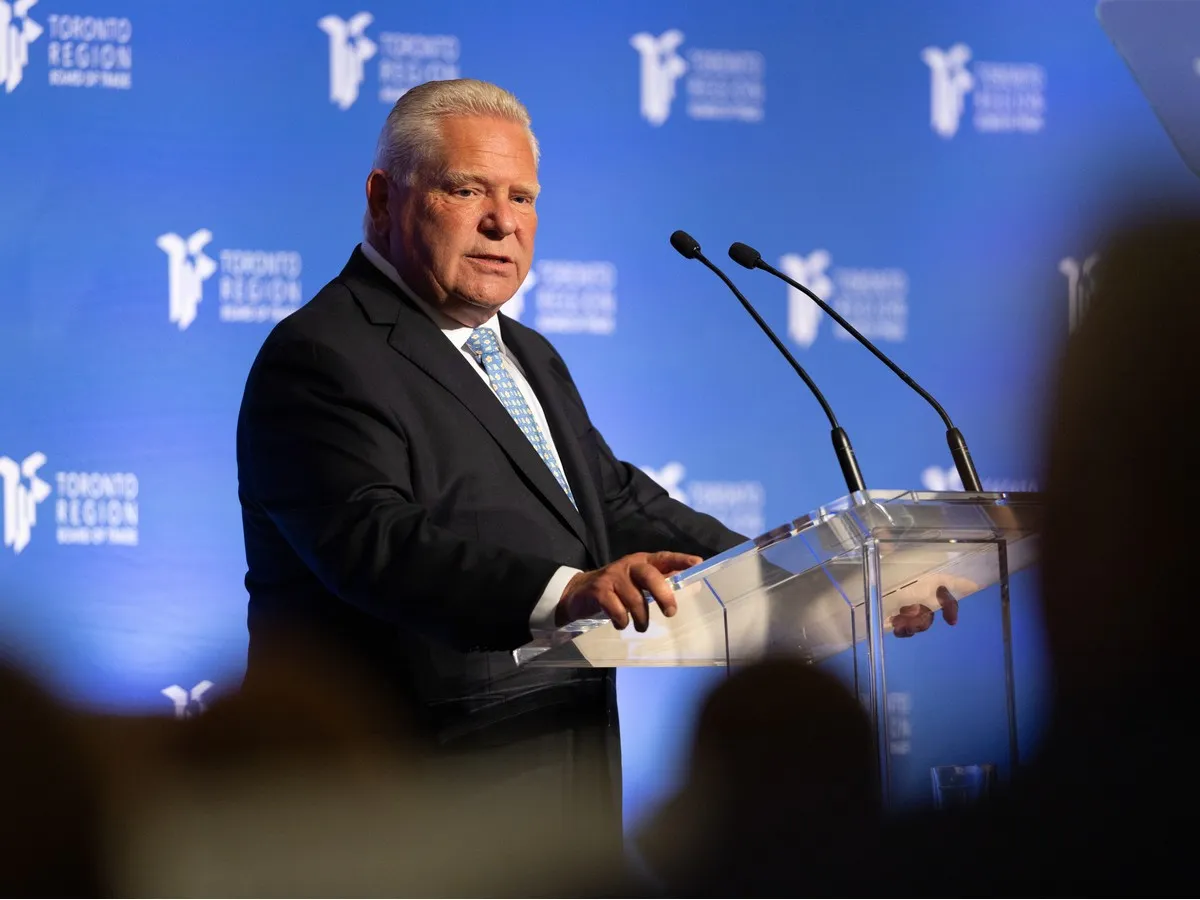
Skip to Content Subscribe My Account Manage My Subscriptions FAQ Newsletters Canada Canadian True Crime Canadian Politics Health World Israel & Middle East Financial Post NP Comment Longreads Puzzmo Diversions Comics NP News Quiz New York Times Crossword Horoscopes Modern Life Eating & Drinking Style Sponsored Play for Ontario Travel Travel Canada Travel USA Travel International Cruises Travel Essentials Culture Books Celebrity Movies Music Theatre Television Business Essentials Advice Lives Told Tails Told Shopping Buy Canadian Home Living Outdoor Living Kitchen & Dining Tech Style & Beauty Personal Care Entertainment & Hobbies Gift Guide Travel Guide Deals Savings National Post Store More Sports Hockey Baseball Basketball Football Soccer Golf Tennis Driving Vehicle Research Reviews News Gear Guide Obituaries Place an Obituary Place an In Memoriam Classifieds Place an Ad Celebrations Working Business Ads Archives Healthing Epaper Manage Print Subscription Profile Settings My Subscriptions My Offers Newsletters Customer Service FAQ Newsletters Canada World Financial Post NP Comment Longreads Puzzmo Diversions Modern Life Shopping Epaper Manage Print Subscription HomeNP CommentScott Stinson: Money isn't solving homelessness. It's time Ford made tough choices Calls for forced drug treatment from the province's urban mayors come amid a huge spike in the homeless populationPremier Doug Ford delivering a special address on the next chapter of Ontario's plan for economic growth at the Toronto Region Board of Trade's Annual Policy Priorities-Setting Session in Toronto, Ontario on Thursday, September 10, 2026. Photo by Peter Power /Peter PowerLast month a group of municipal politicians known as the Big City Mayors put out a statement pleading with the provincial government to step up the fight against homelessness, saying the crisis continues to worsen and that cities had “reached their limit” in dealing with it.Enjoy the latest local, national and international news.Exclusive articles by Conrad Black, Barbara Kay and others. Plus, special edition NP Platformed and First Reading newsletters and virtual events.Unlimited online access to National Post.National Post ePaper, an electronic replica of the print edition to view on any device, share and comment on.Daily puzzles including the New York Times Crossword.Support local journalism.Enjoy the latest local, national and international news.Exclusive articles by Conrad Black, Barbara Kay and others. Plus, special edition NP Platformed and First Reading newsletters and virtual events.Unlimited online access to National Post.National Post ePaper, an electronic replica of the print edition to view on any device, share and comment on.Daily puzzles including the New York Times Crossword.Support local journalism.Create an account or sign in to continue with your reading experience.Access articles from across Canada with one account.Share your thoughts and join the conversation in the comments.Enjoy additional articles per month.Get email updates from your favourite authors.Create an account or sign in to continue with your reading experience.Access articles from across Canada with one accountShare your thoughts and join the conversation in the commentsEnjoy additional articles per monthGet email updates from your favourite authorsSign In or Create an AccountorThe statement avoided using the politically sensitive phrase “involuntary treatment,” but it nevertheless called for it, asking the province for a review of the Mental Health Act and the Heathcare Consent Act among other requests. There was immediate pushback from groups who say such programs, which as the name suggests can force individuals into addiction treatment they do want, do not work.On Thursday, Ontario’s Financial Accountability Office released a report on homelessness that might as well have been a series of exclamation marks at the end of the mayors’ earlier lament.The National Post newsletter that doesn’t hold back, giving readers the unvarnished truth on media, politics and culture.By signing up, you consent to receive the above newsletter from Postmedia Network Inc.A welcome email is on its way. If you don't see it, please check your junk folder.The next issue of Right? will soon be in your inbox.We encountered an issue signing you up. Please try againThat there is a growing homelessness problem in the province is evident to anyone who has been to one of its urban centres and has eyes, but still the numbers are bracing. The FAO found that the “known” homeless population in Ontario jumped to more than 76,000 in 2025-26 from around 62,000 people in 2022-23, an increase of more than 23 per cent in just three years.And it’s not just a Toronto problem: some of the sharpest increases were in other cities like Ottawa (19.7 per cent), London (18.3 per cent) and Windsor (53.8 per cent). Toronto suburbs such as the regions of York, Peel and Durham, while all having relatively low homeless populations per capita, all saw their rates increase by between 80 to 130 per cent.(The data was compiled using a process that began five years ago called the By-Name List, where municipalities collect information to track the homeless population. It does not account for those who decline to have their information collected and so is almost certainly an undercount.) The FAO also found that four of the 10 highest rates of homelessness per capita were in Northern Ontario, with Cochrane and Rainy River leading the list. It is a problem that touches all geographic points of the province.Against that, one can see why Marianne Meed Ward, the mayor of Burlington and chair of the 29-member Big City Mayors, said last month that “the status quo was not an option” when putting out their call to action. Or why Cam Guthrie, the mayor of Guelph, said on social media on Thursday that he “cannot stress enough the absolute magnitude of this crisis that is clearly not being addressed.” Guthrie, who is not seeking re-election, said the homelessness problem took up five per cent of his time when he took office 12 years ago. “Today, it’s easily 75 per cent,” he said.When asked about involuntary treatment last month, Health Minister Sylvia Jones sidestepped the question and talked instead about the money the province has spent on homelessness and addiction.And indeed, the province has spent increasingly on homelessness programs, more than doubling the amount over a decade, adjusted for inflation, although it is forecast to decline in the coming years due to the expiry of time-limited investments made during the acute crisis of the pandemic.But while the provincial Liberals used the FAO report to call on the Ford government to reverse those planned funding cuts, the problem plainly isn’t going to be solved by throwing more money at it.Alberta, under conservative Premier Danielle Smith, has introduced a version of involuntary care, where a panel decides if someone will be placed into treatment after a request from police, family members or a doctor. But NDP-led provinces like British Columbia and Manitoba have also introduced forced-treatment programs of varying degrees. (The B.C. standard was recently struck down by the provincial Supreme Court for being too broad.)Ford said on Thursday at Queen’s Park that he was open to the idea of involuntary treatment, but even though the mayors first began calling for it two years ago, his government has so far avoided legislation on the subject. Perhaps because it is controversial. The Centre for Addiction and Mental Health said last month that “evidence indicates that involuntary treatment may create further potential harms to individuals, including a higher risk of overdose upon discharge, and reduced motivation to participate in mental health and addictions services.” And the Canadian Civil Liberties Association has said “the right to refuse unwanted medical treatment is fundamental to a person’s dignity and autonomy.”These are fair concerns, and frankly the whole idea is unsettling. What kind of success rate could you expect when sweeping someone off the street and right into rehab? But what else could you possibly call the situation in Ontario other than a crisis that requires an extreme response? The FAO report projects an increase in the province’s homelessness population to 88,859 by 2028-29, based on current trends. That’s a jump of almost 43 per cent from 2022-23 — just six years.No, the status quo clearly isn’t working. It’s beyond time for difficult choices. Join the Conversation This website uses cookies to personalize your content (including ads), and allows us to analyze our traffic. Read more about cookies here. By continuing to use our site, you agree to our Terms of Use and Privacy Policy.
Scott Stinson: Money isn't solving homelessness. It's time Ford made tough choices
The homeless population has grown by almost a quarter in just three years, as urban mayors say forced addiction treatment must be considered
1,362 words~6 min read