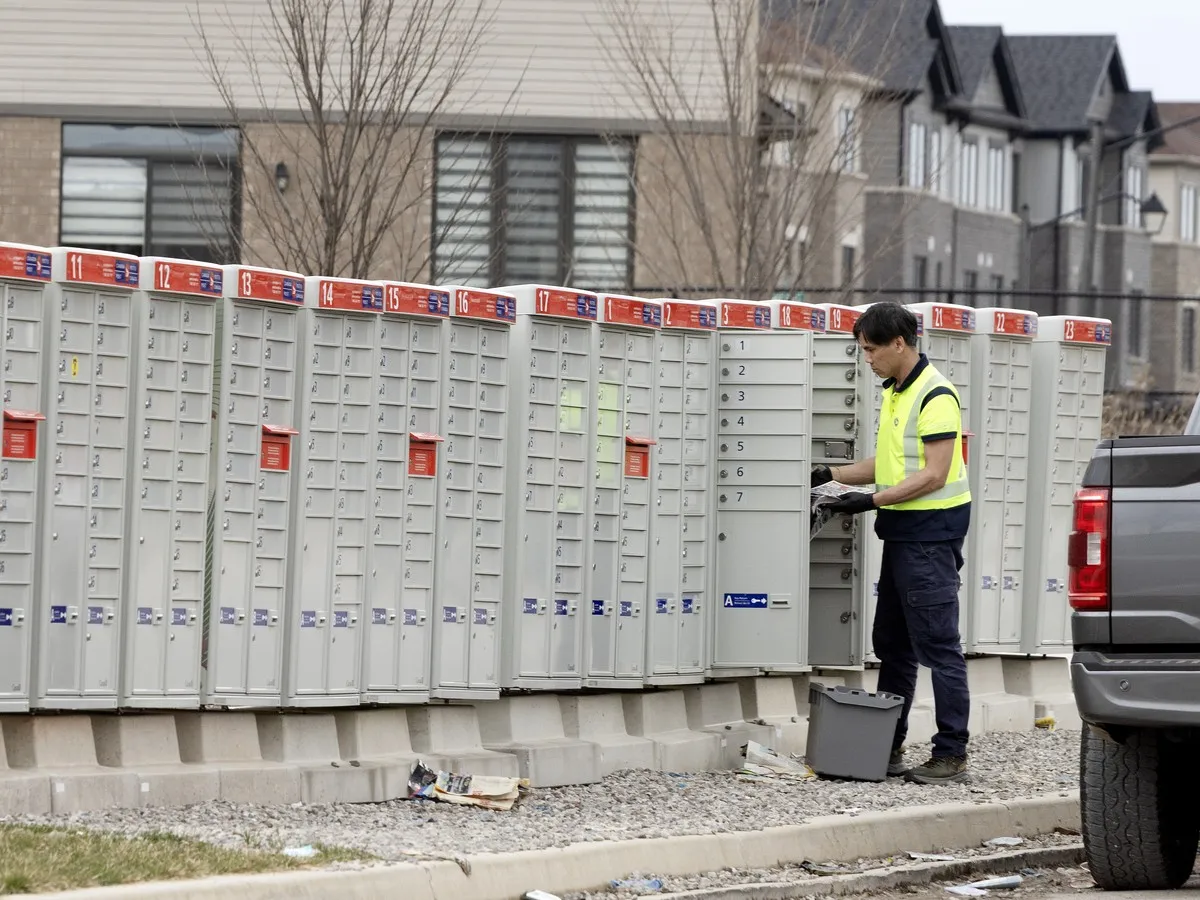
Skip to Content Subscribe Our Offers My Account Manage My Subscriptions FAQ Newsletters Canada Canadian True Crime Canadian Politics Health World Israel & Middle East Financial Post NP Comment Longreads Puzzmo Diversions Comics NP News Quiz New York Times Crossword Horoscopes Life Eating & Drinking Style Sponsored Play for Ontario Travel Travel Canada Travel USA Travel International Cruises Travel Essentials Culture Books Celebrity Movies Music Theatre Television Business Essentials Advice Lives Told Tails Told Shopping Buy Canadian Home Living Outdoor Living Kitchen & Dining Tech Style & Beauty Personal Care Entertainment & Hobbies Gift Guide Travel Guide Amazon Prime Day Deals Savings National Post Store More Sports Hockey Baseball Basketball Football Soccer Golf Tennis Driving Vehicle Research Reviews News Gear Guide Obituaries Place an Obituary Place an In Memoriam Classifieds Place an Ad Celebrations Working Business Ads Archives Healthing Epaper Manage Print Subscription Profile Settings My Subscriptions Saved Articles My Offers Newsletters Customer Service FAQ Newsletters Canada World Financial Post NP Comment Longreads Puzzmo Diversions Life Shopping Epaper Manage Print Subscription HomeNP CommentKaren Stintz: Give the homeless an address, not the right to an encampmentCanada Post should establish community mailboxes for individuals who lack fixed addresses so they can participate in the economyLast updated 10 minutes ago You can save this article by registering for free here. Or sign-in if you have an account.Photo by Peter J Thompson/National PostThere was a time when governments made policy decisions based on data and expected outcomes that would benefit society. Now that job is being replaced by activists and the courts, who use false logic to drive outcomes that, by any measurement, result in social and moral failure.Enjoy the latest local, national and international news.Exclusive articles by Conrad Black, Barbara Kay and others. Plus, special edition NP Platformed and First Reading newsletters and virtual events.Unlimited online access to National Post.National Post ePaper, an electronic replica of the print edition to view on any device, share and comment on.Daily puzzles including the New York Times Crossword.Support local journalism.Enjoy the latest local, national and international news.Exclusive articles by Conrad Black, Barbara Kay and others. Plus, special edition NP Platformed and First Reading newsletters and virtual events.Unlimited online access to National Post.National Post ePaper, an electronic replica of the print edition to view on any device, share and comment on.Daily puzzles including the New York Times Crossword.Support local journalism.Create an account or sign in to continue with your reading experience.Access articles from across Canada with one account.Share your thoughts and join the conversation in the comments.Enjoy additional articles per month.Get email updates from your favourite authors.Create an account or sign in to continue with your reading experience.Access articles from across Canada with one accountShare your thoughts and join the conversation in the commentsEnjoy additional articles per monthGet email updates from your favourite authorsSign In or Create an AccountorEncampments in our cities are one such example of failed policy responses. Can you imagine any political party running on a platform that promised to make homelessness a Charter-protected right? Yet, this has happened, and governments at every level are allowing encampments to fester on public property, robbing people of their dignity. Instead of rallying toward a solution that unites communities, Canada’s leaders have given in to laziness and small-minded recriminations.On one side of this fierce debate, advocates fight to protect the right of individuals to seek shelter in public spaces, arguing that poverty isn’t a crime. Poverty isn’t a crime, but it is also not an aspiration. On the other side, critics contend that municipalities should protect public spaces for their originally intended uses, and encampments were never one of these uses.This newsletter from NP Comment tackles the topics you care about. (Subscriber-exclusive edition on Fridays)By signing up you consent to receive the above newsletter from Postmedia Network Inc.We encountered an issue signing you up. Please try againThe courts have sided with the right-to-shelter camp, providing the activists with a legal victory but a moral failure. Judges have ruled that clearing people from public lands without providing truly accessible alternative housing violates Section 7 of the Charter of Rights and Freedoms. The Region of Waterloo tried twice to clear a major encampment at 100 Victoria Street in Kitchener to build a transit hub, but the Ontario Superior Court thwarted both attempts, ruling that the region lacked adequate, low-barrier shelter space and effectively manufactured a constitutional right to camp on public property.Given that this ruling could potentially have national implications, the lack of response from the political class has been just as alarming as the court’s declaration.Ontario Premier Doug Ford criticized the rulings as “cockamamie” and “ridiculous.” Mayor Chow chose silence — her preferred political currency. To speak out would mean confronting the same activists who keep her in power.The federal response was equally silent. If the federal government were to say anything, it might also give legitimacy to the argument that the notwithstanding clause may need to be used on a regular basis until the activist judges get out of policy making and back in the business of ruling on the actual law.Asserting that the Charter offers a right to shelter on public land offers no solution for those who live on the margins of society. If the political class is not going to take on the activists or court overreach, perhaps at a minimum we could seek to restore the humanity of those who live on the very fringes of society.Both sides of the debate concede that homelessness is a complex systemic problem driven by intersecting variables: ill health, substance use, physical abuse, poverty and mental illness. The binary application of the Charter, which declares a right to encamp over the protection of public spaces, ignores the diversity of the unhoused population and doesn’t consider other parts of the community that are impacted.This false dichotomy also removes the incentive to help individuals find permanent homes. Court rulings tie the hands of municipal governments, cloaking destitution and squalor in the name of rights. All the while our governments concede their power to the courts, and the industry that advocates for people to remain homeless continues to grow.The Waterloo decisions effectively institutionalize encampments unless governments provide shelter, but shelters are not the answer. Since 2016, the City of Toronto has increased its shelter capacity by 125 per cent, growing from 4,000 to 9,000 beds with an annual budget of $786.1 million (2026). Despite this massive expenditure, chronic homelessness remains a severe crisis. The city can keep building shelter beds and still fail to make an impact because people experiencing homelessness need permanent stability. They need a home, or at the very least, an address.Without an address, individuals cannot access the public supports to which they are entitled. They cannot receive welfare payments, employment insurance, or Ontario Disability Support Program benefits. They cannot open bank accounts or file tax returns. Without tax returns, people do not exist in government financial records, which bars them from receiving Old Age Security payments.While ending homelessness is complicated, we can immediately help people secure an address. Restructuring efforts at Canada Post offer an ideal opportunity to establish community mailboxes for individuals who lack fixed addresses. Workers can install these mailboxes near post offices, emergency shelters, municipal buildings or social services offices. Once a person has a secure mailing address, they can begin the process of joining the mainstream economy.On its corporate website, Canada Post President and CEO Doug Ettinger states: “What unites Canadians is our shared belief that every person, business, and community deserves the opportunity to thrive and prosper. At Canada Post, we always put Canadians at the heart of everything we do.”If Canada Post leadership truly believes those words, it should deploy its vast physical infrastructure — currently kept afloat by billions in taxpayer-funded loans — to fill this crucial social gap and fulfill its corporate purpose: “A Stronger Canada — Delivered.” Expanding Canada Post to deliver basic postal banking services would also aid individuals who need financial tools but cannot meet the criteria or afford the fees of traditional banks.This initiative shifts the policy goal from protecting a person’s right to remain anonymous and alienated to helping them secure the institutional benefits they deserve. With a stable address, individuals can access the financial resources needed to transition from temporary shelter spaces into permanent housing pathways. The ill can get treated and the addicted can get support.Restoring dignity to the most vulnerable members of society must become a common goal rather than a political fault line. The authors of the Charter never intended for homelessness to become a protected constitutional right. Solutions exist; governments simply need the will to implement them.National PostKaren Stintz, a former Toronto city councillor and former chair of the Toronto Transit Commission, is the author of “Beyond Good Enough: Toronto and the Crisis of Urban Complacency” (forthcoming from Sutherland House Experts). Join the Conversation This website uses cookies to personalize your content (including ads), and allows us to analyze our traffic. Read more about cookies here. By continuing to use our site, you agree to our Terms of Use and Privacy Policy.
Karen Stintz: Give the homeless an address, not the right to an encampment
Canada Post should establish community mailboxes for individuals who lack fixed addresses so they can participate in the economy
1,514 words~7 min read