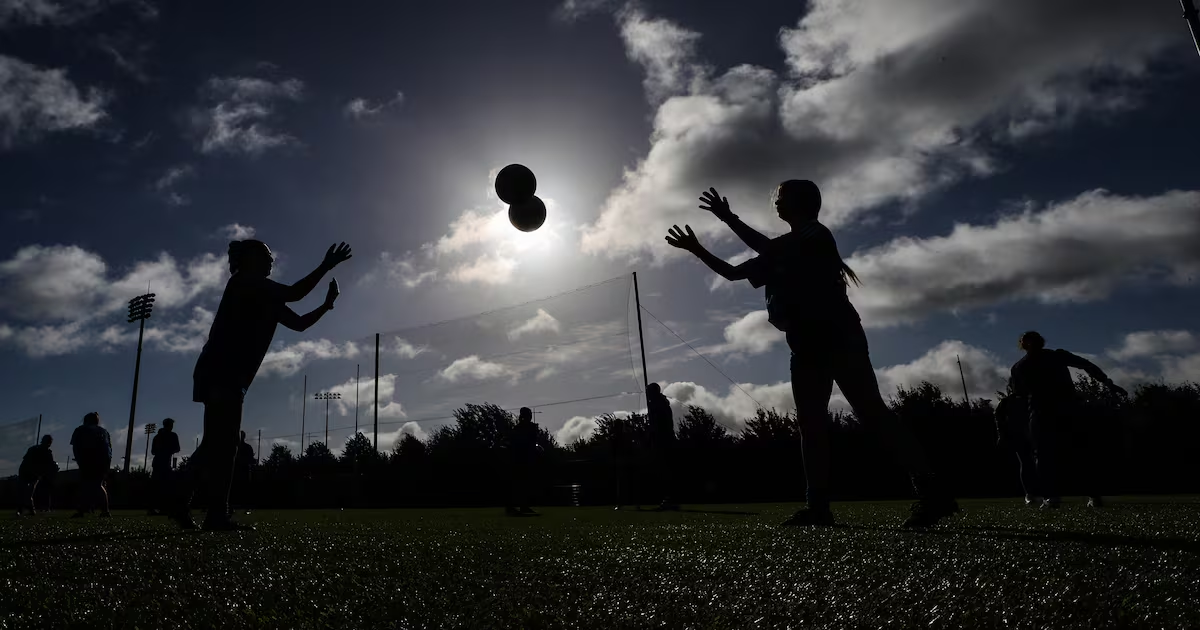
The afterglow of a high point for women’s sport in Ireland last weekend didn’t last long. Only days after Katie Taylor bowed out of boxing in front of an adoring Croke Park crowd of 80,000 and a massive TV audience, a depressing controversy has seriously set back tortuous progress towards the integration of the Ladies Gaelic Football Association and the Camogie Association with the GAA. On its own, the dispute over whether the 2027 deadline for the amalgamation could be met would be damaging enough for the GAA hierarchy. However, the decision by former president Mary McAleese to resign as chair of the integration steering committee has led to bitter verbal exchanges. Explaining her reasons for stepping down from the role, McAleese didn’t hold back in her criticism of the GAA – accusing it of reneging on meeting next year’s deadline after four years of preparation and, much more disparagingly, of misogyny.Unusually for the GAA, this trenchant criticism drew an equally indignant response from its highest officials, with its president Jarlath Burns calling her remarks offensive and undermining of the substantial role women play at the highest levels of the association. However, the root of the problem appears to lie in how much the amalgamation will cost the GAA. At the elite inter-county level, Burns claimed that the €45 million annual cost for men’s teams will double, if the same rules apply for women’s squads. That easy equation seems a little too convenient for the GAA as it wrestles with other significant amalgamation issues like facilities and organisational restructure. McAleese, who steered a ship that is now on the rocks, has not herself faced any hard questions on the controversy but will presumably be happy to answer them. All is not lost. A great amount of work has already been done. And we know two important things. One, the GAA can move on the big issues when it finds the will. And, two, we know where this ends – in full integration based on equality. Anything less would be a colossal failure.
The Irish Times view on the GAA controversy: equality deferred
The root of the problem appears to lie in how much the amalgamation will cost the GAA
342 words~2 min read