Originally published on tamiz.pro.
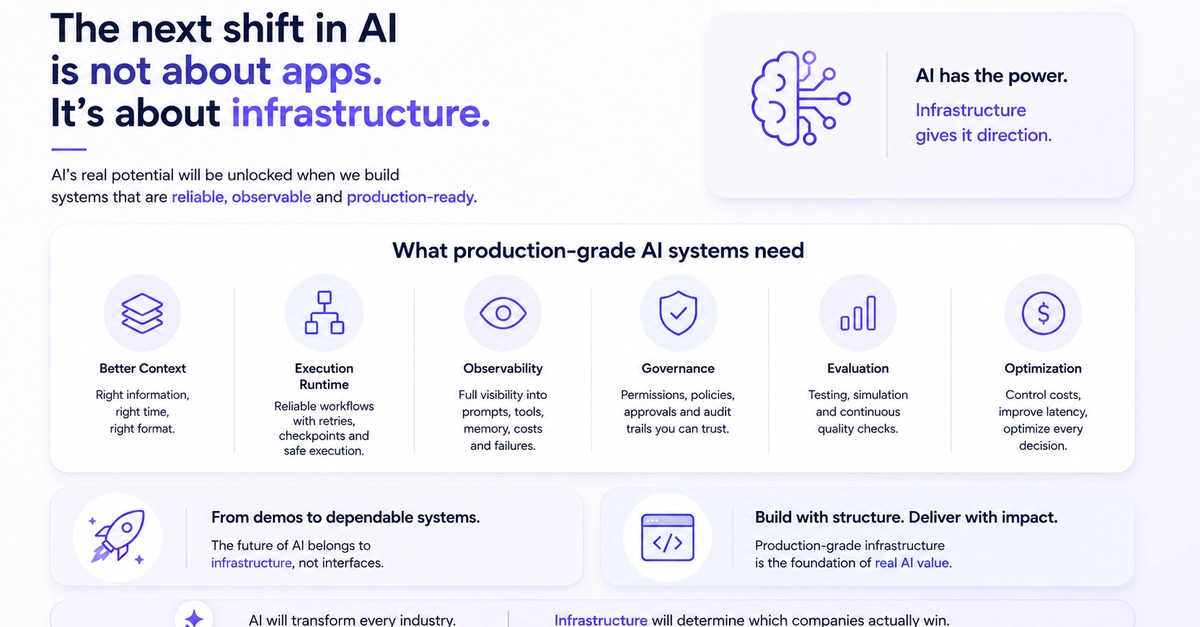
The chasm between a convincing Jupyter notebook demo and a production-grade AI system is not merely one of scale; it is one of engineering discipline. When you first integrate a Large Language Model (LLM) or any generative AI into your application, the initial results are often miraculous: the model understands context, generates fluent text, and solves the specific problem you presented it with. However, this phase of development is dangerously misleading. The transition from a stateless, in-memory prototype to a stateful, distributed system introduces a host of failure modes that are invisible in the lab. Your first AI integration will almost certainly be slow, expensive, and unreliable. This is not a flaw in the model; it is a feature of the engineering gap between inference and application.
Understanding this gap is the first step toward closing it. This article dissects the three primary dimensions of production failure—latency, cost, and reliability—and provides the architectural and code-level strategies necessary to fix them. We will move beyond the "just call the API" mindset and explore the patterns that professional AI engineers use to build systems that can withstand the chaos of the real world. By the end of this deep dive, you will have a blueprint for transforming your brittle demo into a resilient production system.