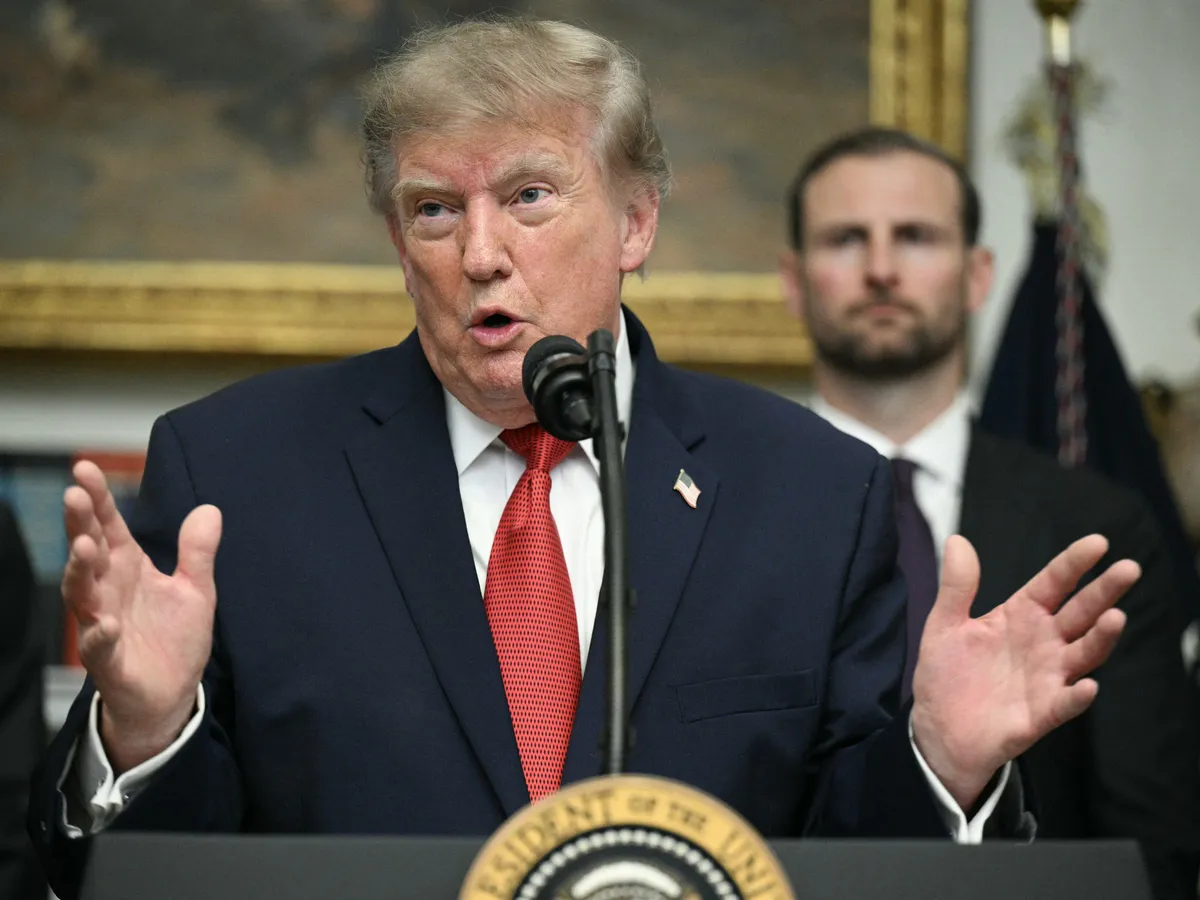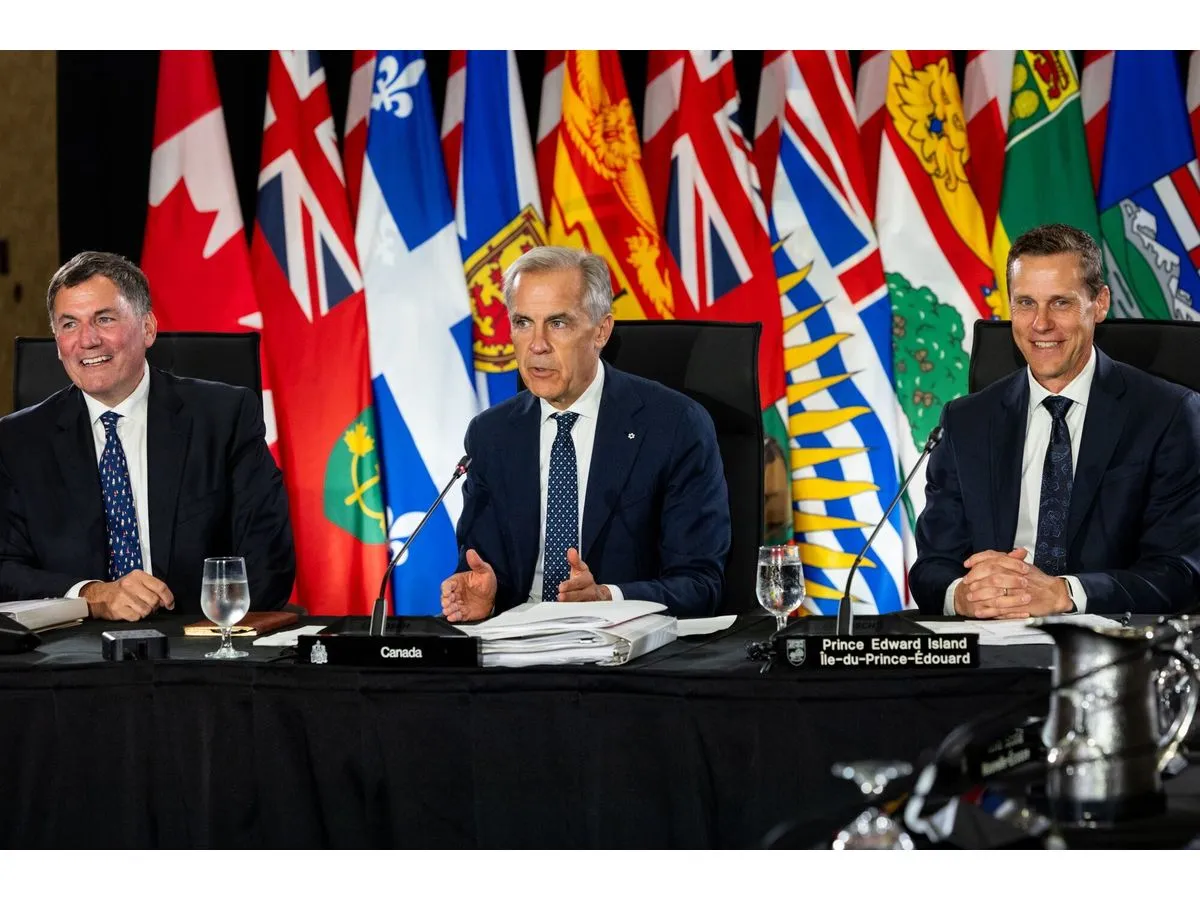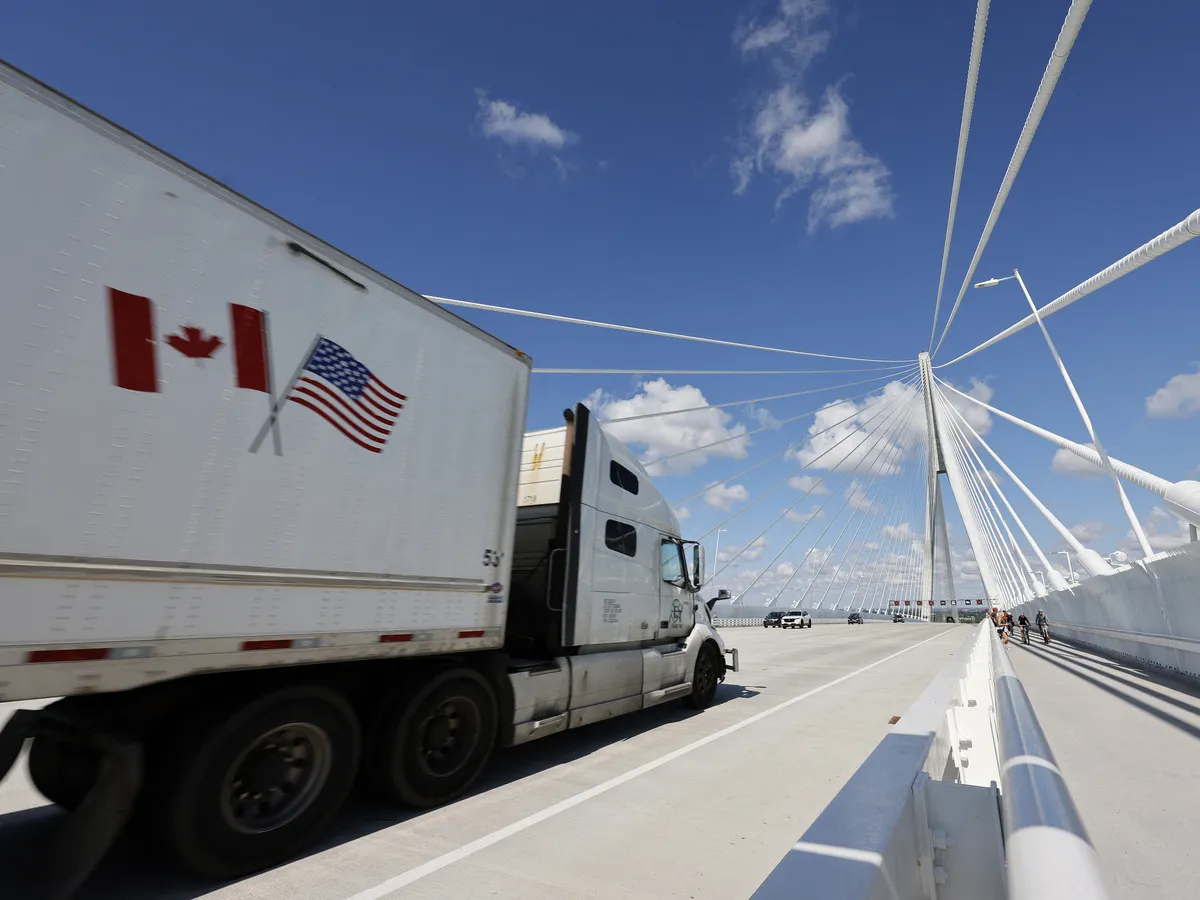
Skip to Content News Archives Economy Energy Oil & Gas Renewables Electric Vehicles Mining Commodities Agriculture Real Estate Mortgages Mortgage Rates Finance Banking Insurance Fintech Cryptocurrency Work Wealth Smart Money Wealth Management Investor Personal Finance Family Finance Retirement Taxes High Net Worth FP Comment Executive Women Puzzmo Newsletters Financial Times Business Essentials More Innovation Information Technology FP500 Podcasts Small Business Lives Told Tails Told Shopping Financial Post Store Obituaries Place a Notice Advertising Advertising With Us Advertising Solutions Postmedia Ad Manager Sponsorship Requests Classifieds Place a Classifieds ad Working Profile Settings My Subscriptions My Offers Newsletters Customer Service FAQ News Economy Energy Mining Real Estate Finance Work Wealth Investor FP Comment Executive Women Puzzmo Newsletters Financial Times Business Essentials HomeNewsEconomyTrump’s targeted Canada tariffs offer scope and time for a dealThe broader risk of an ongoing spat threatens to unravel billions in trade between the two countriesAuthor of the article:Last updated 1 hour ago Most of the import bans were already subject to 50 per cent tariffs, making the move more symbolic than catastrophic. Photo by JEFF KOWALSKY/AFP via Getty ImagesUnited States President Donald Trump’s latest trade manoeuvre leaves the door open to compromise with Canada, even as it threatens to exacerbate the cost-of-living crisis for Americans and further sour relations with Ottawa.Subscribe now to read the latest news in your city and across Canada.Exclusive articles from Barbara Shecter, Joe O'Connor, Gabriel Friedman, and others.Daily content from Financial Times, the world's leading global business publication.Unlimited online access to read articles from Financial Post, National Post and 15 news sites across Canada with one account.National Post ePaper, an electronic replica of the print edition to view on any device, share and comment on.Daily puzzles, including the New York Times Crossword.Subscribe now to read the latest news in your city and across Canada.Exclusive articles from Barbara Shecter, Joe O'Connor, Gabriel Friedman and others.Daily content from Financial Times, the world's leading global business publication.Unlimited online access to read articles from Financial Post, National Post and 15 news sites across Canada with one account.National Post ePaper, an electronic replica of the print edition to view on any device, share and comment on.Daily puzzles, including the New York Times Crossword.Create an account or sign in to continue with your reading experience.Access articles from across Canada with one account.Share your thoughts and join the conversation in the comments.Enjoy additional articles per month.Get email updates from your favourite authors.Create an account or sign in to continue with your reading experience.Access articles from across Canada with one accountShare your thoughts and join the conversation in the commentsEnjoy additional articles per monthGet email updates from your favourite authorsSign In or Create an AccountorA set of actions announced this week left out some of the harshest retaliatory measures, delayed others and pulled back some politically sensitive duties. It’s a tacit acknowledgement of the risks posed by Trump’s campaign of vengeance against Canada with just two months until the U.S. midterm elections.For one thing, the import bans announced Tuesday have a three-week window before taking effect, providing a runway for U.S. and Canadian officials to potentially return to the negotiating table.SUBSCRIBER EXCLUSIVE: FP West: Energy Insider brings you behind the oilpatch’s closed doors with exclusive insights from insiders every Wednesday morning.By signing up you consent to receive the above newsletter from Postmedia Network Inc.A welcome email is on its way. If you don't see it, please check your junk folder.The next issue of FP West: Energy Insider will soon be in your inbox.We encountered an issue signing you up. Please try againA senior U.S. administration official said constructive conversations with Canadian counterparts have taken place this week, and added that they expect to have another discussion in the next few days to see if there’s an alternative path forward.For another, the U.S. is holding off using one of its most potent weapons on Canada. Trump threatened to increase tariffs on automotive vehicles to 50 per cent from 25 per cent, but set their effective date for Jan. 1. The U.S. official said the threat remains in place if the two countries can’t resolve the issues before the deadline.Trump’s “counter-retaliation package in many ways was more bark than bite,” said Wendy Cutler, senior vice president at the Asia Society Policy Institute. Most of the import bans were already subject to 50 per cent tariffs, making the move more symbolic than catastrophic, she said Wednesday.The White House didn’t respond to a request for comment.Republicans are fighting to maintain their congressional majority in November, and polls show that voters aren’t keen on the idea of an escalating trade war with American’s northern neighbour. Some vulnerable Republicans have criticized the Trump administration’s trade actions and the retaliatory measures against Canada.The proclamations announced by the White House on Tuesday include bans on whey proteins, certain rye whiskies and other liquors, malt beer and certain grape wines, non-alcoholic beer and motorcycles.Trump also added new tariffs on certain cheeses, animal hides, motorboats, certain aluminum and paper products, golf carts and mattresses, using a legal authority under Section 338 of the Trade Act of 1930.At the same time, the White House announced plans to remove some of the 50 per cent tariffs — announced just two weeks ago — on certain products, such as salt, cement and toilet paper. Maine Senator Susan Collins, a Republican who is running for reelection this year, had pushed the administration to walk back levies on road salt and cement.Still, the import duties on forest products and other goods that remain will lead to higher costs for Maine families and uncertainty for businesses, Collins said in a statement following the White House’s tariff announcements on Tuesday.“I urge the Administration to continue to work to deescalate this conflict and reach a trade resolution with our Canadian partners,” she said.The White House official disagreed that the tariffs could raise prices for American consumers, arguing instead that the economic consequences of the duties are more challenging for Canada.An earlier threat to end sales of Canada-based Bombardier Inc. jets in the U.S. appears to have also taken a back seat. It was excluded from the series of proclamations on Tuesday, and the official said the president is reviewing his related options.The U.S.-Canada trade spat accelerated in July when Trump threatened to impose a 50 per cent duty on some Canadian goods, prompting officials to kickstart negotiations before the 30 day deadline ran out.The two sides appeared to be on track toward a framework deal to lower industry-specific tariffs on metals and autos. Despite Trump granting a three-day extension, the talks fell apart, and the 50 per cent tariffs on billions of dollars worth of Canadian imports went into effect in late August.Canada vowed to retaliate dollar-for-dollar, and hit hundreds of U.S. products with tariffs as of Tuesday morning.Trump has often compared China, the U.S.’s foremost geopolitical adversary, and Canada, a longtime close ally, noting they are the sole nations to retaliate against his trade actions.The spat with Canada comes ahead of Chinese leader Xi Jinping’s visit to the U.S., planned for the end of the month. Trump will likely be preoccupied with hosting a state dinner and efforts to extend the trade truce before it expires in November, while addressing ongoing sticking points.The Tuesday move “is very modest,” said Josh Lipsky, vice president of international economics at the Atlantic Council. “This is just a sliver of goods here, and many of them already were facing high tariffs, so banning them is negligible in terms of impact.”“But the broader issue is spiralling,” he said. “A trade war is always tit-for-tat. Where does this go? Does it increase? So it creates fear and uncertainty in companies’ minds in terms of future investment.”The broader risk of an ongoing spat threatens to unravel billions in trade between the two countries, who are among each others’ top trading partners.The dispute between neighbours has also stalled a review of the North American trade agreement that Trump negotiated in his first term. The U.S. has been engaging in bilateral talks with Mexico since earlier this summer, though declined to start formal talks with Canada to renew the agreement amid the ongoing trade dispute.It’s unclear if Canadians will respond to this latest act of U.S. retaliation. Canadian Prime Minister Mark Carney said that he didn’t believe in escalating the trade war, though cautioned that Canadians should prepare for turbulent times ahead.“This won’t be easy, and I won’t pretend otherwise,” Carney said in a video on Tuesday. Join the Conversation This website uses cookies to personalize your content (including ads), and allows us to analyze our traffic. Read more about cookies here. By continuing to use our site, you agree to our Terms of Use and Privacy Policy.
Trump’s targeted Canada tariffs offer scope and time for a deal
Donald Trump’s latest trade move leaves the door open to compromise with Canada, even as it threatens to further sour relations. Read on
1,450 words~7 min read