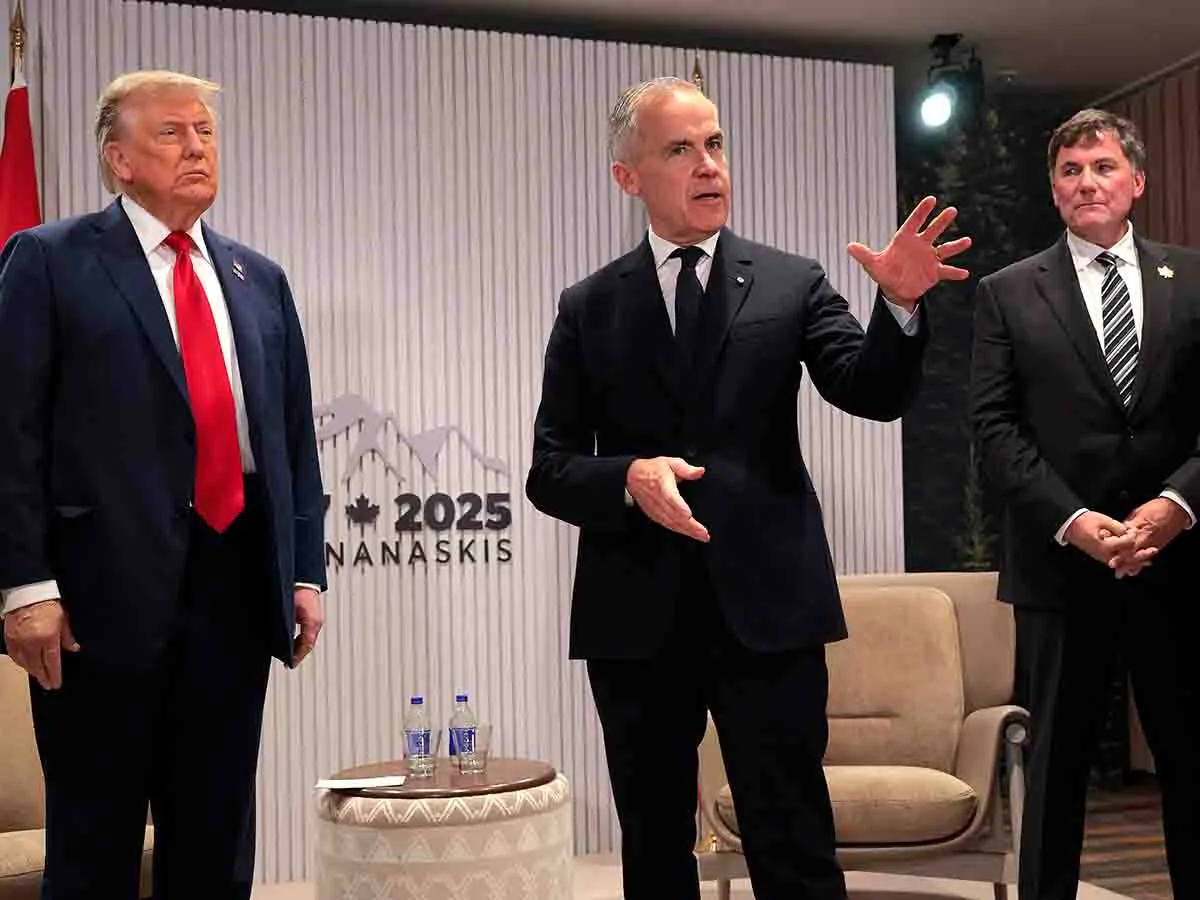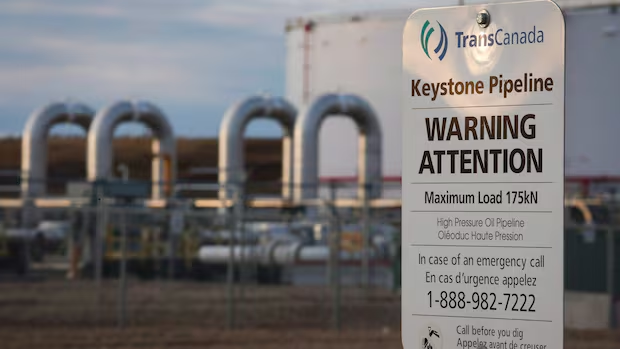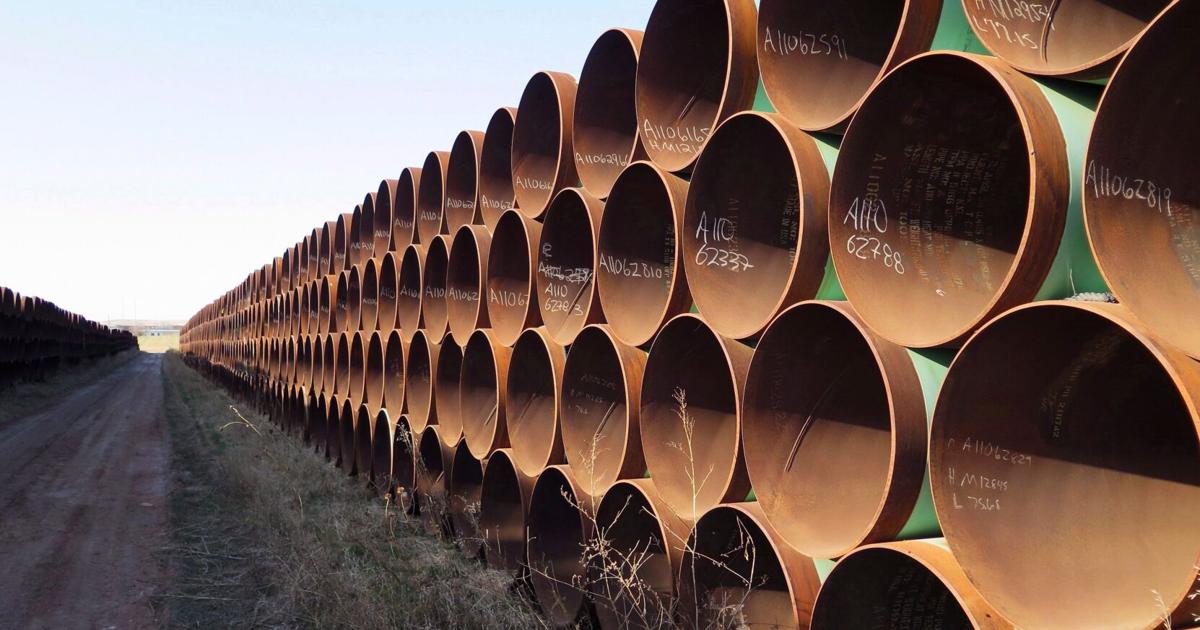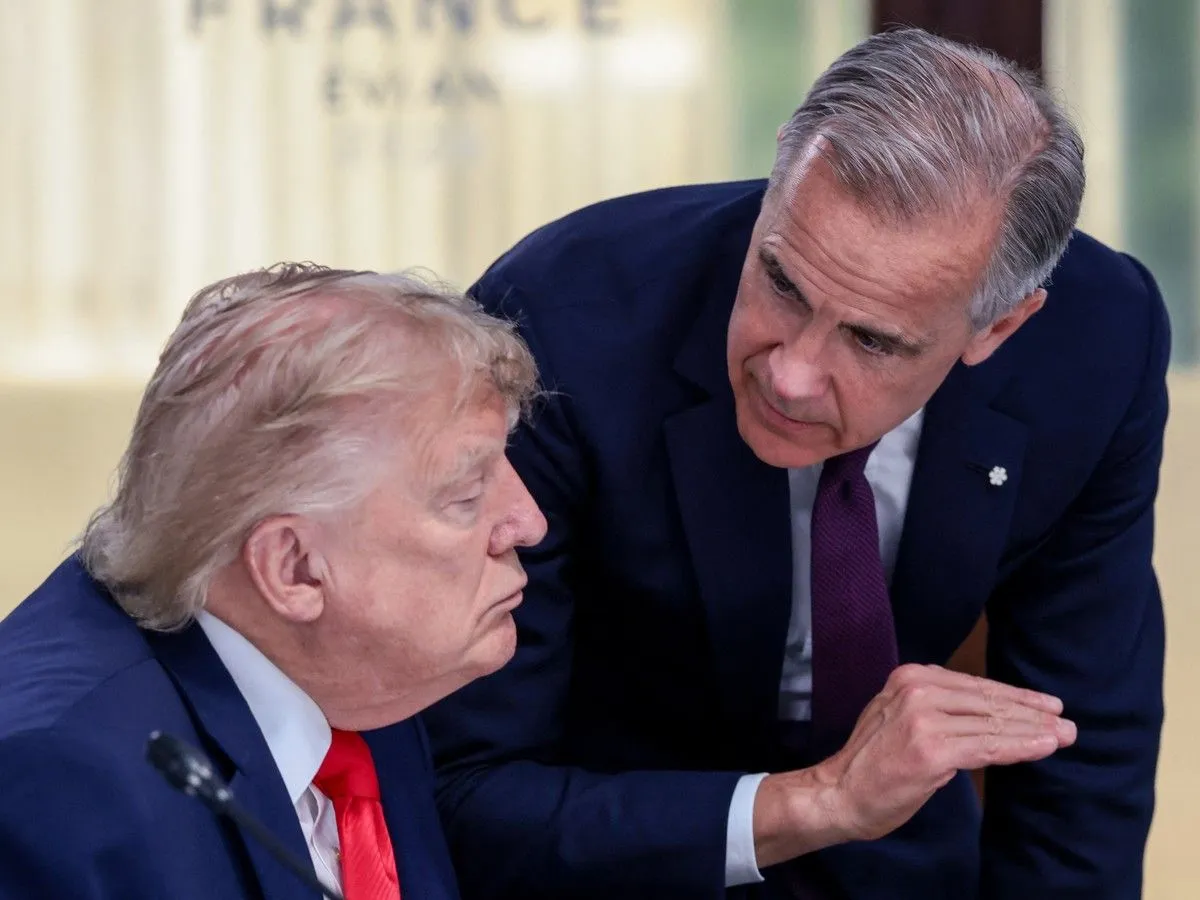
Skip to Content News Archives Economy Energy Oil & Gas Renewables Electric Vehicles Mining Commodities Agriculture Real Estate Mortgages Mortgage Rates Finance Banking Insurance Fintech Cryptocurrency Work Wealth Smart Money Wealth Management Investor Personal Finance Family Finance Retirement Taxes High Net Worth FP Comment Executive Women Puzzmo Newsletters Financial Times Business Essentials More Innovation Information Technology FP500 Podcasts Small Business Lives Told Tails Told Shopping Financial Post Store Obituaries Place a Notice Advertising Advertising With Us Advertising Solutions Postmedia Ad Manager Sponsorship Requests Classifieds Place a Classifieds ad Working Profile Settings My Subscriptions My Offers Newsletters Customer Service FAQ News Economy Energy Mining Real Estate Finance Work Wealth Investor FP Comment Executive Women Puzzmo Newsletters Financial Times Business Essentials HomeEnergyTrump wants Keystone XL revived, Canada wants lower tariffs – while a trade deal loomsChris Varcoe: Keystone XL resurrection talk comes as Alberta and Canada propose new oil pipeline to the West CoastLast updated 1 hour ago US President Donald Trump (L) speaks with Canadian Prime Minister Mark Carney on June 16, 2026. Trump has declared the two countries have come to a trade agreement on social media. Photo by EVELYN HOCKSTEIN /POOL/AFP via Getty ImagesIt’s like a big neon sign flashing on top of Trump Tower: the U.S. president still wants Keystone XL to be built.Subscribe now to read the latest news in your city and across Canada.Exclusive articles from Barbara Shecter, Joe O'Connor, Gabriel Friedman, and others.Daily content from Financial Times, the world's leading global business publication.Unlimited online access to read articles from Financial Post, National Post and 15 news sites across Canada with one account.National Post ePaper, an electronic replica of the print edition to view on any device, share and comment on.Daily puzzles, including the New York Times Crossword.Subscribe now to read the latest news in your city and across Canada.Exclusive articles from Barbara Shecter, Joe O'Connor, Gabriel Friedman and others.Daily content from Financial Times, the world's leading global business publication.Unlimited online access to read articles from Financial Post, National Post and 15 news sites across Canada with one account.National Post ePaper, an electronic replica of the print edition to view on any device, share and comment on.Daily puzzles, including the New York Times Crossword.Create an account or sign in to continue with your reading experience.Access articles from across Canada with one account.Share your thoughts and join the conversation in the comments.Enjoy additional articles per month.Get email updates from your favourite authors.Create an account or sign in to continue with your reading experience.Access articles from across Canada with one accountShare your thoughts and join the conversation in the commentsEnjoy additional articles per monthGet email updates from your favourite authorsSign In or Create an AccountorOn Tuesday night, U.S. President Donald Trump said on social media his government reached a new trade deal with Canada – shortly before new 50 per cent American tariffs were set to hit some Canadian exports. He also took the time to mention that the Keystone XL pipeline project “may be awoken from the grave!”This is not a surprise. But if the talk helps to unlock a trade deal, so much the better.Get the latest headlines, breaking news and columns.By signing up you consent to receive the above newsletter from Postmedia Network Inc.A welcome email is on its way. If you don't see it, please check your junk folder.The next issue of Top Stories will soon be in your inbox.We encountered an issue signing you up. Please try again“It’s something that we know that the president wants because, one, it’s access to continued oil, which is critical to the U.S. economy. And two, it’s a legacy project for him,” said Gitane De Silva, who previously served as Alberta’s senior representative to the U.S. and later became CEO of the Canada Energy Regulator.“If he could get this built, that would be, I think, a big political win,” added James Coleman, a law professor at the University of Minnesota who specializes in North American energy infrastructure.Shortly before the new American tariffs — targeting almost $29 billion of select Canadian products — were set to go into effect on Wednesday, the president announced he was pausing the levies for three days. This was “based on the fact that Canada and the U.S.A., subject to finalization of documents, have a deal,” he wrote.On Wednesday, both countries indicated an agreement had largely been reached, subject to necessary documents being finalized, although details were not yet released.Speaking to reporters, Trump called it “a very fair deal for both,” while Prime Minister Mark Carney said on social media that the two sides had made significant progress and were moving towards an agreement.Congratulations Minister LeBlanc and Ambassador Greer for the significant progress in the Canada-United States trade negotiations. Canada entered these discussions with the best overall trade terms. We are now moving towards an agreement that reinforces that Canadian advantage,… https://t.co/2X8axwEeiE— Mark Carney (@MarkJCarney) August 19, 2026Energy remains critical in the trading relationship between the two countries, as it has been for decades.It is the largest-single export that Canada sells to the United States. In Alberta, cross-border trade was valued at $152 billion last year, dominated by $125 billion worth of minerals exports — mainly oil and natural gas — heading south.If some revised version of Keystone XL goes ahead, the trade would keep expanding.“There continues to be an economic case for the pipeline,” said Coleman, who did work for TransCanada Corp. on the initial Keystone pipeline development.“But the question of whether there’s an investment case, and whether it fits with Canada’s geopolitical interests, I think that remains to be seen.”The history behind this project is demoralizing for the oilpatch and the Alberta government.The project was first proposed by TC Energy (then called TransCanada Corp.) 18 years ago, as it looked to transport 830,000 barrels of Canadian oil per day southward, ultimately connecting the Alberta oilsands to the Gulf Coast.In his first term, Trump approved the project – which had previously been blocked by former president Barack Obama – and construction started up in 2020, financially backed by the Alberta government.On his first day as president in 2021, Joe Biden cancelled the cross-border permit for the pipeline, and the province lost an estimated $1.3 billion in the process.During trade talks between Carney and Trump last October, the prime minister raised the idea of Keystone XL, in the broader context of energy co-operation also leading to U.S. tariffs already imposed on other sectors being reduced or eliminated.While the original Keystone XL is not being revived — TC Energy’s oil pipelines were spun off into company South Bow two years ago — the new company has pitched a project that would use about 150 kilometres of the KXL segments in Canada that were completed.It would become part of a new proposal called Prairie Connector, and the pipeline would extend from Hardisty to the U.S. border. If the project is approved by South Bow Corp., it would connect to a line built by U.S. firm Bridger Pipeline LLC, where the oil would be shipped to Guernsey, Wyo. U.S. President Donald Trump appears to have opened the door for construction of the Keystone XL pipeline. Brunswick News ArchivesTrump signed off on a cross-border permit last spring.South Bow held an open season to gauge shipper interest and announced recently it’s secured 20-year binding commitments for 465,000 barrels per day of transportation service from Alberta to U.S. delivery points. The company anticipates making a final investment decision (FID) on the project by the middle of next year.The president’s push to revive Keystone XL demonstrates the U.S. wants more Canadian heavy oil, which is essential in supplying refineries, particularly in the U.S. Midwest.The idea of resurrecting Keystone XL comes as Alberta and Canada are proposing a new oil pipeline to the West Coast to access more markets in Asia, but Ottawa is also looking for a broader trade arrangement with the U.S.“It’s an easy one for Canada to offer,” said De Silva.A trade deal would help to avoid the 50 per cent tariffs affecting certain Canadian industries. The new levies would hit provinces with more manufacturing much harder than Alberta’s exports, noted ATB Financial chief economist Mark Parsons.While it’s helpful to see an agreement that avoids new levies, even pledges of progress on long-standing issues like Keystone XL could be temporary, given future policy shifts by Trump or the next U.S. president, cautioned Carlo Dade, director of international policy at the University of Calgary’s School of Public Policy.“This is just another step in the journey,” Dade said.“We’re dealing with generational change here, so answers are only temporary.”Chris Varcoe is a Calgary Herald columnist.Catch up with the day’s headlines, curated by our editors and delivered to your email inbox at lunchtime on every business day. Sign up now for the Calgary Herald Noon News Roundup. Join the Conversation This website uses cookies to personalize your content (including ads), and allows us to analyze our traffic. Read more about cookies here. By continuing to use our site, you agree to our Terms of Use and Privacy Policy.
Trump wants Keystone XL revived, Canada wants lower tariffs – while a trade deal looms
A trade deal looms between the United States and Canada while the issue of a once cancelled pipeline continues to be a talking point.
1,506 words~7 min read