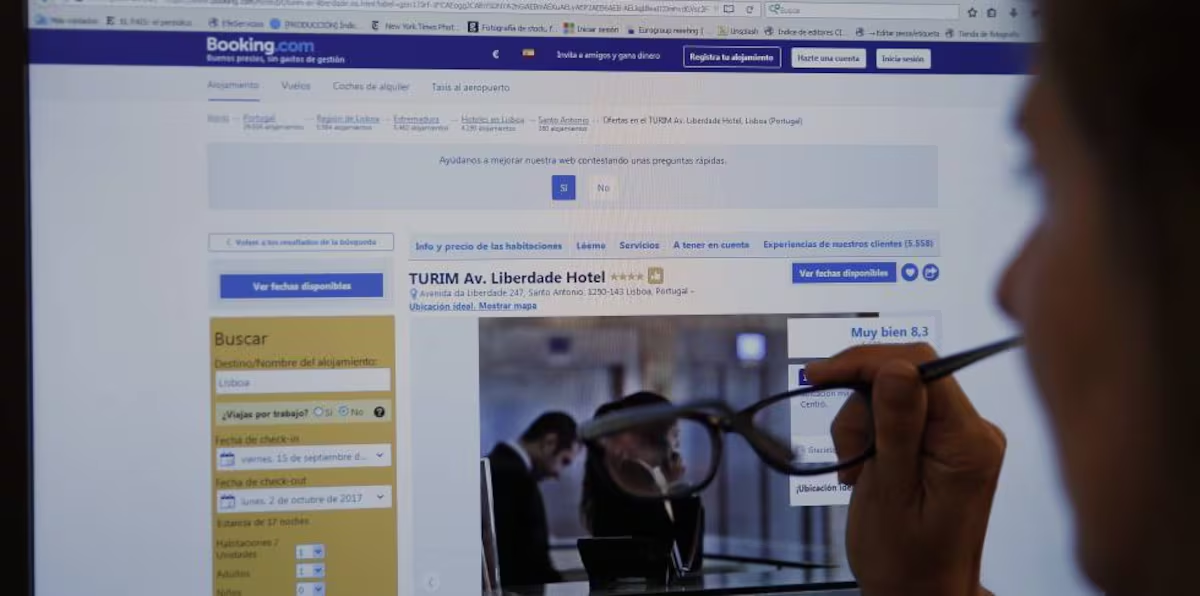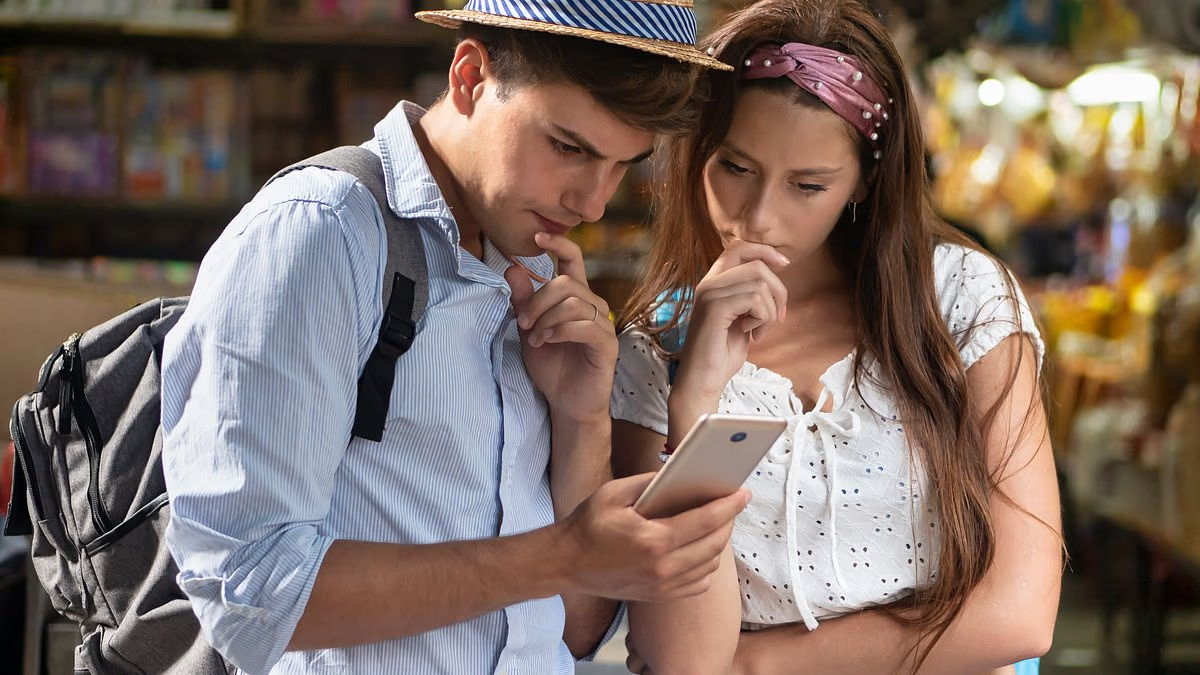
Tourists heading to new destinations once considered pickpockets their primary concern.However, travel scams have grown far more sophisticated, with fraudsters harnessing new artificial intelligence tools to build deceptive websites and exploit stolen data, according to Florent Silve, an executive at corporate travel management platform Engine."What used to look like a fake website now becomes much harder to spot by consumers," Silve said.A Federal Trade Commission report released in June showed that Americans reported losing $3.5 billion last year to scams where impostors contacted them via text, email, phone, social media, and search engines—though not all were travel-related. Impostor fraud accounted for nearly 1 in 3 reports, making it the single most common category of fraud.These schemes can target travelers well before departure, as scammers impersonate hotels or airlines to exploit the expectation of receiving official messages from those businesses."In the past, people were like ‘Oh if I receive a scam that is completely out of place, that's how I know it’s a scam.’ But now, the most dangerous scams don’t look suspicious; they look expected," said Iskander Sanchez-Rola, a scam expert for cybersecurity firm Norton.Another popular scam involves flight cancellations (Getty Images)For those planning upcoming trips, specialists offer several key steps to avoid falling victim to travel fraud:Beware of reservation hijackingReservation hijacking has emerged as a frequent travel scam, according to Sanchez-Rola. Impostors send an email or text message pretending to represent your hotel, claiming an urgent issue—such as a failed payment—requires immediate action.What makes these attacks especially difficult to identify is that criminals often incorporate genuine details to appear legitimate, Sanchez-Rola noted. Fraudsters target hotel networks by sending phishing messages to staff members to steal login credentials and extract valid booking details. Armed with this information, they send messages containing your actual stay dates or the exact cost of your room to convince you they are with your booking company."The main thing is that this isn’t a fake booking confirmation, it’s a real reservation that is weaponized against you," Sanchez-Rola said.If you receive a message like this, Sanchez-Rola recommends avoiding any rush to pay using the provided link. Instead, call the accommodation directly. Avoid using the phone number included in the text or email, as it may belong to the scammer. Look up the official hotel website and dial the number listed there.Be wary of flight cancellation notificationsAnother widespread scheme centers on flight cancellations, Sanchez-Rola said. Scammers reach out with urgent alerts stating your flight is delayed or canceled, then offer to assist with rebooking for an extra fee."You're going to a place, and one day before that happens, they tell you that the flight was canceled," Sanchez-Rola said. "So in that moment, there is an inherent urgency."Should you get a text claiming your flight was canceled, stay calm. First, check your flight status directly on your airline’s portal. If you must rebook, do so strictly through the airline or the original booking provider you used. Most importantly, do not click on links sent via text message, Sanchez-Rola warned.To protect yourself further, avoid sharing images of plane tickets or travel records on social media platforms. Even if you block out the flight number with emojis, the ticket can disclose more information than expected."The QR codes or the barcodes that are there include a lot of information," Sanchez-Rola said. "Sometimes they even include information about returning flights."Beware of QR codesUsing QR codes at restaurant tables to pay bills has become widespread in recent years. While convenient, the practice can leave consumers vulnerable to fraud, said Alissa Abdullah, Mastercard’s deputy chief security officer. Scammers place new stickers directly over a restaurant’s official code to redirect customers to fraudulent payment portals."You may be sitting at a coffee shop and have a real QR code with a fake one that’s a sticker laid right on top," Abdullah said.If a payment page seems suspicious or you spot a sticker placed over another at a dining venue, Abdullah suggests speaking with staff and choosing a different payment method, such as cash or a credit card.Connecting to public Wi-Fi networks is a common way to navigate new cities or access digital boarding passes at the airport. While free Wi-Fi provides convenience while traveling, it brings significant cybersecurity risks."Sometimes cyber criminals will create a network that looks close to the name of a legit network to dupe you into logging onto their network," said Brian Cute, chief executive officer and director of the capacity and resilience program at Global Cyber Alliance, a nonprofit working to lower cyber risks.Infiltrating a scammer's network allows bad actors to harvest personal data, compromise devices, or secure remote control of your hardware. If public Wi-Fi is necessary, Cute advises limiting use to basic tasks, such as looking up directions to your hotel, rather than visiting sensitive sites like banking portals or email accounts.
‘Reservation hijacking’ is draining travelers’ bank accounts - but it’s easy to avoid
The schemes are particularly difficult to spot as thieves often use real information to make you believe they are legit
801 words~4 min read