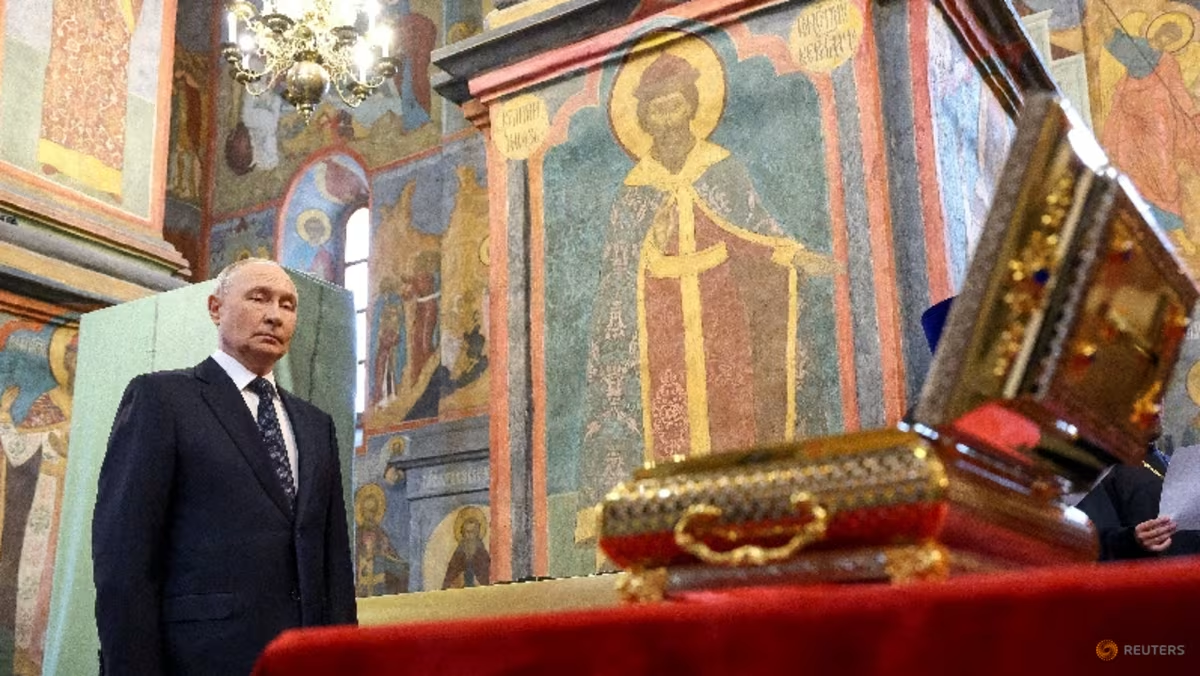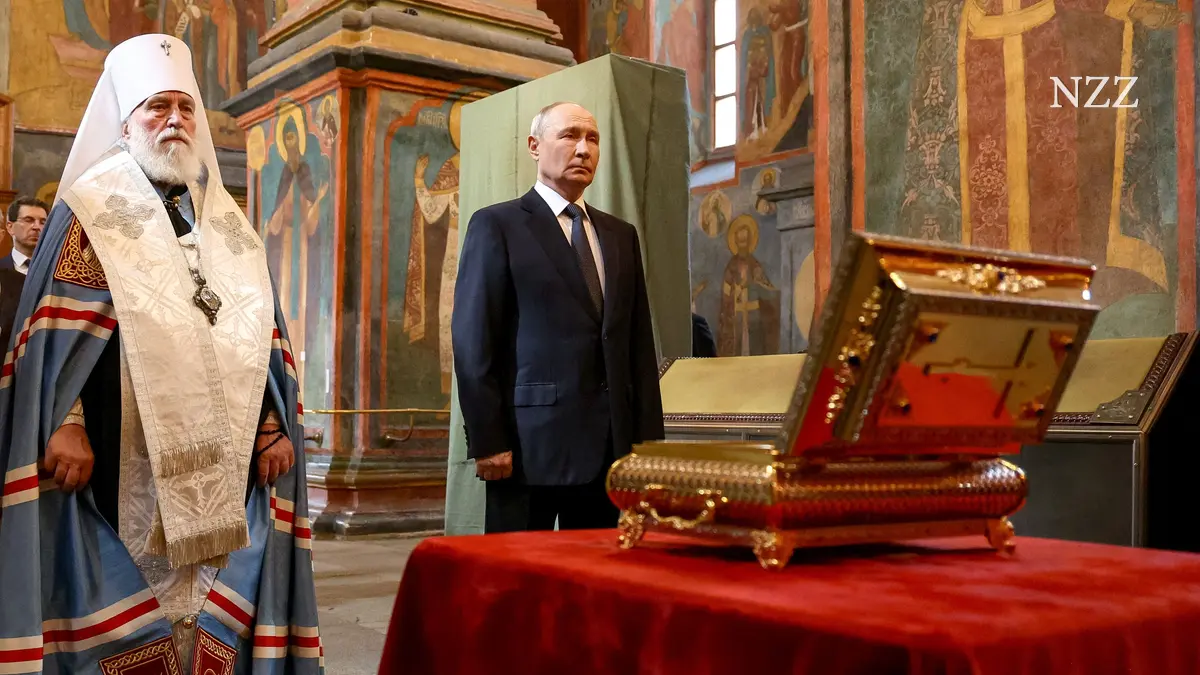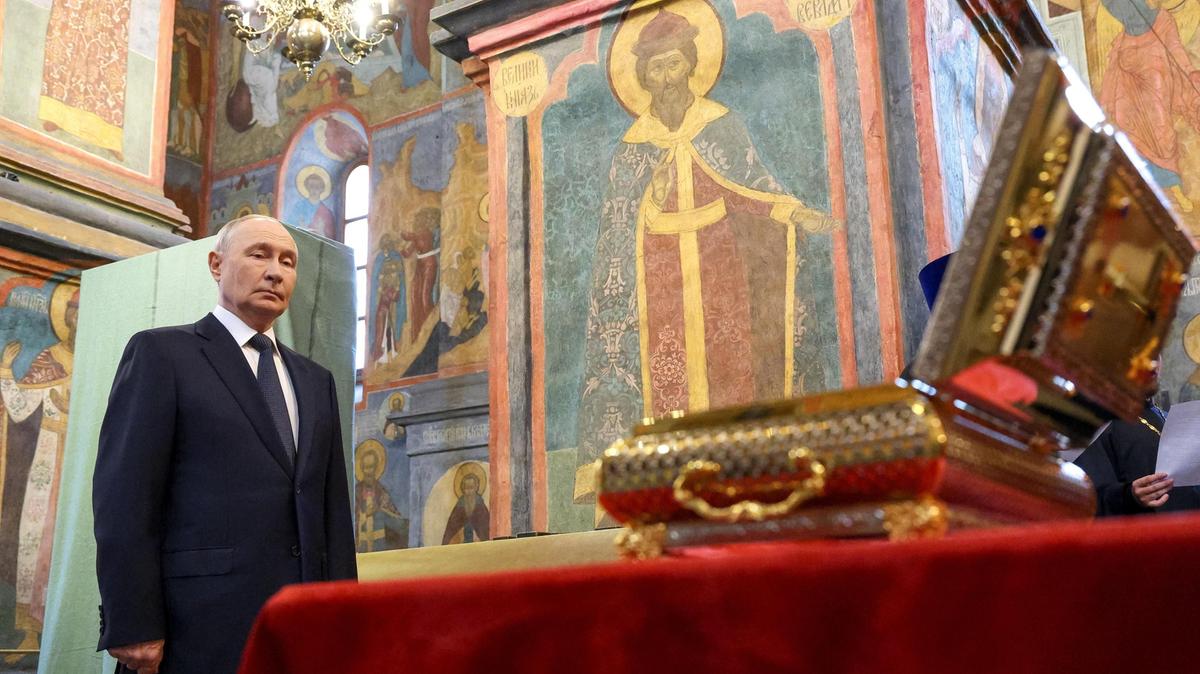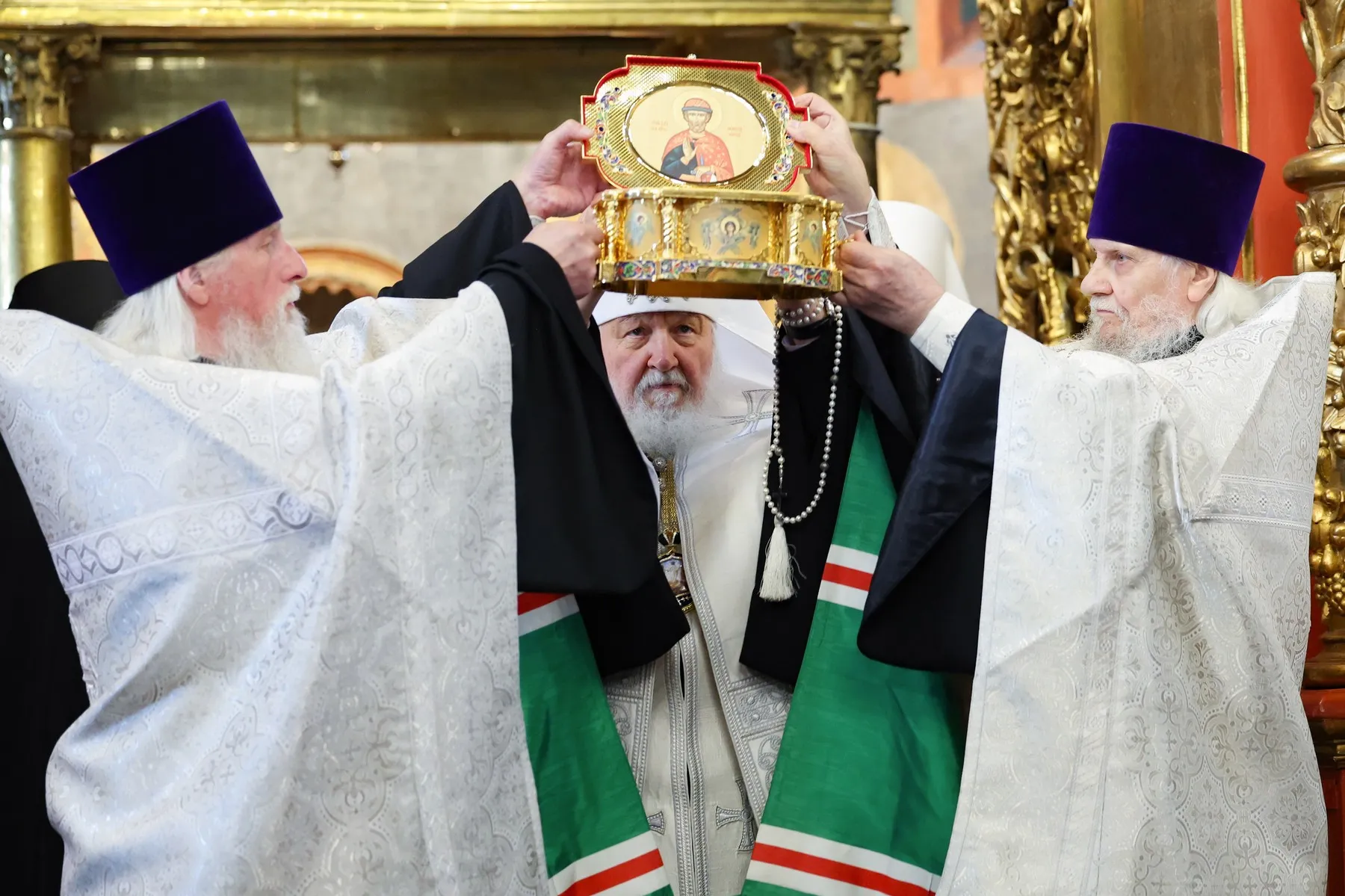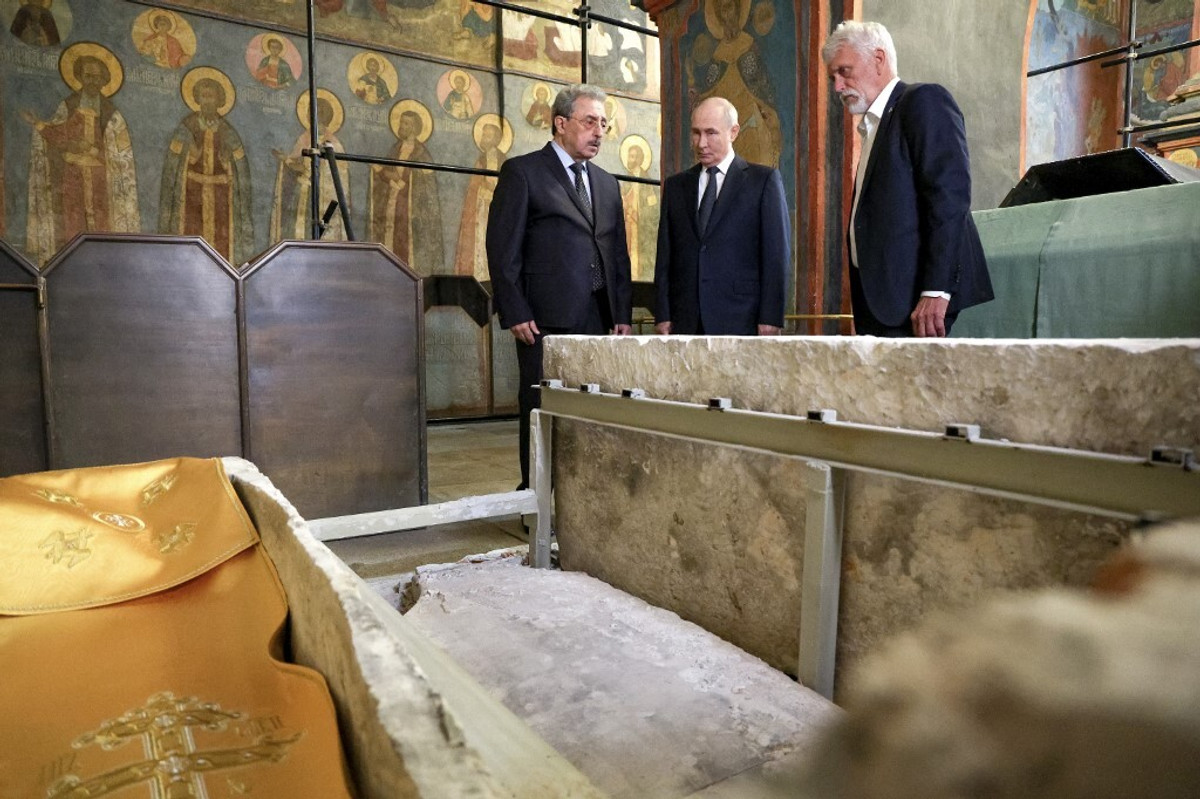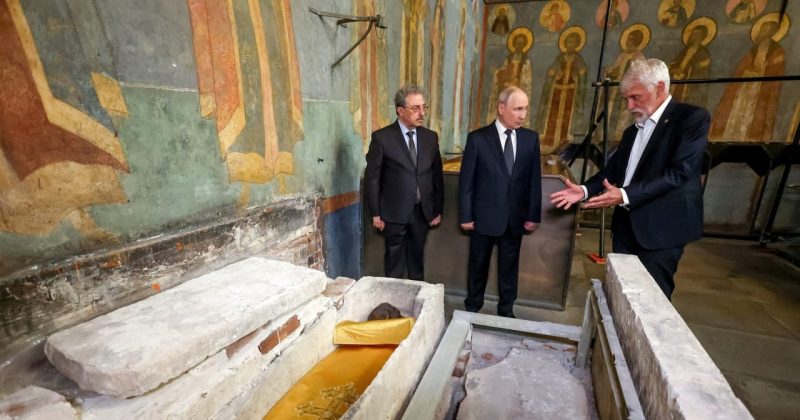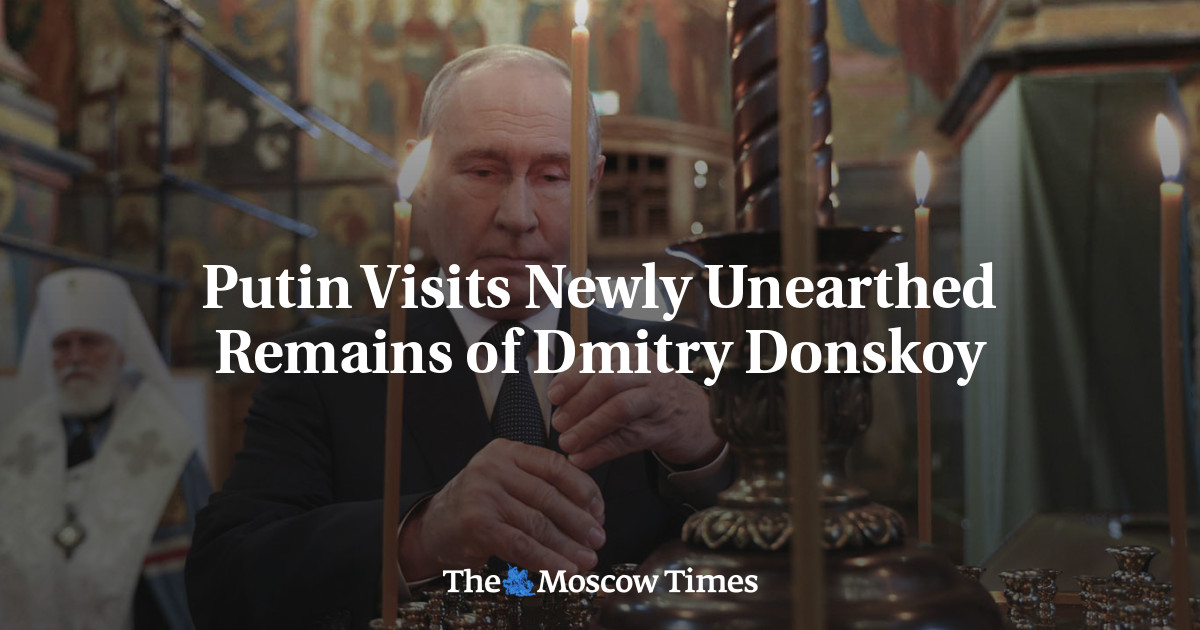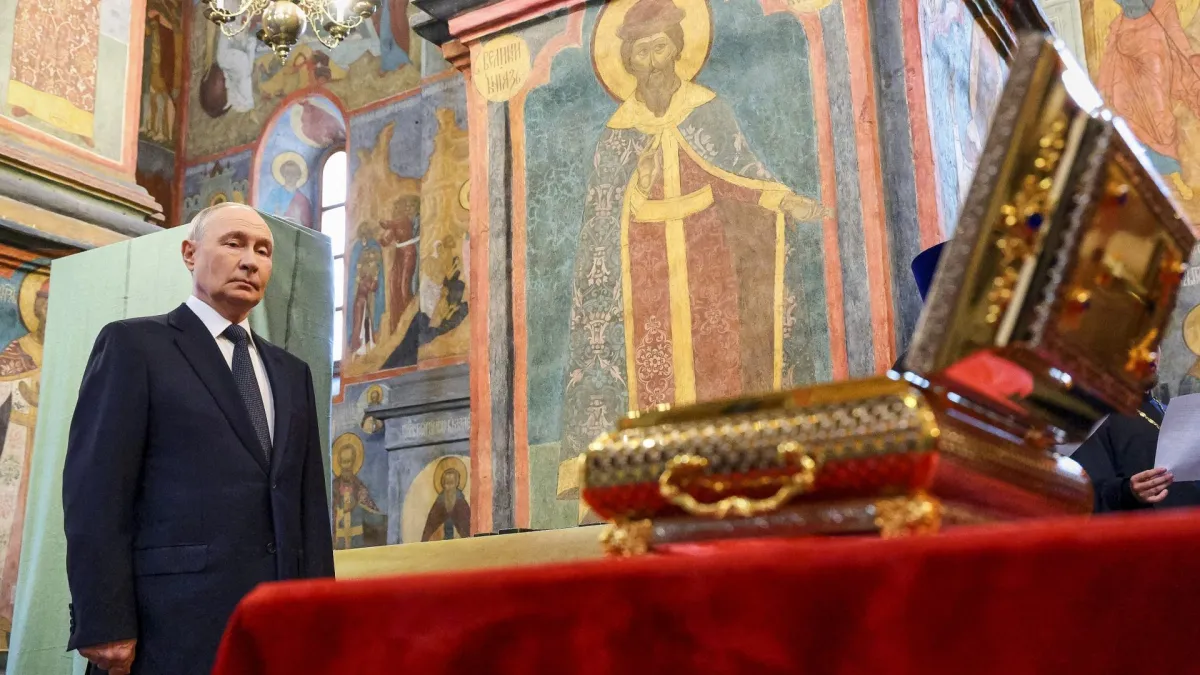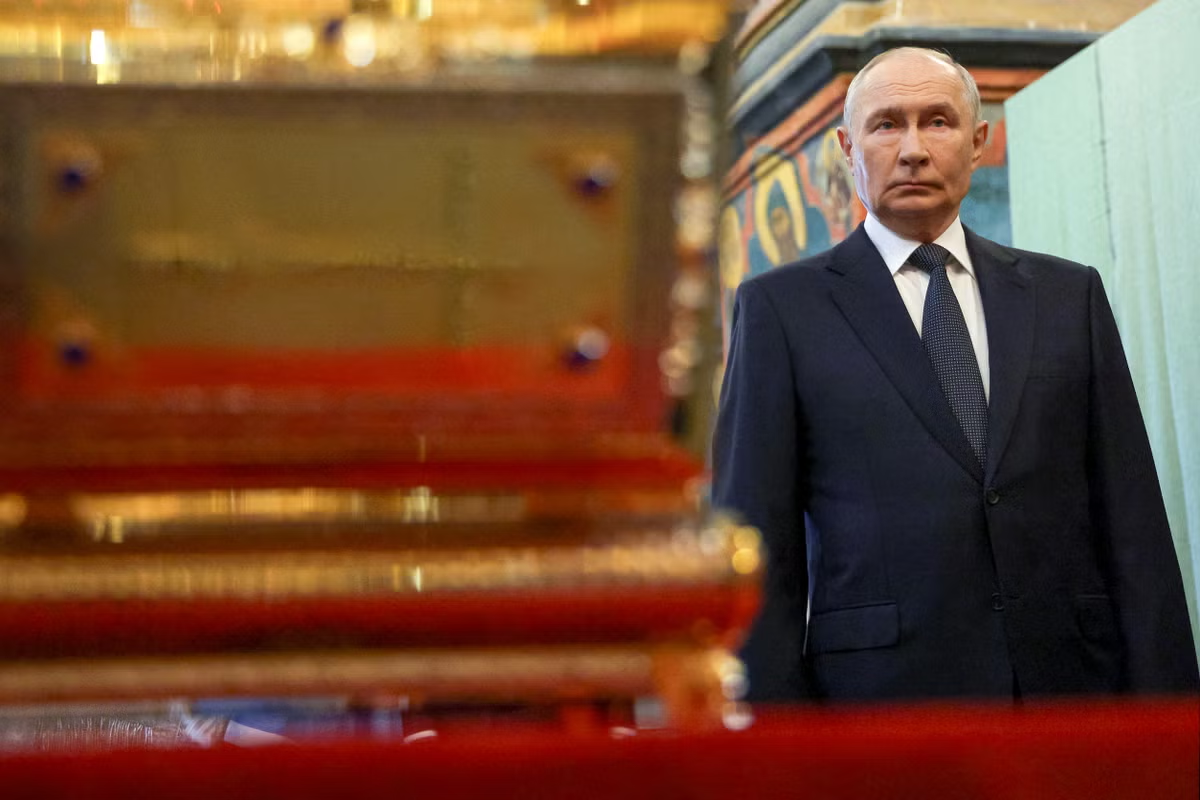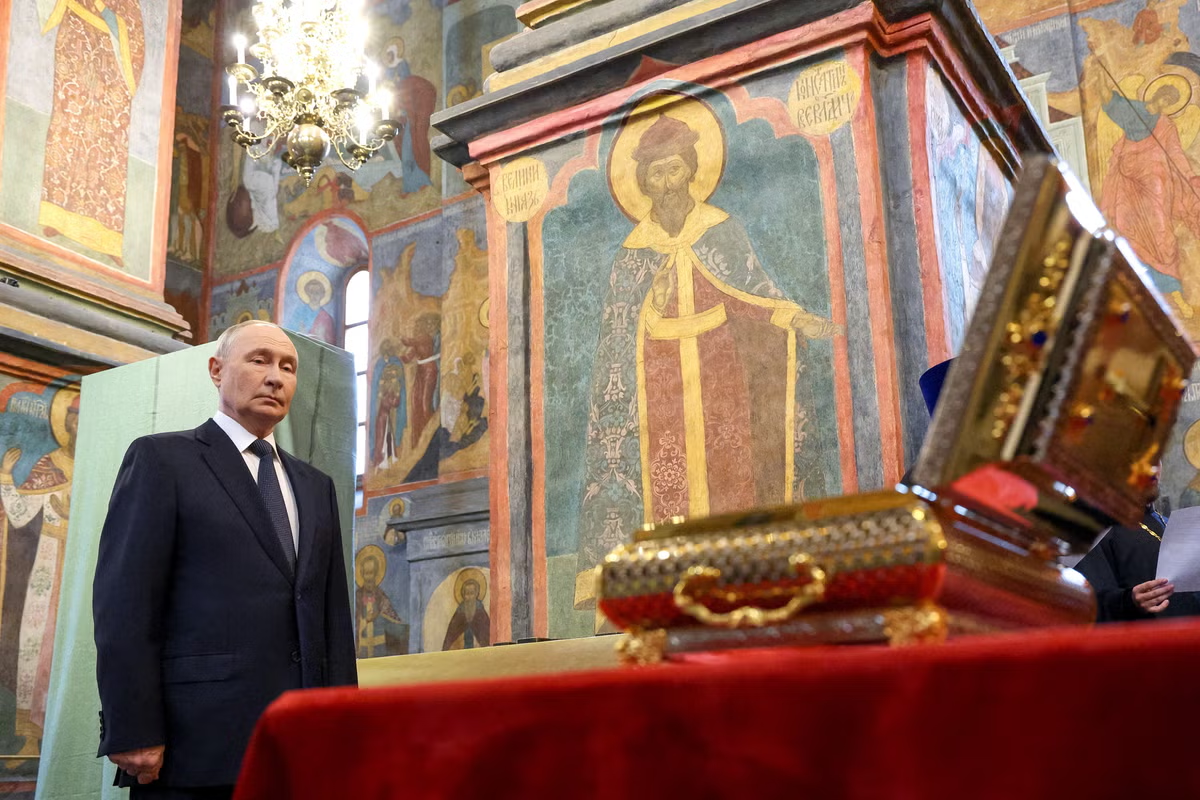
Russia has sent bone fragments from a legendary Russian prince in a bizarre attempt to boost morale for its soldiers fighting in Putin’s war against Ukraine.Tiny fragments from the sword hand of the medieval Grand Prince Dmitry Donskoy, who won a famous victory over the Mongols, have been sent in the Russian Orthodox Church's latest show of support for Putin's war.The Church, which has backed Putin throughout the conflict, said it had dispatched a fragment of Donskoy's right hand to Donetsk, one of four Ukrainian regions Putin said he had incorporated into Russia in 2022, a move Kyiv rejected as an illegal land grab. The sarcophagus of the Grand Prince, who died in 1389 and is revered by Russian nationalists for defeating the Mongol Golden Horde at the 1380 Battle of Kulikovo, was uncovered this summer during restoration work at Moscow's Cathedral of the Archangel inside the Kremlin.Russian military and church officials presented the discovery as a fortuitous find that could help Russian forces prevail in Ukraine, now in the fifth year of a grinding war.Putin personally inspected what experts said were the prince's well-preserved remains in August, hailing them as "an absolutely unique and marvellous discovery" which reinforced the foundations of Russian history.A Russian Army officer leans to a case with relics of a medieval Russian prince Dmitry Donskoy during a citywide procession marking the Feast of the Moscow Saints in Moscow, Russia, September 6, 2026 (Reuters)Referring to Donskoy as "the holy commander," the Moscow Patriarchate of the Russian Orthodox Church said part of his remains had been sent to the front to stand invisibly shoulder-to-shoulder with Russian troops."A fragment of the Grand Prince's right hand – the very same right hand with which he wielded his sword on Kulikovo Field – has been sent to the front to strengthen the soldiers' spirits," it said in a statement.The relic, held in a small ornate casket beneath toughened glass, will be shown to Russian combat units along the more than 1,000-km front line, it said.Donskoy, whose name was given to a Soviet tank column funded by the church in World War Two, was declared a saint by the Russian Orthodox Church in 1988.Russian President Vladimir Putin, right, crosses himself standing at the relics of the Holy Grand Prince Dmitry Donskoy, which were discovered during restoration works at the Archangel Cathedral of the Kremlin, in Mosсow, on Thursday, Aug. 20, 2026 (AP)The carefully choreographed effort to use his remains in a public relations exercise to boost patriotism and morale comes ahead of a parliamentary election later this month.The tour comes as Russian forces seek full control of the Donetsk region in eastern Ukraine and as diplomatic efforts to end the war have yet to yield a breakthrough.Donskoy's relics were carried through the streets of Moscow at the weekend in a huge Orthodox procession.Bearers carry a case with relics of a medieval Russian prince Dmitry Donskoy during a citywide procession marking the Feast of the Moscow Saints in Moscow, Russia, September 6, 2026 (Reuters)At a ceremony at a World War Two memorial in Donetsk on Tuesday, Sergei Kiriyenko, Putin's first deputy Kremlin chief of staff, joined military commanders and the Russian-installed regional head in kissing the relic and making the sign of the cross as a priest read a prayer."Both our military personnel and the people who live in Donbas need strengthening from above, need God's help and the blessing of our saints," Metropolitan Vladimir of Donetsk and Mariupol, a senior Moscow-appointed cleric, said. Donbas is a broader area incorporating Donetsk and neighbouring Luhansk which Russia controls almost in its entirety.Elsewhere, commanders have presented Donskoy's remains as evidence that God is on Russia's side.Patriarch Kirill of Moscow and All Russia leads a citywide procession marking the Feast of the Moscow Saints, in Moscow, Russia, September 6, 2026 (Reuters)The Defence Ministry on Wednesday released footage of troops in the Sverdlovsk region attending a church service carrying icons and Orthodox flags, alongside an interview with a commander who said the relics would support Russia's victory.Critics, however, have accused the Church of breaking with religious protocol to please the Kremlin. They have also questioned why Donskoy's remains, whose location was broadly known for decades, were recovered and venerated only now, 38 years after he was declared a saint."By the fifth year of war, the Church leadership in Moscow began to wonder what else it could do to show its support for what Russia terms its 'special military operation'," Alexander Zanemonets, an Orthodox priest and historian based outside Russia, wrote in a note for the Carnegie Russia Eurasia Center whose director Russia has designated a "foreign agent.""It had already sent priests to the front lines, instituted mandatory prayers for Russian victory in every church, and flown icons over cities. A state embroiled in war will try to compel all institutions, including religious ones, to participate in it."
Putin sends bones of warrior prince to Ukraine in desperate bid to boost morale
Donskoy, whose name was given to a Soviet tank column funded by the church in World War Two, was declared a saint in 1988
811 words~4 min read