“Better than a thousand days of diligent study is one day with a great teacher.”
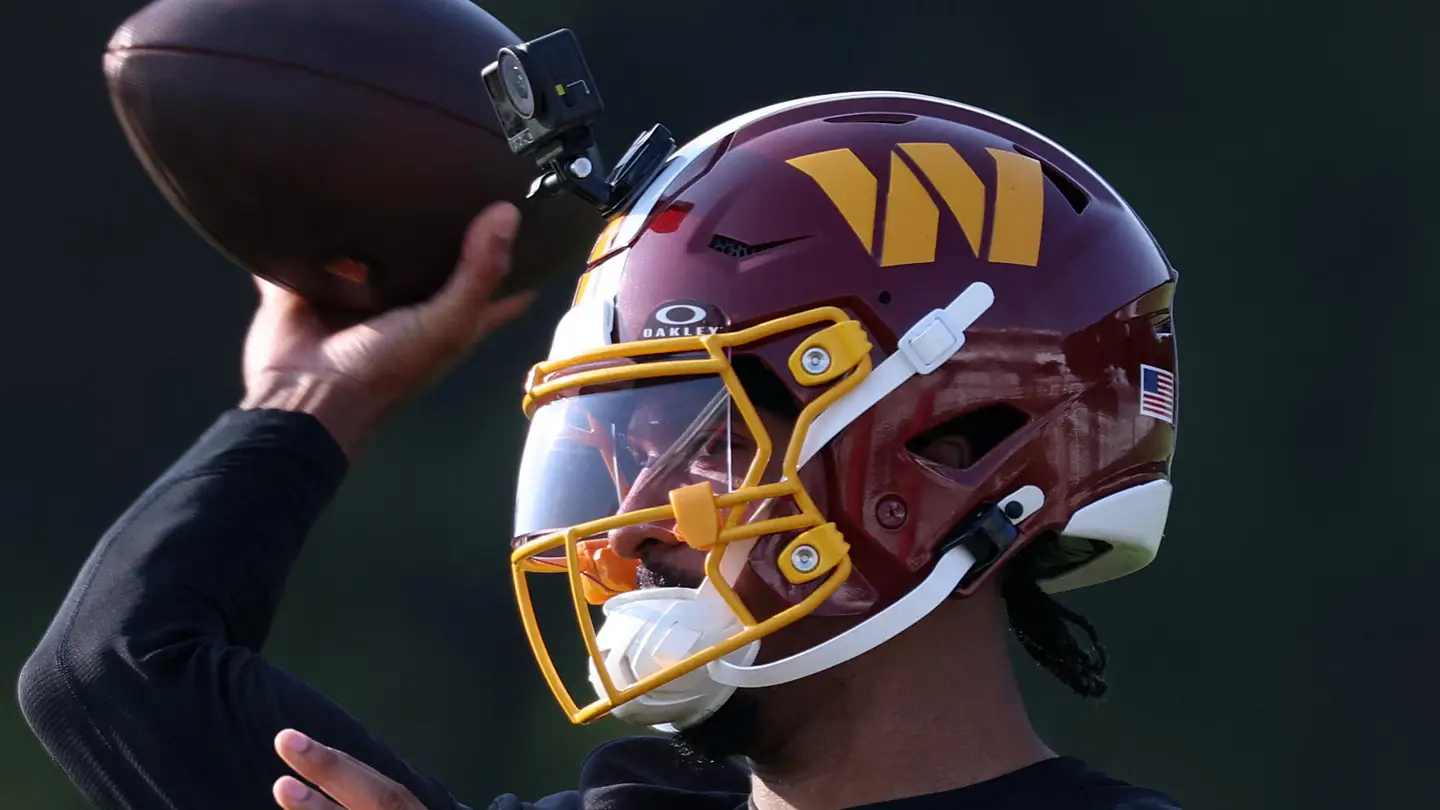
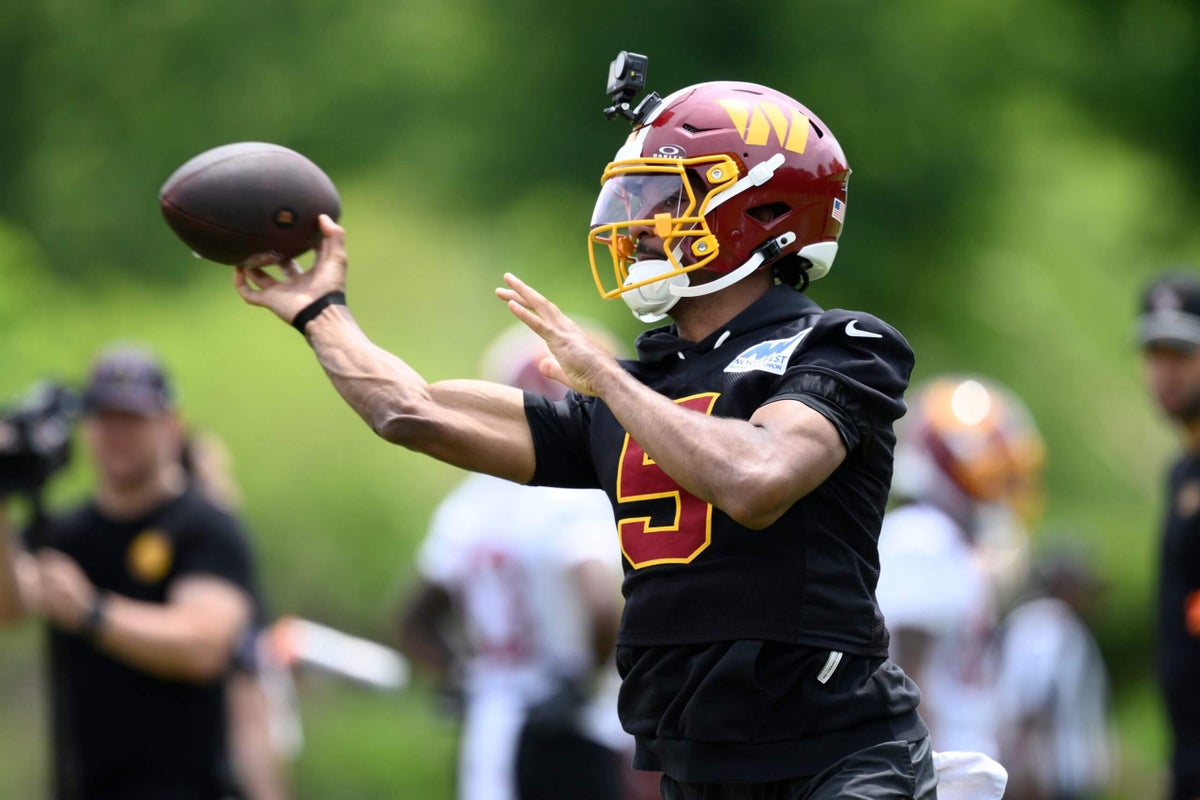
— Japanese proverbASHBURN, Va. — David Blough is, methodically, swatting at gnats. This is not a metaphor.It is a late afternoon at the Washington Commanders’ practice facility, where the bugs are feasting. The 31-year-old Blough is, as pleasantly as one can, given the heat and the swarming insects this time of day, discussing — likely for the hundredth time this summer — how he is introducing his football philosophies to the world on the game’s biggest stage as Washington’s first-year offensive coordinator.A question is posed to him: Who are your teaching influences that aren’t football coaches?“That’s a great question,” Blough begins. He repeats that phrase after many questions, leaving one to wonder if he actually thinks they are great questions, or just uses that mnemonic to gather his thoughts.“I’ve listened to a lot of pastors,” he continues. “And some are incredibly gifted, like given the gift of teaching. I grew up in Dallas, right in the Bible Belt. And there was a pastor down there named Matt Chandler, who’s an excellent teacher, as good as I’ve ever heard. There’s a pastor in the church that my wife and I went to (in Plano, Texas) named Jamin Roller. There’s a pastor here in D.C., at McLean Bible Church, named David Platt, and Mike Kelsey, both those guys. So you hear the rhythm with which they speak. You see the different methods with which they communicate, the analogies, the technology they use. You talk about rhythm, right? We have rhythms in meetings; they have rhythms of sermons. And it’s the same thing as if you’re teaching your young men.”To be sure, professional football is primarily about physical strength and playing to the edge of mayhem — but with purpose and precision. As Washington guard Sam Cosmi puts it, “It’s really hard to mimic (the physicality required for) O-Line. If I did that in public, I’d be behind bars.”But it’s also about processing data, at an incredibly advanced rate, found within complex ideas. That requires someone who can teach those ideas and terminologies to players who learn in different ways and at different speeds. For the first time in his meteoric rise through the NFL’s coaching ranks, Blough is the primary instructor.Of all the bets the Commanders are making in this third season under general manager Adam Peters and head coach Dan Quinn, among the biggest is that their two new, first-time coordinators — Blough on offense and Daronte Jones on defense — can teach their systems, rapidly and completely and effectively, to their respective sides of the football, starting Sunday against the Philadelphia Eagles. Nothing much is riding on this, other than the success or failure of a multibillion-dollar franchise, centered around a once-in-a-generation quarterback in Jayden Daniels, and/or the head coach’s job security.Since the start of OTAs in May, Blough and Jones have put their football philosophies into practice, both individually and through their coaching staffs. But the how matters just as much as the what.“We spend a lot of time thinking about this,” Blough said. “I didn’t want, we didn’t want, any young man to walk out thinking that they couldn’t exhaust all options to learn. So if they wanted to learn via walk-through, we’ll have somebody available to walk through. If they want to learn via testing, we can give them a test. If they want to learn via (flashcards), we have flashcards. Different coaches do it in different ways. … There’s a lot of new technology available, from annotation screens and group things they can see on their phones. We want to have all of those options available to each player. And we want to be innovative with it, too.”At Blough’s request, Commanders quarterbacks wore GoPro cameras during OTAs for the first time. Install meetings showed clips from matches during the recent World Cup to demonstrate how players had to perform under the greatest pressure. Another meeting dipped into the recent Netflix documentary about Rafael Nadal — which showed not only his most glorious moments on the court, but the physical suffering he endured to reach those incredible heights.Will the Eagles three-peat as NFC East Champions?Charlotte CarrollBoth coordinators not only had new position hires, like D.J. Williams, who took over for Blough as Washington’s quarterbacks coach, but were also working with holdovers from the staffs of former coordinators Kliff Kingsbury and Joe Whitt.Quinn opted to promote Blough rather than potentially lose him to the Detroit Lions, who wanted to interview him for their vacant OC position. There were proven elite offensive voices out there, like former Miami Dolphins coach Mike McDaniel, who’d proven adept at marrying the running game with explosive pass plays. But Quinn went with Blough, whom he’d hired as assistant quarterbacks coach in 2024, then promoted to QB coach late last season after Tavita Pritchard left to become Stanford’s head coach.“I was very impressed with Daronte and David, their communication with the players,” Quinn said at the end of the preseason. “And that may seem simple, but I’m telling you, it’s not.”Blough is young for an NFL OC. There are recent precedents, though, of other teams going young at that position — if one is OK with the burden of proof placed upon him by way of such comparisons.Kyle Shanahan was 28 when the Houston Texans hired him as offensive coordinator in 2008. Josh McDaniels was about to turn 30 when the New England Patriots officially made him OC in 2006. And Sean McVay, of course, is the patron saint of this new church. He was promoted to offensive coordinator in D.C. in 2014 by then-coach Jay Gruden, having not yet turned 28. At 30, the Los Angeles Rams made McVay the youngest head coach in league history.Like all of them, Blough has gone places in a hurry. Just three years ago, he was finishing an unspectacular pro career as the emergency practice squad quarterback for the Lions. But at every one of his stops as a player, beginning in high school, he showed high aptitude for not only learning, but being able to explain what he’d learned to his teammates.Blough’s two years with Daniels in the quarterback room provided ample runway for his latest promotion to stick. They get along. But Blough’s changing much of what Daniels has done for most of his career.Daniels will play primarily under center rather than in shotgun. He will huddle before plays rather than speed to the line as he did in Kingsbury’s no-huddle offense, which will give him less time to adjust calls and blocking assignments as the play clock goes down. Receivers will be in motion a lot more this season than they were the last two. (This was a criticism of Kingsbury’s offense when things went badly last season, but that critique wasn’t leveled much in 2024, when Daniels was the near-unanimous NFL Offensive Rookie of the Year, setting a league record for completion percentage for a qualified rookie quarterback, at 69 percent.)There weren’t just the pre-snap changes; training camp was filled with “call-its,” non-scripted plays sent to the quarterbacks in real time to try to put maximum stress on the entire unit to perform. Quinn wanted to see mistakes. Theoretically, it will help everyone learn.Said Blough: “In our society, right, playing it safe is praised. Now, these men don’t play it safe, because they’re the one percent of the one percent of the one percent. But playing it safe is praised, and everybody has an opinion. So what we say in our room is, ‘Winners fail, and losers hide.’ So we challenge them to go fail. And that’s what DQ means when he says let’s put some stress on ’em, see what they can and can’t handle.”But none of that would matter if Daniels wasn’t on board — not only with the system, but with how it was disseminated.During OTAs, teaching the new plays and systems happened during morning position meetings, and then could be reinforced with on-field walk-throughs in the afternoon. Once training camp began, the installs would occur during the late afternoon position meetings — allowing the team to immediately walk through for 90 minutes, then attack it again the following morning during practice at game speed.“That’s a little bit of the crawl, walk, run into that space,” Quinn said.Daniels is a walk-through guy. He prefers to take the information given out during the meetings, go on the field and put into action what coaches just talked about, go home and restudy, then come back the next morning to see if he truly got Blough’s intent. Daniels didn’t change up his own daily routine; he was up and at Commanders Park early, as always. But if something about the new system wasn’t meshing in his head, he wanted to attack it immediately.Which was part of why Daniels brought almost all of Washington’s receivers and quarterbacks out to California for separate workouts during the spring.“Bringing the guys out there, where we could talk about it, you’re more comfortable as OTAs go on, within the install,” Daniels said Wednesday. “Maybe Day 1, it’s like everything’s moving fast. And then, mandatory minicamp, it’s like, OK, I understand it now — the cadence of Blough, how he wants to call the plays, stuff like that, and being able to articulate that to the offense. And then, take that momentum into summer, and work on it super hard. I’m a hard worker. So at the end of the day, I was going to be the best version of myself when we come out of training camp, and we’re humming.”Commanders quarterbacks, including Jayden Daniels, wore GoPro cameras during OTAs for the first time this year. (Nick Wass / Associated Press)A modern NFL playbook isn’t a hardbound, spiraled thing anymore, like it was 30 years ago. In those days, offensive coordinators had several hundred plays painstakingly written up, page after page. Today’s players use iPads and group chats to go over what they’re supposed to do.There is, though, overlap from one system to another. There are only so many zone runs, or passing plays mirrored off them, that any coordinator can dial up in a given season.“Everybody runs the same s—,” tackle Brandon Coleman said.But you still have to learn it. And, if you’re lucky enough to last long, unlearn it — multiple times.Terry McLaurin, beginning his eighth NFL season as Washington’s top wide receiver, is on his fifth offensive coordinator. Each not only had different play calls and different verbiage for those plays, but also had different concepts.McLaurin, though, has put up numbers in every one of those systems. He expects to do so again under Blough.“I think Blough’s just done a great job of making things marry together, so there’s kind of little tidbits in the play calling that’ll kind of remind you of what you may have,” McLaurin said during camp. “So, if you could learn not only conceptually, OK, this is what we’re trying to get done, but then you’re hearing the play call, getting used to hearing the plays in the huddle, and it reminds you of what you studied the night before, then you’re gonna have success.”The quarterbacks, of course, have to tie it all together for everyone. They have to master the verbiage, so every player in the huddle knows what he is supposed to do. But the quarterbacks also have to master the concept behind every play, so they can make adjustments if needed as the play clock is winding down. And they have to do both in a way that inspires confidence in the other 10 players. It takes time.“Like, when Athan (Kaliakmanis, Washington’s rookie seventh-round pick) first got here, for example, he came from an offense (at Rutgers) where they looked to the sideline, they signaled, and he went like this (claps his hands together),” Blough said.“And I was telling my wife, I was like, he was really struggling with some of the play calls at the beginning. And I said, ‘It’s like he’s speaking a new language.’ And she was like, ‘No — it’s like he’s learning how to speak.’ And it was like boom. And to some extent, Jayden’s in the same boat, from what we’ve done. Not always. Sam (Hartman)’s in the same boat. So we really have to go foundational. And they have responded exceptionally.”Daniels understood what Blough wanted.“But it’s also like, this is how I see it,” Daniels told The Athletic. “You’re putting your own spin on it. He wants us to own the offense. But within the parameters of what he has, he allows us to go out there and play ball. I think it’s huge. Everybody’s different as a player. To be able to go out there and put your own spin (on a play), you don’t want to feel like you’re in a box. You don’t want to look at the lines of paper and say, ‘I have to run it exactly this way.’ Cause we’re still are the ones who have to play. And we’re going against humans; we’re not going against robots. They might do something you’re not expecting, and you’ve, basically, got to play backyard football, put your own spin on things.”Coaches went into camp assuming the GoPro video would help the quarterbacks visualize plays better, helping them with retention. It did — but there were additional plusses.“We found the audio was more valuable than the video — probably 5x,” Blough said.“Hearing the verbiage. Our quarterback can coach up a situation in the huddle — ‘Hey, we gotta get out of bounds here.’ And we know if he’s saying that, we know if the player heard or didn’t hear what he said. An unintended benefit was, say, Laremy Tunsil wants to hear every play that went on in training camp after he went out (with a triceps tear). He’s able to still listen to every single play call. All the players are. So, I would say that was a big benefit for our group, especially with a different operation than we’ve had the last few years.”The audio helped everyone.“We would (listen) occasionally,” center Nick Allegretti said. “Really, if there was a miscommunication or something like that, we’d like to see why it was a miscommunication. So that helped a ton.”Since it was new for everyone, everyone was on the same page.“The terminology, obviously, it’s going to change a little bit,” Coleman said. “But given that (Blough) was here, there’s some things that stayed the same. He’s going to add some new things, but that just comes with it. It’s as simple as learning a new vocabulary in school. All you have to do is sit down with it. I took the playbook, and then just ran the plays; maybe had my lady call them out, stuff like that, so I just get used to it. But it’s a quick turnaround. It doesn’t take long. You know what it is; you just have to remember how it goes.”Commanders offensive lineman Brandon Coleman compared picking up a new offense to learning a new vocabulary in school. (Gregory Shamus / Getty Images)Blough has borrowed from multiple teachers. Ben Johnson was the Lions’ tight ends coach during Blough’s initial years there, already showing signs of becoming the play-calling savant he later displayed when promoted to Detroit’s OC in 2022. (Darrell Bevell, another high-level offensive mind from whom Blough learned packages and systems, was a previous Lions OC.) Blough was on the Minnesota Vikings’ practice squad in 2022, in Kevin O’Connell’s first season there as head coach. Jeff Brohm, now the head coach at Louisville, was Blough’s coach at Purdue.“Just like players learn, there’s a lot of different ways to teach,” Blough said. “Kliff had a unique style. Ben had a different style. Like, I could probably pull different things that each of them were exceptional at. And in a perfect world, those things are notches in my belt. Because we’re all shaped by the experiences that we’ve seen, and I really believe that. Like, Jeff’s creativity, and Ben’s detail, and Kliff’s, like, he allowed a lot of freedom for guys. And that was empowering for them.”Tight end Colson Yankoff was a running back at UCLA. He loved the Bruins’ running backs room, then headed by backs coach DeShaun Foster, who played six NFL seasons. Foster wanted input from his players on what they liked and didn’t like about the offense.“I think a really good word for that is (Blough’s) collaborative,” Yankoff said. “Blough obviously has done this at the highest level as well, playing it, which I think helps a ton. And you can say to him, to your point, ‘Conceptually, this is what we’re trying to accomplish on this play,’ or whatever it may be in a situation. ‘These are my thoughts. How do you guys see it?’ Or, like, OK, you ran it this way; I kind of liked that; what are you thinking here? Creating that collaborative environment, where everyone’s just on the same page about trying to achieve the common goal of winning and getting the play to work, is really helpful.”Such collaboration paid dividends in ’24, when Kingsbury famously dialed up a play Blough had designed for Daniels’ last-second, game-winning touchdown pass against the Eagles. Now, it’s Blough who’ll be looking for good ideas, no matter where, or from whom, they come.The Commanders have known for almost four months who they’ll be playing on the road in Week 1. That it’s the Eagles only raises the stakes. Philly is the two-time defending NFC East champion, having won the division three times in the last four years and five times in the last nine. Washington has Daniels, a rebuilt defense, and — it hopes — the element of surprise.Because no one knows what a David Blough offense will look like when the games start for real. Maybe not even Blough. But he does know what it will be rooted in, and what he’s emphasized these last weeks and months, and how he’s filtered that down to his players.“We believe in what we do and making the same things look different, and making different things look the same,” Blough said. “So, we know there are three games in the preseason, and maybe they’re watching other teams’ tape. But they don’t know who the ’26 version is yet. Call it, six weeks in, we will know what we’ve put on tape. We know that you know what we’ve put on tape. And how do we manipulate that and still put our players in the best position possible? I view it as chess, man. It really is the greatest chess match in the world. And the best chess players are always a couple steps ahead.”