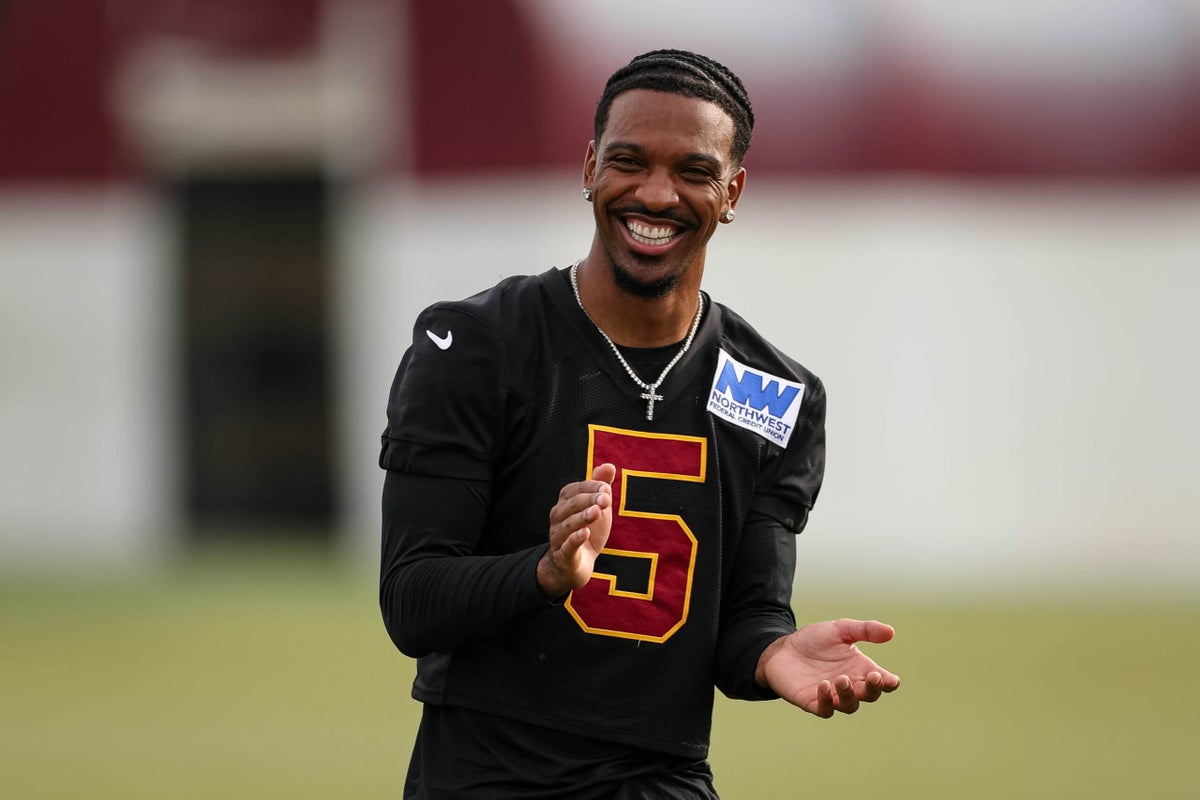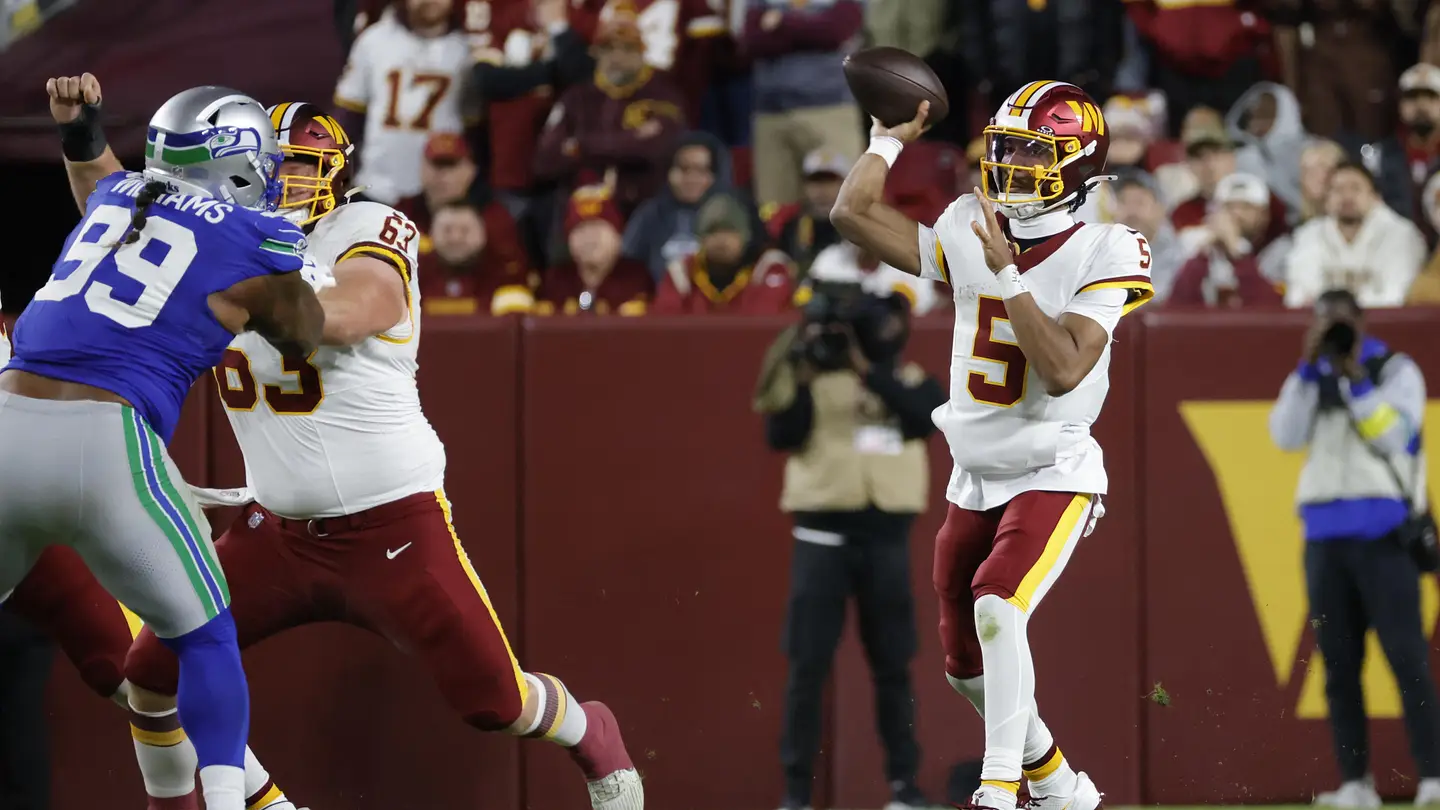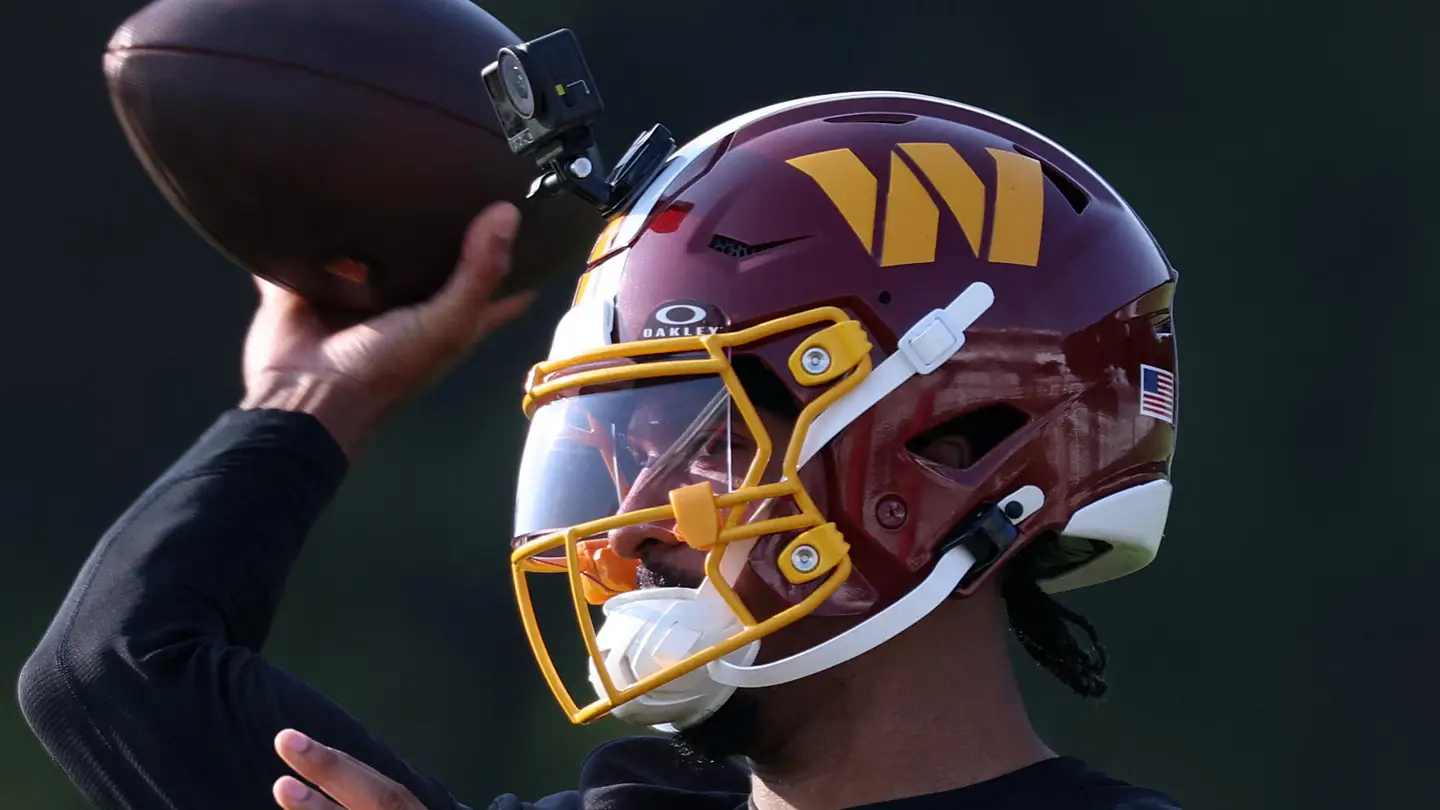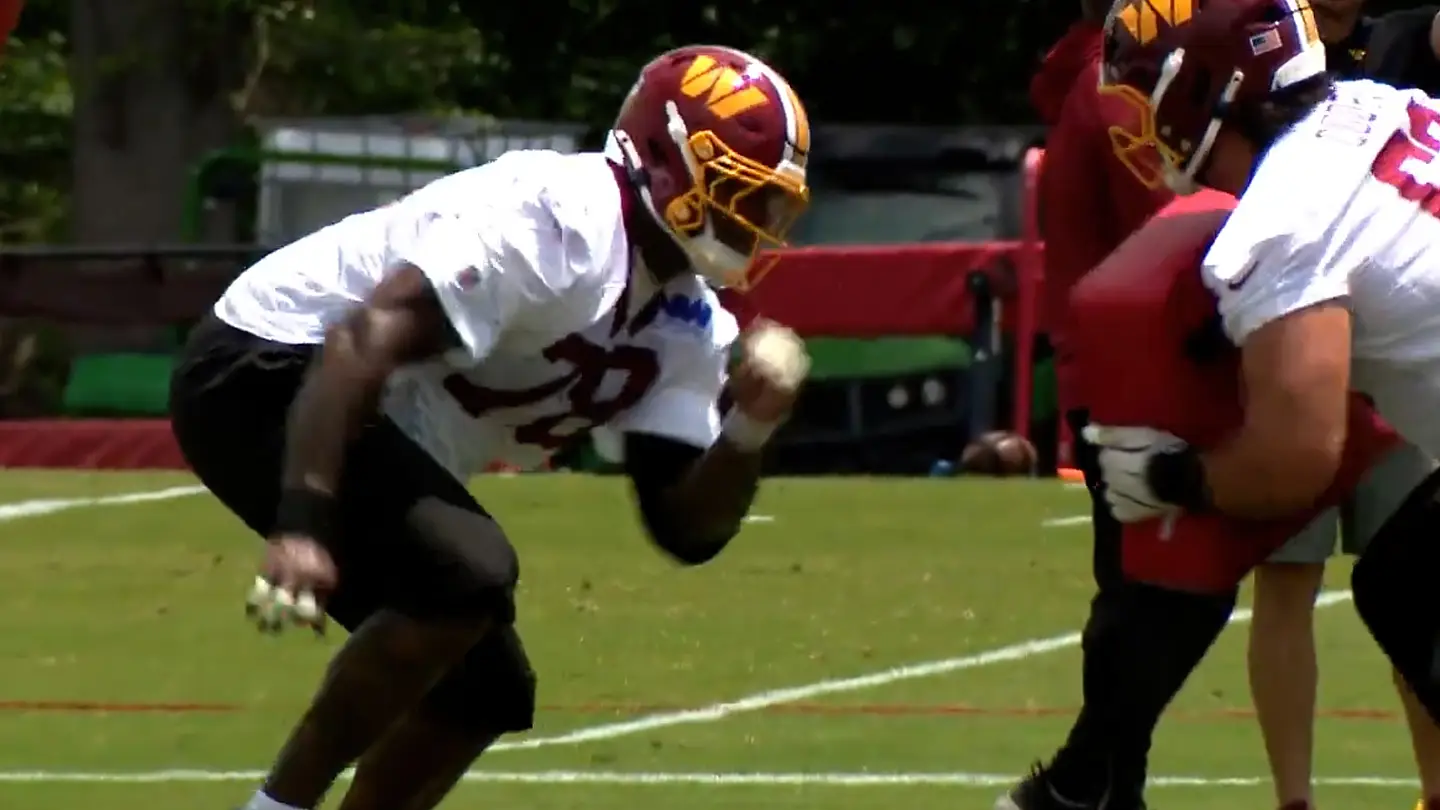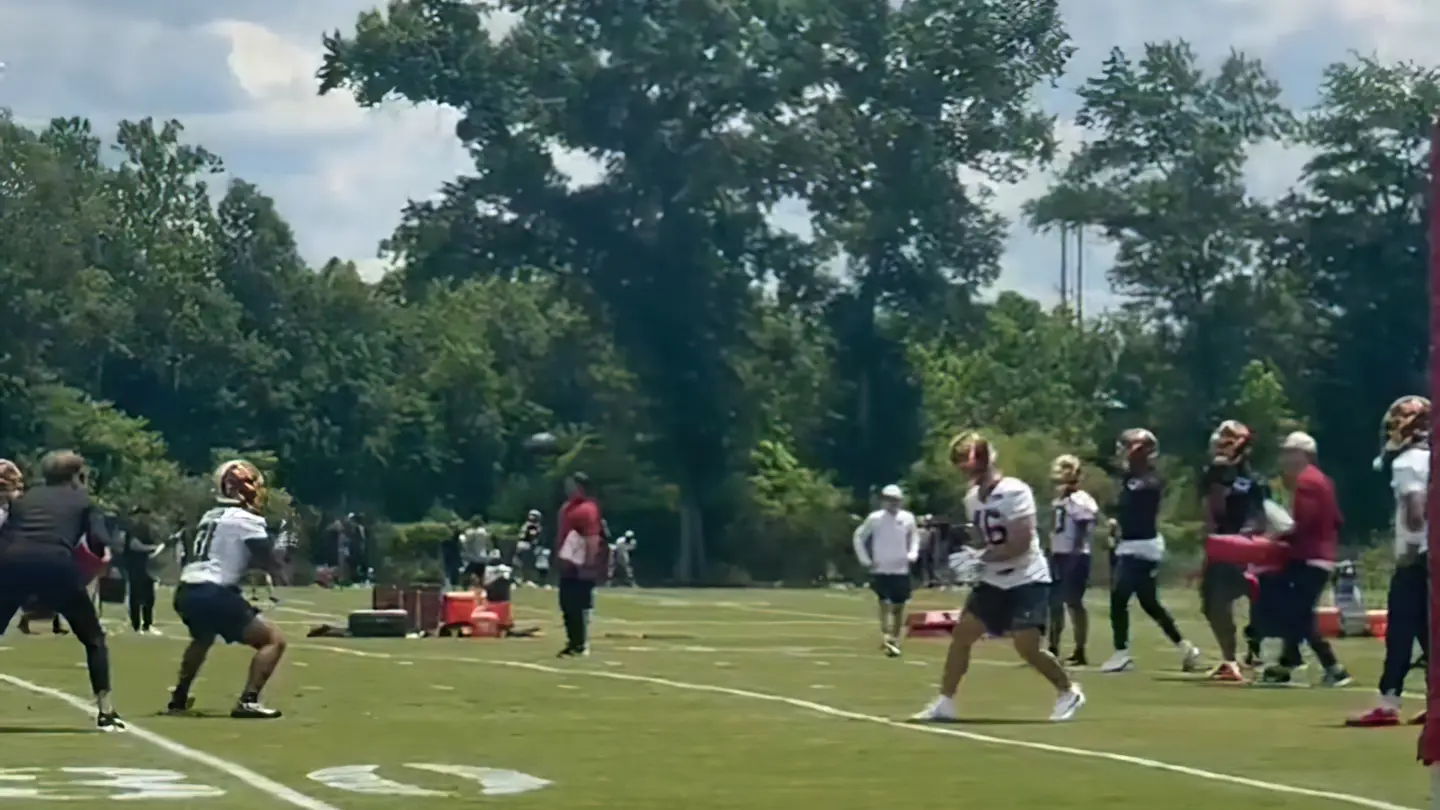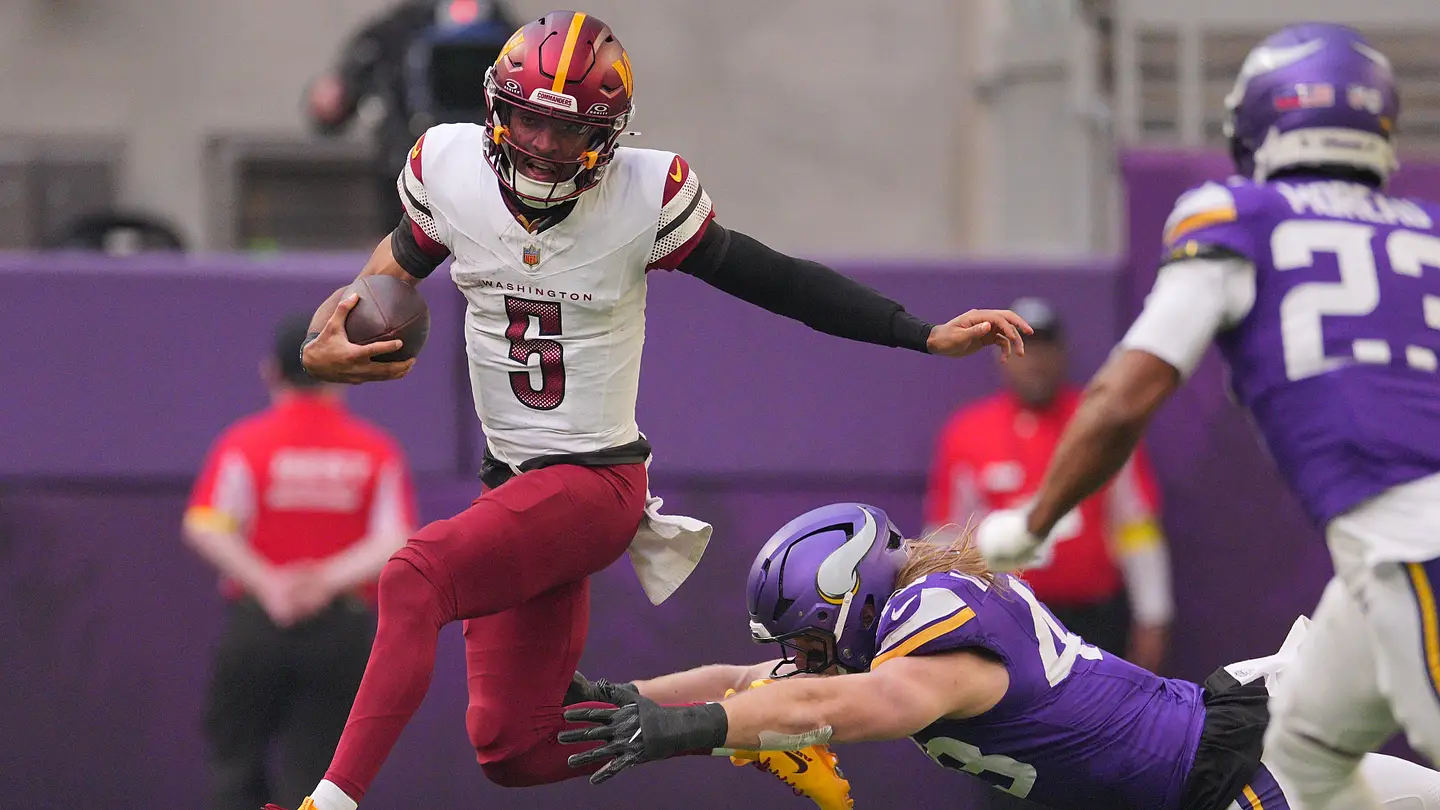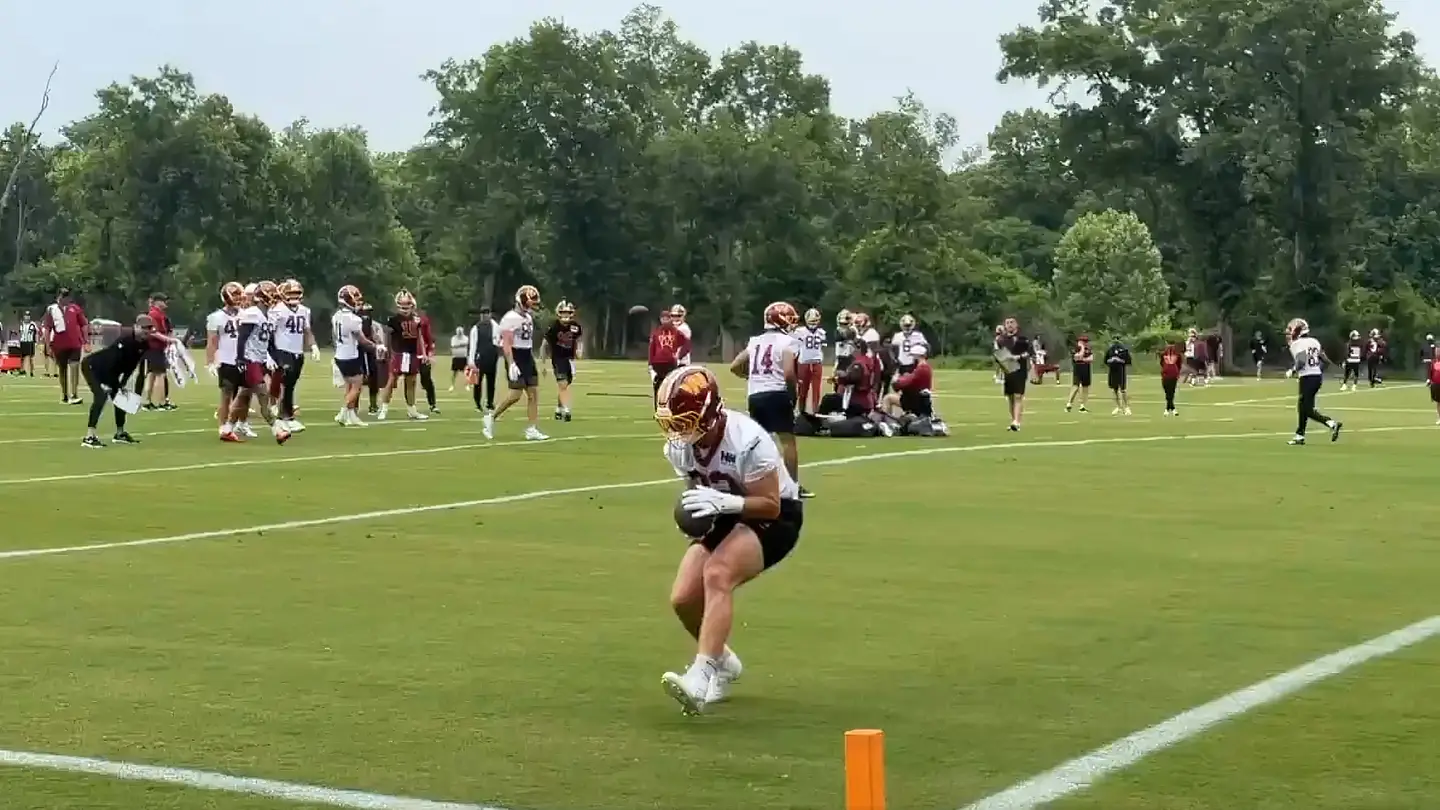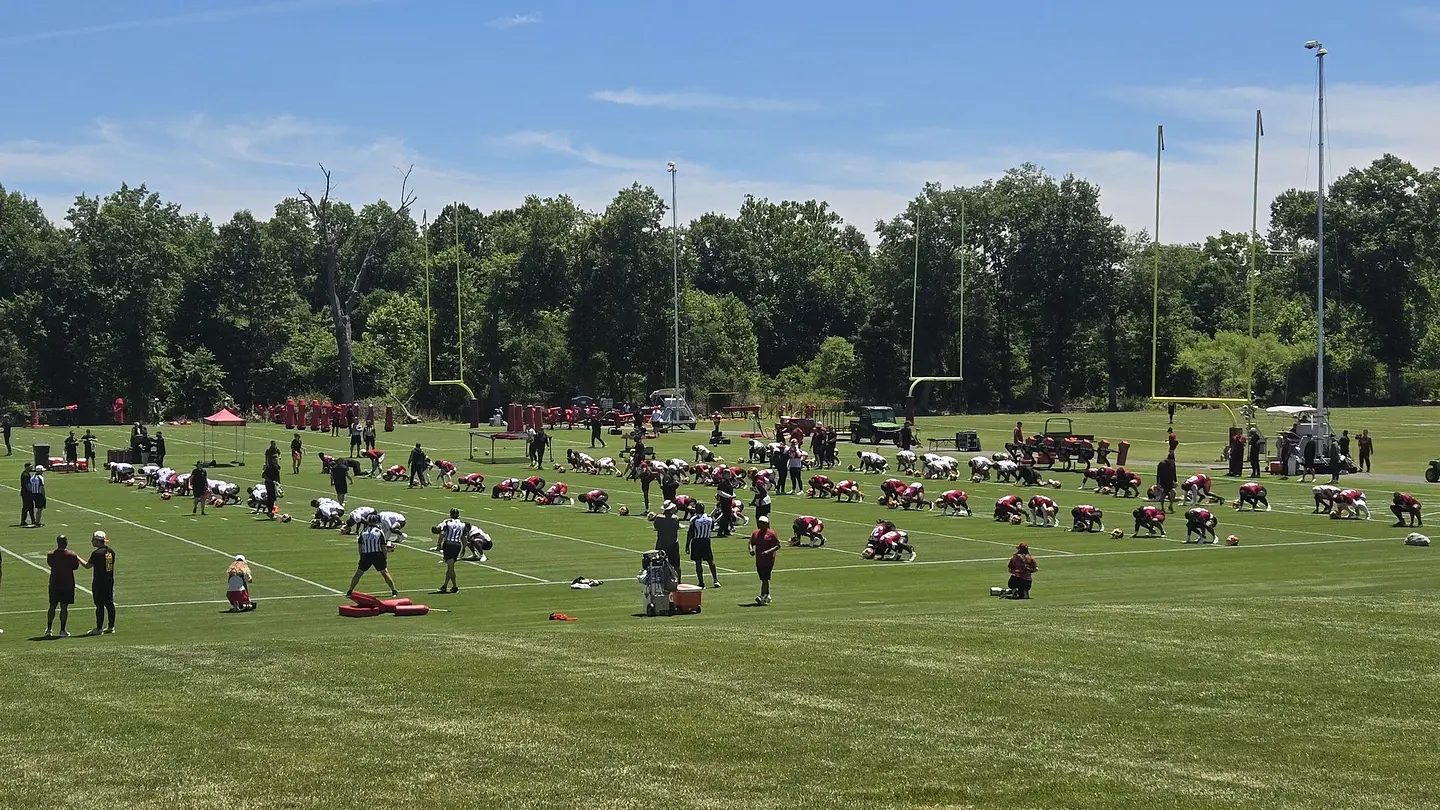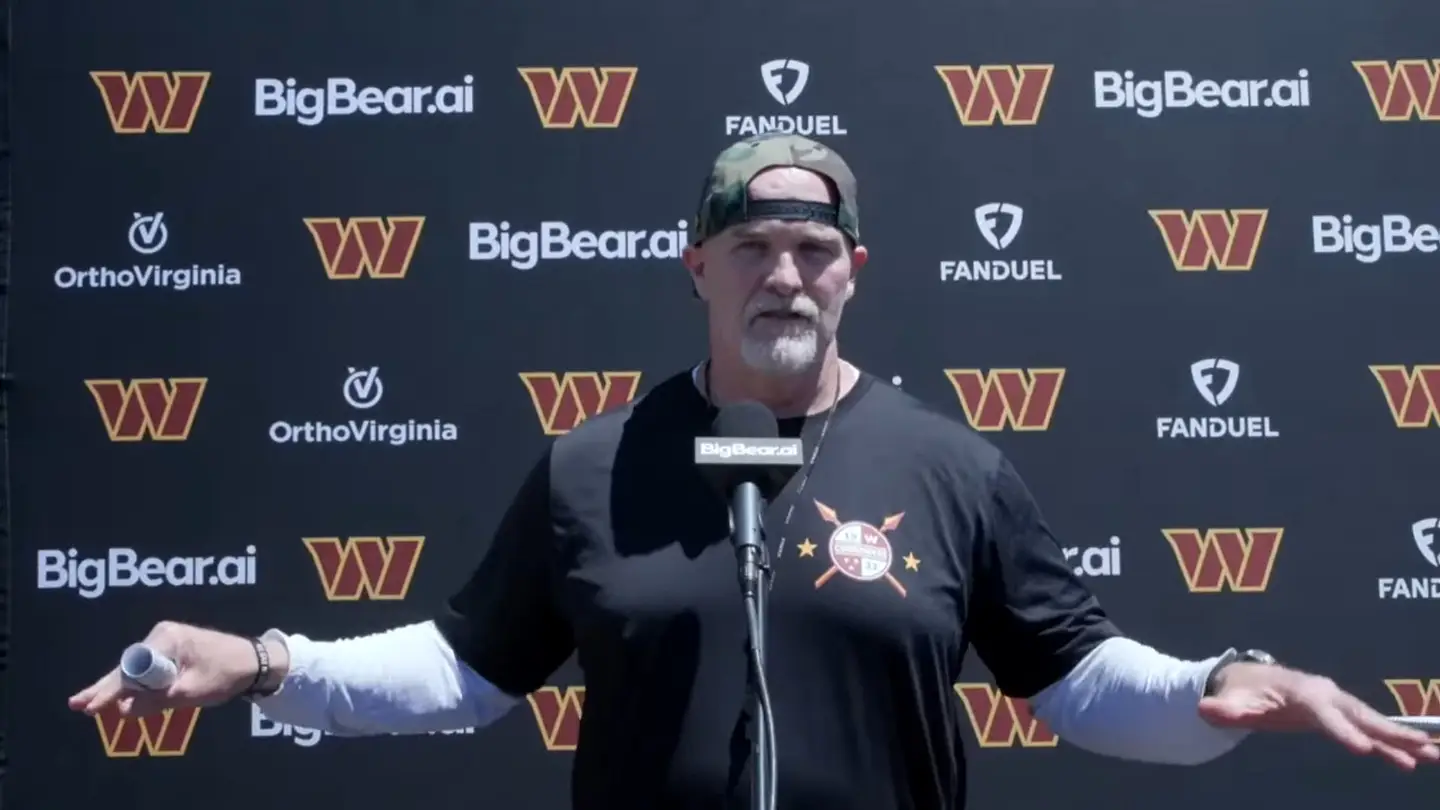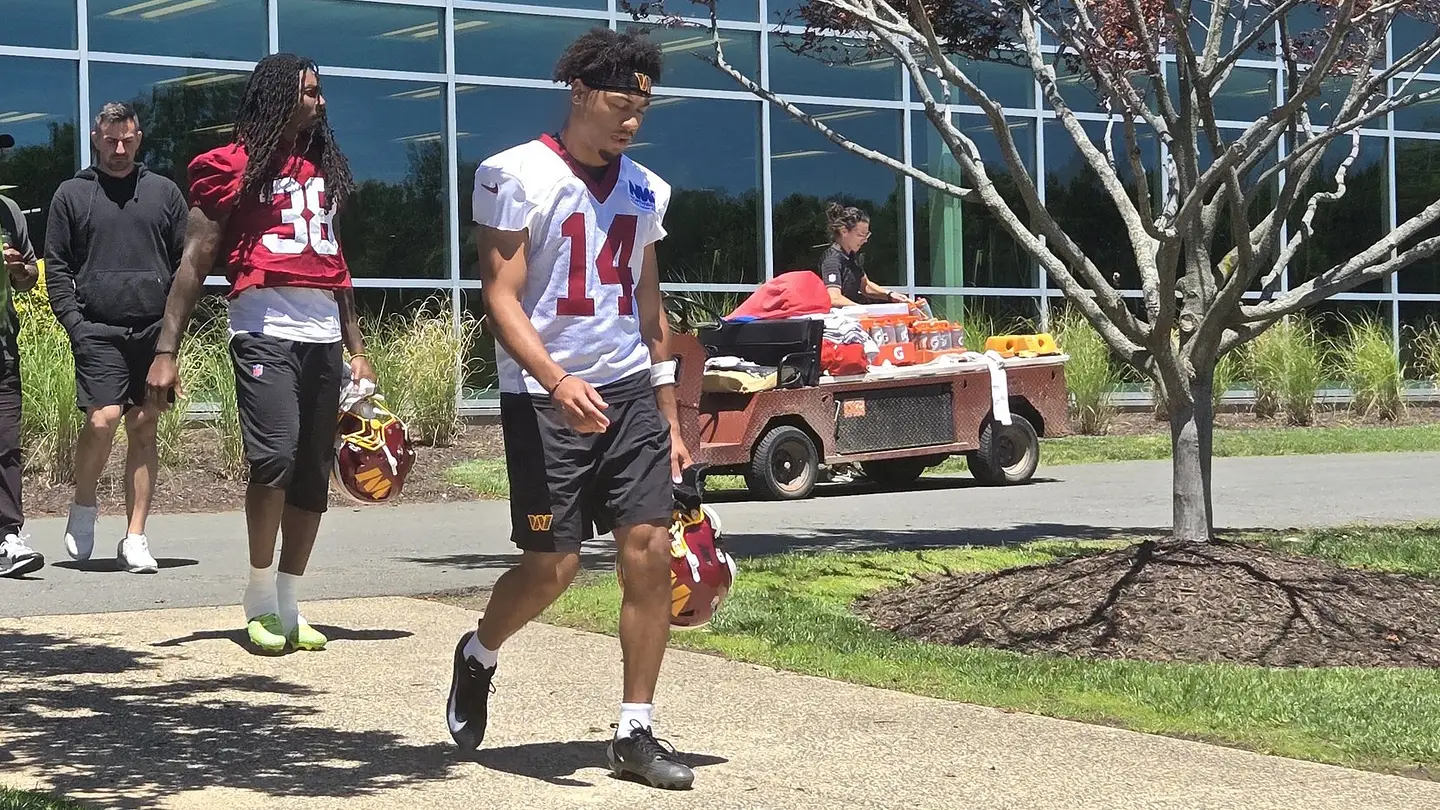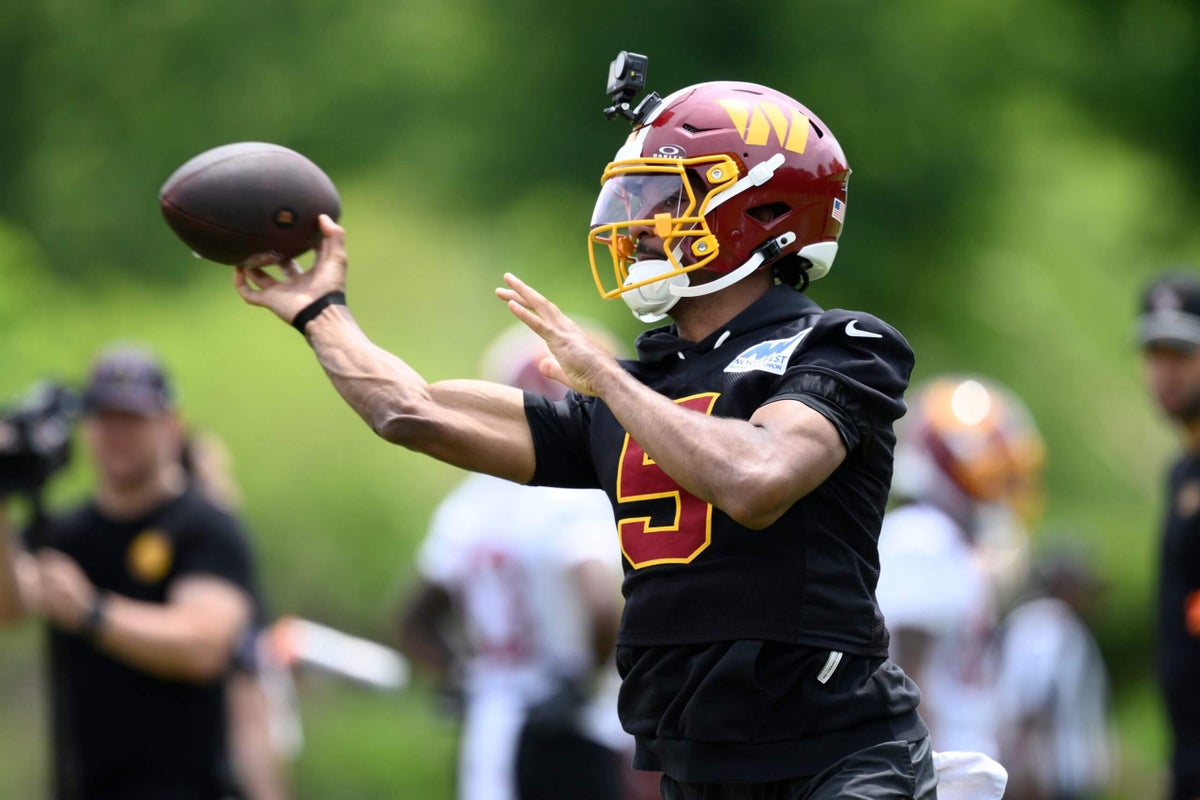
ASHBURN, Va. — Things Jayden Daniels did repeatedly this week during the Washington Commanders’ minicamp that he did hardly at all during a miserable, start-and-stop 2025 season: Gather his offensive teammates around him in a huddle. Break that huddle with an old-school, in-unison clap. Walk to the line of scrimmage to put his hands under his center’s butt. And delay the snap so that receivers — sometimes multiple receivers — could go in motion from one side of the formation to the other.The summer is here. Training camp is more than a month away. The Commanders’ new offense has been installed over the course of only 12 offseason practices — the last of which concluded Thursday with a group hug when the final horn blew and then a cookout with players’ and coaches’ families, all of whom were welcome to watch the final session.Daniels’ conclusion?“I still got a long way to go,” the star quarterback said.That’s probably both correct and to be expected. Coach Dan Quinn said the offense was about 80 percent installed.“But knowing it and then making the plays come to life,” Quinn said, “that’s different.”Still, over the course of those dozen practices, a few of which were open to the media, we learned several things about the Commanders’ intentions with their new offense under first-time coordinator David Blough. Let’s break that down.Minicamp takeaways: Commanders have built their foundationNicki JhabvalaThe offense will huddle up and Jayden Daniels will be under center — a lotOne of the hallmarks of the offense of former coordinator Kliff Kingsbury was that it was constantly in hurry-up mode and that the quarterbacks almost always were in shotgun. Indeed, the Commanders last season led the NFL in shotgun percentage (86.9) and no-huddle rate (60.8), according to TruMedia.Under Blough, that changes. The reasons are multiple.“Just trying to open (the quarterback’s) eyes, maybe, under center to some of the play-action concepts and different things we want to (use to) stretch people horizontally and vertically,” Blough said. “We’re not creating essentially new concepts. Just asking them to do different things.”The Commanders clearly believe having Daniels under center more often will enhance the play-action aspect of their offense. There will be very little run-pass option.The mission: Maximize Daniels’ talents while keeping him healthy.“System-wise, (Blough) had a real vision for what that would look like with Jayden and his teammates … and how we could best feature him,” Quinn said.Terry McLaurin — and others — will move around the formationIn the two years under Kingsbury, it was rare to find the Commanders’ best receiver somewhere other than the left side of the formation. Blough wants different receivers to appear in different positions at different times. McLaurin already sees the benefits.“Just being able to be multiple, being able to be moving around as a receiver” is an advantage, McLaurin said early in offseason workouts. “When you’re the No. 1 guy, and a team goes into the game and they have to worry about you playing one, two or three (receivers) on the left. One, two, three on the right. What is he doing in stack? What does he do in motion?“That forces them to have to communicate more and forces them to have to study my route stems and where I’m lining up versus just being able to know, like, ‘Hey, you know 17 is going to be on the left side. We can shift our defense and play it to that.’”This is all some level of disguise and can sound more complicated than it is. Think of it this way: The Commanders will be able to run the same plays from different formations and different plays from the same formations.“When we snap the ball,” Blough said, “you shouldn’t know if we’re running it (or) throwing it from all different aspects (with) multiple personnel groupings.”McLaurin’s presence mattersThe Commanders are quietly thrilled with how engaged and in shape McLaurin was this spring, qualities that have helped him lead a receiver room that doesn’t have a clear No. 2 as summer break arrives. The flip side of that excitement: It’s easy to see how McLaurin’s contract holdout last year — he skipped spring practice and then “held in” during the early part of training camp — disrupted the entire operation.Whatever the reasons, McLaurin missed a career-high seven games with injuries in 2025, which led to career lows in catches (38), yards (582) and touchdowns (three). The 30-year-old is able to see the impact his absence had on the Commanders’ 5-12 campaign.“Missing that time, I think, with a young quarterback is extremely important, because although I was going into Year 7, Jayden was going into Year 2,” McLaurin said. “And our connection is extremely important to build during this time. …“Now that (the contract issue is) out of the way, we’ve been able to hit the ground running and it’s allowed us to really work out a lot of early kinks, and we’re connecting on a lot of plays early.”McLaurin participated in all 12 spring practices and carried himself as the decided leader of the receiver group.“He’s an open book,” rookie third-round pick Antonio Williams said. “I appreciate him for that.”The line will do a lot of zone blockingQuinn said repeatedly during these nonpadded workouts that it’s hard to get real evaluations on offensive linemen in the spring because so much of the job revolves around physicality. What we do know: The offensive line will use a primarily zone-blocking scheme reminiscent of the one Mike Shanahan employed in Washington from 2010 through 2013 — a system he perfected in Denver in the 1990s.Zone blocking in the run game is exactly as it sounds: Offensive linemen block an area rather than a man. It requires linemen to be athletic and on the move, and results in a lot of double-teams on defensive linemen.“Under-center snaps with some wide zone — with some pulling — I’ve done it before,” said Nick Allegretti, who is moving from guard to center. “But it’s gonna be a bigger part of the bulk of that offense. I’m just getting out in space.”Because there was no tackling during these workouts, any long rushing touchdown was kind of fake. But during one workout last week, Allegretti and guard Sam Cosmi celebrated a supposed score by jumping on each other because they had pulled and led a running back into the end zone some 25 yards downfield — just how Blough drew it up.The belief in David Blough is realAt this point three years ago, Blough was a backup quarterback with the Arizona Cardinals who was released, signed with the Detroit Lions’ practice squad and finished his career as a player that fall. At this point last year, he was an assistant quarterbacks coach in Washington.The departure of quarterbacks coach Tavita Pritchard to become the head coach at Stanford and the Commanders’ decision to move on from Kingsbury leave them not only handing the keys to the offense to a 30-year-old first-time play caller, but also allowing him to build the system from the ground up.That’s a sizable risk. The early returns are promising. It’s easy to say good things about a newcomer when the offense hasn’t committed a turnover or lost a game yet. Still, the universal praise for Blough’s acumen and preparation feels genuine.“I think he was always somebody we knew would develop into this role as a play caller,” Quinn said. “He came in as a coach kind of ahead of the curve.”That’s at least in part because Blough was so recently a player.“You don’t have to play the game to know ball or to be able to coach at a high level,” McLaurin said. “But I think that adds an added benefit when you’ve played that position — especially at a high level. …“He’s extremely smart. From day one, it was such a detail-oriented process from our route stems to the reasoning as to why we’re running these plays, to beat what coverages, how they’re gonna marry together, how we’re going to make the same things look different.”
What we learned about Jayden Daniels and the Commanders’ new offense in minicamp
There are no pads and Washington's offense is only about 80 percent installed, but some sizable changes are already obvious.
1,339 words~6 min read