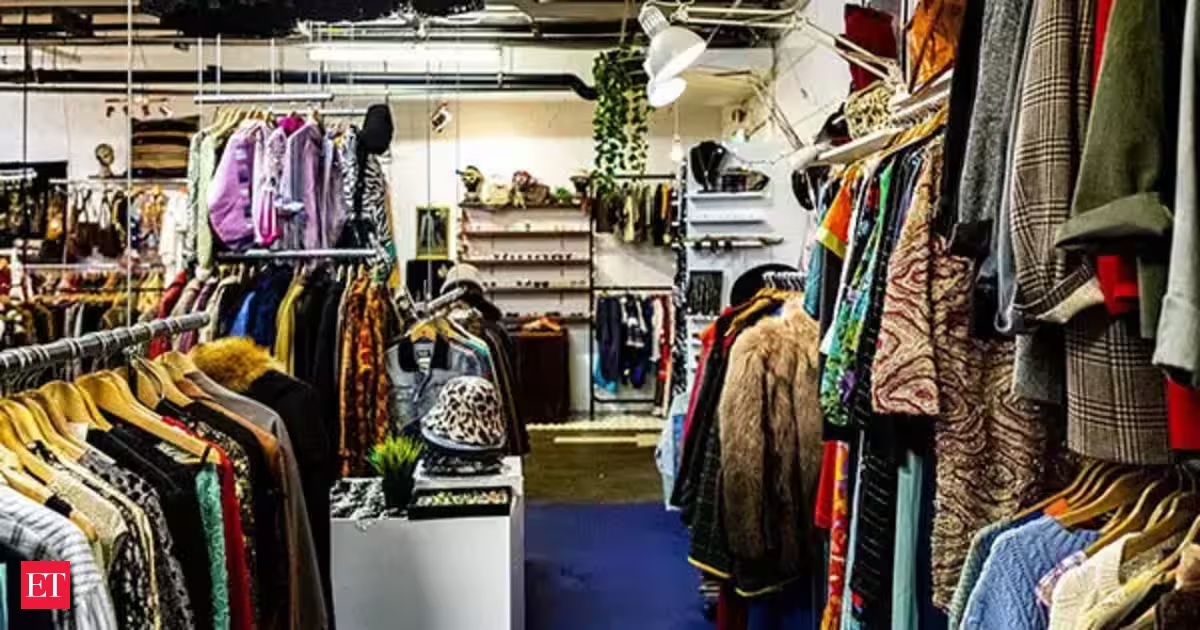
With Indian consumers increasingly diversifying discretionary spending, India’s organised apparel retail sector’s revenue growth is expected to be at 12-13 per cent this fiscal, slightly lower than about 15 per cent recorded last fiscal. Strong traction in value fashion, the expansion of organised retail beyond large cities and sustained demand for branded apparel should support growth, a report by CRISIL Ratings said. However, operat margins are likely to compress by about 100 basis points to about 14 per cent due to rising cotton prices and elevated operating costs, which will be passed on to consumers only partially.“The festive season, which has recently commenced, will be crucial to the sector’s growth outlook because festive spending typically accounts for nearly 35% of annual apparel sales. Revenue growth has been broadly steady so far, in the high single digits between April and August 2026, but has largely been driven by the value-fashion segment,”it added.Anuj Sethi, Senior Director, Crisil Ratings said, “Value fashion has emerged as the key growth driver for organised retailers, growing more than twice as fast as the other segments over the past three fiscals and increasing its share of revenue to 46 per cent from 39 per cent. The shift reflects increasing share of aspirational consumption by price-conscious consumers, wider choice at lower price points and increasing penetration into smaller cities. While value fashion will continue to support volume growth, the rising share of lower-priced apparel is expected to moderate organised apparel retail revenue growth to 12-13 per cent this fiscal.”The ratings agency said these estimates are based on an analysis of 41 organised apparel retailers, accounting for around 28 per cent of the organised apparel market, indicates as much. The value-fashion or fast-fashion and mid-premium segments, which are largely priced below ₹2,500, account for around two-thirds of sector revenue.Changing consumer shopping patterns are also increasing the importance of omnichannel strategies. Although online sales account for only about 10 per cent of total retail sales, the growing influence of e-commerce platforms is making a strong digital presence increasingly important. Retailers are therefore expanding their footprint in underpenetrated tier-II and tier-III cities, with value-fashion players leading store additions, the report noted.Poonam Upadhyay, Director, Crisil Ratings, “Revenue per square foot has remained largely flat at around ₹11,000 over the past three fiscals and is unlikely to improve meaningfully this fiscal because same-store sales growth remains subdued. Growth continues to be driven primarily by new store additions and the increasing share of the value-fashion segment. With rising cotton prices and elevated operating costs likely to lower operating margins somewhat to around 14 per cent this fiscal, maintaining the balance between growth and profitability will remain critical.”Capital expenditure is expected to remain around ₹2,500 crore this fiscal, broadly in line with last fiscal, as retailers expand into newer and smaller cities, the ratings agency added. Lower store set-up costs and operating expenses in these markets should help keep debt levels in control.Published on September 10, 2026
Organised apparel retail sector likely to clock 12-13% growth this fiscal: CRISIL Ratings
CRISIL Ratings forecasts India's organised apparel retail sector to grow 12-13% this fiscal, driven by value fashion and expanding markets.
492 words~2 min read