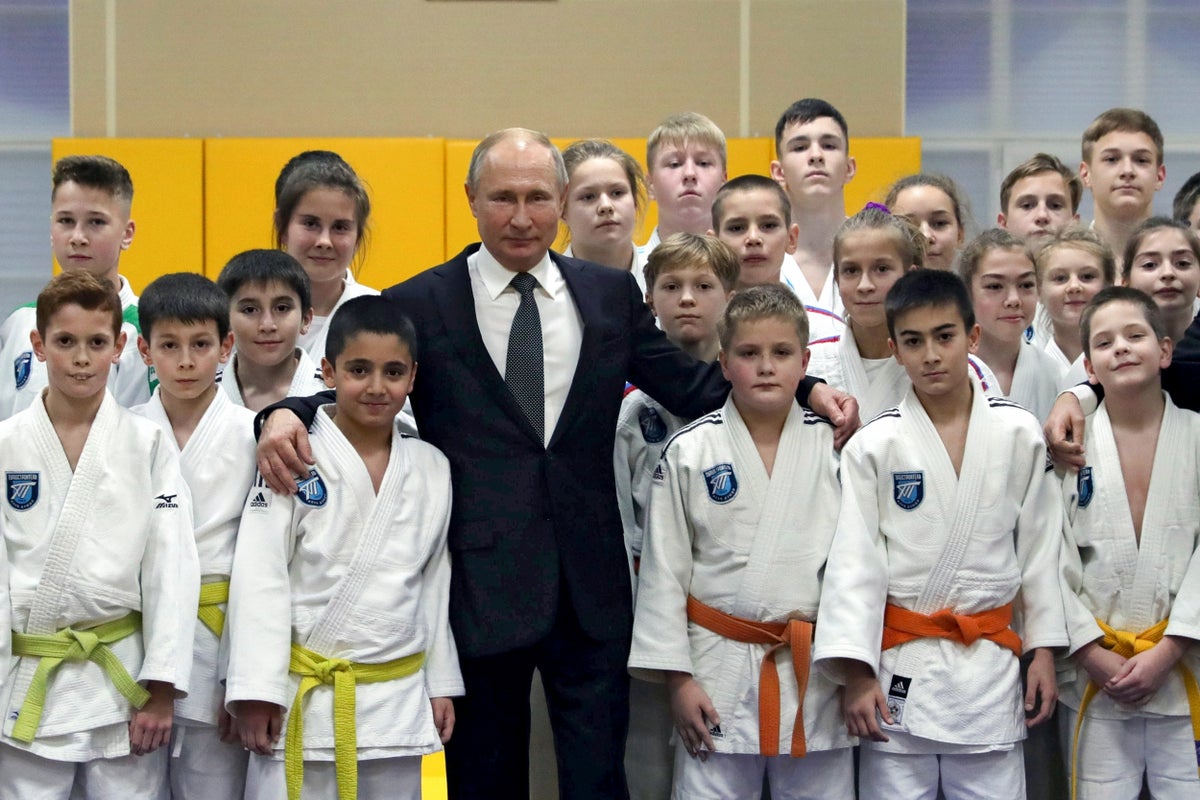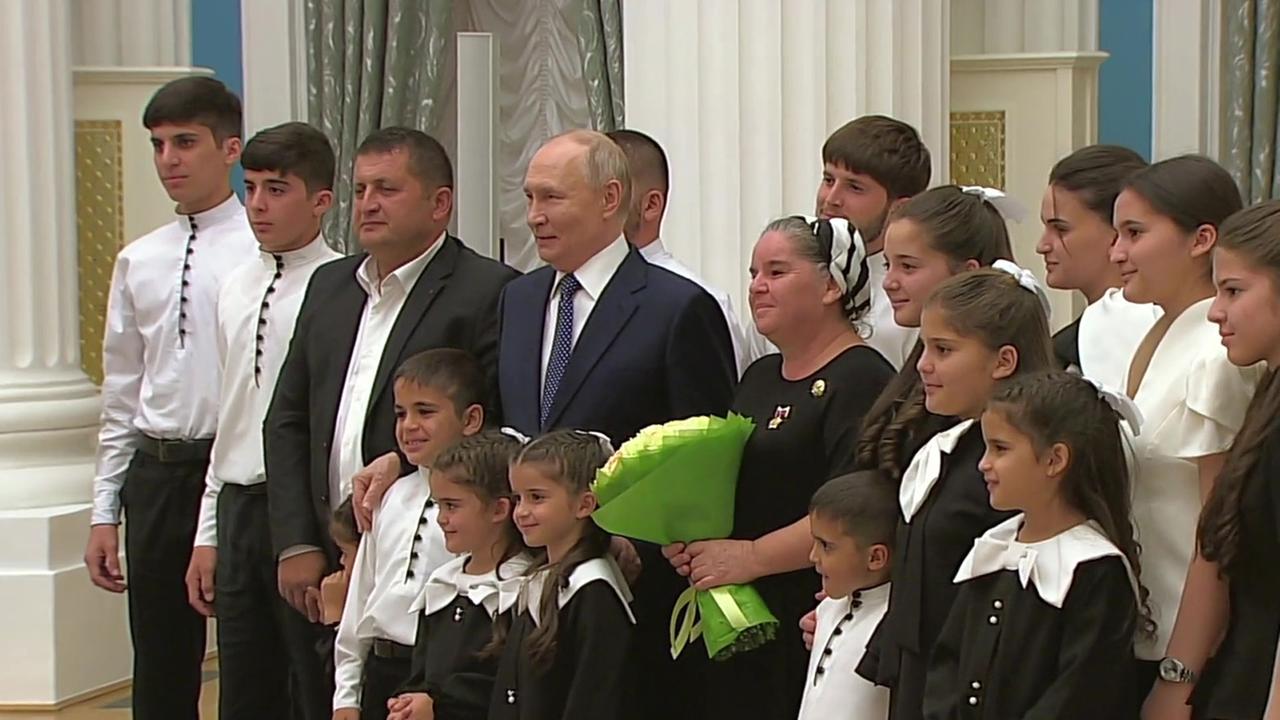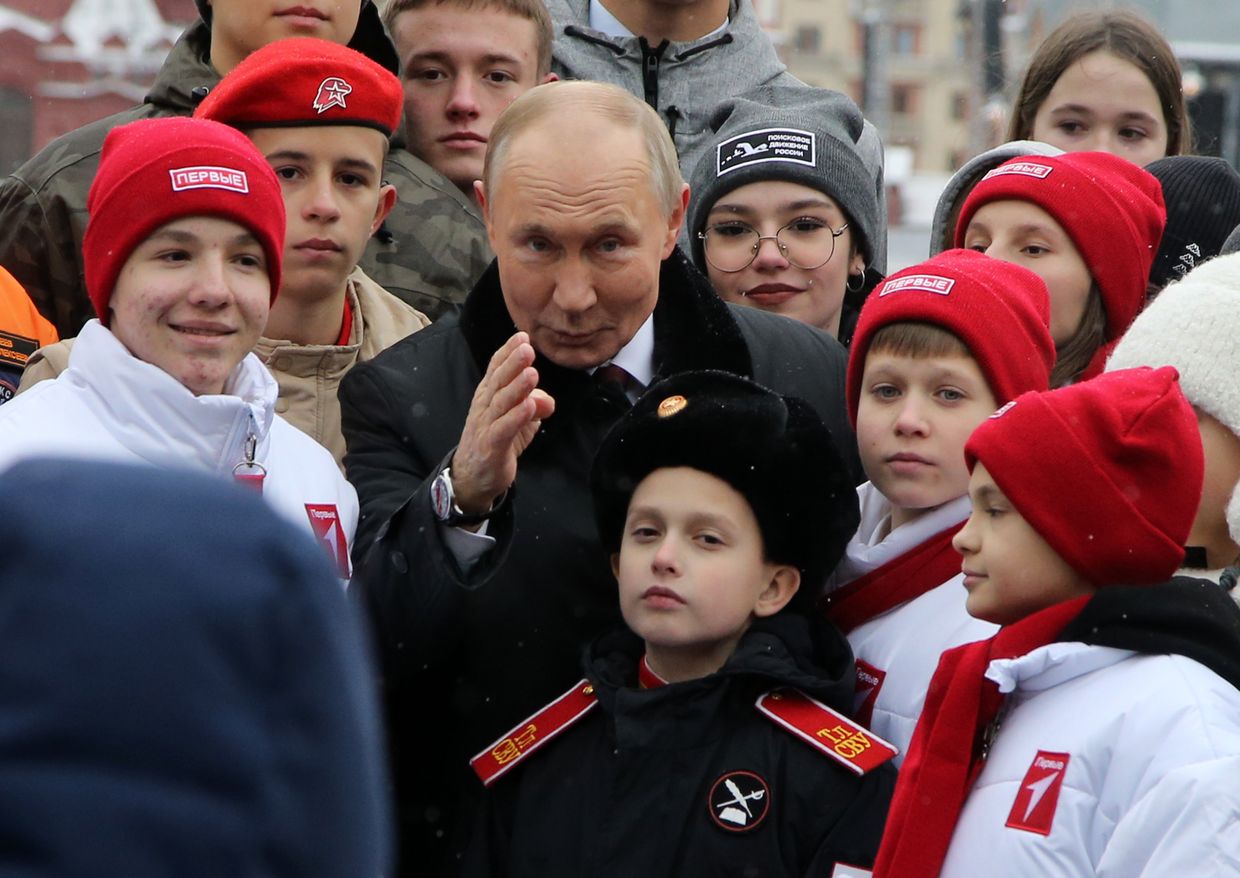
Russian President Vladimir Putin poses with children of Russian officers involved in the full-scale invasion of Ukraine and with participants of youth and student organizations at Red Square in Moscow, Russia, on Nov. 4, 2024. (Contributor / Getty Images)The Kremlin promises money to people who have children, expands benefits for large families, and publicly "cares" about pregnant students and schoolgirls.The sums involved are enormous: by 2030, the national "Family" project is expected to receive funding equivalent to about two of Ukraine's annual state budgets in terms of expenditures.The money will go toward measures intended, in one way or another, to boost the birth rate — from subsidized mortgages for young families to promoting large families.But there is a problem. Our monitoring of two of Russia's most popular social networks, Telegram and VKontakte, conducted in early 2026, shows that absurd legislative initiatives and relentless demographic propaganda are openly irritating the Russian public. A policy that Russian authorities call "family support" is becoming yet another source of conflict between the state and society.To wage aggressive wars in the future, Russia needs people above all else. That makes it critically important to understand how successful the Kremlin's demographic programs are.Russian teenagers attend a ceremony to join the patriotic Youth Army cadets movement in Volgograd, Russia, on Jan. 25, 2023. (Kirill Kudryavtsev / AFP via Getty Images)More than two-thirds of humanity lives in countries where birth rates are insufficient to replace the population. The problem of population decline has plagued Ukraine since its independence, but it became catastrophic after the full-scale war began and triggered mass migration. Ukraine's total fertility rate has now fallen below one.Russia is in a better position, but the picture is far from straightforward. In 2024, 1.22 million children were born in Russia, one of the worst figures in its modern history. The total fertility rate stood at 1.4 children per woman at the end of 2025.To simply replace the population, the rate needs to be 2.1.After the invasion of Ukraine, the issue took on strategic importance for the Kremlin. Enormous battlefield losses and the exodus of young people have turned the Soviet slogan "the women will give birth to more" into a new political priority.Just recently, Putin once again said that "the long-term task is to preserve and increase the population of Russia." Regional birth rates have also been included in assessments of governors' performance. The carrots and sticks of "family values"Russia has enough resources to actively shape its demographic policy. The Kremlin has a broad set of tools at its disposal to increase the birth rate — from financial incentives to outright bans.There are plenty of "carrots": maternity capital, family mortgages, tax breaks, support for large families, and more.The Kremlin is not sparing money on the "production" of new soldiers. The national "Family" project is expected to receive 17.9 trillion rubles (more than $200 billion) between 2025 and 2030, including 3.2 trillion rubles ($36 billion) in 2026 alone.Children pose with mock weapons during the Russian Agricultural Festival in Murino, Leningrad Oblast, Russia, on Aug. 8, 2025. (Olga Maltseva / AFP via Getty Images)Most of the program consists of various financial incentives and benefits for families, such as reduced-rate mortgages and maternity capital. Yet Russian authorities understand that this is not enough. The program's goal is to raise the total fertility rate to 1.593 — still far below the target of 2.1.For those who are not tempted by financial incentives, the Russian authorities have a "stick" in the form of pro-natalist propaganda and various restrictions.These include Putin's law banning the "promotion of refusing to have children," penalties for "coercing" women into having abortions, a ban on private clinics performing abortions, and, more recently, discussions in the State Duma and the Russian Orthodox Church about requiring a husband's consent for an abortion.The state's "concern" for citizens' sexual health sometimes reaches absurd levels.Among the latest government initiatives are referring women who do not plan to have children to psychologists, while men who enjoy going to saunas are sent for sperm tests.And however comical these measures may look from the outside, the Kremlin is using them to relentlessly pursue its goal of overcoming the demographic crisis.At the same time, the public views these initiatives quite critically, and sometimes even with hostility, creating yet another deep conflict within Russian society.Children ride an electric car shaped like a military tank with a missile array in a city park outside Moscow, Russia, on May 3, 2026. (Contributor / Getty Images)"Like it or not, give birth, my beauty"At Join Ukraine, we analyzed discussions about childbearing in more than 700 communities on Telegram and VKontakte across virtually all regions of Russia. The scale of the sample allows us to see both individual bursts of discontent and a clear broader social trend.The biggest wave of outrage among Russians was triggered by announcements of payments for pregnant students and schoolgirls: 72% of reactions on Telegram were negative, while only 3% were positive.This “support” was seen not as assistance to young women, but as an incentive for early pregnancy at the expense of education and professional development.Disgruntled social media users asked, "And when are they supposed to study?" Others went even further, wondering: "Are women being pushed to have children instead of pursuing careers? What happens if the marriage doesn't work out? Will the state take care of the children? Of course not."The second most negatively received issue was abortion restrictions. Users were particularly concerned by the government's proposal to allow a married woman to terminate a pregnancy only with her husband's consent.For example, under one post in a Rostov-based public channel, the proposal received 1,473 negative reactions. Another post on a similar topic, this time in a Voronezh-based community, received 2,023. In the comments, users pointed to overcrowded orphanages and argued that banning abortions does nothing to eliminate the reasons why women seek them.A member of the all-Russian military-patriotic organization "Youth Army" (Yunarmiya) shakes hands with Russian President Vladimir Putin, in a photo published on Feb. 7, 2026. (Telegram / Yunarmiya of the city of Stakhanov)Russians were also deeply unhappy with the Health Ministry's idea of encouraging women to become pregnant through consultations with psychologists.Posts about introducing mandatory consultations for women who say they do not plan to have children, announced in March 2026, generated tens of thousands of reposts and received overwhelmingly negative reactions.Purely economic programs failed to generate much enthusiasm either. Posts about family mortgages were largely met with negativity. The main reason is that the program is becoming increasingly inaccessible to Russians as its terms are repeatedly changed and housing prices continue to rise.Russians reacted relatively calmly to posts about maternity capital, although government attempts to restrict how the funds can be used also faced sharp criticism from commenters."Have children yourselves!": Why Russians reject the government's demographic initiativesThe core of social media users' criticism of the Kremlin's demographic initiatives was distrust of the authorities and a belief that they are hypocritical, reflected in the sarcastic call: "Have children yourselves!"This argument accounted for roughly a quarter of substantive comments on Telegram and VKontakte.Next came more mundane arguments: poverty, high prices, and unaffordable housing. Commenters also condemned the cynicism of calls to have more children amid the systematic closure of schools, maternity wards, and clinics, as well as inadequate infrastructure.A xenophobic line of argument was also prominent — a predictable consequence of years of state propaganda that has taught Russians to look for someone to blame among migrants and other "outsiders."Nearly one in seven substantive comments on Telegram and VKontakte concerned the claim that child-related benefits were supposedly going to "the wrong people."Direct state interference in private life was mentioned less frequently, but consistently.People were even more cautious when discussing the war: only 5.8% of comments on Telegram and 7.5% on VKontakte explicitly linked calls to have more children with the need to replenish the army and compensate for human losses in the so-called "special military operation."A schoolboy dressed in the uniform of a Russian soldier in Vladivostok, Russia, on May 3, 2026. (Lidia Mukhamadeeva / SOPA Images / LightRocket via Getty Images)Still, given the censorship and repression prevalent in Russia, even these figures are significant.Women's rights were mentioned the least. One could joke that women's rights in Russia are so reliably protected by the state that women themselves are simply never given them.Seriously, however, the reason is the scale of "traditional values" propaganda and religious pressure, as well as the dominance of patriarchal notions of the family, particularly outside Russia's largest cities.Whether all of these measures are successful matters not just to Putin but also beyond Russia's borders.A shrinking population does not automatically make Russia less dangerous. On the contrary, the Kremlin's efforts to reverse demographic decline are closely tied to its long-term economic, military, and geopolitical ambitions.If Moscow sees people primarily as a resource for the state — including a pool of future soldiers — its demographic policy is a variable worth monitoring, as well as public discussion around it.Editor's note: Copyright, Ukrainska Pravda. This translated article has been republished by the Kyiv Independent with permission. The opinions expressed in the op-ed section are those of the authors and do not purport to reflect the views of the Kyiv Independent.
Russia is going all in on a baby boom
The Kremlin promises money to people who have children, expands benefits for large families, and publicly "cares" about pregnant students and schoolgirls. The sums involved are enormous: by 2030, the national "Family" project is expected to receive funding equivalent to about two of Ukraine's annual state budgets in terms of expenditures. The money will go toward measures intended, in one way or another, to boost the birth rate — from subsidized mortgages for young families to promoting large
1,534 words~7 min read