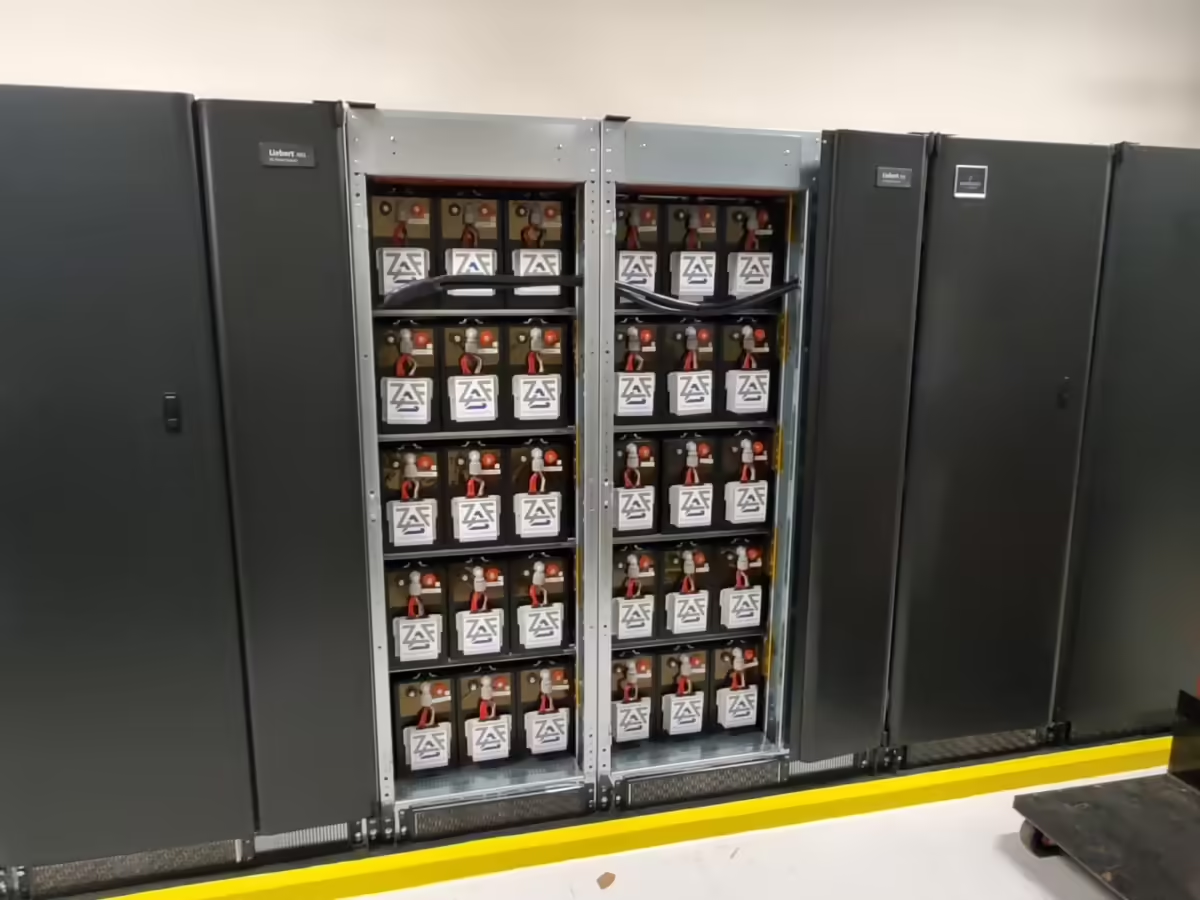
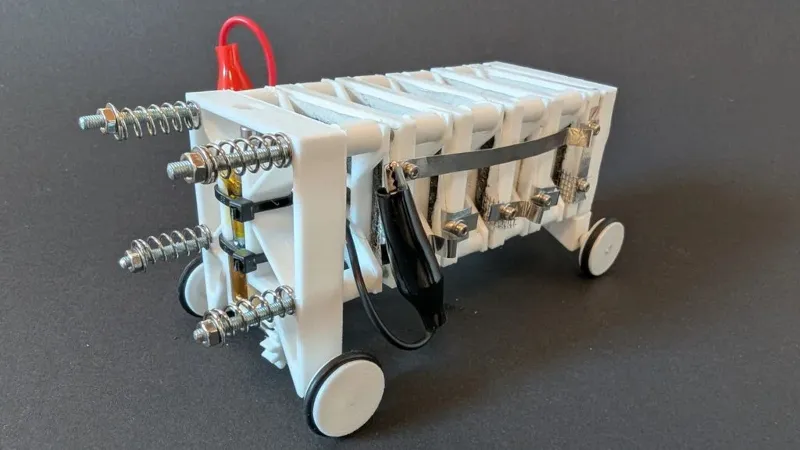
In Spain, researchers at the Institute of Materials Science of Barcelona (ICMAB-CSIC) have developed a new architecture for zinc-air batteries that can boost their power output by up to 80% without altering their core chemistry. The system adds conductive elements inside the battery, which act as wireless bipolar electrodes to facilitate charge transport and lower internal resistance.
The breakthrough opens up a new avenue for designing more efficient, higher-performance batteries. The study, published in the journal "Energy Storage Materials", was carried out in collaboration with the Catalan Institute of Nanoscience and Nanotechnology (ICN2) and the National University of La Plata in Argentina.
According to the researchers, this work and previous studies by the group question the conventional design of batteries and set out a new way of conceiving energy storage systems.
A design principle that rewrites the rules
Batteries generate electricity thanks to the energy difference between the materials in their two electrodes. Charges move from one to the other through the electrolyte, a material that allows ions to flow. Until now, it was assumed that this component had to block the passage of electrons to avoid any risk of a short circuit. The new study challenges this principle.