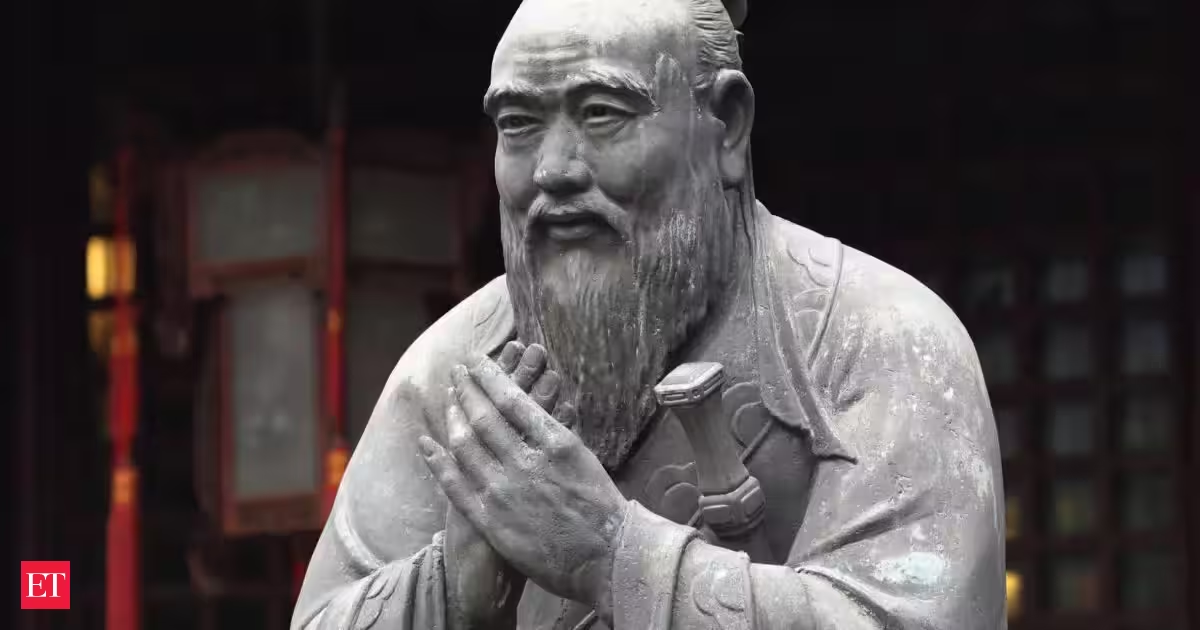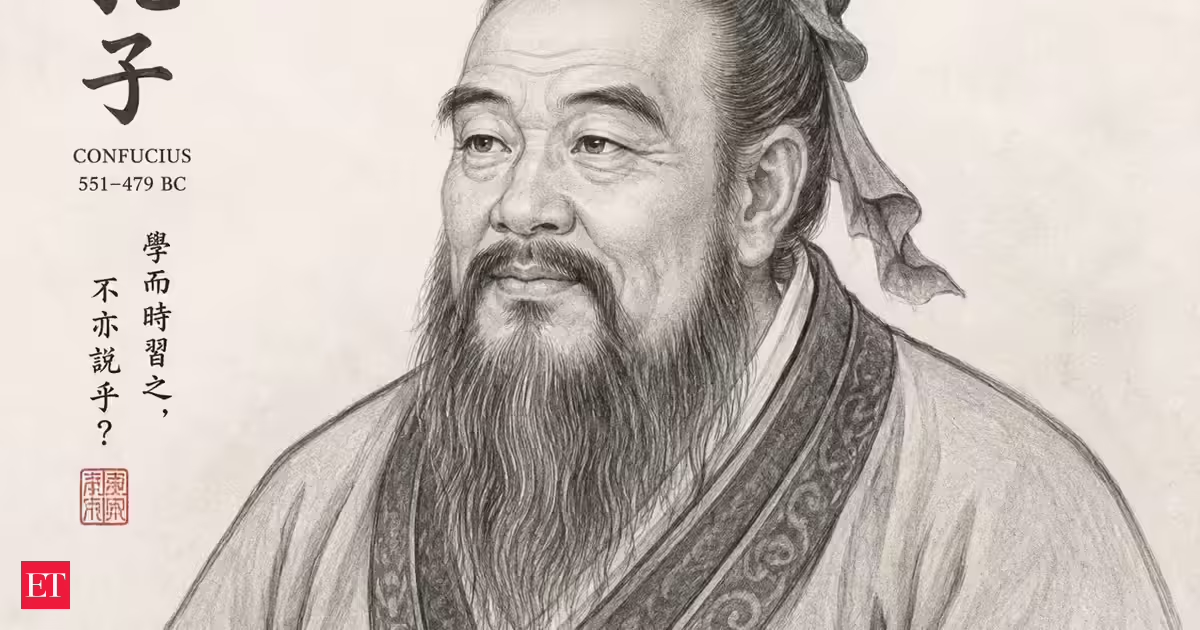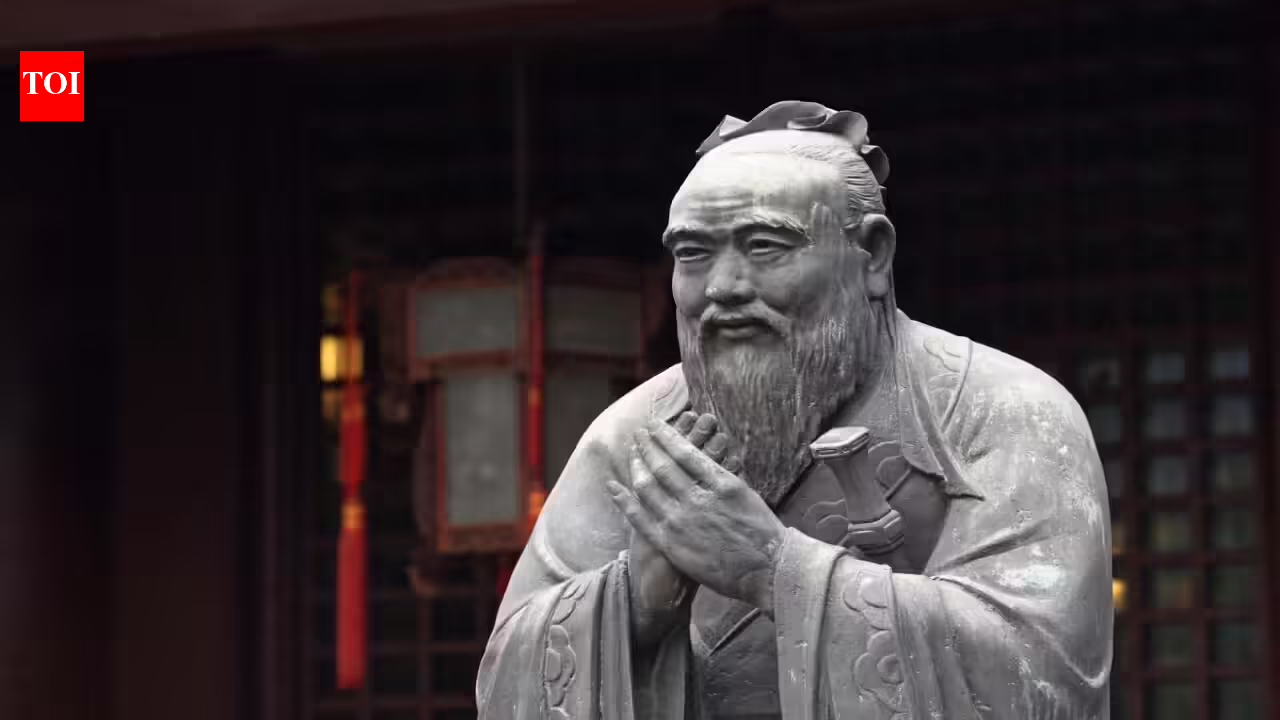
Quote of the Day: You are joining a new workplace and heard that one colleague is difficult, while another is universally loved. It is easy to accept both opinions before getting to know either person yourself. Popular opinion can feel like evidence in itself. But what if both extreme dislike and extreme admiration deserve the same level of scrutiny? Confucius questioned that very instinct, arguing that both widespread dislike and widespread admiration deserve closer scrutiny.Quote of the Day by Confucius: “When everyone hates a person, you should investigate thoroughly, and when everyone loves a person, you should also investigate thoroughly.”The thought captures a simple idea: consensus is not necessarily the same as truth. Whether a person is widely criticized or widely admired, Confucius suggests that we should investigate rather than automatically accept the crowd's judgment.Also Read: Quote of the day by Al Pacino: ‘The truth is, you know, we need our anodynes. You know that …’ – The Godfather star on finding small comforts in lifeWhat Confucius' quote says about popular opinionThe quote challenges the instinct to follow the majority. If everyone dislikes someone, it may be tempting to assume that person must deserve the criticism. If everyone admires someone, the opposite assumption can be just as easy.Confucius places both reactions under the same question: have we actually looked closely enough?That makes the quote less about defending unpopular people or doubting popular ones and more about developing the habit of investigation. Reputation, whether positive or negative, can shape how people are perceived before the facts are examined.Why questioning the crowd still mattersThe idea can apply to ordinary situations at work, in relationships, education and social life. A colleague who has become unpopular can be quickly judged by others' opinions. Someone widely praised can receive the benefit of the doubt without the same scrutiny.Confucius' point is that neither reaction should replace independent judgment.His broader philosophy, as expressed in The Analects, is more towards humility, modesty, honesty, study and the importance of recognizing what one does not know. That makes the quote part of a larger emphasis on learning rather than assuming that one's first impression is complete.From Kong Qiu to ConfuciusThe man known today as Confucius was actually known by the family name Kong and the given name Qiu. He was born in the state of Lu in the middle of the sixth century BCE, in territory that is now part of Shandong province.His hometown, Qufu, is now associated with his life and thought. Confucius was later known by the title “Zi,” or “Fu Zi,” a term of respect meaning “teacher.” In modern Chinese, he is known as “Kong Zi” or “Master Kong,” as the Asia Society pointed out.The name “Confucius” came much later through European encounters with Chinese thought. In the late sixteenth century, Italian Jesuit priests Michele Ruggieri and Matteo Ricci helped mediate the exchange of philosophical ideas between China and Europe and were associated with early Chinese-European translation work.The Analects and the making of ConfuciusMuch of what is known about Confucius comes not directly from writings by him but from sayings and anecdotes recorded by his followers. His legend also took shape through later historical accounts, including the biography written by historian Sima Qian in the second century BCE.His teachings are known primarily through The Analects, a collection of sayings compiled by his followers.The text presents Confucius as someone deeply interested in learning, humility and self-improvement. He repeatedly emphasized the value of recognizing one's limitations and learning from other people, including their mistakes.That outlook provides an important context for the quote about popularity. Investigating both praise and criticism requires a willingness to admit that our understanding may be incomplete.Confucius' philosophy centered on learning and self-improvementConfucius did not present himself as someone creating an entirely new system of thought. Instead, he described himself as transmitting the ideas of earlier generations.His teachings emphasized social duty, responsibility, respect for parents, study and personal growth. Humility was particularly important. In The Analects, he stressed that people should be able to learn from others and identify both qualities worth emulating and shortcomings that require correction.This approach makes investigation a form of intellectual humility. Instead of deciding that the crowd must be right, a person remains willing to examine what they know and what they may have missed.A philosophy that shaped Chinese intellectual lifeConfucian thought became a major force in Chinese intellectual and cultural history and also influenced Korea, Japan, Vietnam and other parts of East Asia.At the same time, Confucianism faced substantial criticism. Twentieth-century Communist revolutionaries attacked it as a conservative tradition associated with hierarchy and obedience, while other critics raised questions about its treatment of women and its emphasis on a male-dominated social structure.The tradition was later rehabilitated in China, and Confucius came to be honored as a major figure in Chinese cultural history.Why Confucius' quote remains relevant todayThe enduring appeal of this quote lies in how readily its question applies to modern life. People often make judgments through reputation, group opinion and first impressions. But popularity can amplify both praise and criticism without necessarily providing the full picture.Confucius offers a different approach: investigate. The same standard should apply whether someone is being criticized by everyone in the room or praised by everyone in it. His words ultimately point to a habit central to his broader philosophy: remain humble enough to question what you think you know, and curious enough to look more closely.
Quote of the Day by Confucius: ‘When everyone hates a person, you should investigate thoroughly, and when everyone loves a person…’ - life lessons on judgment, reputation, humility and independent thinking and why we should investigate before accepting the crowd’s opinion, from the ancient Chinese philosopher whose teachings became the foundation of Confucian thought
Quote of the Day by Confucius: Confucius emphasized the importance of thoroughly exploring both popular admiration and widespread disdain. He believed that societal opinions can often color our perceptions before we analyze the facts. This insight is relevant in professional settings, relationships, and everyday social interactions. Instead of automatically accepting group consensus, we should strive for independent judgment, embracing humility and the continuous learning that comes with considering diverse viewpoints.
902 words~4 min read