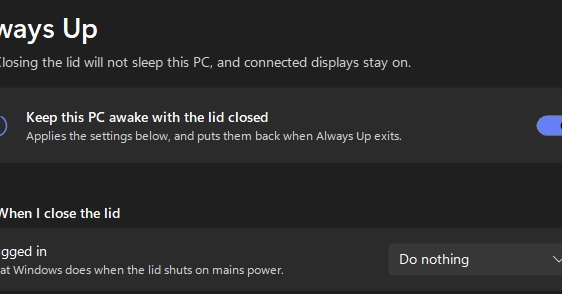
A backend engineer closed a laptop lid on a crowded commuter train and expected a local coding agent to keep working. The agent had been halfway through summarizing a public GitHub issue while a .env file sat two directories away. Local inference stopped the moment the kernel suspended the GPU, and a naive webhook to a hosted model would have uploaded the entire workspace. That gap between host sleep and unfinished public work is the actual design problem, not another routing slogan.
Local-first agents treat the laptop as both the secret boundary and the compute pool, which works until the machine disappears. Hosted agents invert that arrangement by assuming every unfinished token is allowed to travel across the network. A dual-residency design keeps secrets on the host that already holds them, while public remainder work may finish remotely after the lid closes. The sections below describe a proposed sleep-boundary contract, an illustrative Python snapshot, and the cases where a free server is the honest winner.
Two residencies, one unfinished job
Secret residency answers an ownership question about bytes that must never leave the kernel that loaded them. Compute residency answers a different question about where tokens may be spent after the local GPU has been powered down. Mixing those questions produces either leaked environment files or agents that die at the first kernel suspend. Splitting them produces a resume path that stays inspectable, boring to operate, and limited to public corpora.
 aws.amazon.com