There’s a habit going around. Walking from one meeting to the next with the laptop cradled half-open. Sitting through a 1:1 with the lid propped just enough to keep the screen alive. Riding home while holding your laptop because it must stay running. Anywhere except closed on a desk, because closed on a desk is what kills the coding agent running inside (Claude Code, Codex, Kiro, OpenCode, Gemini CLI, Cursor CLI, or whatever harness the developer pulled together). Business Insider has a piece on it.
Strip any of these agents down and they all need the same five things: a shell, a filesystem, the project checked out, its dependencies installed, and the right permissions (to act on the filesystem, plus credentials for the network and the outside world). Your laptop has all five. Nothing about the list says laptop, though. The laptop won the job by being the nearest machine, not the right one.
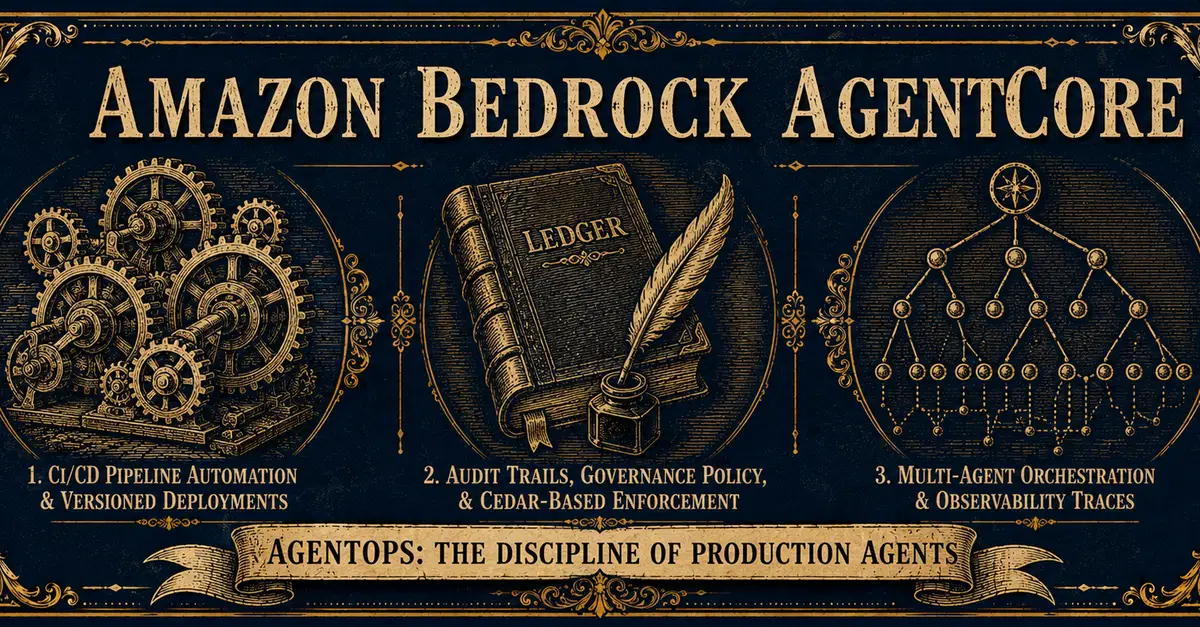
The rest of this post is about reaching for a different one. Amazon Bedrock AgentCore Runtime gives every session a dedicated environment: an isolated Linux microVM with a persistent workspace, a real shell, and deterministic command execution. Most sandbox products do something similar. What’s harder to assemble, and what AgentCore ships out of the box, is the surrounding system: an Identity layer so the agent acts as the user who triggered it, a Gateway that gives Claude Code, Codex, Kiro, and the rest the same set of tools (GitHub, Jira, Slack, your own services) through one Model Context Protocol (MCP) endpoint with the real tokens held outside the agent, and Observability so every step the agent takes lands in the Amazon CloudWatch your team already uses. And then the lid can close.
 aws.amazon.com