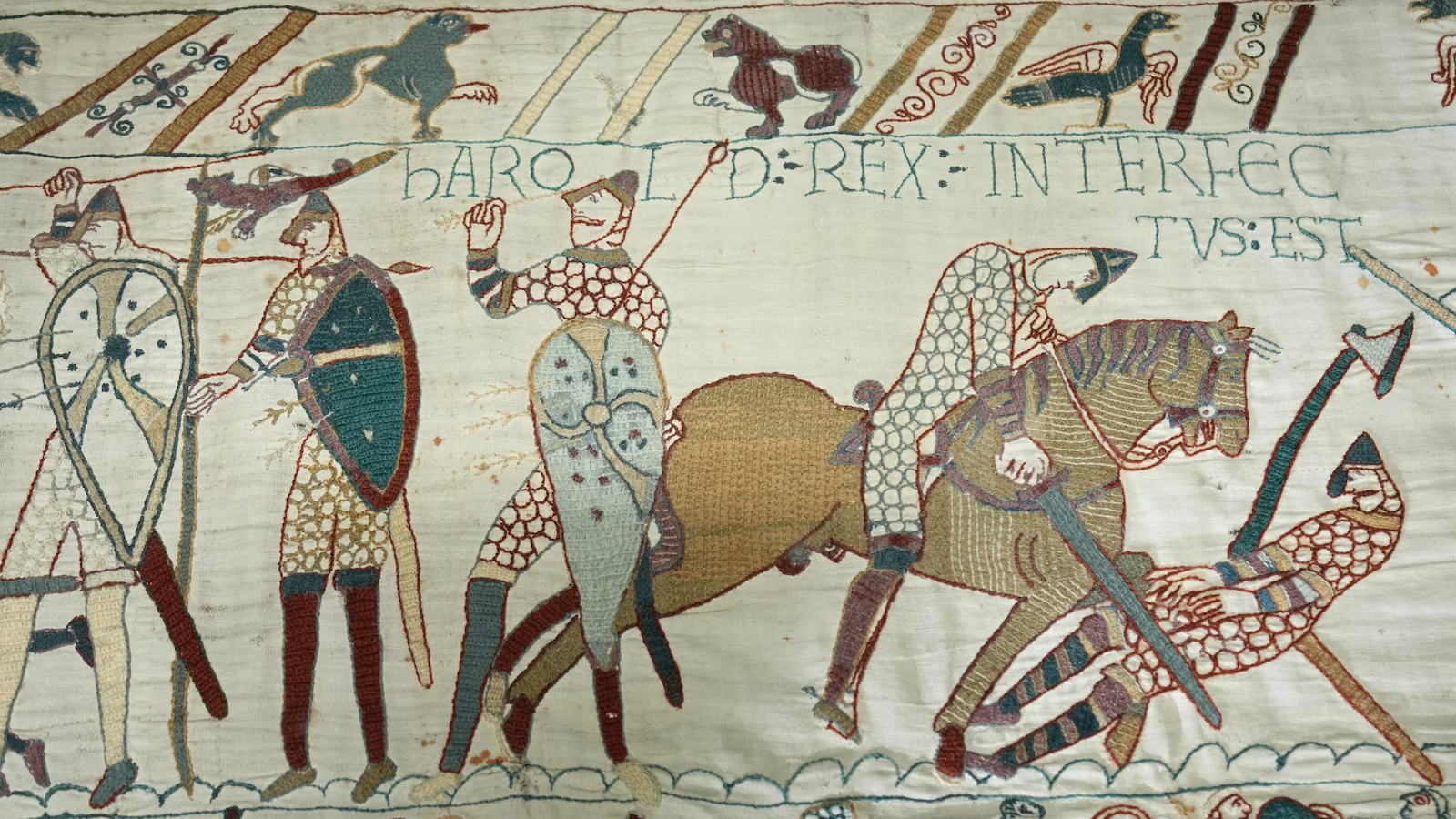
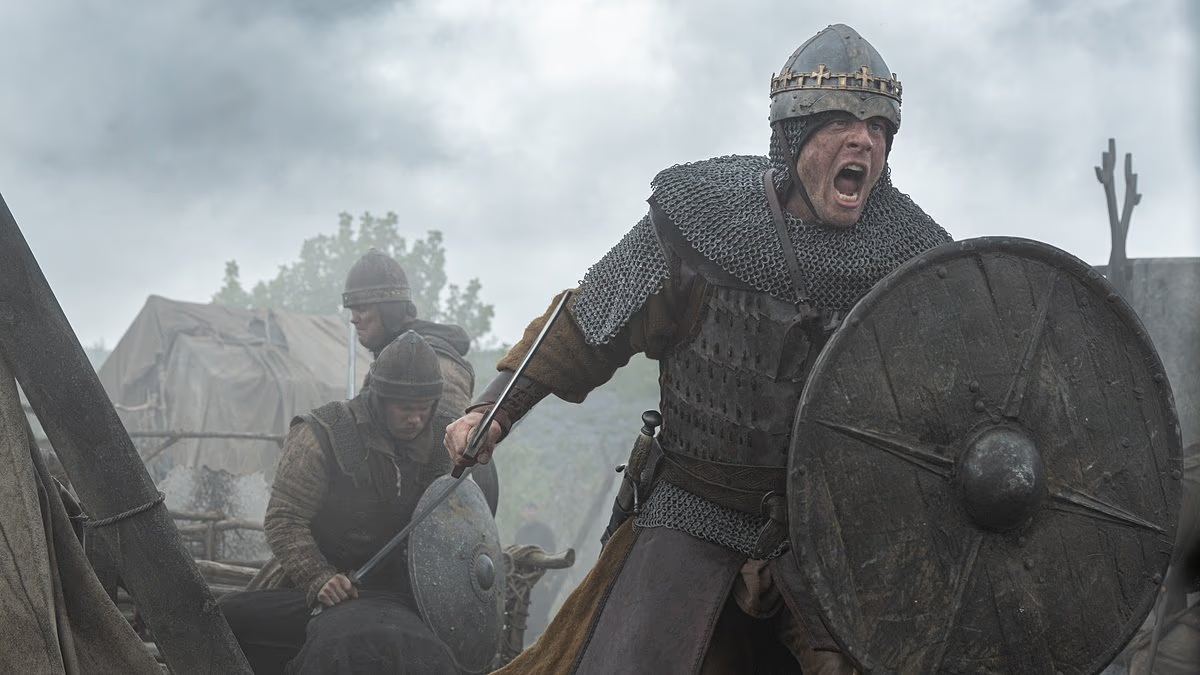
The death of King Harold, felled by an arrow through the eye at the Battle of Hastings, is the Bayeux Tapestry’s defining moment, marking the end of the Saxon era and the beginning of Britain’s fraught love-hate relationship with France, as William the Conqueror became the first Norman king of England.
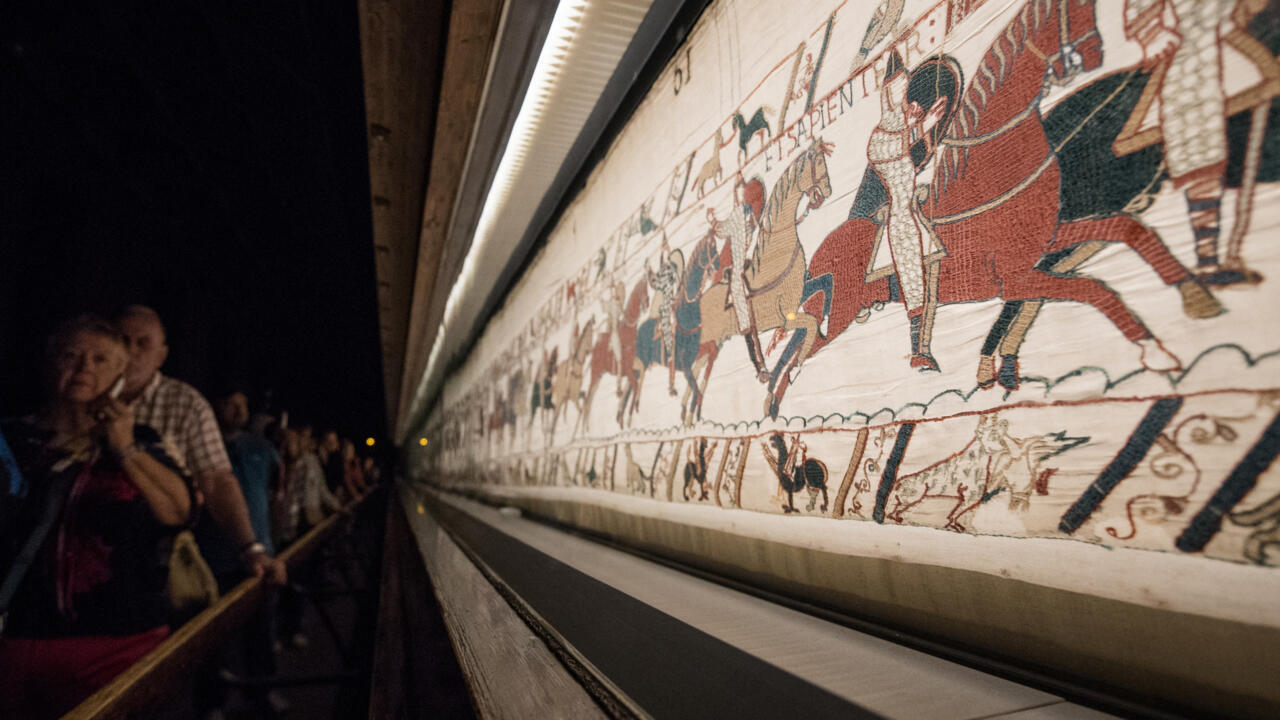
Now in Britain for the first time in almost 1,000 years, the 70-metre long, 50cm high Tapestry enjoys a cultural profile comparable to that of the Mona Lisa. Whether you’ve seen it in the flesh or in a school textbook, it is hard to forget its jaunty, characterful imagery spanning nine linen panels, and its idiosyncratic plant-derived palette of blues, greens, reds, browns and yellows.
Beginning in 1065, it describes the events leading up to the Norman invasion and victory over King Harold at the Battle of Hastings on 14 October 1066 – including an inauspicious (for Harold) weeklong appearance by Halley’s Comet in April 1066 – in images stitched with wool and accompanied by brief Latin captions.
Ranking as one of the world’s most recognisable artworks has its downsides. In 2014, Nigel Farage triggered a demand for Bayeux Tapestry ties when he wore one during a by-election campaign. Less controversially, it was adapted for a jokey Guinness advert in 1966, the 900th anniversary of the Battle of Hastings, when it also featured on a special set of postage stamps, and a Wedgwood mug.