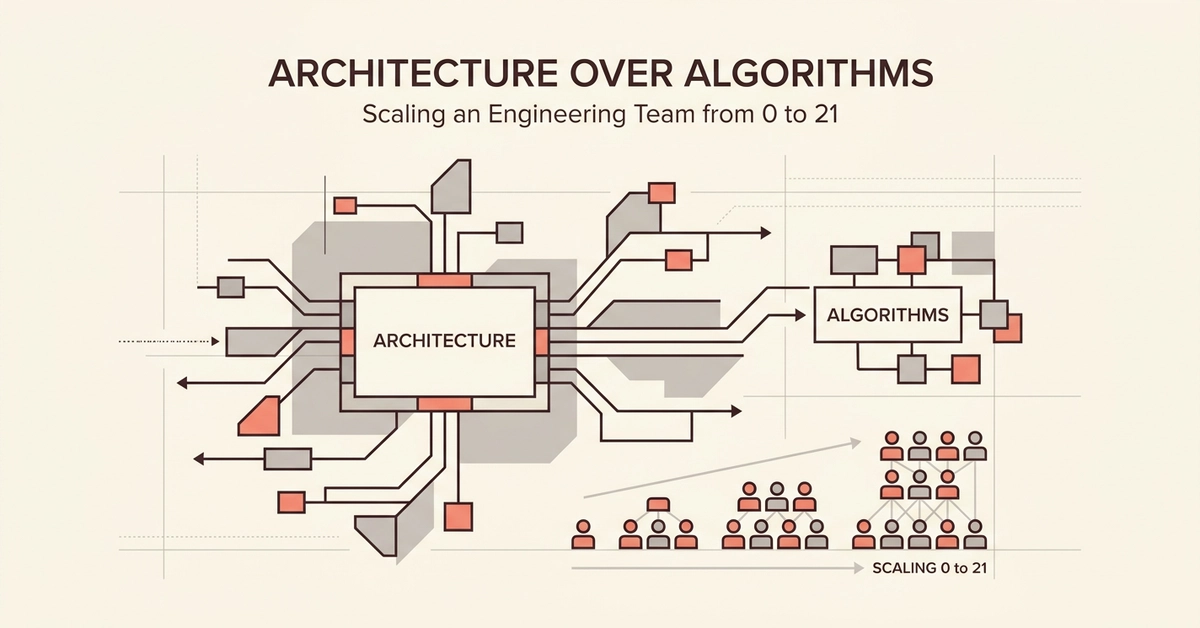
When I joined Synapsis Medical Technologies as the founding engineer, the roadmap was daunting: we needed to build a HealthTech AI platform that integrated wearable data, handled FHIR/HL7 standards, and maintained a HIPAA-aligned RAG pipeline with 99.9% uptime. To execute this, I had to scale the engineering team from 0 to 21 engineers in just 13 months.
The standard industry approach to hiring—grinding candidates through LeetCode puzzles and red-black tree inversions—was never an option. We weren't building a search engine; we were building a complex, regulated ecosystem across React Native, Next.js, and NestJS. I needed architects who understood state synchronization and data integrity, not just competitive programmers. Over 8 years of professional engineering and 18 production applications, I have found that the ability to solve an algorithm puzzle rarely correlates with the ability to ship a resilient production system.
The Problem: The High Cost of the Wrong Signal
In the early days of a startup, a single hiring mistake is a catastrophic drag. If you hire an engineer based on their ability to optimize a sorting algorithm, you might end up with someone who builds a "perfect" technical solution that fails to account for the constraints of a HIPAA-compliant environment or the latency requirements of a clinical AI.