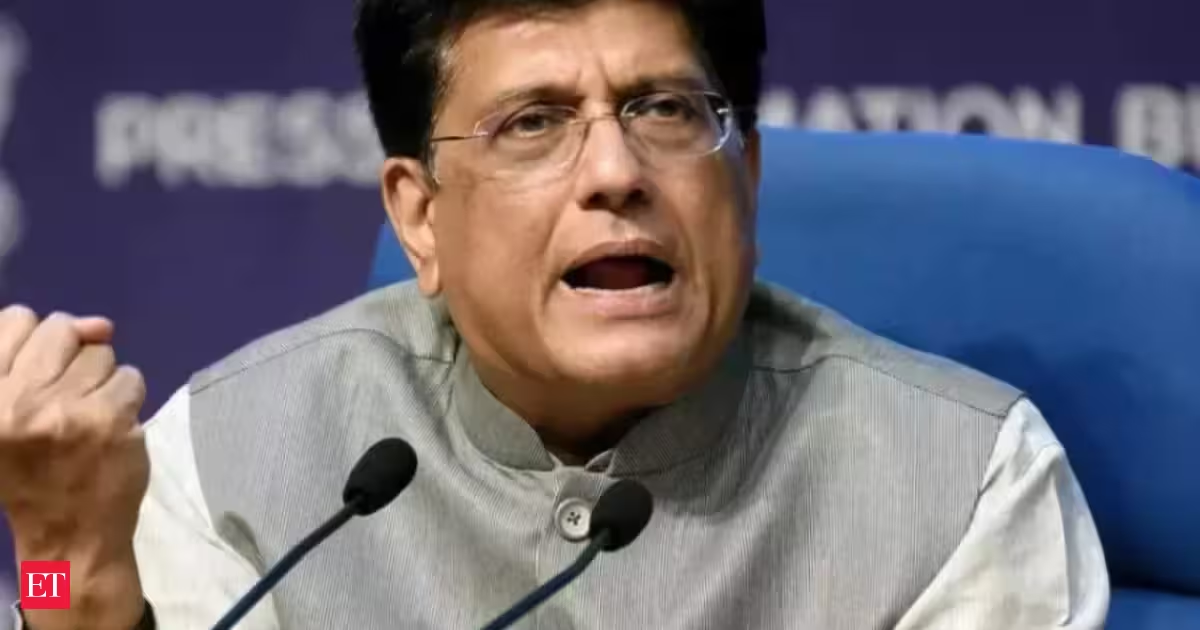
Union Commerce and Industry Minister Piyush Goyal
| Photo Credit:
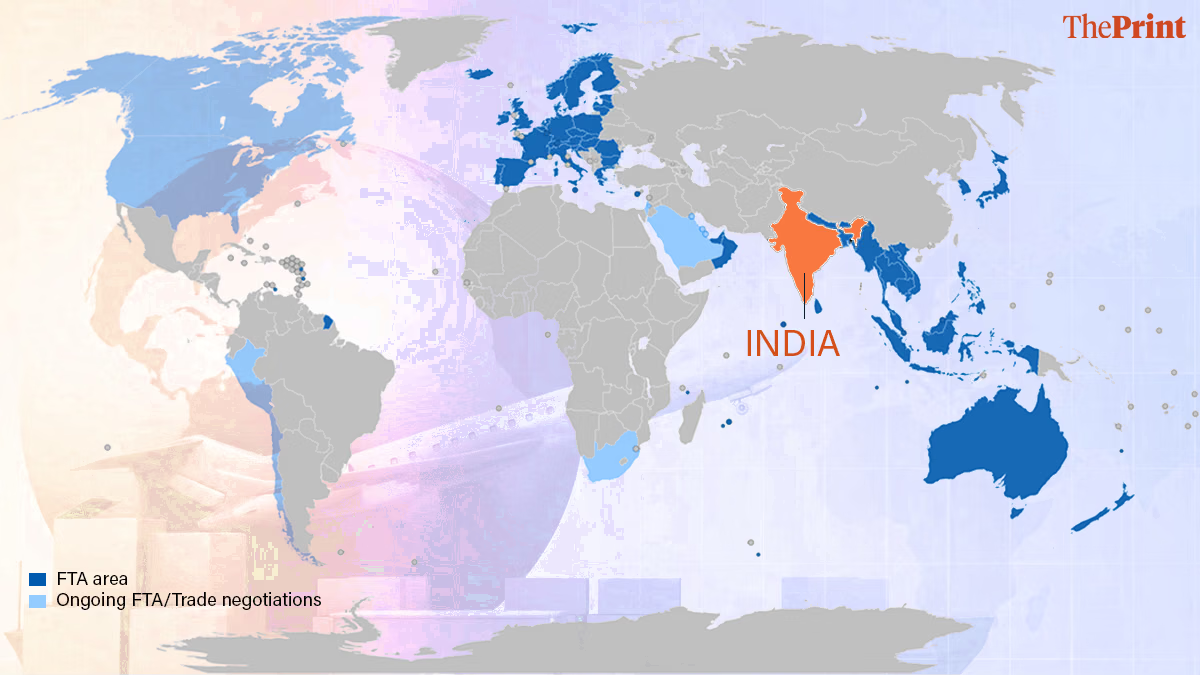
Exports under free trade agreements (FTAs) are now growing faster than imports, signaling an improvement in the utilisation of trade pacts, according to Union Minister of Commerce and Industry Piyush Goyal.In a blog post analyzing trade data for April to July of the current financial year, the minister noted that outbound shipments to FTA partner countries expanded by 23.9 per cent to $57.2 billion, outpacing the 13.9 per cent growth recorded in shipments to non-FTA markets.Consequently, the share of FTA partners in India's total exports rose from 31.1 per cent ($46.2 billion) to 32.9 per cent ($57.2 billion). At the same time, the trade deficit with FTA partners narrowed from $34.2 billion to $32.6 billion. Shipments to Singapore nearly doubled, contributing approximately $4 billion to export growth, while outbound trade with Oman climbed by $0.6 billion following the enforcement of the Comprehensive Economic Partnership Agreement on June 1, 2026.Goyal pointed out that exporters are gradually overcoming previous structural bottlenecks to leverage these pacts. "For years, a fair criticism of India’s free trade agreements was that we signed them and then did not use them to their full potential. Our exporters found the rules-of-origin paperwork tedious. Importers, on the other hand, used the agreements enthusiastically. So the deals looked one-sided. This time the pattern is different.""Preferential access through FTAs provides excellent opportunities for our exporters to expand their global footprint, access new markets, and deepen their presence internationally. Our exporters are steadily leveraging these opportunities to drive greater exports," Goyal stated.Overall merchandise exports for the four-month period reached $173.8 billion, representing a 17 per cent increase over the $148.5 billion recorded during the same period last year. Combined with services exports of $145 billion, India's total exports stood close to $319 billion.Non-FTA destinations also logged noticeable gains, led by African markets. Inbound demand from Tanzania increased by $2 billion, South Africa added $1.7 billion, and Kenya recorded a $1.1 billion increase. "African markets are young, growing, and increasingly integrated into global trade. They also have growing demand for exactly the kind of goods India makes well. From pharmaceuticals and engineering products to automobiles, food products, textiles, and technology, Indian companies have enormous opportunities across the continent.""However, it is important to recognise that four months is a relatively short period, and export performance during this window may reflect some large, one-time shipments that may not be repeated in every quarter," the minister added.Agricultural exports rose by 4.5 per cent to $18.18 billion during the period. Shipments of basmati rice climbed 25.4 per cent to $1.05 billion, non-basmati milled rice totaled $588 million, castor oil stood at $423 million, other food preparations reached $284 million, shrimp and prawn exports touched $226 million, and instant coffee exceeded $200 million.Goyal highlighted that the imports for the period rose to $292.3 billion, led by electronic components at $21.6 billion, computer hardware and peripherals at $12 billion, and accumulators and batteries at $2.8 billion, reflecting an ongoing expansion in domestic manufacturing and industrial input requirements. “The part I find most encouraging is that exporters found these markets themselves, one buyer and one shipment at a time. Our job in government is to keep the paperwork light, keep the credit flowing, keep the ports quick, make the agreements usable, open more doors, and then get out of the way of people who understand their business,” Goyal said.He added that April-July 2026 has been promising for Indian exporters. “It is a signal that we are moving in the right direction.”Published on September 10, 2026