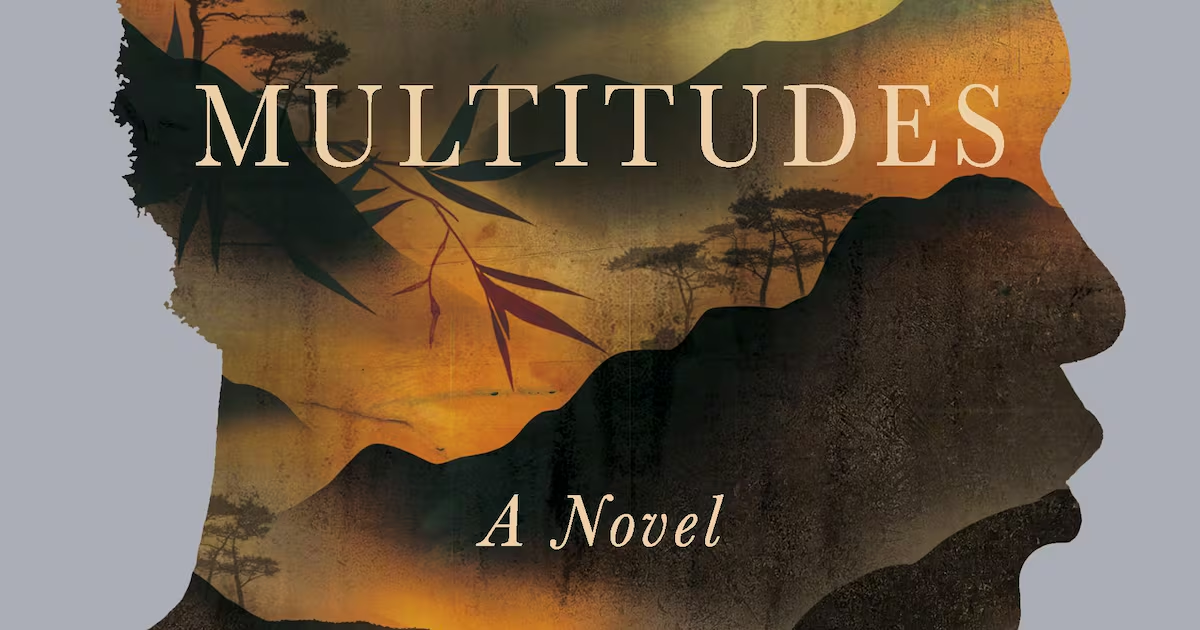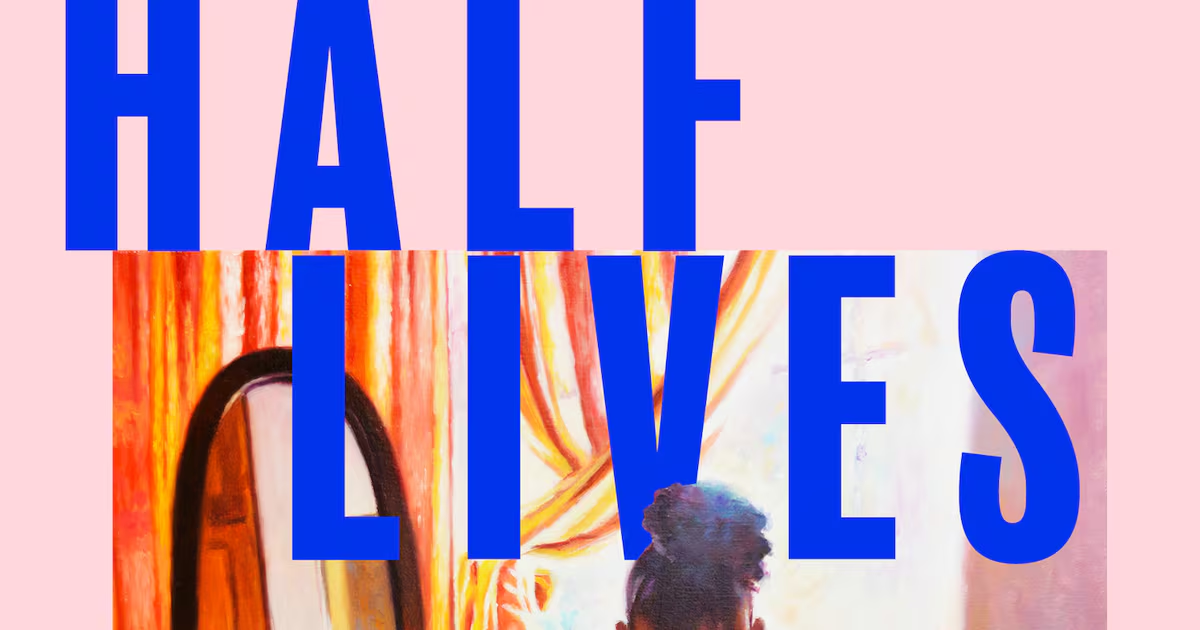
Born and raised in London to Ghanaian immigrant parents, Krystle Zara Appiah is one of five sisters. She visited Ghana as a child but remembers little of those trips. In 2017, she returned as an adult, started spending more time there and has gone back regularly since. Family, especially the relationships between women, now runs through much of her fiction.Her 2023 debut, Rootless, explored a British-Ghanaian couple whose marriage begins to break down when they want different things from life. In Half Lives, she turns to family and motherhood through two sisters from an earlier generation.Set in Ghana from the late 1960s, the novel centres on Evelyn and Maggie. Evelyn has always been responsible, while Maggie does what she likes. Both dream of America as a place of greater freedom and opportunity and a way to a different kind of life.Evelyn gets that chance when she is encouraged to marry Gus, a Ghanaian doctor in New York whom she barely knows. With her family under financial pressure, the marriage offers security and an escape. Then both sisters become pregnant. Evelyn is married. Maggie is not, and her pregnancy will bring shame on the family.Before Evelyn can leave for America, she loses her baby in an accident. It’s a devastating loss, but it also gives the family a way to hide Maggie’s pregnancy. When Maggie gives birth to Jonathan, Evelyn takes him to America and raises him as her own.The sisters love each other, but they also resent each other for what they think the other has got away with. Maggie has always done what she wanted and is bitter about being judged for it. Evelyn has spent years doing the right thing, putting family first and being taken for granted.“How we are raised, even by the same parents, makes us very different people,” Appiah says. “I’m close to my sisters, but there are moments where I cannot stand them. There’s no-one who can infuriate you more than a family member.”She says she never wanted readers to choose between Evelyn and Maggie. “I didn’t take a side. They are both mothers to Jonathan. Maggie has to live with knowing someone else is raising her child, while Evelyn may be forced to give up the boy she has loved and cared for as her own. Neither can get what she wants without breaking the other.”How we are raised, even by the same parents, makes us very different people. I’m close to my sisters, but there are moments where I cannot stand them. There’s no-one who can infuriate you more than a family member.— Krystle Zara AppiahJonathan has to live with what the adults decided for him. He grows up with a lie about his family, then has to deal with their guilt and regret as well as his own shock. “We think a lot about how it impacts women in this situation, less about how it impacts the child,” Appiah says.Appiah was interested in examining the belief that moving abroad means doing better. The late-1960s setting let her examine what women could or were allowed to do and the choices they had, from access to medical care to what was expected of them in life and relationships and the social pressure around marriage and pregnancy.“Evelyn takes the respectable, adventurous route and marries Gus, but the marriage is abusive and anything but safe, while living far from home leaves her more desperately isolated. From Ghana, Maggie sees Evelyn as the sister who got the life they both wanted, while she is left behind to take on the responsibilities at home. The sisters will spend the rest of their lives dealing with the costs of the decision they were forced to make.”Appiah did much of her research in Ghana, spending time in libraries, galleries and museums, looking through old family photographs, and speaking to her parents about what they remembered from when they were young. She also considered how much information a family would realistically have had about someone living thousands of kilometres away.The setting gave her a lot of room to work with secrets. “I wanted it to be a story about the secrets families keep and the lies they tell each other — all of which ultimately come out in the end. Because travel was much harder then and information moved so slowly, people could keep parts of their lives hidden in ways that would be much trickier now.”Unlike older generations, her idea of home is not one fixed place. At the time of our interview, she was preparing to move from London to New York. She describes herself as transient. For her, that means “building home wherever I am”. She already has friends and a community in New York, while Ghana has become part of her life in its own right. She wanted to write about the country she was getting to know, and now she wants to see more contemporary stories set there.In her writing, Appiah keeps coming back to women trying to decide what they want for themselves when others already have strong ideas about what their lives should look like.‘Team effort’“I always know the beginning and the end,” Appiah says. She writes early in the morning, before what she calls her inner critic has fully woken up.“I just write a very messy first draft,” she says. Then I check what works and whether the characters’ decisions make sense. Sometimes you think something’s on the page, but when you look at it, you’ve actually totally missed it.”Her work as a children’s book editor has also made her used to revision and to having other people challenge her work. “Even though it’s your name on the book cover, it’s a team effort,” she says.Appiah is already working on another novel, which she describes as darker than her previous books. “I like writing about relationships, complicated relationships,” she says.She is also working on screenplays. Rootless has attracted interest from production companies. “It’s been really exciting to be able to revisit that and, again, just think about different ways of bringing the same stories to life.”Business Day
Sisters' secrets shape new novel set in Ghana
Krystle Zara Appiah delves into identity, home and the complexities of sisterhood
1,015 words~5 min read