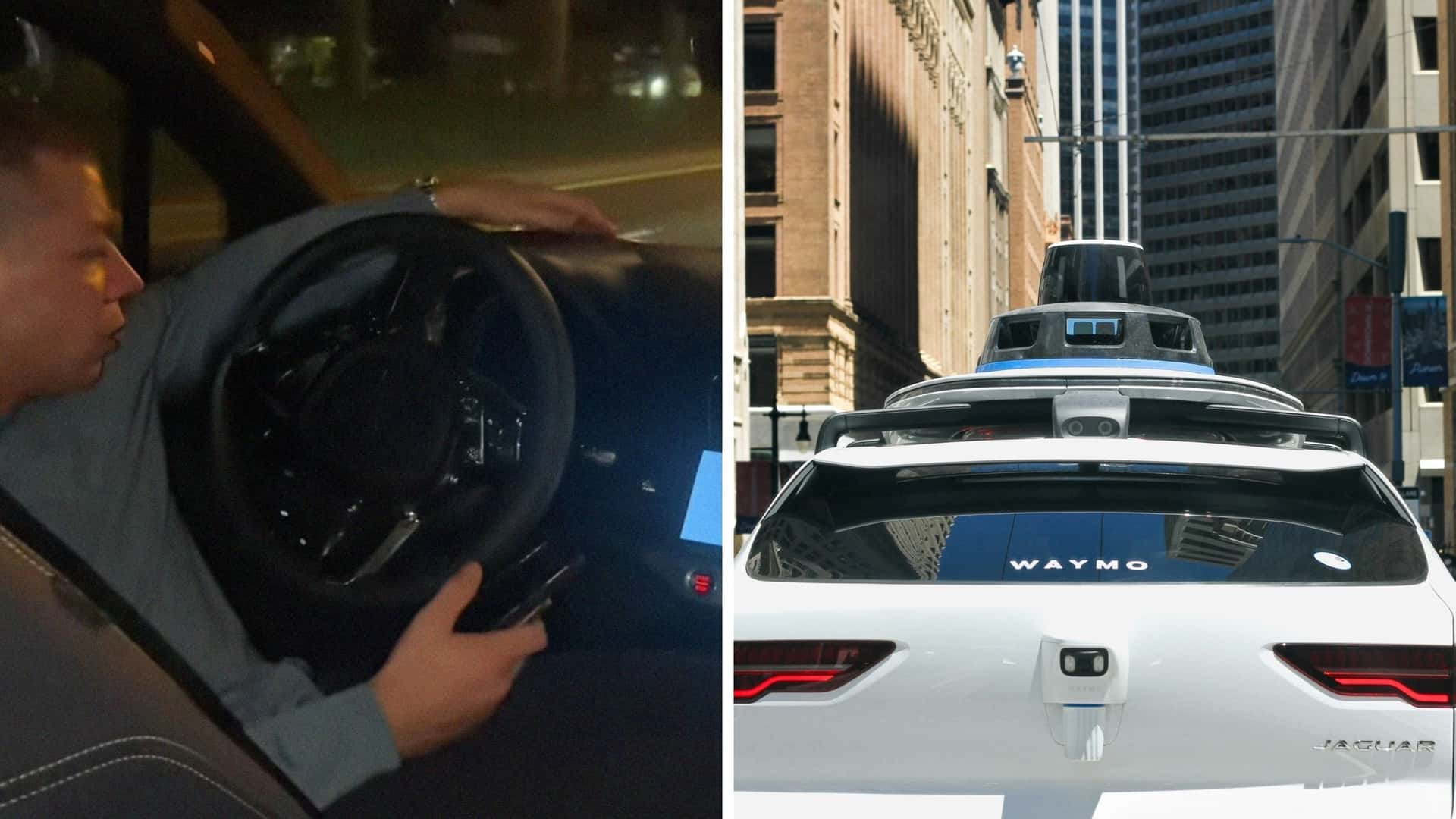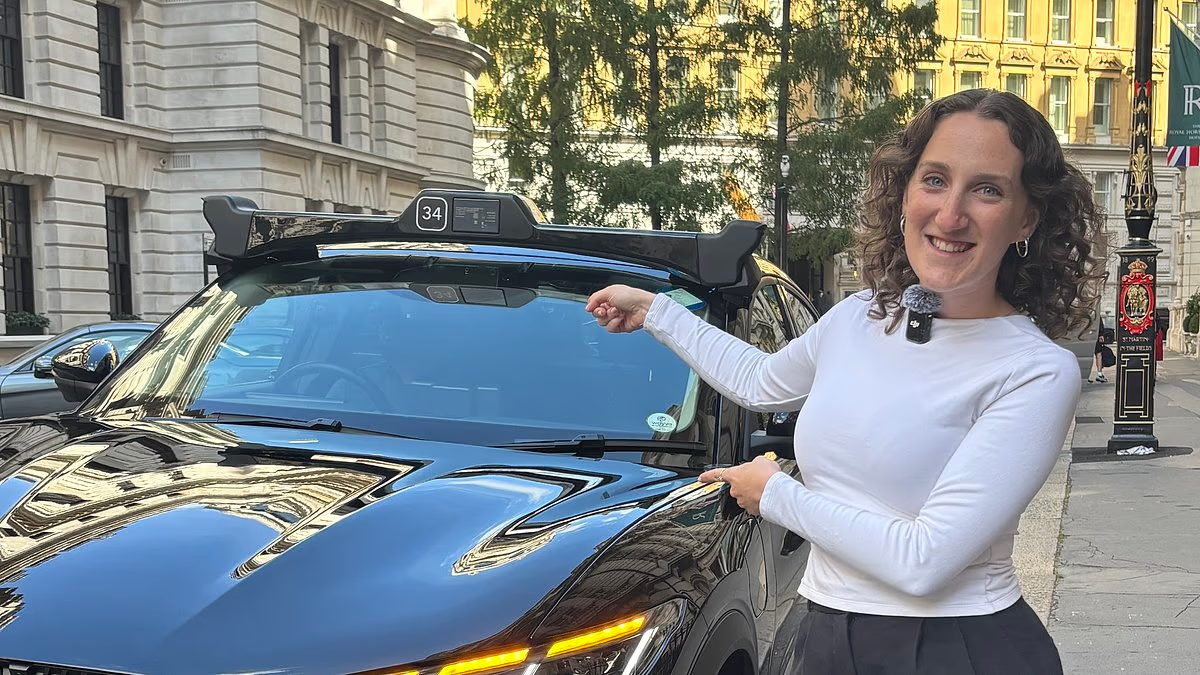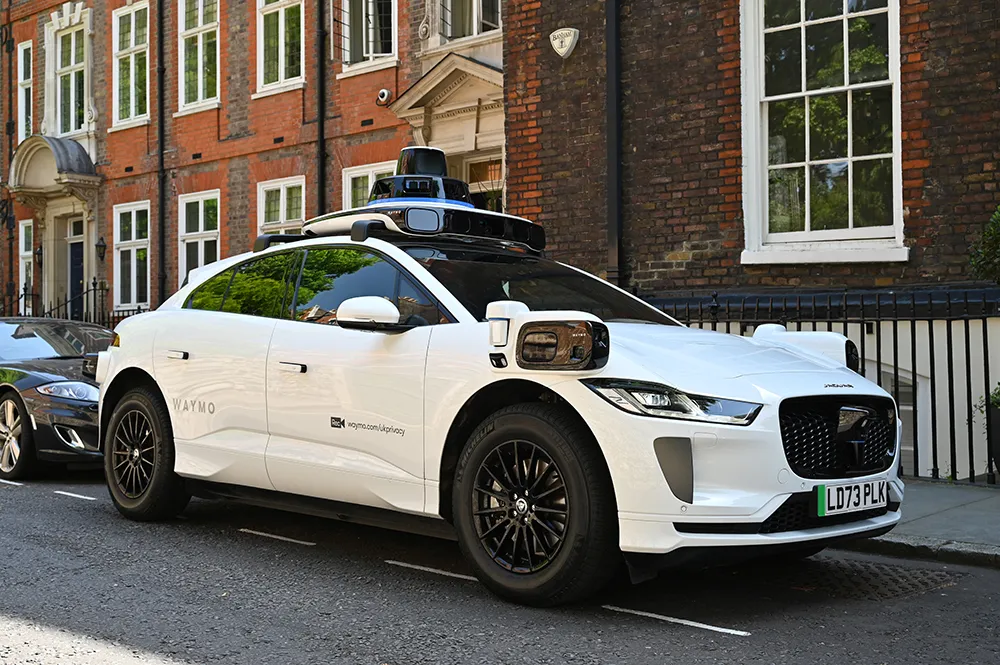
I’ve ridden in Waymo driverless taxis in both Miami and Austin and it is, as you would expect, a slightly surreal experience. When an empty vehicle turns up, displays your glowing initials on the roof, then invites you to unlock the doors via your phone, you feel as if you’re in a science-fiction film. Once you drive off, it feels doubly weird.
Yet what’s most surprising is how quickly it ceases to feel strange. After three minutes, you pay scarcely more attention to the progress of the vehicle than you would when riding in a car driven by any competent human driver. A colleague of mine who has used Waymo on faster roads tells me you experience another burst of unease when the car first hits 50mph, but this, too, rapidly dissipates.
Waymos don’t only need to learn to drive in Britain, they need to learn to drive like Brits
You may have noticed a few Waymo cars, with their rooftop rotating scanners, tootling around London, carrying no rear-seat passengers but with only a human behind the wheel. This is a necessary training process for London roads. Ideally, some of the time will be spent observing the car as it autonomously drives itself; at other times the software will record the driving behaviour of an expert human driver. Waymo relies heavily on copying human driving data – rather than learning to drive solely from first principles or by pure trial and error.