Korea’s labor market is facing a generational clash as older workers seek longer careers and younger people struggle to find first jobs. Policymakers are preparing to gradually raise the statutory retirement age from 60 to 65, but the change has sparked concern about youth employment. The Bank of Korea and experts say retirement-age reform should be paired with more flexible pay and hiring systems. Labor Minister Kim Young-hoon said the trade-off is especially sharp at large companies and in the public sector.
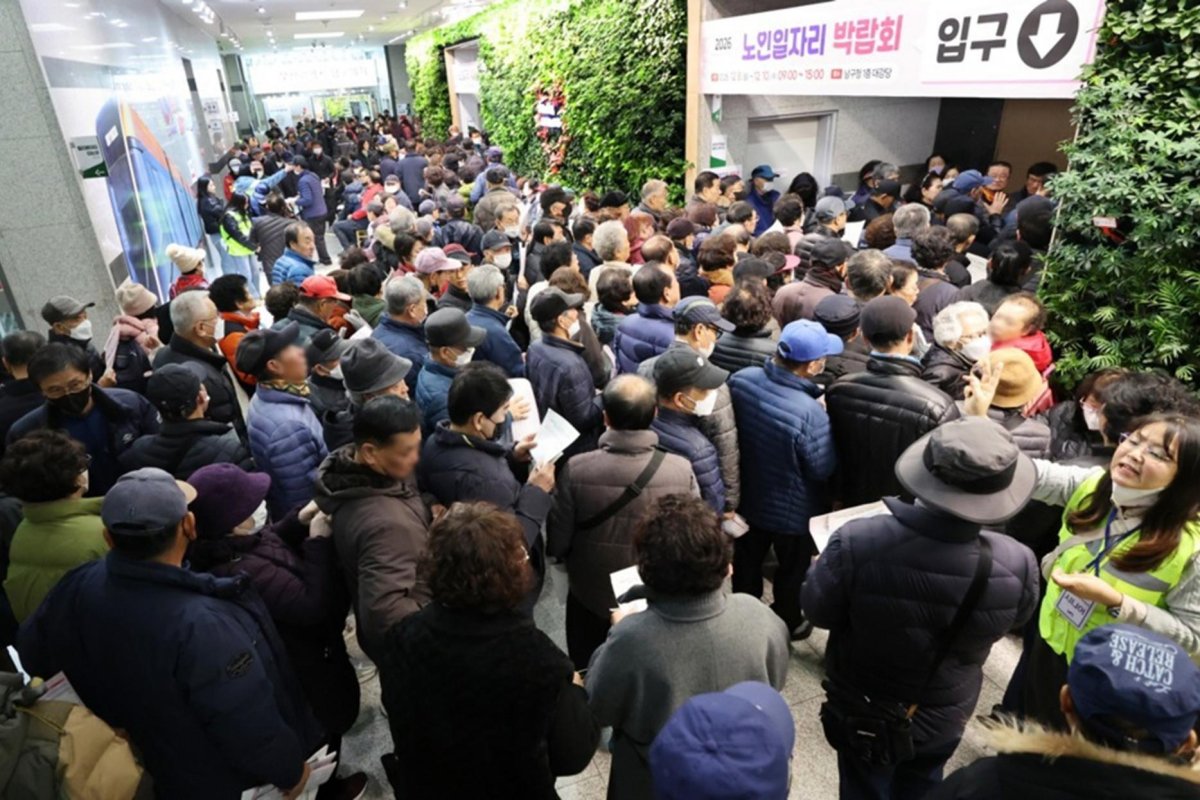
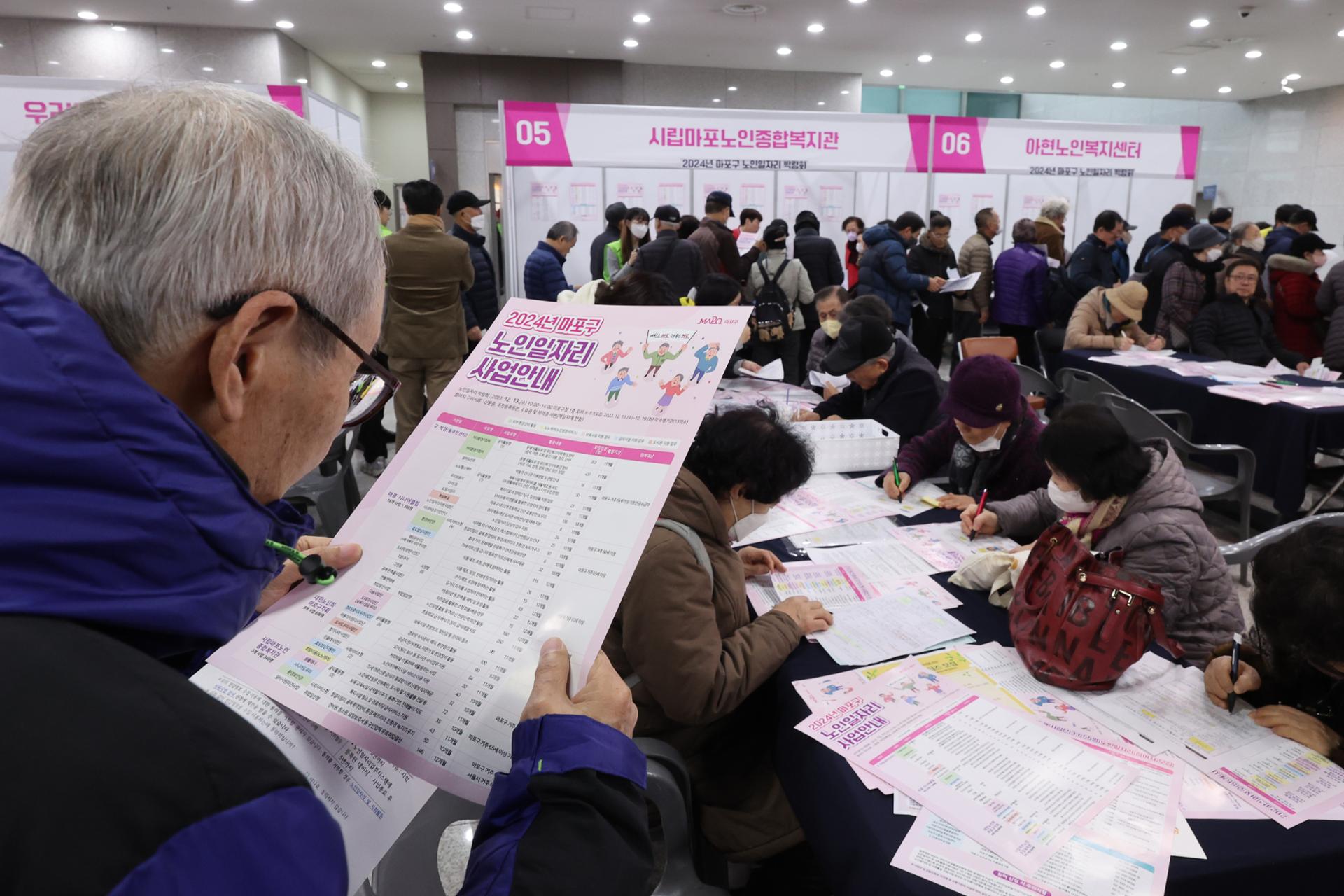
Job seekers crowd a fair for older workers in Seoul's Mapo District, Dec. 13, 2023. Yonhap
Korea’s labor market is caught in a generational dilemma. Young people continue to struggle to land their first jobs, while older workers are hoping to stay on the payroll for longer, as pension income often falls short of what they need for retirement.
As the country rapidly ages, policymakers are pursuing a gradual increase in the statutory retirement age from 60 to 65. This prospect has raised a difficult question: Are older workers staying in the workforce at the expense of the younger generation’s first break?
A recent survey by the Economic, Social and Labor Council, a presidential advisory body, found that 77 percent of 878 respondents believed Korea needed an employment system that could better accommodate both older and younger workers.