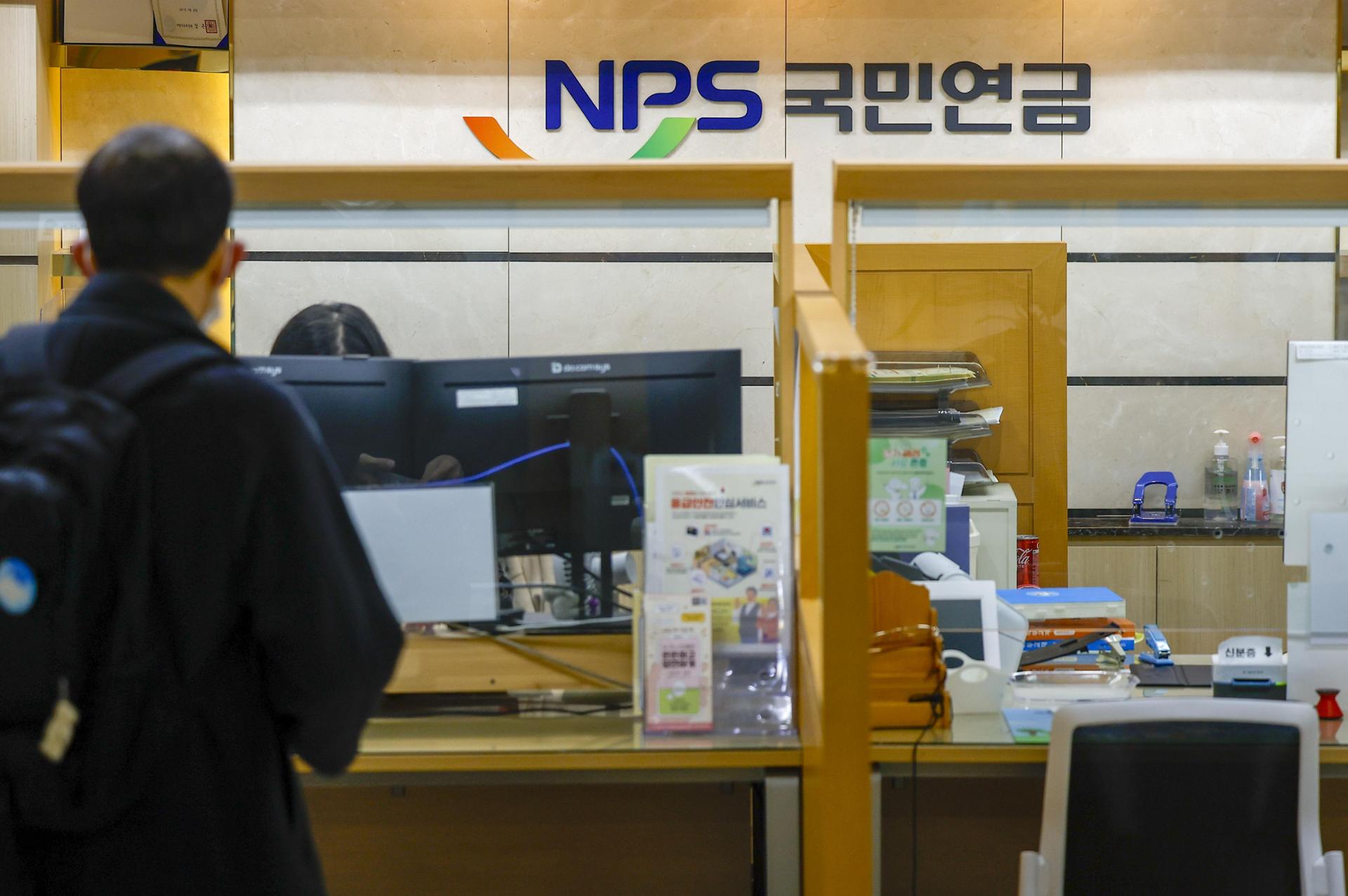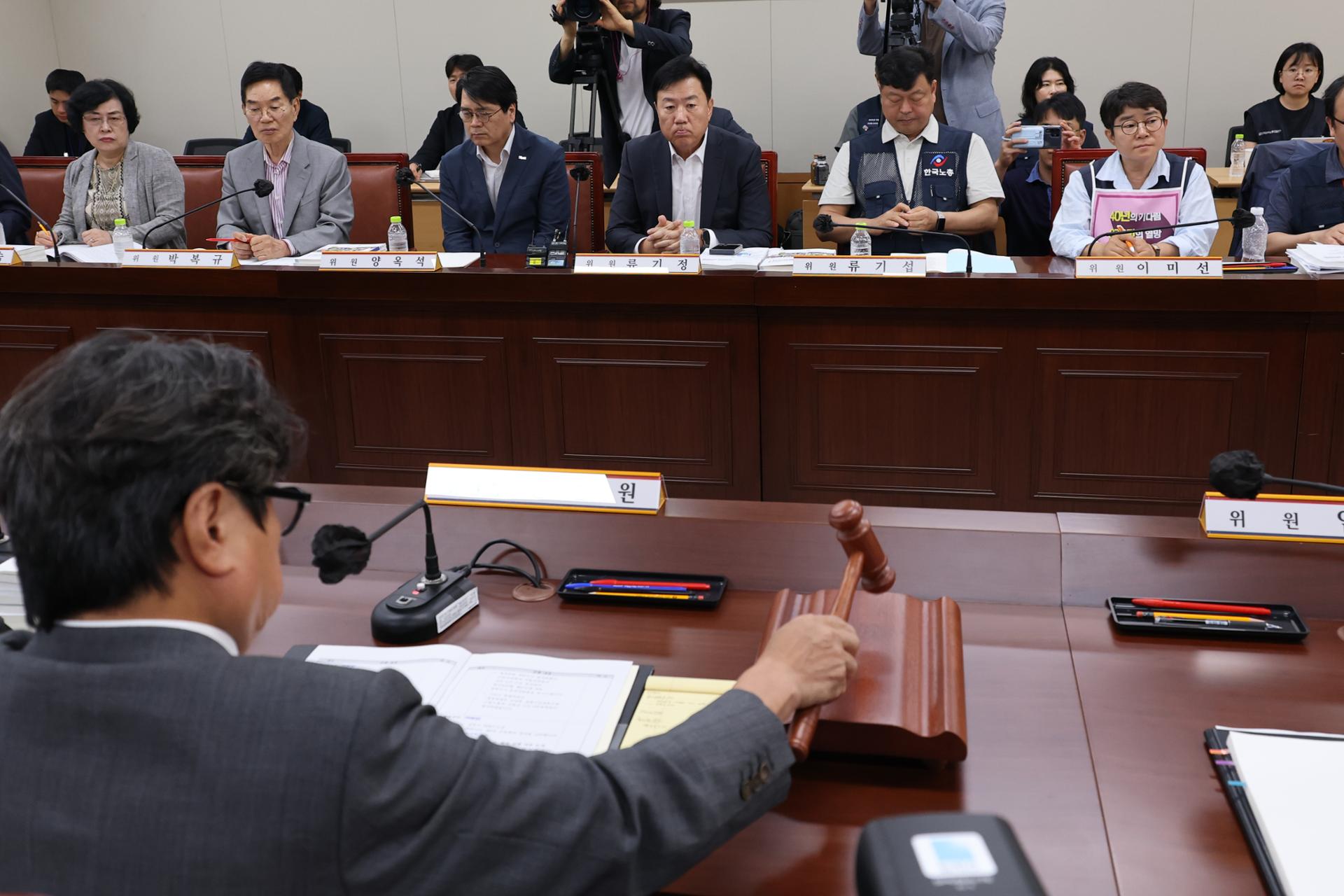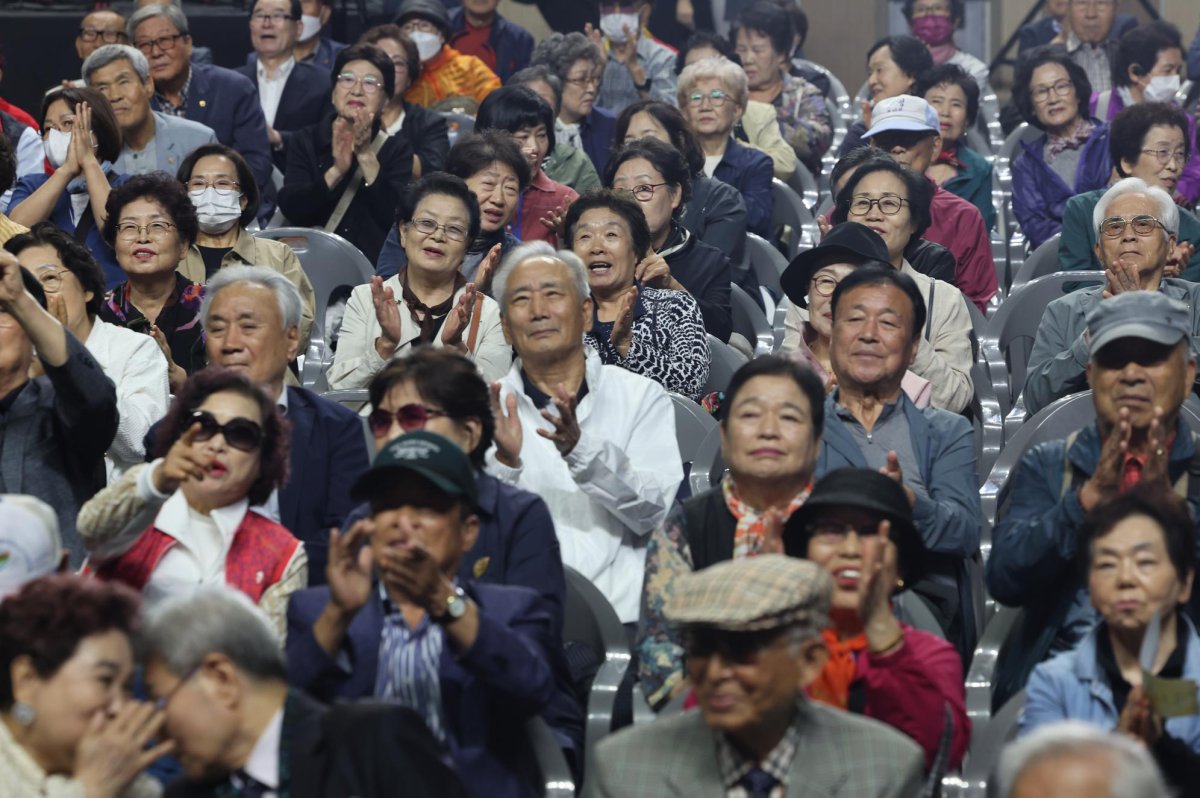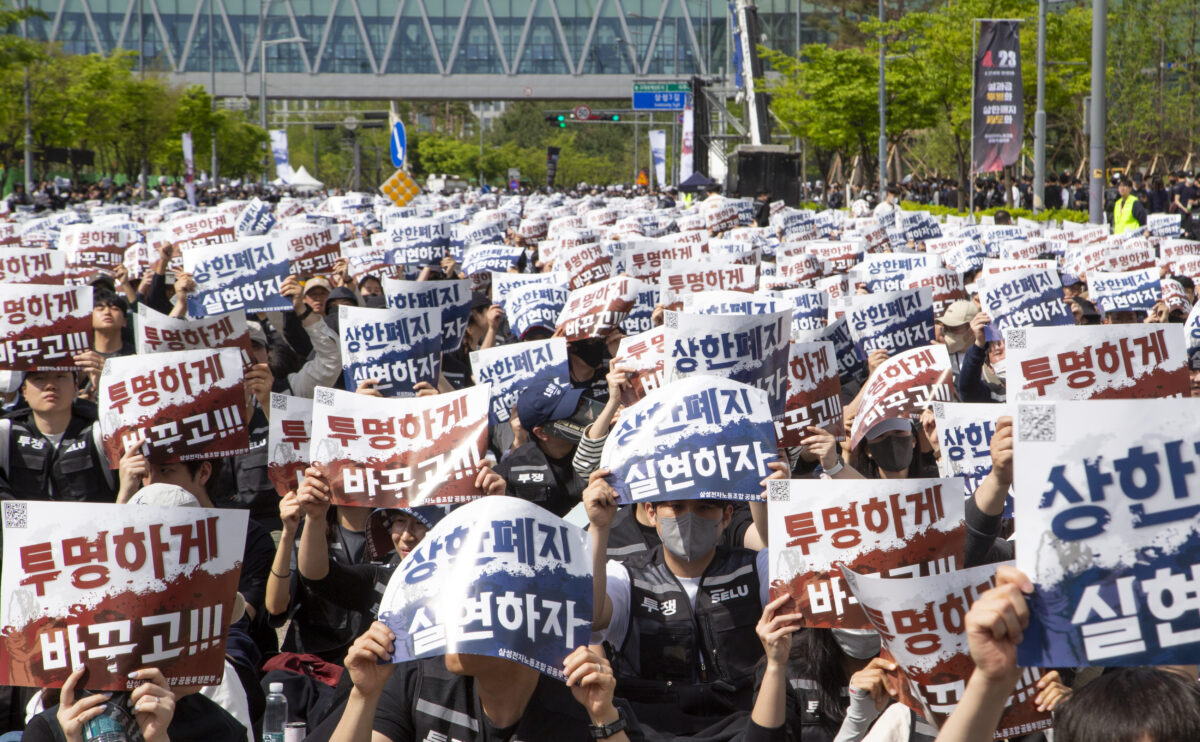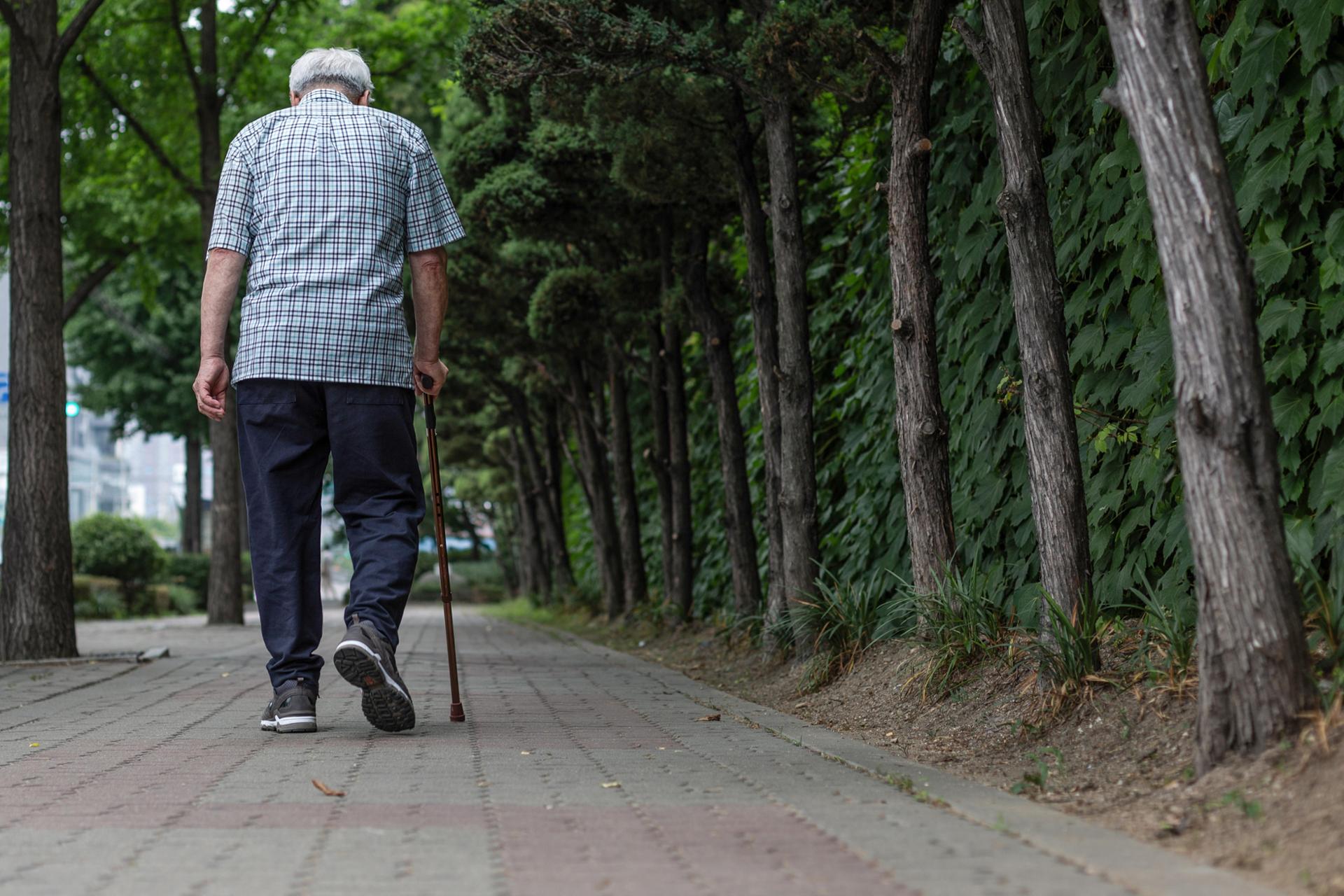
Labor groups say workers face income cliff between mandatory retirement, pension eligibility Yang Kyung-soo (third from left), president of the Korean Confederation of Trade Unions, and Kim Dong-myeong (fourth from left), president of the Federation of Korean Trade Unions, attend a press conference calling for legislation to immediately raise the retirement age to 65 at the National Assembly in Seoul on Tuesday. (Yonhap) In many advanced economies, efforts to raise the retirement age have triggered fierce opposition from labor unions, as seen in France in recent years.In South Korea, the opposite is happening.The country's two largest labor federations have joined forces to demand a higher retirement age, arguing that workers face a growing income cliff between retirement and pension eligibility.The debate reflects the pressure facing the world's fastest-aging society: People are being pushed out of work before they can receive public pensions. Demonstrators take part in a May Day protest in Paris on May 1, 2023, amid weeks of public outrage over a pension reform law that raised France's retirement age from 62 to 64. (Getty Images) Reversal of rolesOn Tuesday, the country's two largest umbrella labor groups, the Federation of Korean Trade Unions and the Korea Confederation of Trade Unions, held a joint press conference at the National Assembly, calling for the immediate implementation of a gradual retirement-age extension.Korea's current mandatory retirement age is 60, while eligibility for the national pension begins between ages 63 and 64 and is scheduled to rise to 65 by 2033.The gap has become a growing source of concern for workers approaching retirement.The move followed the Democratic Party's announcement of a road map that would gradually raise the retirement age to 65 by 2036, beginning with workers born in 1969.But the proposal relies heavily on rehiring workers after retirement, rather than simply allowing them to remain in their existing positions until 65."Under the reported proposal, those born in 1967 and 1968 could face a significant income gap before becoming eligible for pension benefits," the unions said.They also criticized the government's reliance on post-retirement reemployment, arguing that workers often return at substantially lower wages and that any retirement-age extension should guarantee no reduction in pay.The issue has gained urgency as members of Korea's second baby-boom generation, born between 1964 and 1974, approach or reach retirement age, raising concerns that many could face years without stable wages or full pension benefits.“Korea's labor unions have increasingly viewed retirement-age extension as a means of ensuring income security and protecting workers' livelihoods in later life,” said Yoon Dong-yeol, a business professor at Konkuk University.In many European countries, by contrast, retirement-age reforms have typically been initiated by governments as part of broader pension and labor market reforms, often drawing union opposition over concerns that they would force workers to stay in the labor market longer.Public opinion largely appears to align with the unions' position. The labor groups cited surveys showing that 88 percent of Koreans support extending the retirement age, while government data showed that older Koreans hoped to remain economically active until age 73.4 on average last year. Senior citizens gather at Tapgol Park in central Seoul (Im Se-jun/The Korea Herald) Concerns remainDespite broad sympathy for the need to extend working lives, strong opposition from businesses and concerns within government have slowed progress.Employers argue that a uniform retirement-age extension across industries and company sizes could raise labor costs and reduce flexibility in workforce management. Business groups have called for greater discretion in determining which workers are able to continue in their positions.Many companies already rehire selected retirees through programs permitted under Korean law, typically employing experienced and skilled workers as nonregular employees.The practice initially gained traction among manufacturers outside the Greater Seoul area, which includes Incheon and Gyeonggi Province, who struggled to recruit younger workers, but has increasingly expanded into some of the country's most sought-after workplaces. Korea's five major banks — KB Kookmin, Shinhan, Hana, Woori and NH NongHyup — reportedly rehired a combined 574 retired employees in the first quarter alone, with the number increasing each year.However, critics argue that extending employment for older workers could come at the expense of opportunities for younger generations.According to the Korea Enterprises Federation, 217,000 people aged 25 to 29 neither worked nor actively sought employment in 2024. The figure was driven largely by university graduates and was 2.6 times higher than two decades earlier, as companies reduced new hiring amid rising training costs. Students attend an employment expo at Kintex in Goyang, Gyeonggi Province, on June 10. (Yonhap) Calls for broader reformExperts warn that extending the retirement age without accompanying reforms to wages, job structures and support for small and medium-sized enterprises could deepen existing labor market inequalities.They argue that a simple extension could further concentrate stable, well-paying jobs among older workers, particularly because relatively few positions currently allow employees to remain until retirement age in the first place."Since SMEs and small business owners may struggle to benefit from or absorb the costs of such reforms, disparities between different segments of the labor market could become even more pronounced," Yoon said.He pointed to Japan and Taiwan as examples where governments expanded the range of employment arrangements available to companies while encouraging longer working lives through broader labor market reforms."The real policy challenge is not merely extending working lives, but creating an environment in which people can work longer and more productively while maintaining fairness across generations and reducing labor market inequality."
Unlike in France, Korea’s unions back higher retirement age. Why?
In many advanced economies, efforts to raise the retirement age have triggered fierce opposition from labor unions, as seen in France in recent years. In South
902 words~4 min read