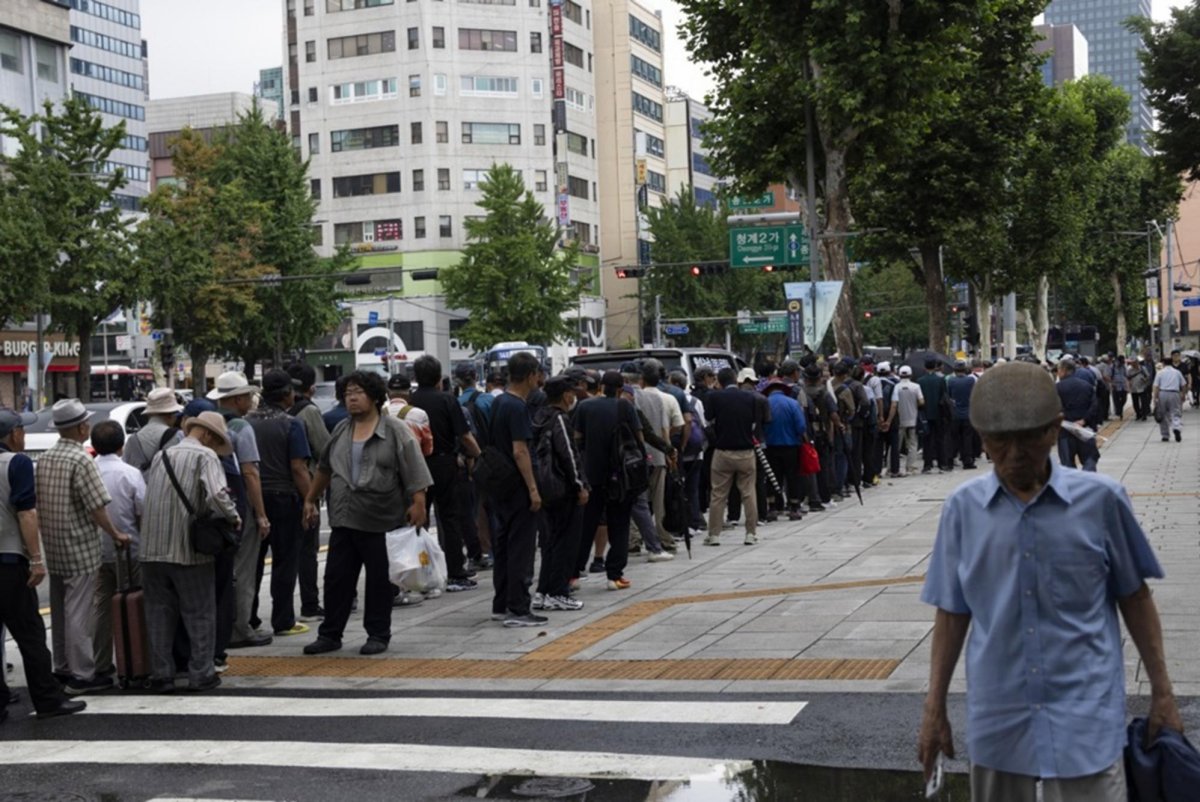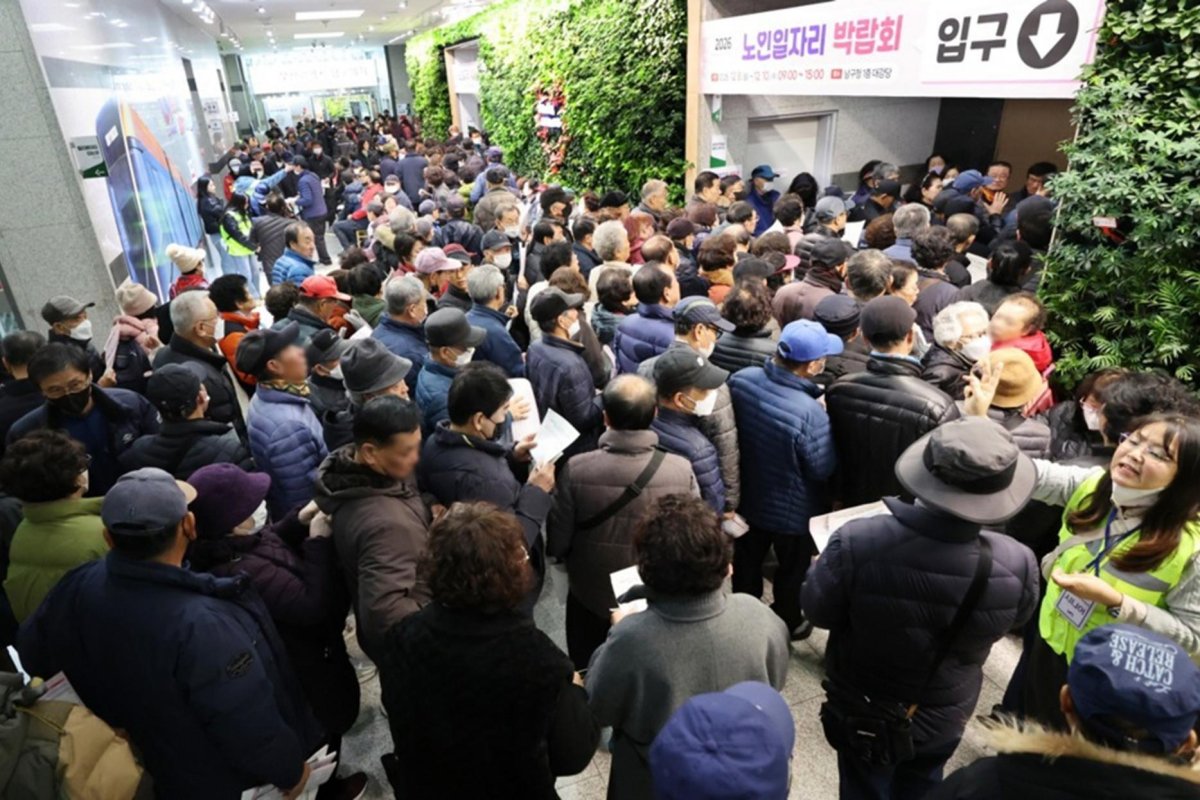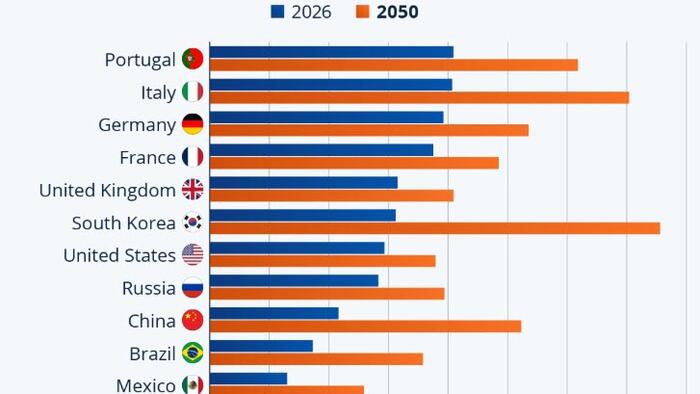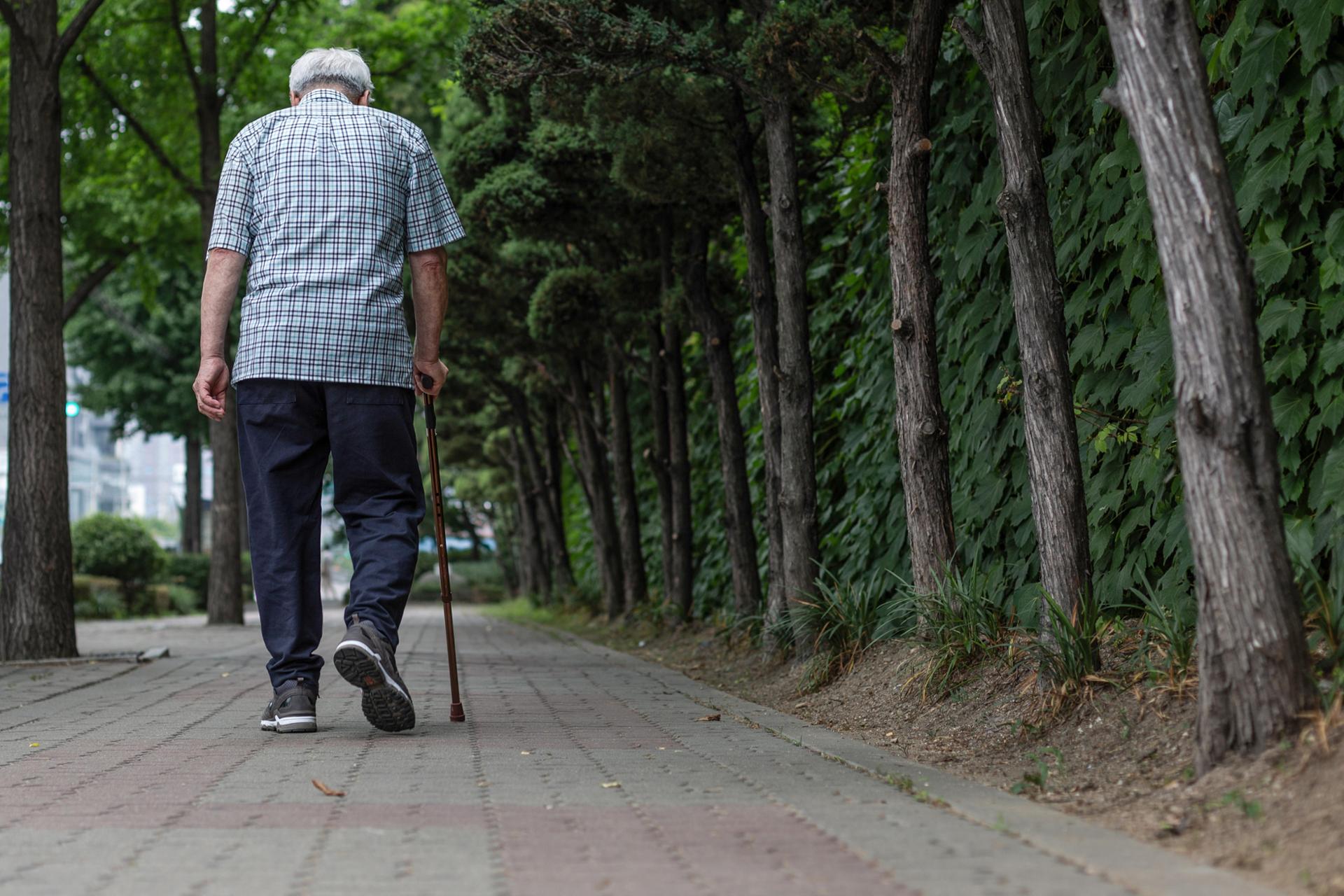
gettyimagesbank Korea's income poverty rate among people aged 65 and older has fallen below 40 percent for the first time on record, largely due to the retirement of the baby boomer generation (born between 1955 and 1963), who generally possess more assets, higher incomes and better pension coverage than previous generations.However, experts warn that income inequality within the elderly population is expected to widen further, underscoring the need to strengthen the social safety net for low-income seniors.According to an analysis released Wednesday by the National Pension Research Institute based on the Organisation for Economic Co-operation and Development's (OECD) Pensions at a Glance 2025, Korea's elderly income poverty rate stood at 39.7 percent.It marks the first time the country's elderly poverty rate has fallen below 40 percent in OECD statistics. The figure has steadily declined over the past decade, from 49.6 percent in 2015 to 45.7 percent in 2017, 43.8 percent in 2019, 43.4 percent in 2021 and 40.4 percent in 2023.Despite the improvement, Korea's elderly poverty rate remains about 2.7 times higher than the OECD average of 14.8 percent, ranking the highest among member countries.Korea also recorded the largest gap between elderly poverty and overall poverty rates among OECD members. While the country's overall poverty rate stood at 14.9 percent, the elderly poverty rate was 24.8 percentage points higher. In contrast, 17 OECD member countries reported lower poverty rates among seniors than among the overall population.Experts attribute the decline primarily to a generational shift."The baby boomer generation is the first to fully benefit from the maturation of the National Pension system and is a well-prepared generation with relatively high levels of both assets and income," said Seok Jae-eun, a professor of social welfare at Hallym University. "As they become the majority of the elderly population, their characteristics are increasingly reflected in the statistics."Lee Sam-sik, director of Hanyang University's Institute of Aging Society, said the trend also reflects demographic changes."Many elderly people born before Korea's liberation, who entered old age without adequate retirement preparation and often lived in extreme poverty, have passed away. They are being replaced by baby boomers," he said.The baby boomer generation accumulated considerable wealth during Korea's industrialization and generally has longer contribution periods to the National Pension, enabling more stable retirement income.An older adult collects waste paper using a handcart in an alley in Seoul. NewsisThe downside, experts say, is that inequality within the elderly population is likely to deepen."As people born in the late 1960s and the 1970s gradually enter old age, the overall poverty rate among seniors will continue to decline," Lee said. "But differences in asset ownership will increasingly divide older adults into affluent and low-income groups."The data support that assessment. Korea's Gini coefficient for the elderly, measured by disposable income, stands at 0.376, higher than the overall population's 0.331. A Gini coefficient closer to 1 indicates greater income inequality.By comparison, the OECD average shows lower inequality among seniors (0.306) than among the overall population (0.315).Lee argued that Korea can no longer sustain a universal approach to the Basic Pension that treats all seniors as a homogeneous group."It is urgent to reform the system into one that provides greater support to vulnerable seniors while reducing benefits for those who are financially better off," he said.Seok also stressed that the redistributive function of the Basic Pension should be strengthened."The National Pension alone cannot lift low-income seniors out of poverty. The Basic Pension needs to play a stronger redistributive role than it does now," she said.This article from the Hankook Ilbo, the sister publication of The Korea Times, is translated by a generative AI system and edited by The Korea Times.
Elderly poverty rate falls below 40 percent for first time, but still highest in the OECD - The Korea Times
Korea's income poverty rate among people aged 65 and older has fallen below 40 percent for the first time on record, largely due to the retirement...
605 words~3 min read