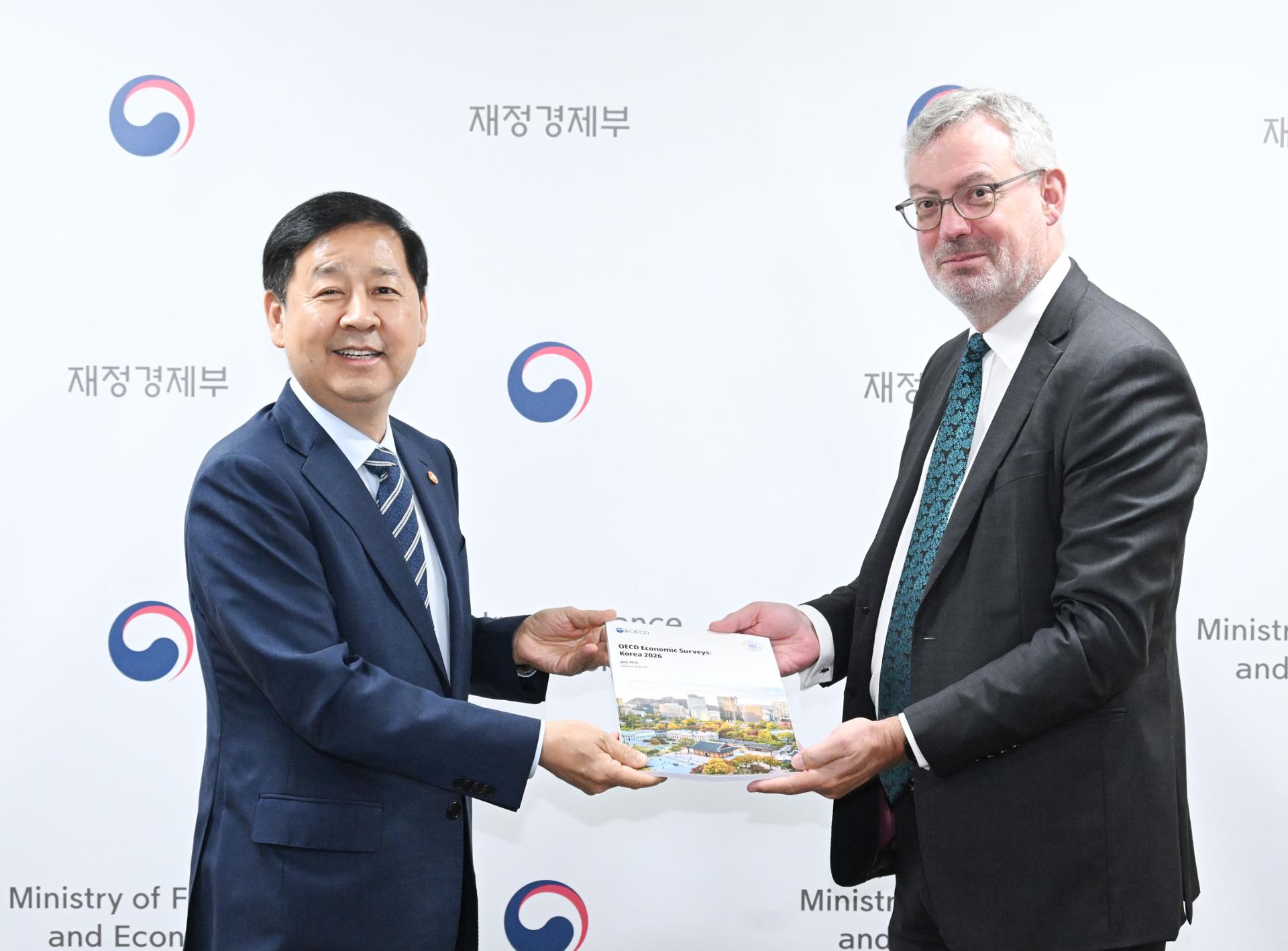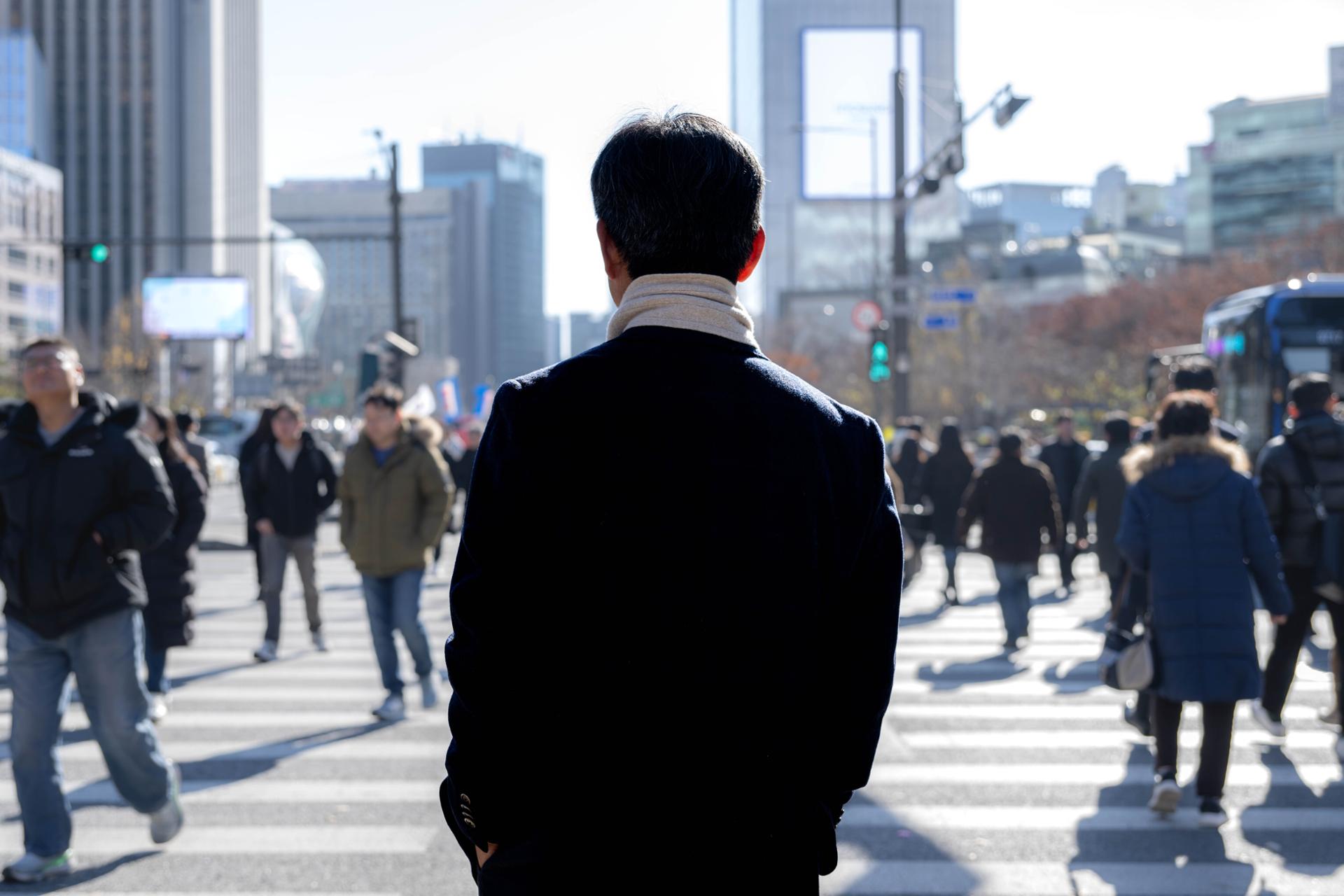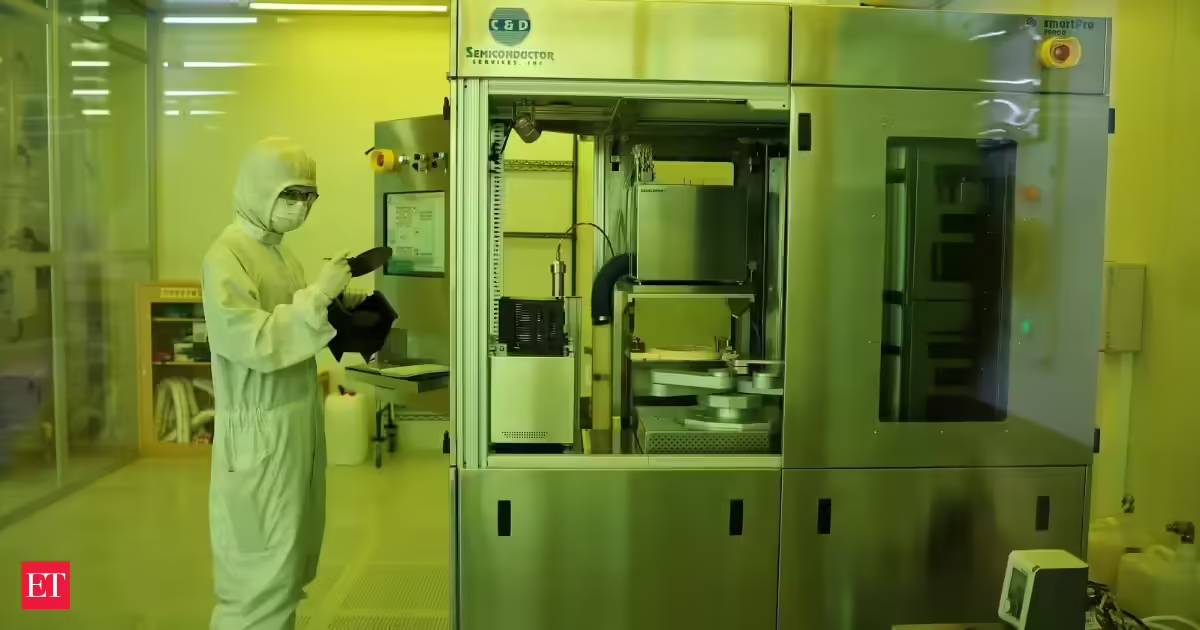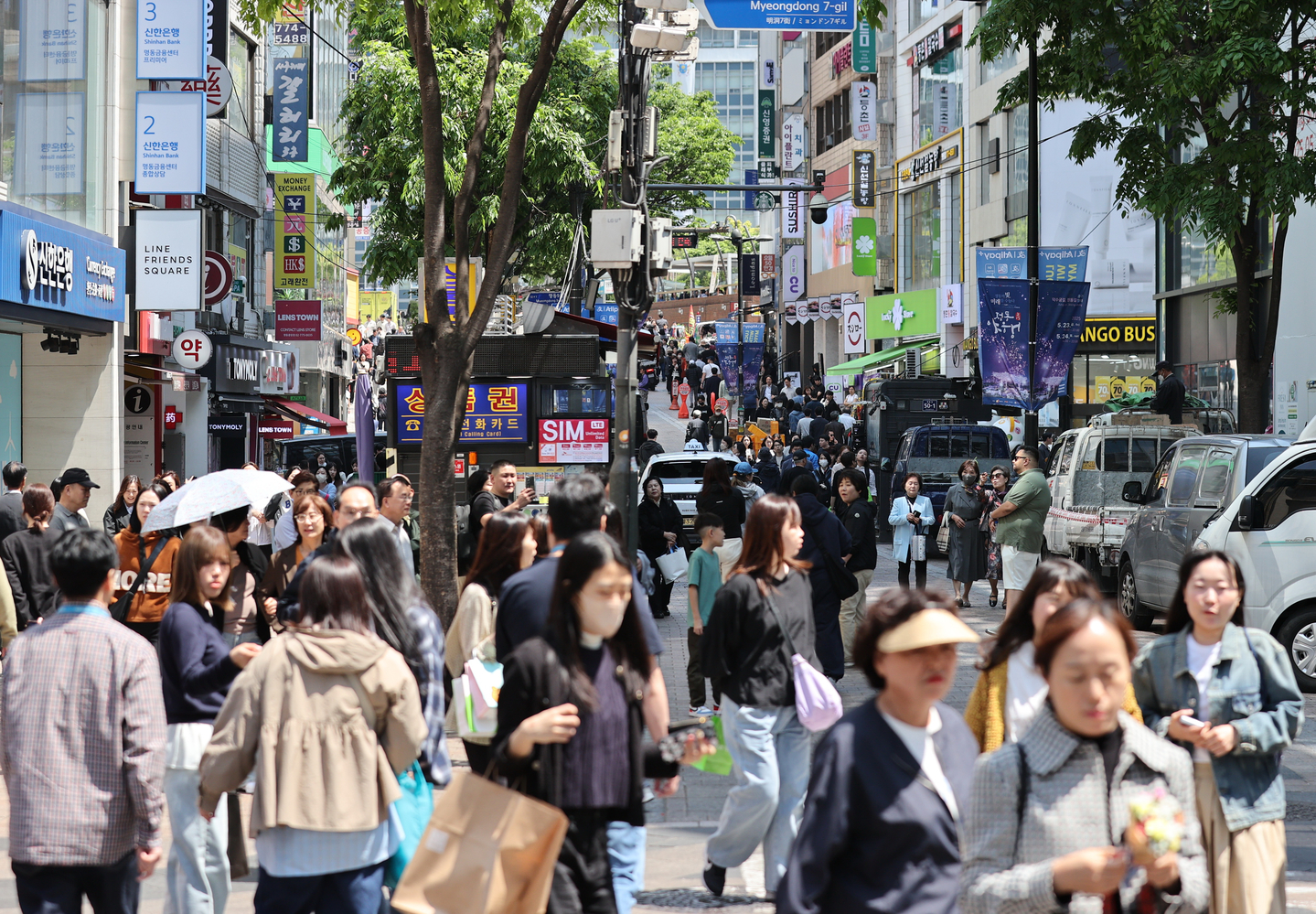
OECD sees Korea’s growth strengthening to 2.6% this year, but warns aging costs require new revenue sources A pedestrian walks through Gwanghwamun Square in central Seoul on June 26. (Newsis) South Korea should broaden its tax base and rely more on less distortive taxes to prepare for rising aging costs, the Organization for Economic Cooperation and Development said Thursday, warning that demographic pressures are set to strain public finances even as economic growth recovers."Rapidly increasing aging-related spending pressures require new sources of government revenue," the Paris-based organization said in an executive summary of its 2026 Economic Survey of Korea."At the same time, Korea must design its tax system to better support the economy in a low-growth environment."The biennial report projected Korea's economy would grow 2.6 percent this year before slowing to 1.9 percent in 2027, saying the recovery has regained momentum following the political turmoil triggered by the December 2024 martial law declaration, supported by fiscal stimulus and strong semiconductor exports.However, it warned that geopolitical tensions in the Middle East and higher energy prices continue to cloud the outlook.Against that backdrop, the OECD said Korea needs a broader, more growth-friendly tax system to meet rising age-related spending needs without undermining economic activity.One major recommendation concerned corporate income tax. The OECD said Korea's multitier corporate tax structure and various tax expenditures distort incentives by encouraging companies to remain small or split operations to retain tax benefits.It recommended that Korea gradually move toward a single corporate tax rate while balancing tax competitiveness with the need for stable government revenues.According to the Finance Ministry, Korea operates a four-tier corporate income tax system, while 22 OECD countries use a single rate and 12 apply two brackets. Including Korea, only four member countries maintain three or more tax brackets.The OECD also highlighted Korea's narrow personal income tax base, noting that more than one-third of wage earners pay no income tax.More broadly, it called for reducing tax expenditures and making greater use of less distortive revenue sources, including value-added taxes and corrective taxes.Property taxation was another key target for reform.Although Korea collects relatively high property tax revenues compared with the OECD average, the report said the system relies heavily on transaction taxes rather than recurrent property taxes.According to the Finance Ministry, property tax revenue accounts for 3 percent of Korea's GDP, compared with the OECD average of 1.6 percent. However, recurrent taxes account for only 29.4 percent of Korea's property tax revenue, well below the OECD average of 56 percent.The OECD recommended shifting property taxation away from transaction taxes and toward recurrent levies once housing market conditions stabilize, arguing that such a move would improve residential mobility, boost labor market efficiency and reduce distortions in the housing market.The tax recommendations form part of a broader reform agenda aimed at lifting Korea's long-term growth potential as its population ages and workforce shrinks.In its 2025 Employment Outlook, the OECD projected Korea's working-age population, defined as people aged 20 to 64, would decline by 46.7 percent between 2023 and 2060, the steepest drop among member countries.The organization said fiscal policy should continue supporting domestic demand in the near term but called for fiscal consolidation over the medium term as aging-related spending pressures intensify.It also urged Korea to strengthen its fiscal framework and pursue additional pension reforms, noting that the country's pensionable age of 63 remains among the lowest in the OECD.Beyond tax and fiscal policy, the OECD warned that despite roughly 70 percent of young Korean adults completing tertiary education, many struggle to enter the workforce and the earnings premium associated with a university degree has declined.The report called for reducing reliance on high-stakes examinations while strengthening work-based training and lifelong learning programs.On regional policy, the OECD said moving to the capital region no longer guarantees the economic gains it once did, as the benefits of migration have become increasingly linked to parental income and wealth.It called for stronger regional universities and more targeted investment in functional regional hubs to support balanced growth.
OECD calls for tax overhaul as Korea ages
South Korea should broaden its tax base and rely more on less distortive taxes to prepare for rising aging costs, the Organization for Economic Cooperation and
665 words~3 min read