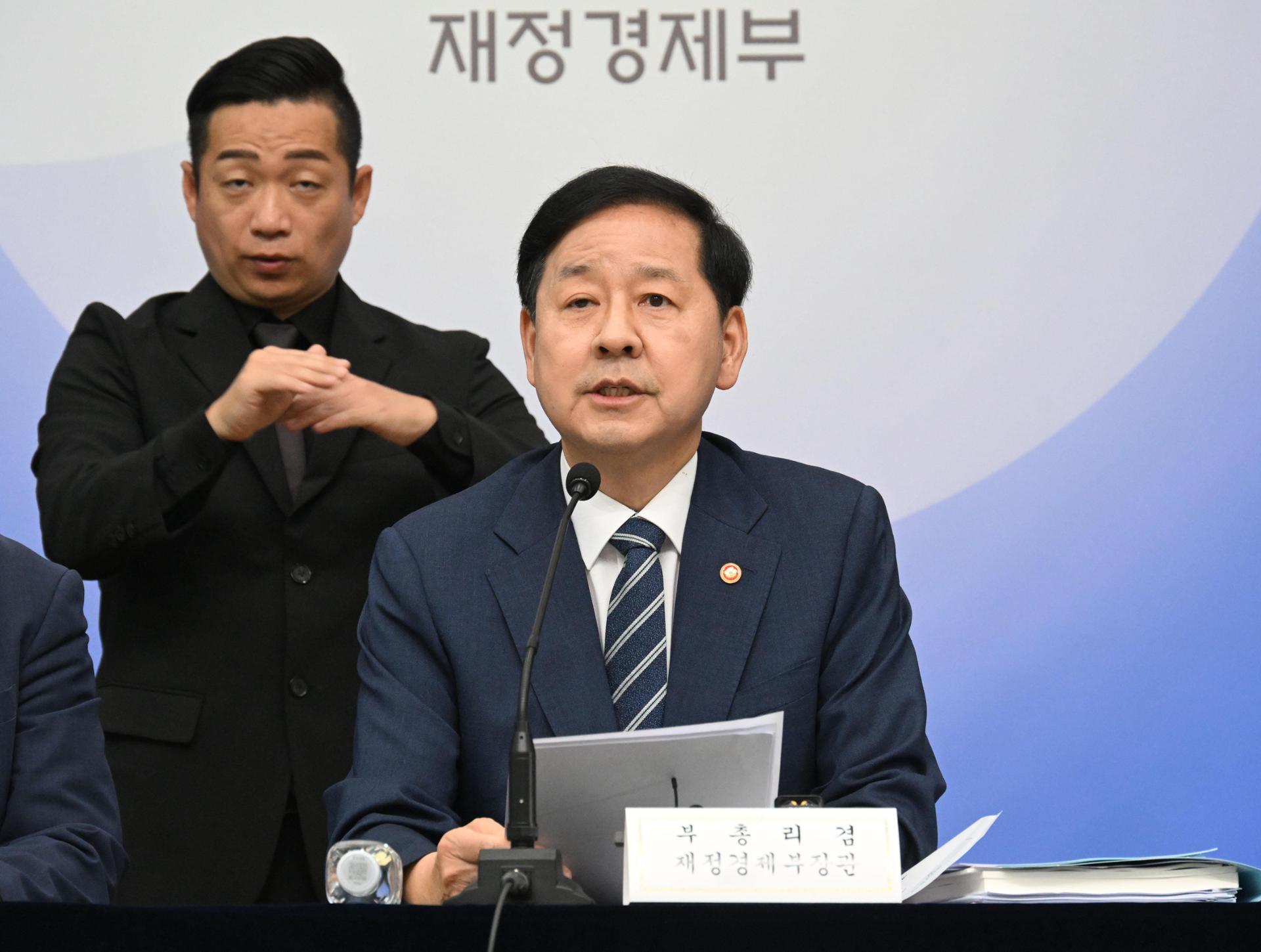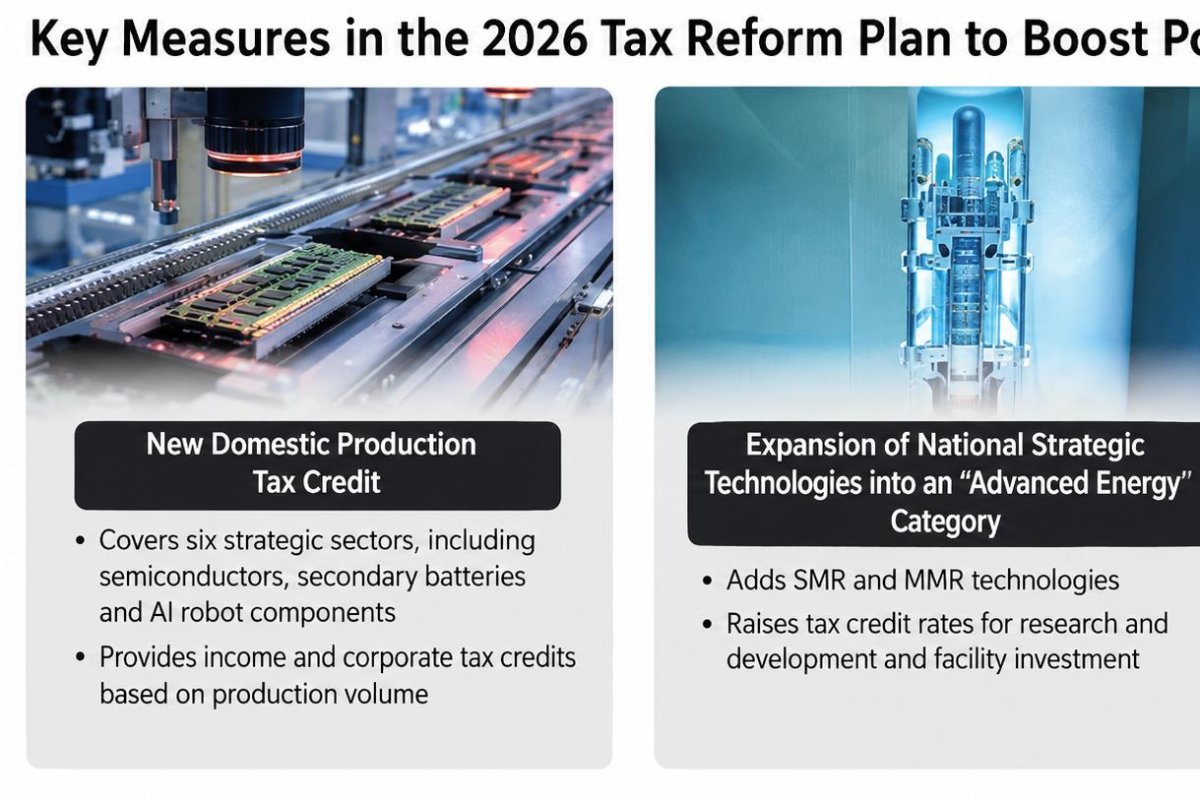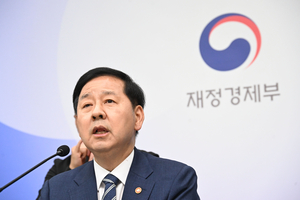
Package also raises foreign-worker flat tax to 21% and introduces production credits for strategic industries Deputy Prime Minister and Finance Minister Koo Yun-cheol speaks during a press briefing on the 2026 tax reform held in Sejong on Thursday. (The Ministry of Economy and Finance) South Korea unveiled its 2026 tax reform package Monday, proposing lower housing taxes for most single-home owner-occupiers but heavier burdens on expensive, rented-out and multiple properties. The package also raises the optional flat tax rate for foreign workers and introduces production-based incentives for strategic industries."This year's tax reform focuses on supporting sustainable economic growth and livelihood stability through the tax system," Deputy Prime Minister and Finance Minister Koo Yun-cheol said at an embargoed briefing Thursday.The package's biggest changes are in housing. The government plans to cut taxes for most people who own and occupy a single home, while raising the burden on expensive, nonowner-occupied and multiple properties.Housing taxes shift toward actual residence"A home should be a place to live rather than merely an asset to buy," Koo said, underscoring a reform aimed primarily at improving tax fairness rather than cooling housing prices.Officials said its centerpiece was a shift in the comprehensive real estate holding tax from rates based on the number of homes owned to a system tied to their combined value.For an individual who owns and occupies a single home, the basic deduction will rise from 1.2 billion won to 1.4 billion won ($840,000 to $981,000) in officially assessed value, equivalent to a market value of about 2 billion won. It will fall to 900 million won for a sole home not occupied by its owner and also be reduced for multiple-home owners.For owner-occupiers with a single home, the fair market value ratio — the share of post-deduction assessed value included in the taxable base — will rise from 60 percent to 70 percent in 2027, bringing the taxable base closer to market value.Government simulations show holding taxes falling for such homes worth up to about 3 billion won, changing little at roughly 4 billion won to 5 billion won and rising more sharply above that range.Capital gains tax benefits will likewise shift toward actual residence. The current deduction of up to 40 percent each for ownership and residence will be replaced by a residence-based deduction of 8 percent a year, up to 80 percent, taking full effect in 2029.A monetary cap aimed at limiting deductions on high-value homes will be set at 2 billion won in 2028 and lowered to 1 billion won from 2029. To encourage multiple-home owners to sell as their holding-tax burden rises, the government will temporarily ease capital gains tax surcharges in regulated areas through 2028.Production incentives, tax breaks reshapedBeyond property, the government will introduce a domestic production tax credit for strategic goods in six sectors, including solar and wind power, secondary batteries, semiconductors, critical materials and AI robot components. Unlike existing incentives tied to investment spending, the credit will be based on the volume manufactured and sold in Korea, with regional multipliers of 1.0 to 1.5 and a general cap of 50 percent of qualifying production costs.The government will also tighten inheritance- and gift-tax valuations of listed shares to deter controlling shareholders from suppressing stock prices. Longer valuation periods may apply when a company's price-to-book ratio ranks in the bottom 25 percent of its Kospi industry or the bottom 10 percent of its Kosdaq industry for 12 of the past 13 half-year periods.The rule will also apply when a company's share valuation is at least 30 percent below its three-year average following potentially value-depressing actions within the previous year.Foreign-worker flat tax rises to 21%The optional flat income tax rate for foreign employees will rise from 19 percent to 21 percent. At the same time, the eligibility window will be extended, allowing foreign workers who begin employment in Korea by the end of 2029, rather than 2026, to choose the flat-rate system.Eligible workers may opt to pay the flat rate instead of Korea’s progressive income tax, which reaches 45 percent for the highest earners. Those choosing the flat rate, however, cannot claim income exemptions, deductions or tax credits.Officials said the increase reflects the rise in Korea’s top personal income tax rate from 40 percent, when the 19 percent flat rate was introduced, to 45 percent today.W3.44tr net revenue gain projectedThe government puts the net revenue gain at 3.44 trillion won on a year-on-year basis, equivalent to a cumulative 13.3 trillion won from 2027 to 2031.It also plans to revise 11 tax laws. Following a public notice period from Tuesday through Aug. 11, the bills will undergo vice-ministerial review on Aug. 27 and Cabinet approval on Sept. 1 before being submitted to the National Assembly by Sept. 3.
Korea tax overhaul rewards resident homeowners, targets multiple properties
South Korea unveiled its 2026 tax reform package Monday, proposing lower housing taxes for most single-home owner-occupiers but heavier burdens on expensive, re
788 words~4 min read