Encode-prefill-decode (EPD) disaggregation is an inference optimization technique for multimodal models that separates the vision encoder stage from the prefill and decode stages. It is most effective for image-heavy prompts, short-to-medium outputs, and quantized mixture-of-experts (MoE) models.
This post shows when and how to use EPD disaggregation with NVIDIA Dynamo to achieve up to 5x faster time to first token (TTFT) and 7x faster end-to-end response time. The post also addresses the scenarios where EPD disaggregation is not recommended.
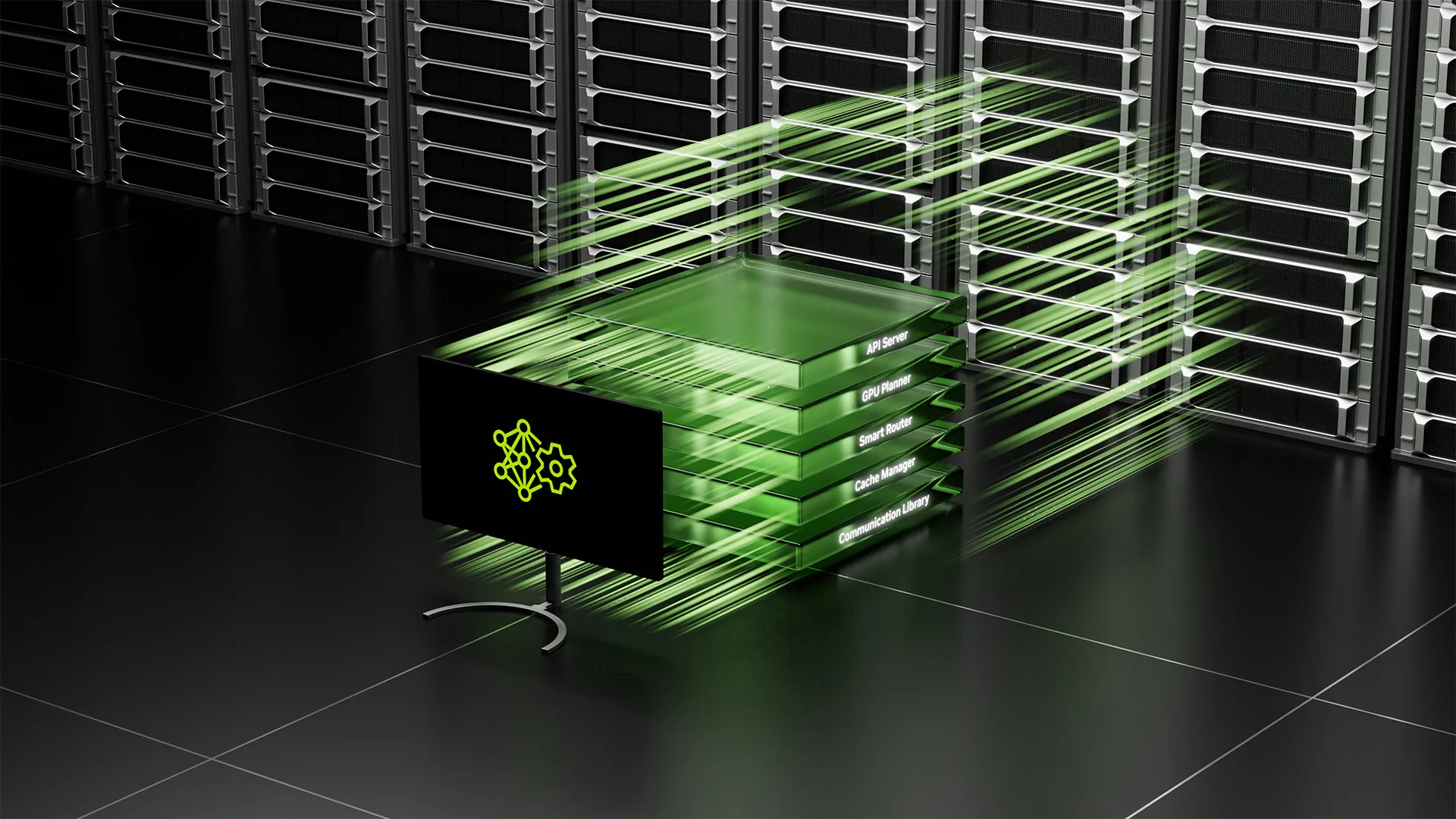
Dynamo is an open source inference framework for serving AI models in distributed environments. It supports EPD disaggregation, separating these phases into independently scalable stages rather than running them together with tightly coupled scheduling and scaling patterns. Dedicated encoder workers can improve batching, memory efficiency, and overall throughput.
Why is EPD disaggregation important?
A multimodal request adds work before LLM prefill can begin. The serving stack must preprocess the media and run the vision transformer (ViT) to produce embeddings. In aggregated serving, vision encoding, LLM prefill, and decode all share one worker and one scheduling domain. This simple design works well when media processing accounts for only a small portion of the workload.
 aws.amazon.com