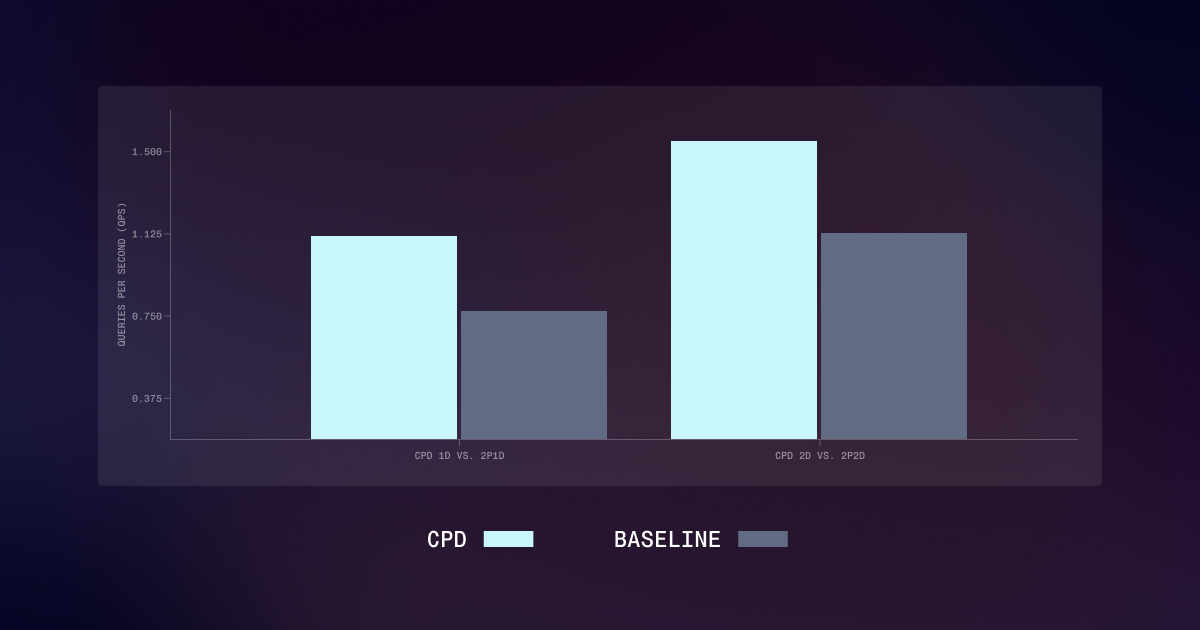
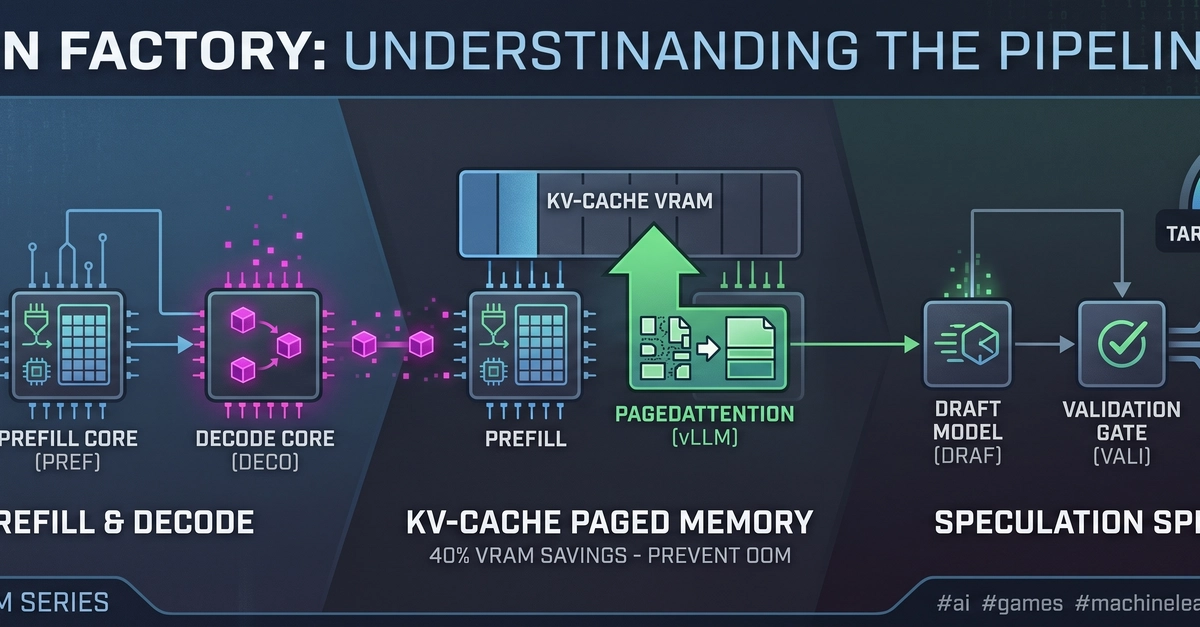
When prefill and decode share a GPU, long prompts stall token generation for every concurrent request. Disaggregated Prefill and Decode (DPD) removes this interference by running each phase on separate GPU pools connected through Elastic Fabric Adapter (EFA) with Remote Direct Memory Access (RDMA). Large language model (LLM) inference has two fundamentally different phases. Prefill is compute-bound. It processes the entire input prompt in parallel to generate the initial key-value (KV) cache. Decode is memory-bound. It generates one token at a time and requires substantial memory bandwidth to access model weights and the growing KV cache. By disaggregating these into specialized engines, you can assign different parallel strategies to each phase. With this separation, you can tune time to first token (TTFT) and inter-token latency (ITL) independently, control tail latency more reliably than chunked prefill tuning, and keep long-context prefills from blocking ongoing decode requests. vLLM improves single-node efficiency through continuous batching and PagedAttention. However, organizations that deploy at scale still face challenges when they orchestrate multi-node deployments and optimize routing.
Disaggregated prefill and decode for LLM inference on SageMaker HyperPod | Amazon Web Services
In this post, we show how to implement DPD with vLLM on Amazon SageMaker HyperPod using the HyperPod Inference Operator.
2,845 words~13 min read

 aws.amazon.com