Home loan borrowers choosing the right term to fix for have a choice: take the cheaper short-term rate or lock in some certainty for longer, at a slightly higher price.Interest rates have risen from their lows of the end of last year and early this year.Six-month rates at the big banks are around 4.75 percent. One-year rates are just under 5 percent, and two-, three-, four- and five-year rates are between 5.39 percent and 5.69 percent.So is it worth locking in for longer?ASB senior economist Chris Tennent-Brown said one-year rates were still about 2.5 percent below their last peak.He said people deciding what term to choose had a trade-off to make."It's not all about picking the bottom of the mortgage interest rate cycle, especially now with the balance of risks and market pricing pointing to higher mortgage rates."He said many people liked to fix for a year or two. But he said there was not a lot to lose in fixing longer, at the moment."If our reasonably conservative call on the OCR proves correct - they get it up a half a percent more but don't need to go beyond that - I'd expect that to translate to one-year rates being lower than what the four- and five-year rate are now."But given that we think the one-year rates could be half a percent higher over the next three to six months, [choosing a longer rate] is a lot of certainty for a reasonably low price from a historical perspective."He said fixing for a series of shorter terms had paid off in the past but it had hurt at times when rates had risen faster or higher than expected."But the other reason people like those shorter-term rates is it gives them a chance to reassess their finances, make lump sum payemnts and that sort of thing on a frequent basis as well."He said people who wanted an "in-between" step could split their loans into a shorter and longer-term fix. "Get some of that longer-term stability with the longer terms and a bit of flexibility by having some money rolling on a shorter term."Kelly Eckhold, chief economist at Westpac, said the one-year rate was the cheapest part of the market because there was an expectation that rates would rise.Westpac chief economist Kelly Eckhold.Supplied / LinkedIn"The whole curve is fairly flat compared to what it has been. Even if you go out to three years you only have to pay an extra 0.4 percent or 0.5 percent more basically for that."If you are interested in hedging or insuring yourself against the possibility that rates go a lot higher, that's probably not a bad deal compared to what you've otherwise had for a while."He said he expected the OCR to rise over the next year and take the one-year rate with it."But the forecasts for that are relatively modest. You're only talking about perhaps another 30 or 40 points, something like that."Fixing decisions would become much more important if something happened that surprised the market."If it turns out inflation is going to be quite fierce and growth is going to be quite strong and the Reserve Bank has to take rates to 4.5 percent then obviously there will be benefits to having borrowed for longer because a 5.5 percent or 5.6 percent three-year rate will work out to be a pretty decent deal if that happens."But if you think things are just going to stop around here in terms of the OCR, probably somewhere around 5 percent is where it's going to be."Mike Jones, BNZ chief economist, said the market was already pricing an OCR peak of about 3.5 percent.BNZ chief economist Mike Jones.Supplied / BNZ"That will naturally limit how much further fixed mortgage rates rise even as a higher OCR is delivered. Retail interest rates have actually been rising for about nine months in anticipation of this tightening cycle."We could get another 20 to 50bps or so of increases in fixed rates from here, very much concentrated at those shorter fixed terms. So it may be that the chunkiest increases are behind us. Clearly though there remains significant uncertainty about the way forward and the Reserve Bank has continued to stress the interest rate outlook is data dependant - conditions can change."ANZ earlier said that a 0.92 basis point increase in the one-year rate would make back-to-back fixes more expensive than fixing for two years."That could happen but it is a bigger jump than we are projecting... financial markets expect more OCR hikes than we do. If we are right, a series of back-to-back one-year fixes may end up being the cheaper alternative if you are prepared to forego the certainty of a longer fix."Infometrics chief forecaster Gareth Kiernan said his forecast was for rolling one-year rates to deliver an average interest rate of 5.2 percent over the coming years, compared to about 5.7 percent currently for five-year rates and 5.3 percent for two-year.RNZ / Rebekah Parsons-King"Historically, focusing on the one-year rate has on average been best for borrowers, although of course there are occasions when fixing for longer would have worked out better, as well as even more rare occasions when holding off fixing and floating for a short period of time would also have been better."So the current attractiveness of one-year rates is not unusual. I'd also note that the comparison relies on our forecasts of future rates being correct, which, with the benefit of hindsight, is not always true."Sign up for Money with Susan Edmunds, a weekly newsletter covering all the things that affect how we make, spend and invest money.
Is it worth fixing a home loan for longer?
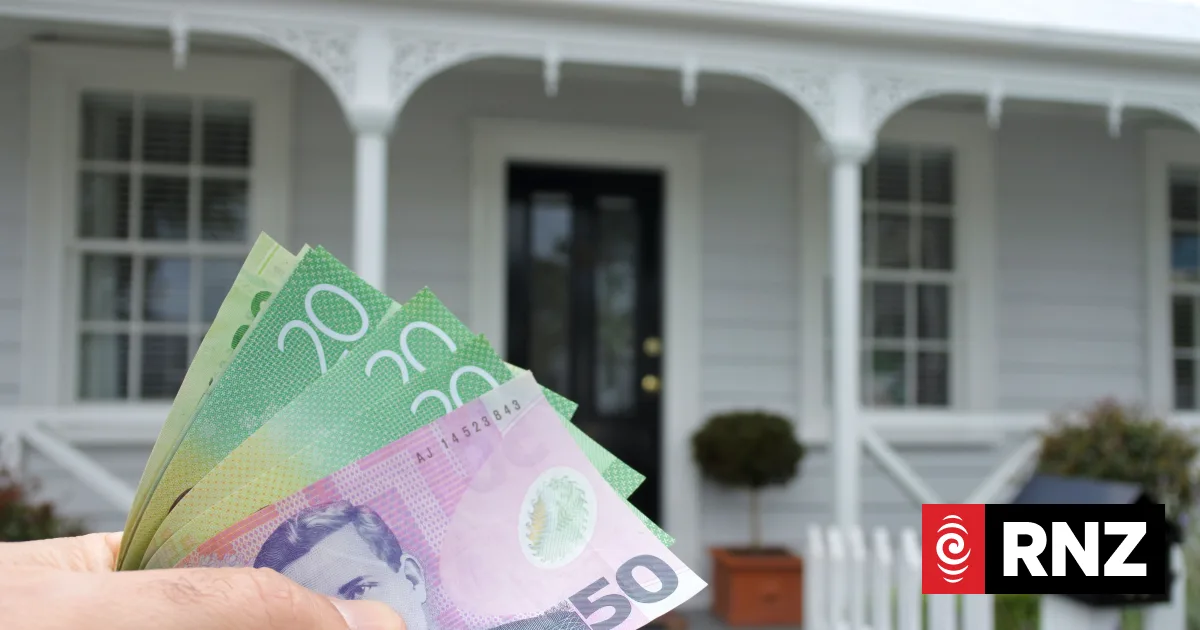
Home loan borrowers choosing the right term to fix for have a choice: take the cheaper short-term rate or lock in some certainty for longer, at a slightly higher price.
931 words~4 min read