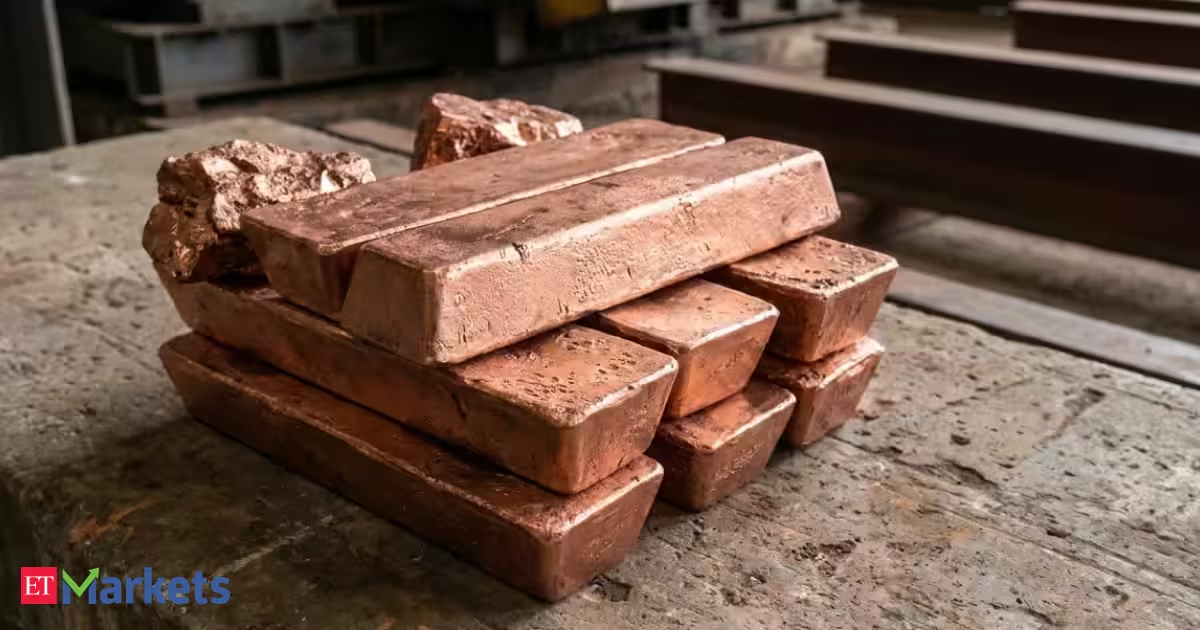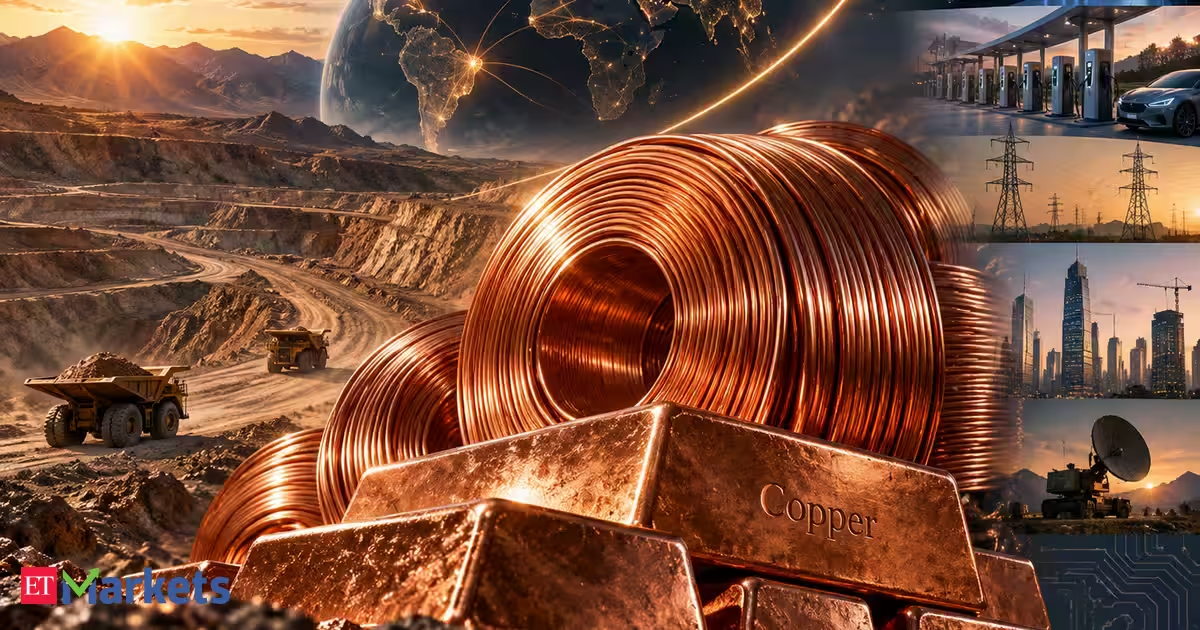
Copper is trading at record prices, and the people who turn raw ore into usable metal can't make money doing it. That's the copper market right now, and it says more about who actually controls the world's most important industrial metal than any single price headline does.Three-month copper on the London Metal Exchange hit an all-time high of $14,779 a ton on Tuesday, its fourth straight session of gains, before easing back toward $14,630 Wednesday morning. The metal is up close to 18% this year. COMEX copper in the US is trading near $6.75 a pound, pulled higher by the same forces driving London.None of that is showing up in smelter profits. The 2026 benchmark treatment and refining charge, the fee miners pay smelters to turn concentrate into finished metal, settled at zero dollars a ton this year, the lowest annual benchmark on record. That's down from $21.25 in 2025 and $80 in 2024. Spot rates went further, dropping to roughly negative $127 a ton by midyear, meaning smelters are effectively paying miners for the right to process their own ore.Whoever owns the concentrate is winningChina smelts roughly half the world's copper and has driven more than 90% of global smelting capacity growth since 2005, tightening its grip on the processing side of the business even as it squeezes its own margins. Beijing built that capacity assuming mine supply would keep pace. It hasn't, and the gap is now the defining fact of the copper market."It's really hard to fix a number between miners and smelters, with both having strong arguments," one Shanghai trader involved in this year's negotiations told Fastmarkets, adding that miners currently hold the upper hand.Set OilPrice.com as a preferred source in Google here.Mine supply is the actual constraint, not processing capacity. Chile posted its weakest second-quarter output in at least 19 years. Antofagasta's first-half production fell 9.5%. Congo's Kamoa-Kakula and Indonesia's Freeport operations both saw disruptions, and Panama's Cobre Panama mine remains shut amid an ongoing legal fight with the government.More smelters are coming anywayNone of that is slowing new construction. Countries increasingly treat smelting capacity as a strategic asset rather than a margin business. Indonesia alone has pulled in more than $9 billion in copper smelter investment over the past few years, chasing the same downstream playbook that turned it into a nickel-processing power. Globally, projects on the table could add more than 8 million tons of new smelting capacity by the early 2040s, most of it in Asia. More capacity chasing the same shrinking pool of concentrate means negative treatment charges look less like a blip and more like the new normal.Tariffs are scrambling trade flows tooWashington is adding another distortion. The prospect of a US tariff on refined copper imports has been pulling metal into the country ahead of any actual policy, tightening availability everywhere else. COMEX inventories have climbed to a record near 700,000 tons, while LME and Shanghai warehouses combined hold barely 300,000 tons between them. That's draining the rest of the world and layering a fresh premium on top of an already tight concentrate market.Data centers, EV production and grid buildouts tied to the energy transition keep adding load to a metal whose global mine output has grown at a fraction of its 1990s pace. That's the backdrop analysts point to when they talk about a multi-year, not cyclical, supply gap, and it's why buyers aren't waiting around for treatment charges to normalize before they lock up supply.None of this is really a Chile problem, or a China problem, or a US problem on its own. It's a structural squeeze that starts at the mine, where new supply takes a decade or more to develop, and works its way through every stage of the chain: smelting, refining, and now trade flows warped by tariff politics. Record prices are the symptom. The real story is that the business of turning copper ore into usable metal is running at a loss almost everywhere, while control over the raw ore itself has become the only place left in the chain to make money.By Michael Kern for Oilprice.com More Top Reads From Oilprice.comVitol CEO: Global Fuel Markets Are "Tight and Inflexible"Gulf Producers Find Workarounds As Hormuz Tensions PersistCalifornia Heat Wave Tests Grid as Power Demand Surges
Copper Hits Record Highs While Smelters Lose Money on Every Ton | OilPrice.com
Copper prices hit record highs even as global smelting margins collapse to zero, exposing who really controls the world's most critical metal.
712 words~3 min read