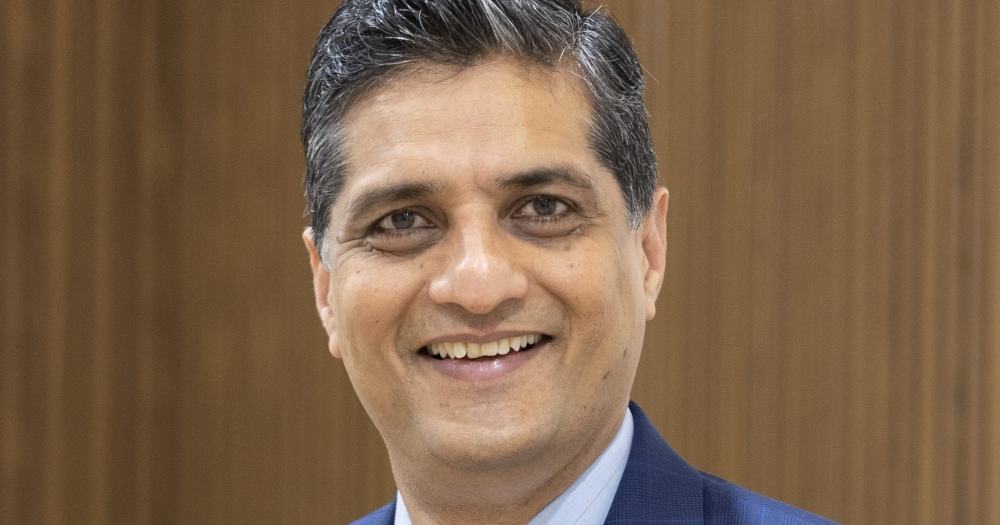
Telkom sees opportunity in capitalising on the growth in digital infrastructure demand now being driven by AI. The group has already begun to make use of existing property and fibre assets to offer data centre services to customers leveraging the new technology. Growth in the digital infrastructure sector has been underpinned by the advent of cloud computing over the past decade and a half, presently benefitting from the demand created by the AI boom.While in the past data processing was mainly done through data centres, new approaches by the likes of Oran Development Corporation (ODC) and Nvidia technology now enable mobile operators to integrate AI directly into the radio control loop, allowing cellphone towers to perform real-time computing tasks.Rival MTN is among a group of investors, including Cisco, Nokia and AT&T, that have backed ODC and its technology, underscoring the growing interest for alternatives to large data centre builds. For Telkom, the group’s large trove of digital infrastructure puts it in a strong position to take advantage of the new trends, repurposing existing assets to offer smaller computing facilities that are closer to customers, referred to as “edge data centres”.This is according to Sunil Piyarlall, executive for network architecture and modelling at Telkom’s infrastructure business, Openserve. He told Business Day Telkom’s main advantage is using existing infrastructure without having to build from the ground up. “A lot of capital expenditure in other parts of the world is being directed towards building data centres,” he said. “Telkom, between Openserve and BCX, has 10 large data centres, three of which are Tier 4 data centres.“A lot of the world is now starting to invest in edge data centres because of the latency and the demand for high-capacity, low-latency connectivity … they are starting to move their networks closer to the customer.”Looking at Openserve’s infrastructure, Piyarlall said, “We have about 1,500 buildings across the country. About 300 of those have all the requirements for a data centre. “We have diverse power and fibre reticulation, so if any one route had to go down, there is a backup. And we already have cooling.” That means “We have three of the foundations for an edge data centre: power, fibre, and cooling.”“For us to scale and build edge data centres would require minimal capital investment, as opposed to other [companies] that have to build from scratch,” Piyarlall said. He said much of the capital for such projects was in the building development.“We have customers that have asked us to create an edge data centre to facilitate whatever their ICT requirement was: either pure space leasing, on a rack level, or full-blown server space,” said Piyarlall. He said the company is able to fulfil this “within a short time”. “We’ve created one [data centre] at our cable landing station in Yzerfontein as a pilot, and that was very successful.“We sold a lot of space to local and international customers looking for edge data centre space at cable landing stations. And we’ve created a few others purely on demand, where customers are looking at automating and moving into AI for their operations.”Business Day
Telkom repurposes legacy infrastructure to capitalise on AI chance
Converted buildings and fibre assets position Telkom to meet AI-driven data needs
515 words~2 min read