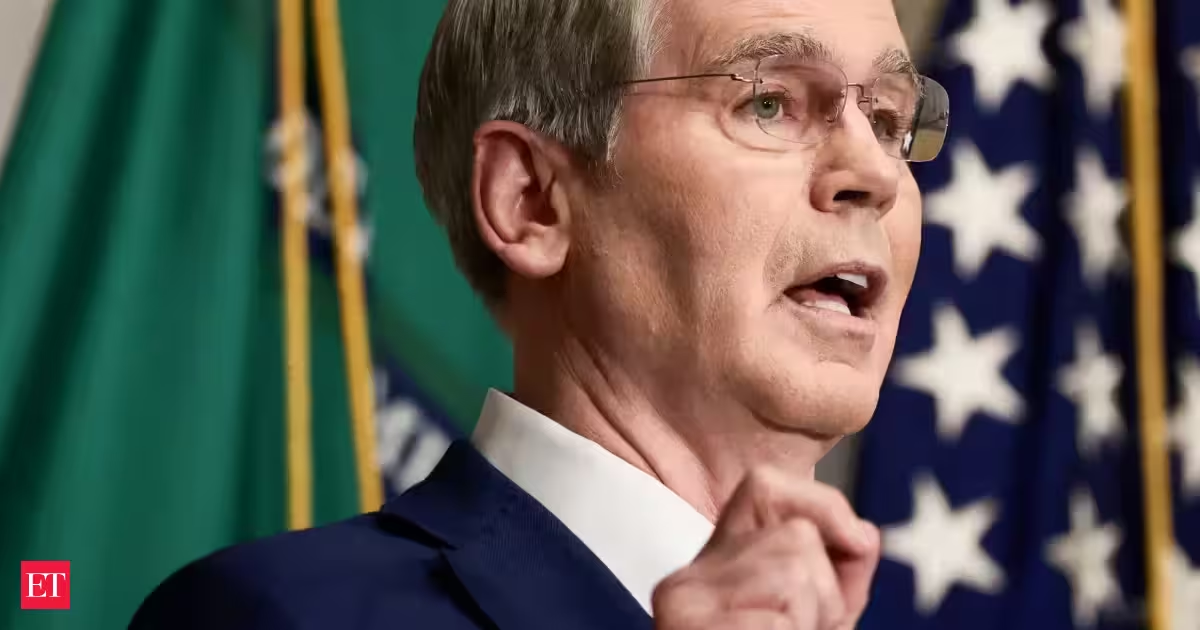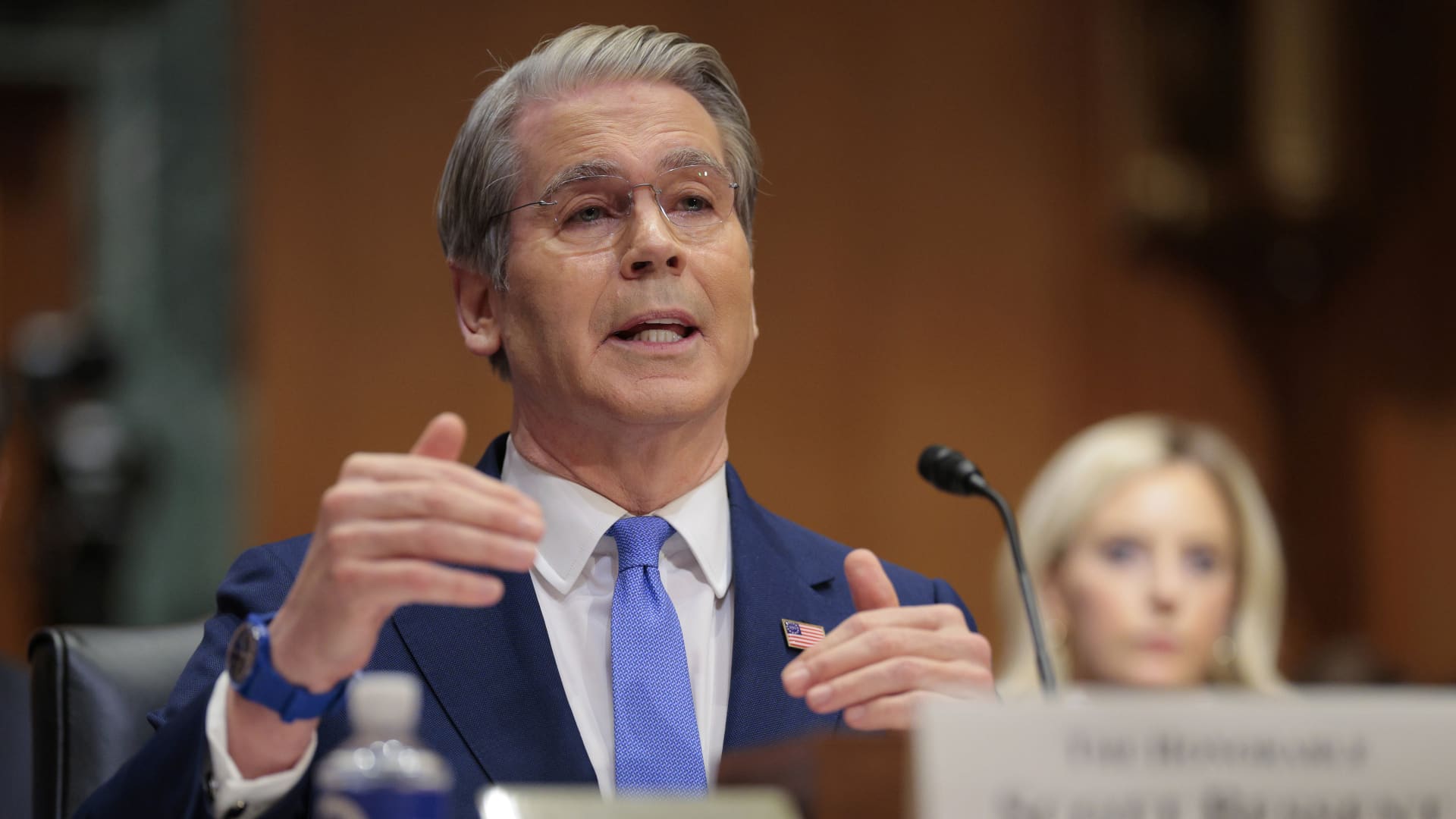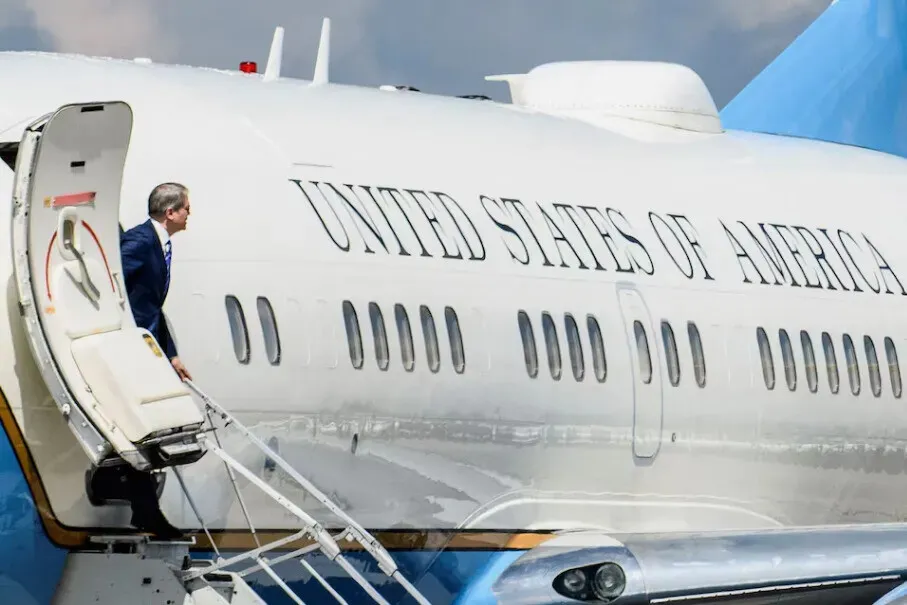
US Treasury Secretary Scott Bessent disembarks from a plane in Asheville, North Carolina, for a meeting of the finance ministers and central bank governors of the Group of 20 nations. (Reuters/Yonhap)
By Jung E-gil, senior international affairs writerUnder President Donald Trump, America faces twin challenges: the quagmire in Iran and the Treasury crisis. The situation resembles the dollar crisis of the early 1970s, when the US was mired in the Vietnam War.At the time, the US was suffering from a trade deficit as it faced growing competition from Japan and Europe. At the same time, the Vietnam War was behind a fiscal deficit that fueled inflation and drove down the value of the dollar.Finally, on Aug. 15, 1971, President Richard Nixon abruptly halted the conversion of dollars into gold at the fixed rate of US$35 an ounce, a move dubbed the “Nixon shock.” The crisis was brought to a head in October 1973 by the oil shock triggered by the Yom Kippur War (the fourth Arab-Israeli war).The US eventually overcame that crisis by establishing the petrodollar system and restructuring its industrial base.The US defended the dollar’s status as the world’s reserve currency through the petrodollar system, which kept oil transactions denominated in dollars. At the same time, it shed uncompetitive “smokestack industries” and replaced them with computer-based high-tech industries and financialization of the economy.That innovative transformation helped the US win the Cold War and enjoy unrivaled hegemony atop the division of labor built around a single global market. Developing countries such as China supplied cheap labor and goods, while middle powers such as Korea took over manufacturing, with the enormous capital investments that required. That let the US claim the most lucrative spot in financial management and high-tech design.American tech giants such as Apple and Alphabet (Google) exemplify this model. They maximized profits by delegating capital-intensive operations such as chipmaking to Korea and Taiwan while retaining control over design and operations.This division of labor helped fuel the rise of China, which went from being the world’s factory to vying for leadership of high-tech industries. It also fueled the rage of lower- and middle-income white Americans displaced by the hollowing out of US manufacturing.Their anger arguably brought Trump to power. His erratic course ultimately dragged the US into the quagmire of war with Iran.The war with Iran has revealed that the US’ stockpile of munitions is running low, a problem fundamentally resulting from the erosion of American industrial competitiveness. With its manufacturing base hollowed out, the US struggles to build a single seafaring ship.Of its 11 aircraft carriers, symbols of American military supremacy, only four or five are in operation. Faced with Iran’s cheap drones and missiles, the US has depleted 30% to 80% of its stores of expensive precision-guided weapons, which will take six years to replenish.US defense contractors specialized in these highly lucrative smart bombs lack Iran’s capacity to churn out cheap drones and missiles.Trump has altered course on Iran and now seeks to cut it off from the global economy. But that once again puts dollar hegemony to the test.With the US’ national debt exceeding US$40 trillion and Treasury yields at their highest level in 20 years, Washington has been forced to buy back its own debt. There’s even talk of tapping funds in the Treasury General Account, the federal government’s cash account.Interest on the national debt now consumes 20% of federal tax revenue and 15% of the federal budget. A 0.1 percentage point rise in interest rates now adds roughly US$35 billion US$38 billion to the annual interest burden.The US debt crisis isn’t so different from the dollar crisis of the early 1970s. There’s a worsening trade imbalance, while budgetary outlays on the war, among other expenses, have grown excessive.At the same time, Big Tech is pouring astronomical sums into data center expansion, sucking up funds from financial markets and driving Treasury yields up even higher.As Big Tech loses the advantage of reaping high profits without massive capital investment, its competitiveness is evaporating as well. A bubble appears to be forming in the artificial intelligence sector, and the US’ industrial competitiveness has reached an inflection point.The fate of sanctions against Iran will ultimately depend on the staying power of dollar hegemony. The question is whether the US can stop China’s oil trade with Iran and prevent countries from conducting trade outside the dollar system. That would require sanctions on Chinese banks.It’s doubtful whether the US has the appetite or even the ability to take that step or whether such sanctions would even work. Washington would also have to endure retaliation in the form of Chinese restrictions on its exports of rare earths.And the more pressure Washington applies, the more trade denominated in the Chinese yuan is likely to expand.Since Russia annexed Crimea in 2014, the West has imposed no fewer than 33,000 sanctions. Yet Russia is still alive and kicking, and non-dollar trade, including transactions settled in the Russia and Chinese currencies, continues to grow.Luke Gromen, a macroeconomic analyst on Wall Street, told the Financial Times that “every other weaponization of the US dollar over the past 14 years has [driven] ever-greater volumes of trade and global trade finance into the Chinese yuan, via China’s [payment] system.”The same dilemma was acknowledged by then-US President Barack Obama when he cut a landmark nuclear deal with Iran in 2015. To impose real pain on Iran, Obama said, “We’d have to cut off countries like China from the American financial system.”“And since they happen to be major purchasers of our debt, such actions could trigger severe disruptions in our own economy and, by the way, raise questions internationally about the dollar’s role as the world’s reserve currency,” he added.The Iran war has exposed the harsh reality of American military power.The economic conflicts that lie ahead will further undermine dollar supremacy as the US grapples with its debt crisis.In the 1970s, America’s leaders had the skill and the vision to navigate such a crisis.But America today is led by Trump. Unlike the Nixon shock, the Trump shock doesn’t seem likely to save America.Please direct questions or comments to [english@hani.co.kr]