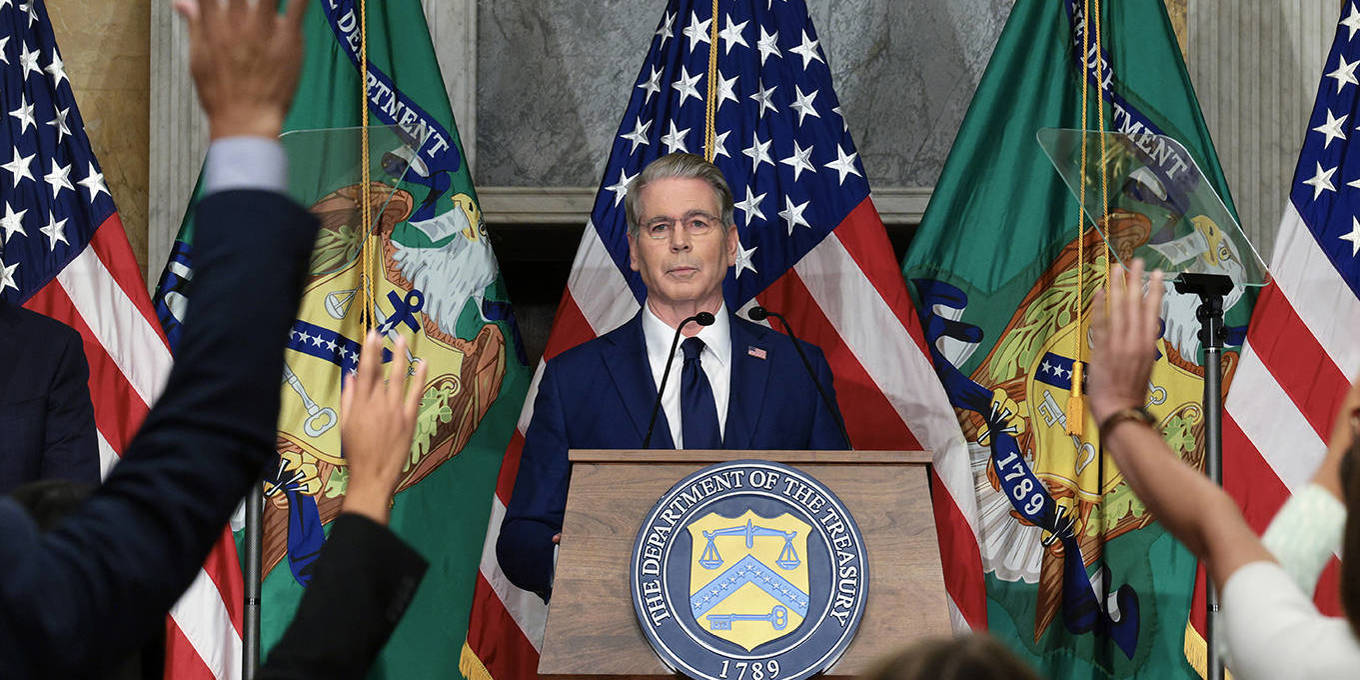
U.S. Treasury Secretary Scott Bessent is under pressure as he tries to steady Treasury yields and manage America’s rising debt burden. He has pushed yen-support measures with Japan, expanded Treasury buybacks, and faced mixed market results. The piece argues that growing debt, persistent inflation, and political pressure on the Fed could make the situation more unstable.
Paola Subacchi
PARIS — U.S. Treasury Secretary Scott Bessent has a packed agenda. Alongside trying to crash Iran’s economy, he is concerned about the cost of servicing federal debt, which surpassed 100 percent of GDP earlier this year. Interest payments on America’s debt have shot up to more than $1 trillion this year, exceeding annual U.S. defense spending.
To keep a lid on Treasury yields, Bessent — who spent most of his career in capital markets, notably at Soros Fund Management, where he helped “break” the British pound in September 1992 — is now seeking to move market sentiment from the other side of the fence.
First came a joint intervention by the U.S. and Japan to prop up a weak yen. To raise the dollars required on its own, Japan would have had to sell U.S. Treasuries. Japan is the largest holder of U.S. debt and has long been a reliable buyer, putting around 25 cents of every surplus dollar into Treasuries for the past two decades. A forced sale would have been a very public break from precedent.