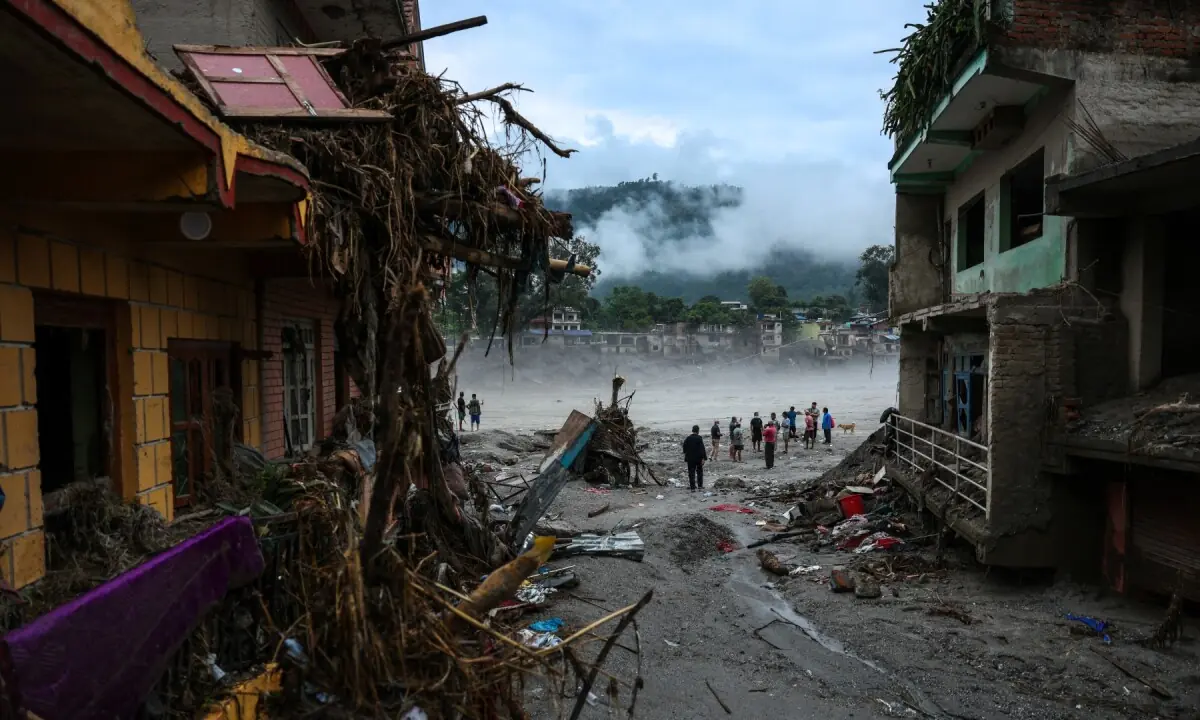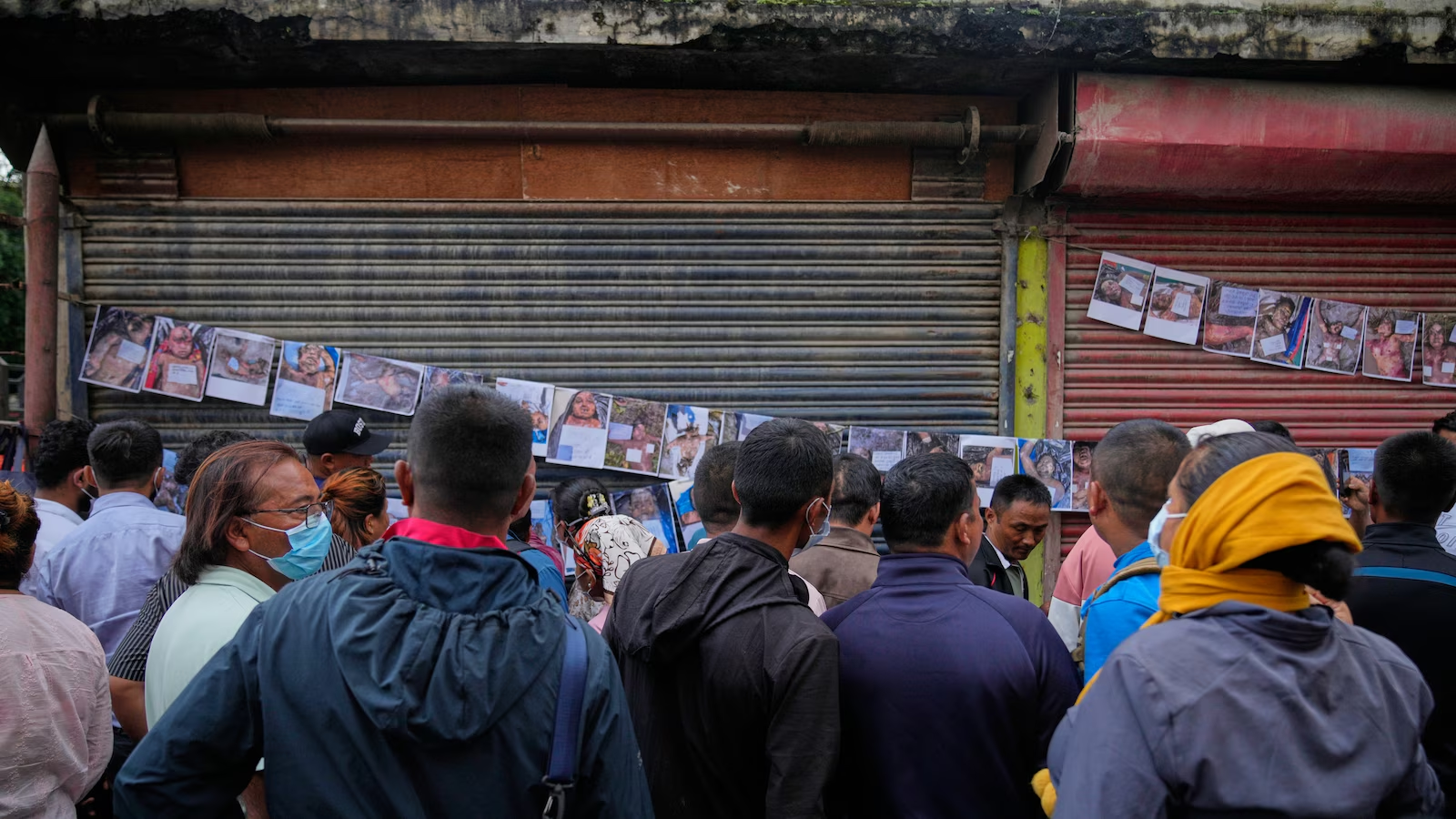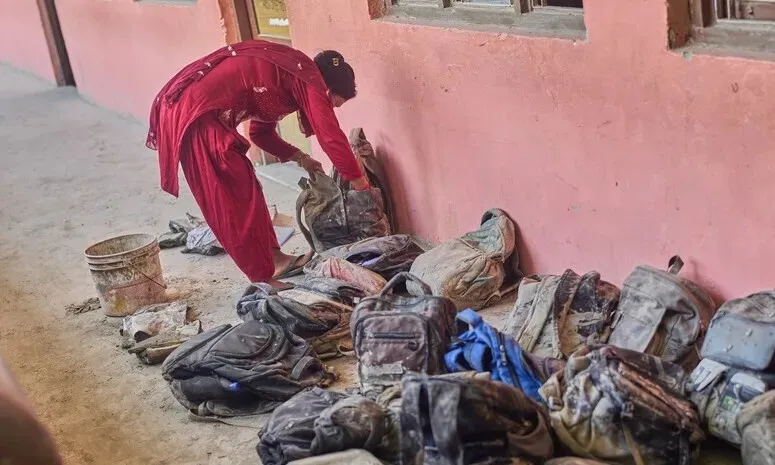
A mother searches for her child’s bag from a pile extracted from the mud brought in by the recent flash floods, at the Shree Bagheswori Madhyamik School in Galchhi, Dhading district of Nepal on Aug. 30, 2026. (AP/Yonhap)
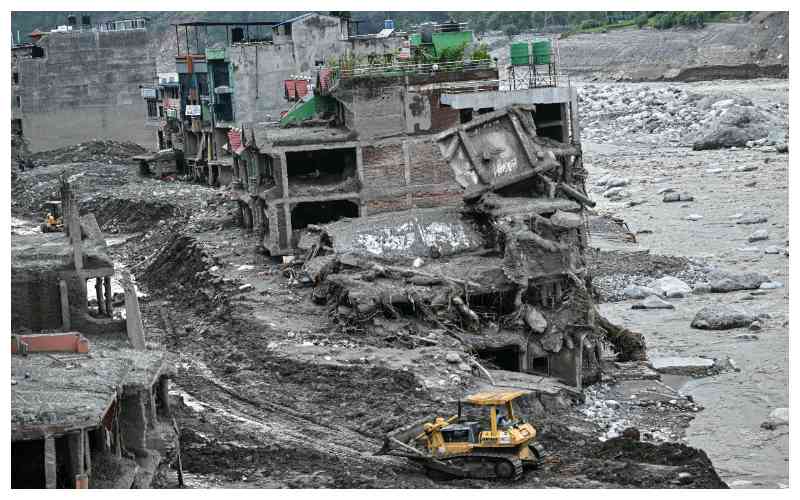
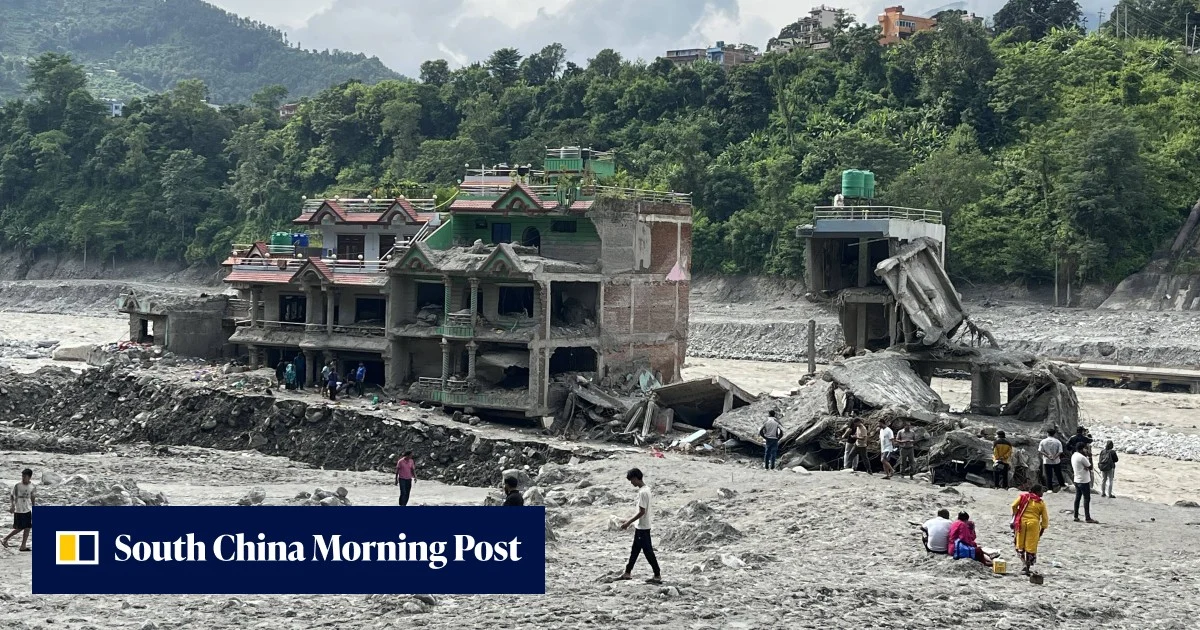
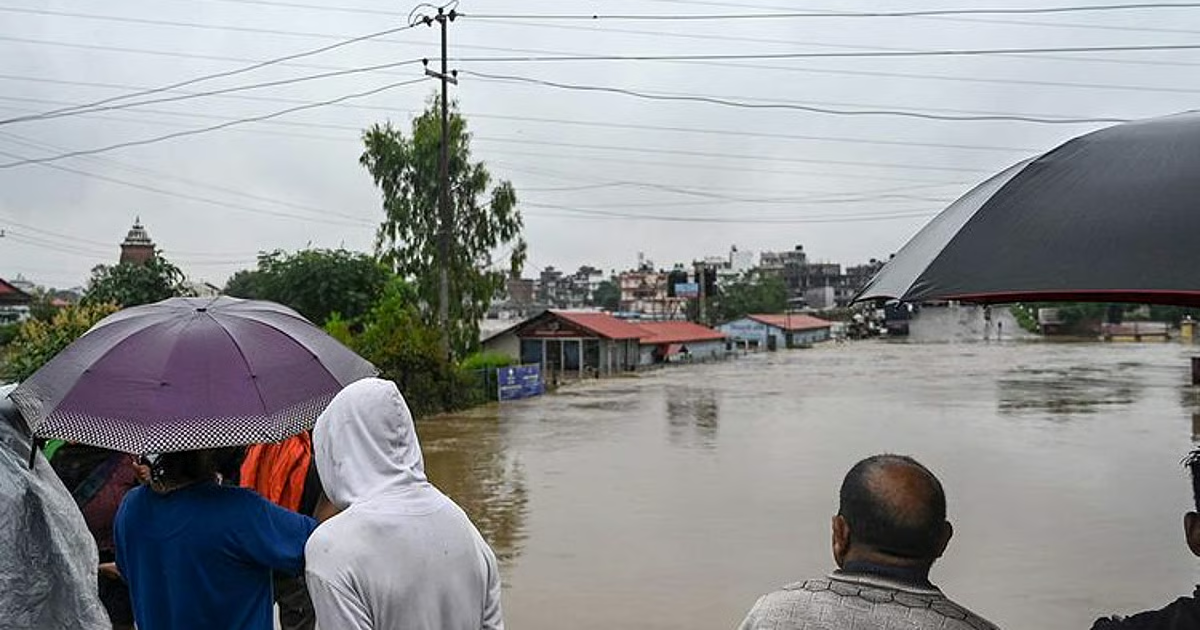
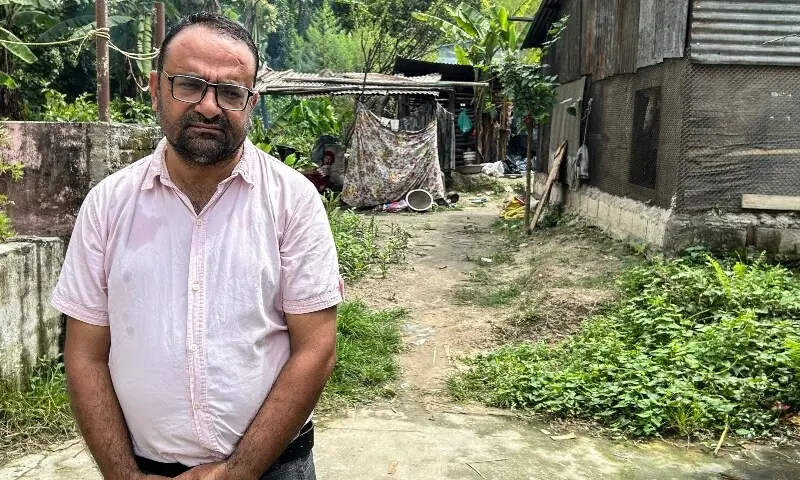
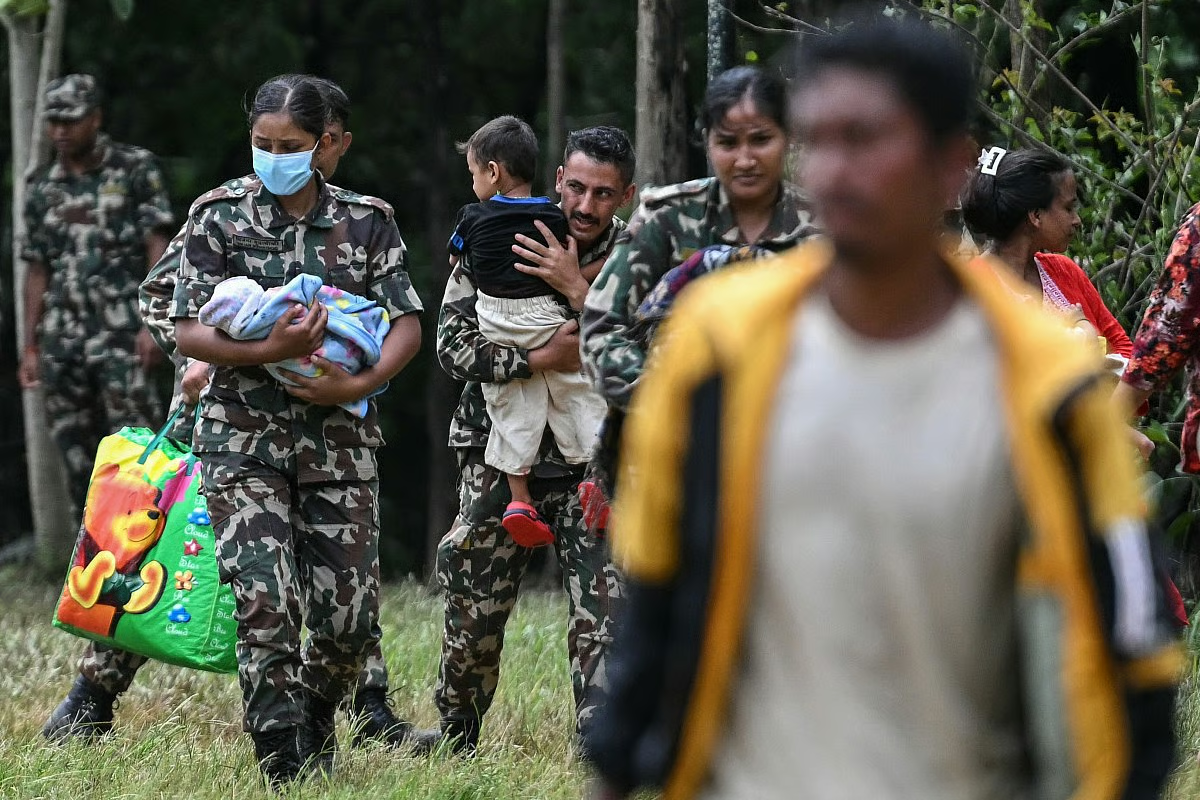
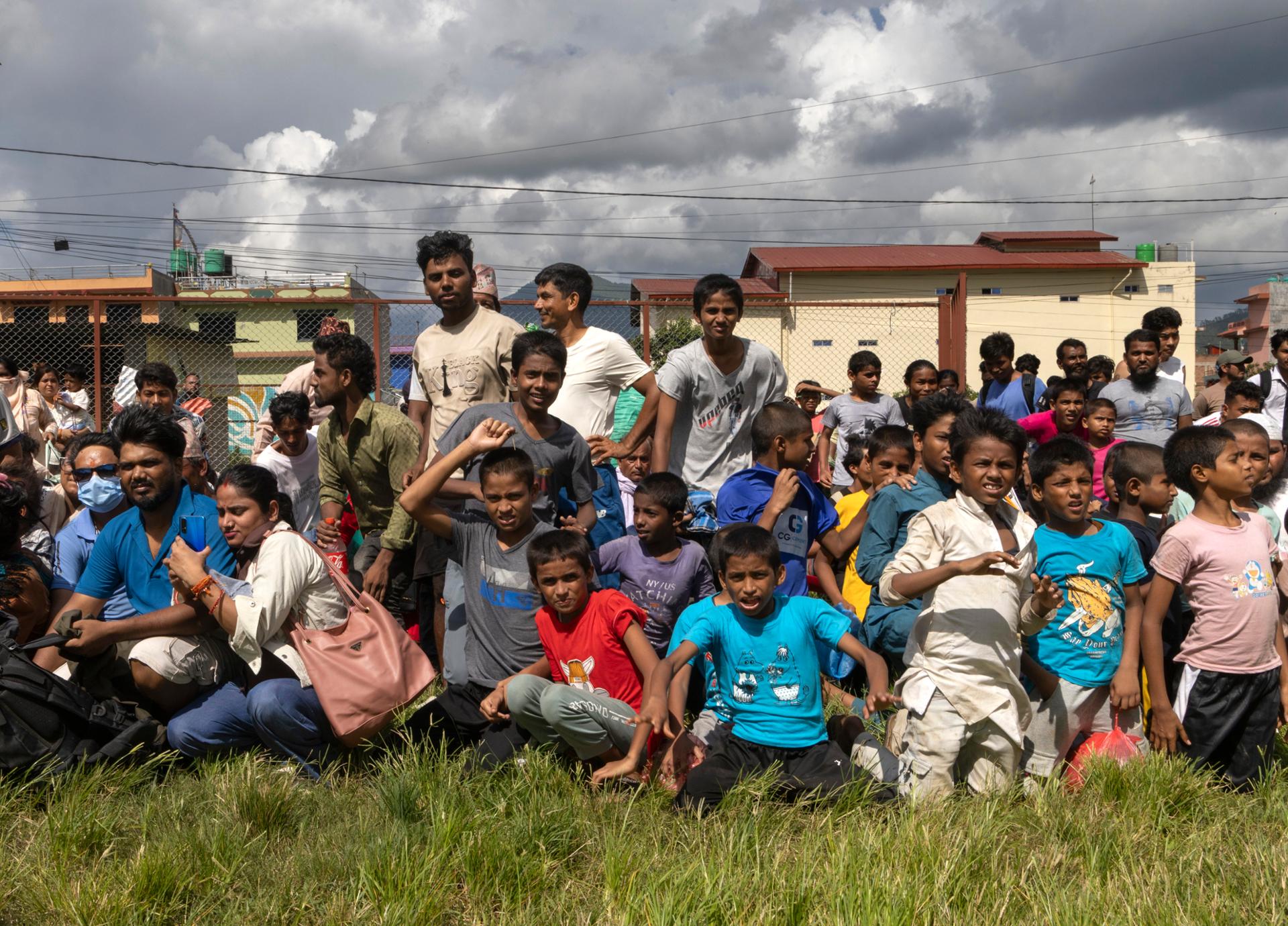
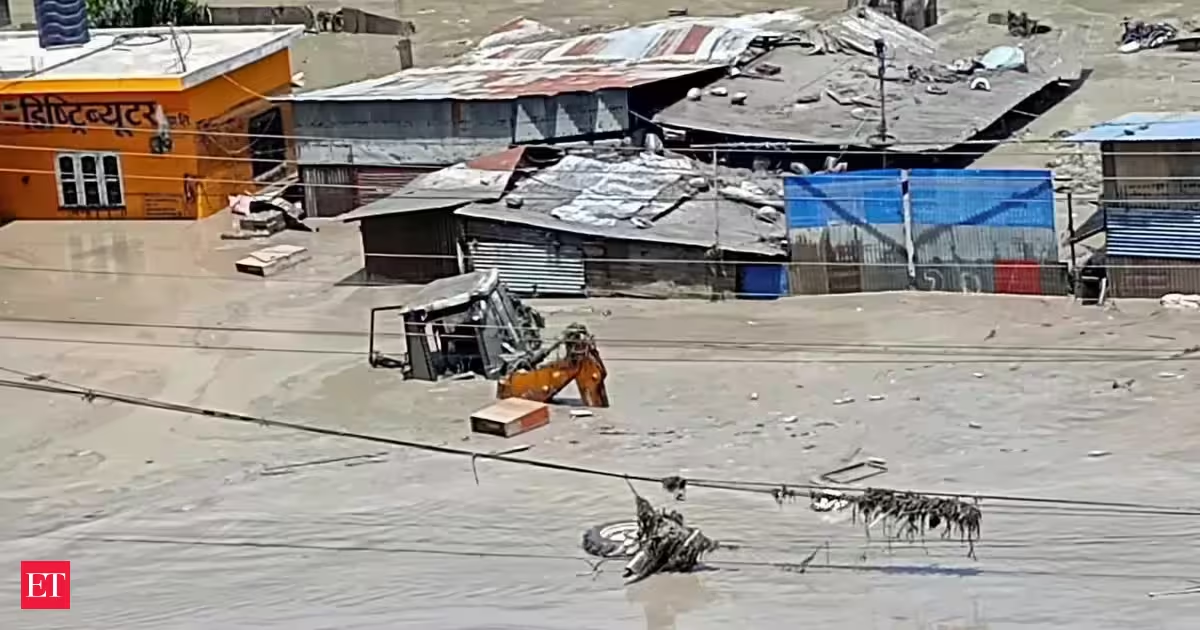
For children caught in Nepal’s devastating floods, surviving the disaster was only the beginning. In the aftermath, many are facing a new set of hardships. “I was talking to this girl who was in the holding center, and she said that she could not sleep because she had seen four of her best friends being washed away by the flood,” said Ayush Joshi, the director of program development, quality and influence for Save the Children in Nepal. Recalling the girl at the shelter in Nuwakot, one of the hardest-hit areas in the recent major floods in Nepal, Joshi said that even though she was separated from her parents and her loved ones, she didn’t cry. But her eyes were full of sadness.Speaking to the Hankyoreh in a video interview on Monday, Joshi, 39, also said another child had not changed clothes since arriving at the center.Joshi, himself a survivor of a major earthquake in Nepal in 2015, said that disasters do more than destroy infrastructure, and can trigger humanitarian and mental health crises in affected societies as well. “The crisis will move from an immediate disaster to a prolonged protection, health, education and mental health crisis for children,” he predicted.As this suggests, many children are suffering both direct and indirect consequences after narrowly escaping the floods that ravaged Nepal. According to a situation report released on Monday by UNICEF, an estimated 65,000 people were impacted by the floods in the districts of Rasuwa, Nuwakot, Dhading, Gorkha and Tanahu — including 22,100 children — with severe damage and destruction to major infrastructure, including six healthcare facilities.