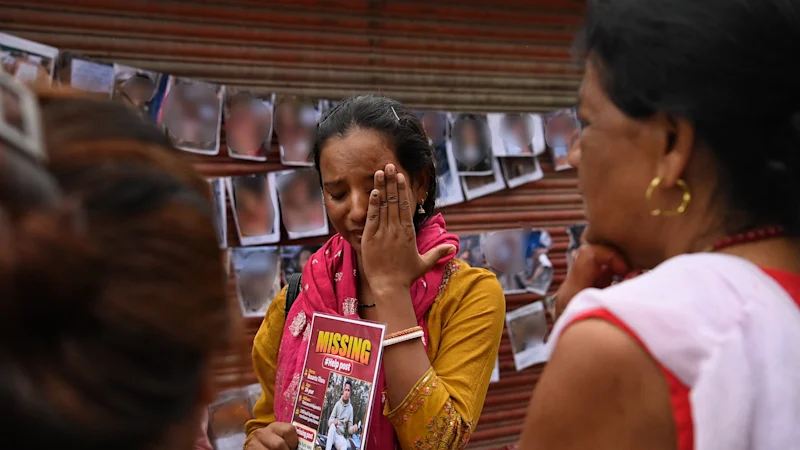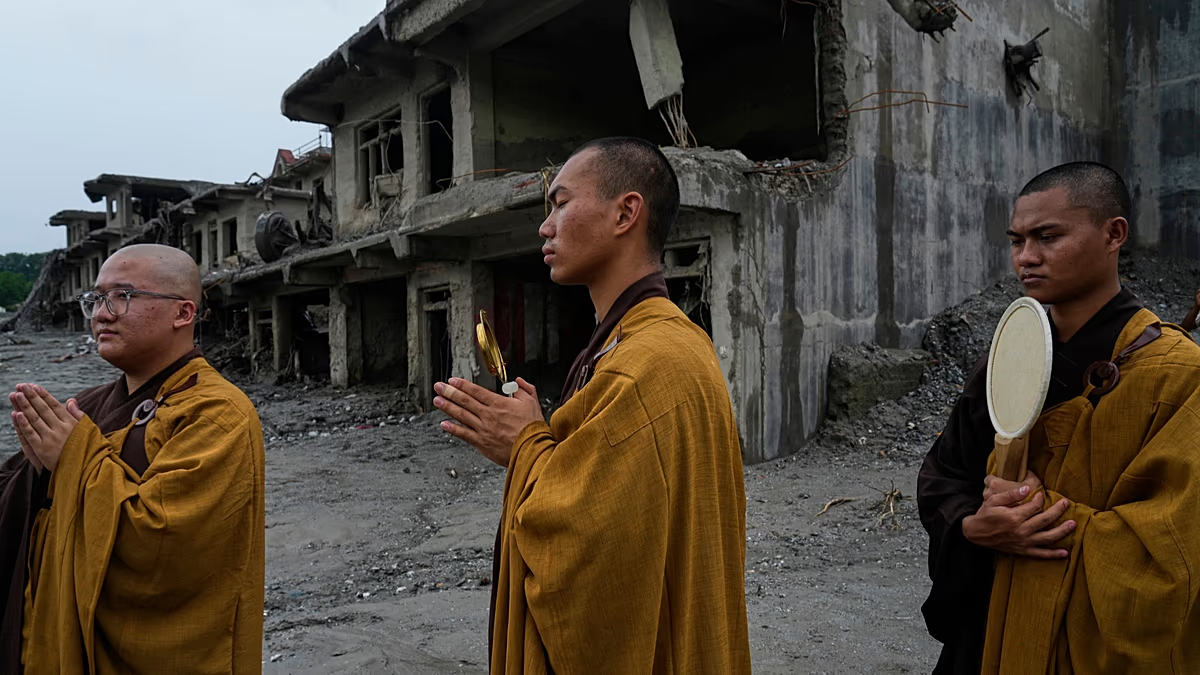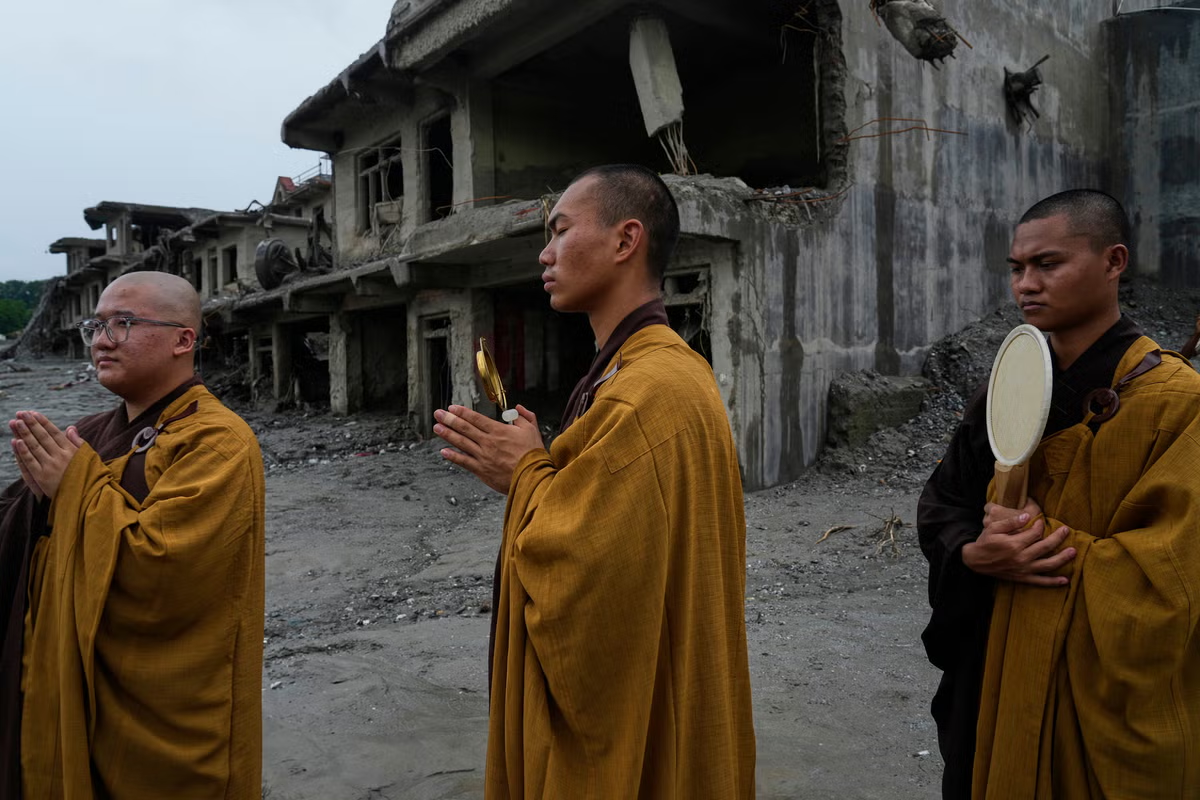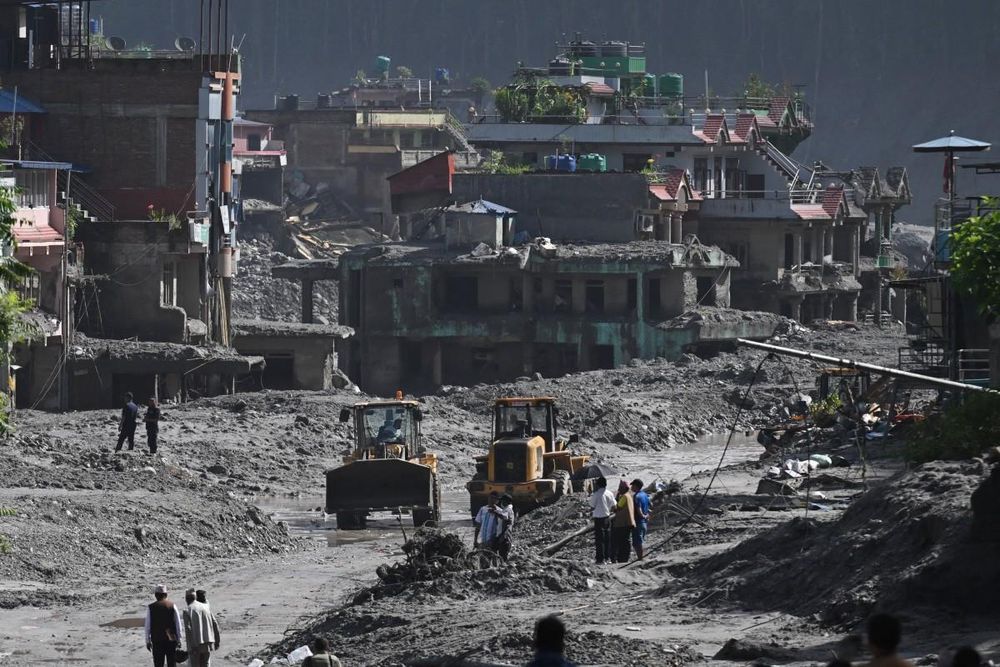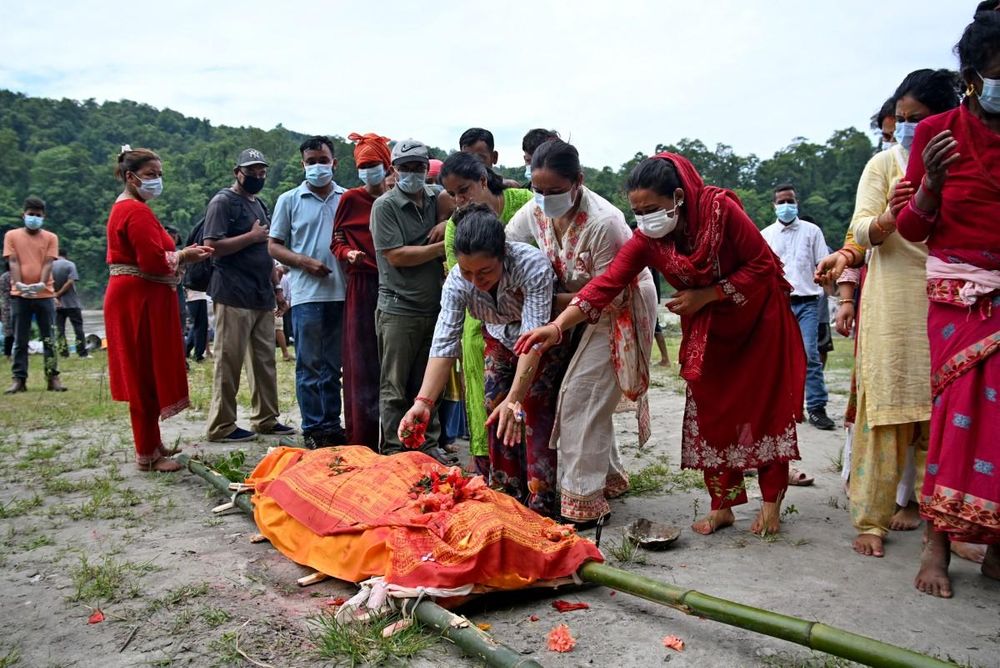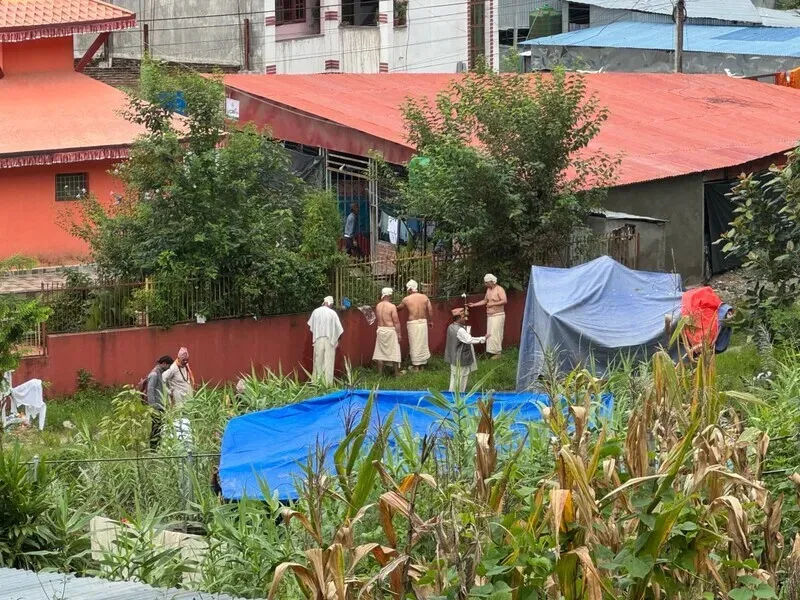
The family of Bishowram Basnet holds funeral rites in a temporary tent at Guhyeshwari Temple in Kathmandu on Sept. 3, 2026. (Jeong Bong-bi/Hankyoreh)
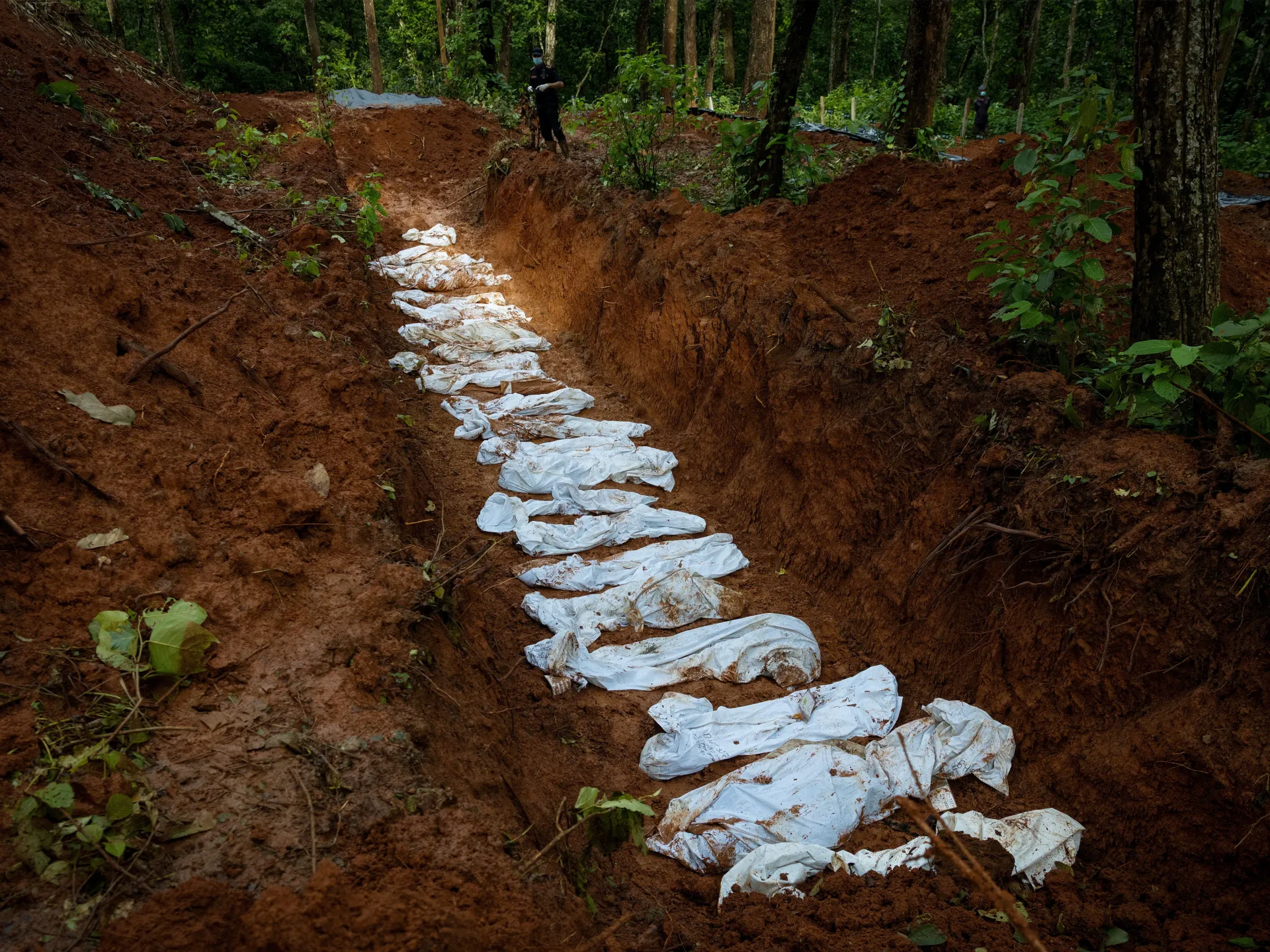
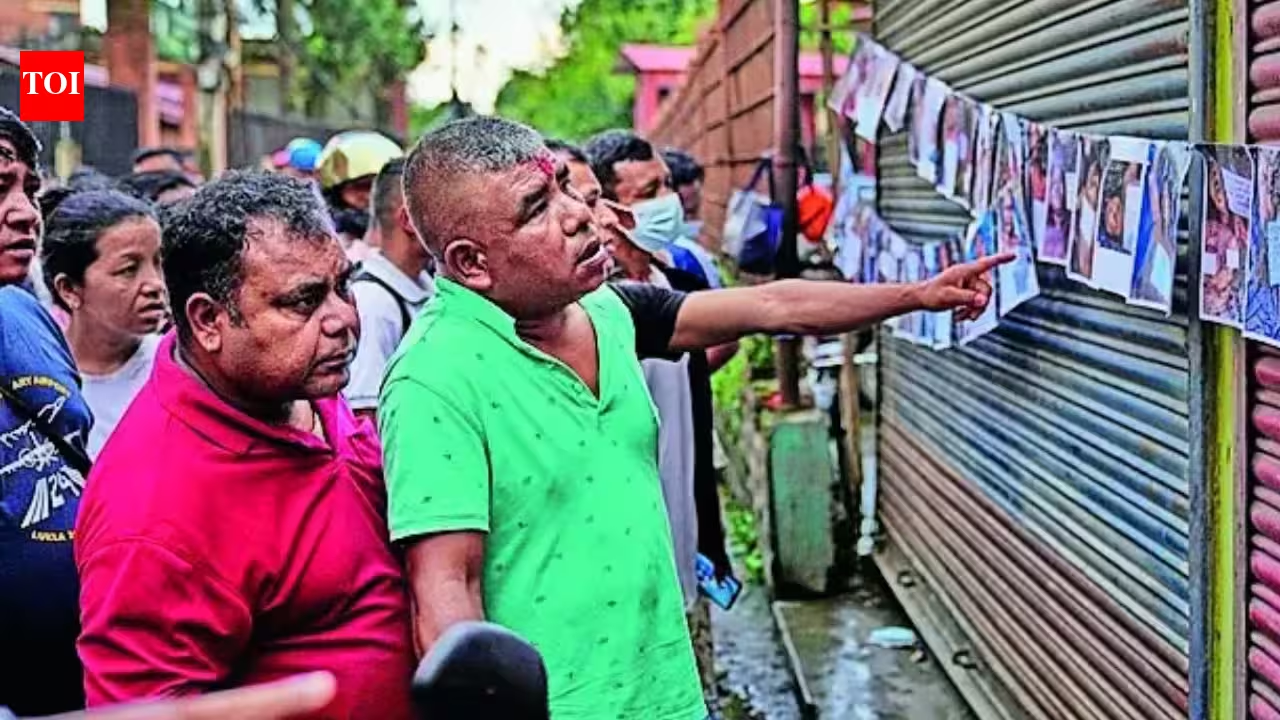
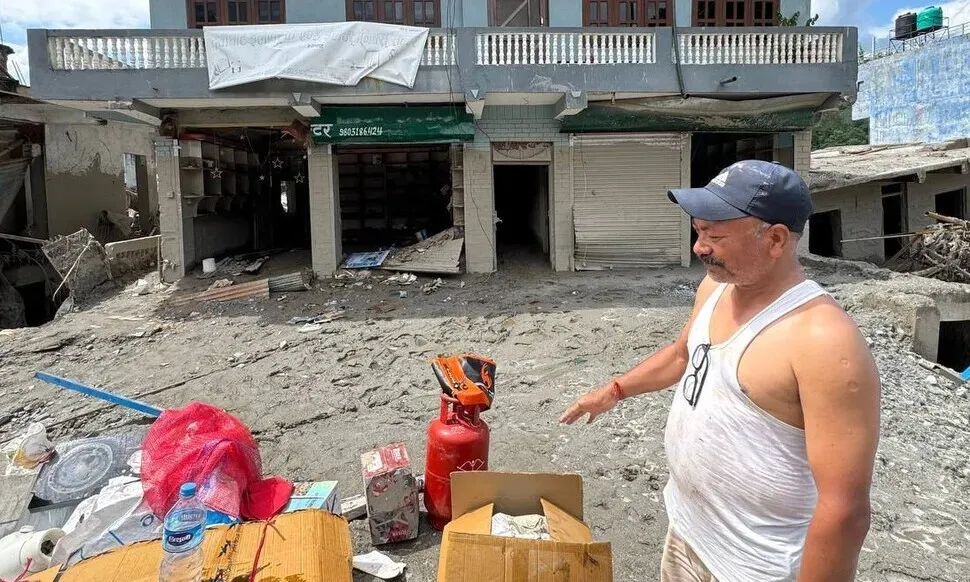
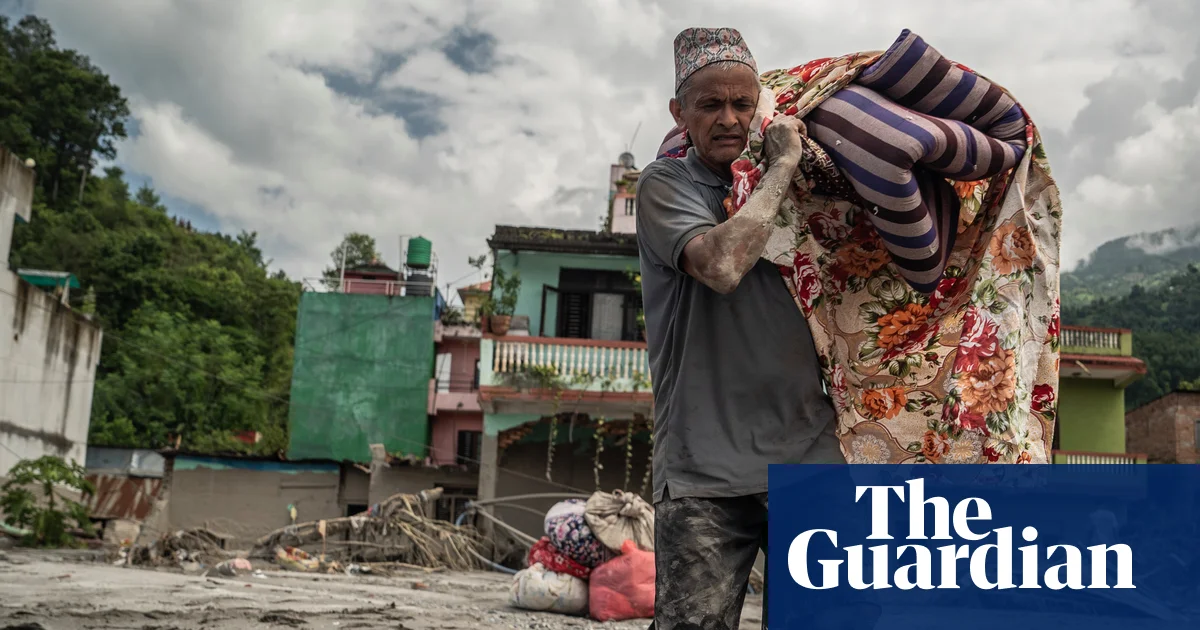
“Only people from the Timure region can enter here.”On Thursday morning, the ninth day after massive floods hit Nepal, a woman visited Mustang Gumba, a Buddhist monastery in Kathmandu being used as a temporary shelter for flood victims. She looked exhausted with a backpack on her shoulders and personal effects in her hands, but the temple’s heavy iron gate remained firmly closed.This was because her flood-decimated hometown was in the Nuwakot region, not Timure, whose residents this temple accepted. The monastery official who turned away the woman also lamented the extreme difficulty in showing mercy in the aftermath of the catastrophe, saying, “Right now, we’re already at full capacity just with displaced people from Timure.”With a look of resignation, the woman turned around and walked away.As victims of the devastating floods in Nepal and the families of those killed flock to the capital, shelters for them and venues for funeral rites are being stretched to their limits. They came to Kathmandu to find the remains of their loved ones and make funeral arrangements, but with nowhere else to go, many wander aimlessly through the grief-stricken city searching for a place to simply rest.The situation at most temples in Kathmandu visited by the Hankyoreh on Thursday was no different from that of Mustang Gumba. Even after limiting the flood of displaced people based on region or sending them to other monasteries, such facilities expressed worry over the daily dwindling of resources.Yellow Gumba, located about a 10-minute drive from Mustang Gumba, had reportedly taken in 400 Timure residents until recently, but due to lack of space, some were reportedly sent to other monasteries. “Our situation is still tight in light of our remaining food and relief supplies,” said a person affiliated with the temple.A major reason Nepalis have flocked to Kathmandu is funeral arrangements. Because the bodies of the deceased are sent to the capital, where large hospitals are located, funerals must also be held at the temples there.A Hindu funeral lasts for 13 days, during which period the family of the deceased must minimize contact with outsiders, perform memorial rites, and arrange a place to stay.“All 17 of our rooms are full,” said an official at Mahadev Temple, which provides accommodation for the funeral period called a Kriya Putri Bhawan. “The guests are families from areas severely affected by flooding such as Rasuwa, Nuwakot and Dhading. More than 10 people a day come to ask about funeral venues, and we simply can’t handle the volume.”